
Herbal Teas for Sleep and Relaxation – The Complete Guide
There is something quietly ritualistic about a warm cup of tea in the hour before bed. The steam, the smell, the few minutes of stillness it forces on an otherwise busy evening all send a signal to the body that the day is winding down. For generations, herbalists have leaned on a small group of calming plants to support that transition, and modern research has started to catch up with at least some of that tradition.
This guide walks through the herbal teas most commonly used for sleep and relaxation, what the science actually says about each one, how to brew and blend them, and the safety details that matter most before you start a nightly cup. Some of these herbs have real clinical evidence behind them. Others are mostly supported by tradition and small studies, and it is worth knowing the difference before you build your routine around one.
How Herbal Sleep Teas May Help You Wind Down
Most of the herbs in this guide are described as having a mild sedative or calming effect, and several share a proposed mechanism: gently supporting the activity of gamma-aminobutyric acid, or GABA, the brain’s primary calming neurotransmitter. Benzodiazepine sleep medications work on the same GABA receptor system, though at a far stronger dose and with far more pharmacological force than a cup of tea.
That shared mechanism is part of why so many of these plants show up in sleep blends together. It is also why several of them, discussed below, carry real cautions around combining them with sedative medications, alcohol, or anesthesia. The National Center for Complementary and Integrative Health (NCCIH) notes that evidence for most herbal sleep aids is inconsistent or limited, even where the underlying mechanism looks promising in the lab.
It helps to think of herbal tea as a supporting habit rather than a standalone treatment. The ritual of preparing and drinking it, away from screens and in a dim room, may do as much for your nervous system as the plant compounds themselves.
The Best Herbal Teas for Sleep and Relaxation
Chamomile
Chamomile (Matricaria chamomilla) is the most familiar sleep tea in the world, and for good reason. It contains apigenin, a flavonoid that binds to benzodiazepine receptors in the brain and is thought to produce a mild calming effect.
The evidence is genuinely mixed. A systematic review and meta-analysis found chamomile improved measures like the number of nighttime awakenings, though it did not clearly improve total sleep time or sleep efficiency. The NCCIH fact sheet on chamomile is more blunt, noting there is very little research on chamomile specifically for insomnia and that one 2019 review found no benefit in the single study it examined.
In practice, chamomile tends to work best for people whose sleeplessness is tied to stress or a mildly upset stomach rather than clinical insomnia. It is widely considered gentle enough for most adults and often for children, though people allergic to ragweed, daisies, chrysanthemums, or marigolds should be cautious, since chamomile is in the same plant family.
Valerian Root
Valerian (Valeriana officinalis) has one of the longest histories of any sleep herb, dating back to ancient Greece and Rome, where it was used for insomnia, migraines, and stomach cramps. Its roots contain valerenic acid, which is thought to interact with GABA receptors in a way similar to, though far weaker than, prescription sedatives.
Despite that long tradition, the clinical picture is inconsistent. The NCCIH fact sheet on valerian states plainly that the evidence for sleep problems is inconsistent, and that the American Academy of Sleep Medicine’s 2017 guidelines actually recommend against using valerian for chronic insomnia in adults.
Valerian tea has a distinctive earthy, slightly musty smell that some people find unpleasant, which is part of why it is often blended with mint, lemon balm, or honey. It seems to work best when taken consistently for two or more weeks rather than as a one-off before a hard night.
Lavender
Lavender (Lavandula angustifolia) is better studied as an aromatherapy tool than as a tea, but dried lavender buds are also brewed on their own or blended into sleep teas for their floral, slightly sweet flavor. Its calming reputation comes partly from linalool, a compound that has shown anxiety-reducing effects in animal studies.
According to the NCCIH fact sheet on lavender, it remains unclear whether lavender aromatherapy meaningfully improves sleep quality or insomnia, even though many people report feeling calmer after using it. Oral lavender products appear to be reasonably well tolerated short term, though some people experience diarrhea, headache, nausea, or burping.
A cup of lavender tea before bed is a low-risk way to build a calming ritual, and it pairs especially well with chamomile. Just keep in mind that a pleasant, relaxing scent is not the same thing as clinically proven sedation.
Passionflower
Passionflower (Passiflora incarnata) was used by Native American communities for insomnia, nervous tension, and even epilepsy long before it made its way into European herbal medicine. It contains flavonoids and other compounds that appear to have mild sedative and anti-anxiety effects in animal research.
The NCCIH fact sheet on passionflower describes a small amount of research suggesting oral passionflower might improve total sleep time in adults with insomnia, though its effect on how quickly people fall asleep is mixed. One small crossover trial found short-term subjective sleep quality improved with a week of passionflower tea compared to placebo tea.
Passionflower tends to be gentle and is often paired with chamomile, lemon balm, or valerian in commercial sleep blends. It carries one specific caution worth flagging early: it should not be used during pregnancy, which is covered in the safety section below.
Lemon Balm
Lemon balm (Melissa officinalis) has a bright, citrusy flavor that makes it one of the more pleasant sleep herbs to drink on its own. Traditionally it was used for nervousness, anxiety, and digestive upset, and modern research has focused mostly on its calming and mood-related effects rather than sleep specifically. The LiverTox monograph on lemon balm notes it is generally recognized as safe and has not been linked to liver injury, with side effects limited to occasional headache, dizziness, or bloating in small trials.
A small trial in postmenopausal women found sleep quality scores improved somewhat more with valerian and lemon balm together than with placebo. Because it is mild and well tolerated, lemon balm is a good starting point for anyone new to herbal sleep teas or brewing for a child under a doctor’s guidance.
Magnolia Bark
Magnolia bark, known in traditional Chinese medicine as houpo, comes from the bark of Magnolia officinalis and has been used for centuries as a sedative and digestive aid. Its two main active compounds, honokiol and magnolol, appear to interact with the same benzodiazepine site on the GABA-A receptor that many prescription sedatives target.
Animal studies have shown magnolol can shorten the time it takes to fall asleep and increase deep sleep stages, but rigorous human clinical trials on magnolia bark tea specifically are still limited. It has a woody, slightly bitter, faintly spicy flavor and is usually blended with sweeter herbs like chamomile or licorice root rather than brewed alone.
Skullcap
American skullcap (Scutellaria lateriflora) was used by Native American communities as a nerve tonic for nervousness, tension, and sleeplessness, and it is often included in modern sleep blends alongside valerian. Its flavonoids, including baicalin and scutellarin, are thought to act on GABA receptors in a way similar to other herbs in this guide.
Safety Note: Skullcap Adulteration
Skullcap has a real, documented history of being adulterated or mislabeled with germander, a related plant that can cause liver injury. The LiverTox monograph on skullcap describes rare but real cases of acute hepatitis linked to skullcap products, several of which were later traced to germander contamination rather than skullcap itself. Buying from a reputable supplier that tests for adulterants matters more with this herb than with most others on this list.
Skullcap has a mild, slightly grassy flavor and is rarely brewed on its own. It is most often found blended with chamomile, passionflower, or valerian in sleep tea mixes.
Hops
Yes, the same hops that flavor beer. Hop cones (Humulus lupulus) have long been used as a mild sedative, and the folk observation of “hop-picker fatigue” among field workers helped fuel that reputation. The LiverTox monograph on hops notes that while hops is widely used as a sedative in combination products, it has not been proven effective on its own as either a sedative or hypnotic in controlled research.
One randomized trial found a valerian-hops combination produced a modest hypnotic effect compared to placebo, similar in some measures to a low dose of diphenhydramine. Hops tea has a bitter, slightly floral taste that most people find easier to take blended with chamomile or lemon balm than on its own.
Other Sleep-Supportive Herbs Worth Knowing
A handful of other plants show up regularly in sleep tea blends and deserve a brief mention. California poppy (Eschscholzia californica) is a gentle, non-narcotic relative of the opium poppy family used traditionally for mild sedation and pain relief. Catnip (Nepeta cataria) has a calming effect in humans that is the opposite of its famous stimulating effect on cats.
Linden flower (Tilia species) has a soft, honeyed flavor and a long history in European folk medicine as a calming, mildly sedative tea. Tulsi, also called holy basil (Ocimum tenuiflorum), is prized in Ayurvedic tradition as an adaptogen that may support a calmer stress response rather than acting as a direct sedative.
None of these four have the depth of clinical research behind chamomile or valerian, but they are traditionally considered gentle and are commonly found in commercial nighttime tea blends for variety and flavor.
How to Brew Herbal Sleep Tea Properly
Most sleep herbs are delicate flowers, leaves, or soft roots, and they respond best to a true infusion rather than a hard boil. Bring fresh water to just off the boil, around 200 degrees Fahrenheit, and pour it directly over the herbs rather than boiling the herbs in the water.
For flower and leaf herbs like chamomile, lavender, lemon balm, and passionflower, use about one to two teaspoons of dried herb per cup and steep covered for five to ten minutes. Covering the cup while it steeps helps trap the volatile oils that carry much of the calming aroma and flavor.
Root and bark herbs like valerian and magnolia bark are tougher and benefit from a longer steep, often ten to fifteen minutes, or a true decoction where the herb is gently simmered rather than just infused. Strain well before drinking, since valerian root in particular can turn gritty if left in the cup.
Related: Creating Calm Moments Daily with Herbal Tea for Anxiety
Building Your Own Custom Sleep Tea Blend
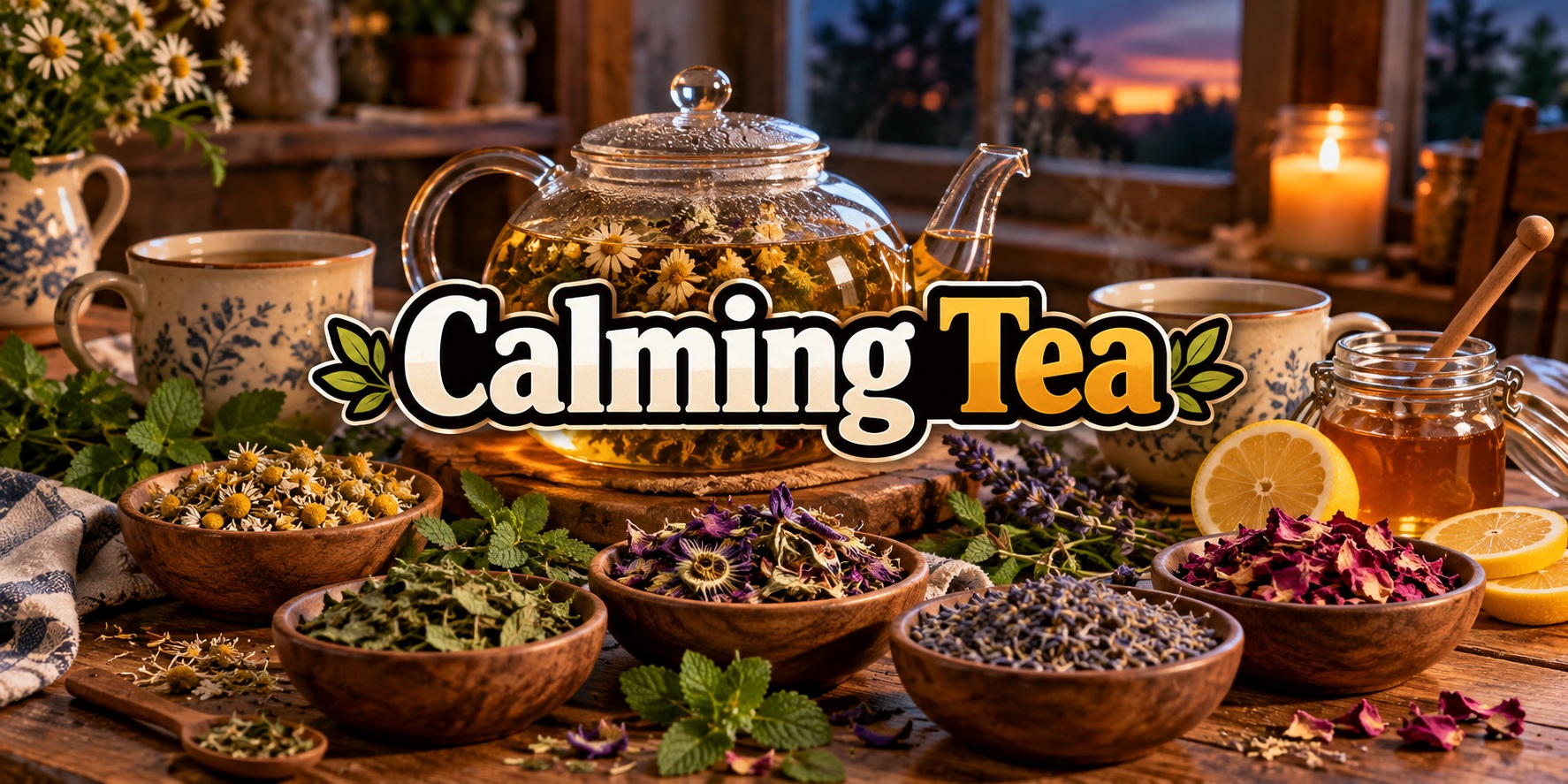
One advantage of brewing your own sleep tea rather than buying a pre-made bag is that you can tune the blend to your own taste and needs. A simple, well-balanced starting ratio is two parts chamomile, one part lavender, one part lemon balm, and half a part passionflower, all by dried volume.
If sleeplessness is tied to a racing, anxious mind rather than physical tension, lean the blend toward lemon balm and passionflower. If the problem is more about physical restlessness or muscle tension, valerian, hops, or skullcap in small amounts can be added, though start with a lighter hand since these are the most sedating herbs on this list.
Store your blend in an airtight glass jar away from light and heat, and most dried herb blends will stay fragrant and potent for six months to a year. Label the jar with the date you mixed it, since dried herbs lose potency gradually rather than spoiling outright.
Related: The 6 Best Bedtime Teas To Help You Sleep
When and How to Drink Sleep Tea for Best Results
Timing matters almost as much as the herb itself. Most herbalists recommend drinking sleep tea thirty to sixty minutes before your intended bedtime, which gives the herbs time to take effect and also gives your bladder time to settle before you lie down.
Herbal tea works best as one piece of a broader wind-down routine rather than a substitute for good sleep habits. Mayo Clinic’s guidance on valerian and insomnia points out that lifestyle basics such as avoiding caffeine late in the day, keeping a consistent sleep schedule, and winding down an hour or two before bed often matter more than any single supplement.
Dim the lights, put screens away, and treat the cup of tea itself as the signal that the day is closing rather than something to sip while scrolling. Many people find that keeping the same herb, the same mug, and the same few minutes of quiet each night trains the body to associate the ritual with sleep.
Safety, Interactions, and Who Should Be Cautious
Important Safety Information
Herbal does not automatically mean risk-free. Several of the herbs in this guide can intensify the effects of alcohol, sedatives, and anesthesia, and some carry specific cautions during pregnancy or breastfeeding.
Please read this section fully before starting a nightly herbal tea habit, and talk with a doctor or pharmacist if you take any prescription medication.
Passionflower deserves particular attention here, since the NCCIH fact sheet cited earlier is explicit that it should not be used during pregnancy because it may trigger uterine contractions. Valerian and lavender have little to no safety data in pregnancy and breastfeeding, so caution and a conversation with a healthcare provider are warranted for those too.
Sedating herbs like valerian, hops, skullcap, and magnolia bark can intensify the effect of alcohol, benzodiazepines, opioids, and other sedative medications, which can be dangerous when combined. If you have surgery scheduled, mention any herbal tea habit to your surgical team, since several of these herbs, especially passionflower and lavender, may interact with anesthesia.
Chamomile may interact with blood thinners like warfarin and can theoretically reduce the effectiveness of birth control pills, since it may have mild estrogen-like activity. Anyone allergic to ragweed, daisies, or related plants should approach chamomile cautiously, and anyone with a known liver condition should be extra careful with skullcap given its documented, if rare, association with liver injury.
For children, stick to the gentlest herbs, chamomile and lemon balm in particular, in small amounts, and check with a pediatrician before giving any herbal tea to an infant or toddler. As with any supplement, quality matters: buy from suppliers who test for contamination and correct plant identity, particularly for skullcap.
Frequently Asked Questions
Can I drink sleep tea every night?
Most of the gentler herbs here, chamomile, lemon balm, and lavender, are considered reasonable for regular short-term use, though the long-term safety of nightly use has not been well studied for any of them. Rotating herbs or taking occasional breaks is a reasonable, low-risk approach if you plan to make this a long-term habit.
How long before bed should I drink it?
Thirty to sixty minutes before your intended bedtime is a common starting point, which also allows time for a bathroom trip before you settle in. Adjust based on how your body responds, since some people notice an effect faster than others.
Will herbal tea actually cure insomnia?
No, and it is important to be honest about that. The evidence reviewed throughout this guide is consistently modest at best, and clinical guidelines from groups like the American Academy of Sleep Medicine do not recommend herbs like valerian for treating chronic insomnia. Persistent insomnia deserves a conversation with a doctor rather than reliance on tea alone.
Can I combine several of these herbs in one cup?
Yes, and many traditional sleep blends do exactly that, pairing a flavorful base like chamomile or lemon balm with a stronger sedating herb like valerian or hops. Start with small amounts of any new herb to see how your body responds before making it a nightly habit.
Does caffeine timing matter if I am already drinking sleep tea?
Yes, and this is one of the most overlooked pieces of the puzzle. Caffeine has a half-life of roughly five to six hours in most adults, so a mid-afternoon coffee can still be affecting your sleep onset well into the evening, no matter how calming your bedtime tea is.
If you are relying on herbal tea to help you unwind, it is worth cutting caffeine off by early afternoon and paying attention to hidden sources like chocolate, some pain relievers, and certain green and black tea blends. Sleep tea works with your body’s natural wind-down, not against a lingering caffeine buzz.
What is the difference between an herbal tea and a supplement capsule?
Tea delivers a much lower, more diluted dose of a plant’s active compounds than a concentrated capsule or tincture, since only what dissolves into hot water during a short steep makes it into your cup. That generally makes tea a gentler starting point, though it also means the effects tend to be milder and slower to build than with a standardized extract.
For most people using these herbs for general relaxation rather than treating a diagnosed condition, tea is a reasonable and lower-risk way to begin. If you later consider a capsule or tincture for a stronger effect, the same safety cautions in this guide, and then some, still apply.
Turn Your Kitchen Into a Forgotten Home Apothecary
Chamomile, lemon balm, lavender, passionflower, and valerian are only the beginning.
For generations, people kept herbs close at hand and knew how to turn them into teas, tinctures, salves, poultices, infused oils, and other traditional preparations for everyday needs. Much of that practical knowledge has slowly disappeared from the modern home.
The Forgotten Home Apothecary brings that old-fashioned herbal know-how back into one practical resource.
Inside, you’ll discover how familiar plants and herbs have traditionally been prepared and used, along with recipes you can make at home and keep ready when you need them. Instead of simply buying another box of herbal tea, you can begin learning how to build your own collection of useful herbal preparations.
If this article has you looking at chamomile, lemon balm, valerian, and the other herbs in your cupboard differently, this is the perfect next step.
👉 Discover The Forgotten Home Apothecary and start rebuilding the herbal knowledge our grandparents once kept at home.
Bring Forgotten Herbal Knowledge Back Into Your Home →
Final Thoughts
Herbal sleep teas are not a proven cure for insomnia, and the honest scientific picture for most of them is more modest than their popularity would suggest. What they do offer is a gentle, generally low-risk ritual that, paired with real sleep hygiene basics, can become a meaningful part of winding down for the night.
Start with the gentlest herbs, pay attention to how your own body responds, and respect the safety notes on pregnancy, medication interactions, and sourcing quality covered above. A warm cup brewed with intention is, at the very least, thirty quiet minutes taken away from a screen, and that alone is worth something.
You may also like:

Join Our Private Herbal Remedy Community!
The Legal Narcotic You Can Grow In Your Own Backyard (Video)
Make Your Own Medicinal Plant Oils and Reclaim Your Independence From Overpriced Scams
9 Doctor Approved Herbal Remedies
Homemade 3-in-1 Elixir for Migraines, Restless Nights, Anxiety & Allergies