

9 Doctor Approved Herbal Remedies
You don’t have to choose between herbs and modern medicine.
In fact, the line between the two is much blurrier than most people realize.
Some remedies that still look perfectly at home in an herbal apothecary are also recommended by doctors, mentioned in clinical guidelines, or used as recognized medicines for very specific problems.
These aren’t miracle cures, and they don’t replace every prescription. But they’ve earned something many herbal remedies never do:
a place in conventional healthcare.
So if you prefer reaching for something plant-based when it makes sense, these are some of the remedies worth knowing before you need them.
1. Peppermint Oil for IBS
If bloating, cramping, or abdominal pain regularly hijacks your day, peppermint deserves more attention than the average cup of tea gets.
Doctors and gastroenterologists may recommend enteric-coated peppermint oil capsules for people with IBS. Peppermint helps relax smooth muscle in the digestive tract, which can ease some of the cramping and discomfort that come with IBS.
And yes, the form matters.
Peppermint tea can feel soothing, but most clinical evidence involves concentrated, enteric-coated capsules designed to release farther down the digestive tract.
For something that grows so easily in a backyard pot, peppermint has made it surprisingly far into modern digestive care.
And if you want a Stomach Comfort Blend recipe, peppermint is the star ingredient.
Actually, when you pair it with chamomile, marshmallow root, slippery elm, licorice, cinnamon, ginger, and honey, you get an old recipe found in an independence skills guide, the kind of book about breaking free and bringing back skills that were once used every day, then slowly lost in time. 
The ratios matter most.
And I’m telling you, I’ve rarely seen something so traditional put together so beautifully.
2. Psyllium for Constipation and More
Psyllium isn’t glamorous, but neither are you when gut discomfort hits.
Made from the husks of Plantago ovata seeds, psyllium absorbs water and forms a soft gel inside your digestive tract. Doctors commonly recommend it when you need more soluble fiber, particularly for constipation.
And there’s another reason to remember it.
Regular psyllium intake can also help lower LDL cholesterol as part of a heart-healthy diet, as I’ve mentioned it in a previous article.
So one humble plant husk can potentially support two things you struggle with as you get older: keeping your bowels moving comfortably and keeping cholesterol headed in a healthier direction.
Just always take psyllium with plenty of water.
3. Ginger for Nausea
There’s a reason ginger has followed upset stomachs through generations.
Modern medicine hasn’t dismissed it.
Ginger is one of the better-supported herbal options for nausea.
In fact, in Europe, there are nausea supplements that are ginger-based.
And ginger is SO practical because you don’t necessarily need an elaborate herbal cabinet to use it.
Fresh ginger, tea, capsules, and standardized preparations all make this one of the easiest traditional remedies to keep within reach.
If you’re one of the DIY lovers who just loves making sure everything is homemade, then I’m with you.
My mom used to make something like this for me when I was younger and we had to travel by car, bus, or anything that made me motion sick.
And I loved it because, to me, they were real candies.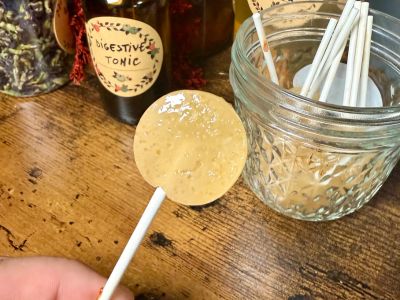
This is the recipe I still make whenever I want some natural ginger support for nausea. It’s tasty, simple, and actually fun to prepare.
I’m adding a picture so you can see how it looks.
Click here to see the ginger nausea lollipops recipe.
4. Senna for Short-Term Constipation
Senna isn’t merely an old-fashioned herbal tea.
It’s still used as a laxative medicine.
Senna contains sennosides, compounds that stimulate activity in your bowel and help move stool through the colon.
That’s why doctors and pharmacists still recommend senna for short-term constipation.
But this is also a good reminder that herbs aren’t automatically gentle simply because they’re natural. In fact, you have to be careful when using any herbal remedy. Since their power is real, you have to be careful how you use it.
Senna shows you something important:
Herbs can be powerful.
That’s why you need to know how to use them properly, especially when it comes to bowel remedies.
Inside The Lost Remedies Academy, Nicole shows you practical herbal skills step by step, how to identify plants, how to prepare remedies, and how to avoid the kind of mistakes that happen when you’re guessing.
 One thing that caught my attention is what I’d call the Native American remedy of emptying your bowels every morning.
She also shows you the herb you can add to your coffee or tea to empty your bowels each morning, a simple old trick that can help you start the day feeling light again.
Click here to see the herb Nicole adds to coffee or tea.
5. Cranberry for Recurrent UTIs
This is one herbal remedy people often get slightly wrong.
Cranberry isn’t something you should rely on to treat an active urinary tract infection.
It’s actually used for prevention, so you don’t have to go through all that pain.
Doctors may recommend cranberry products to some people who repeatedly develop UTIs because cranberry compounds can make it harder for certain bacteria to attach to the urinary tract.
For someone who keeps finding themselves back in the same uncomfortable situation several times a year, reducing the chance of another episode can matter enormously.
And please, don’t misinterpret store-bought cranberry juice as a remedy. That’s filled with sugars and cranberry flavor only.
If you want to make a cranberry remedy, you need the berries themselves. And then follow a legitimate recipe by a herbalist, so you can truly say that you tried a cranberry remedy. For example, this one right here:
UTIs are one of the most common women’s problems you can encounter.
So if you’re a husband, this is the kind of recipe you may want to make for your wife or mother.
And if you’re a wonderful lady, please love yourself enough not to wait until discomfort becomes unbearable.
There’s this very tasty cranberry recipe I recommend, and you can use it at your discretion.
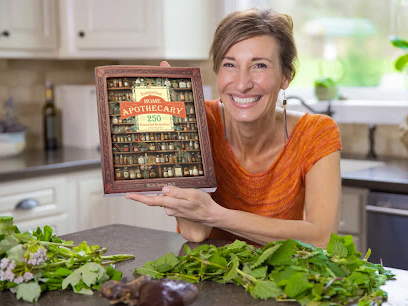 It comes from the same herbal recipe bestseller book written by Nicole, as the nausea lollipops, the one that finally brings together the convenience of making remedies at home with the forgotten knowledge of our ancestors, which should be promoted more.
Click here to see the cranberry urinary support tonic recipe.
6. Chamomile When Your Mind Won’t Switch Off
Some nights you’re physically exhausted…
…but your brain apparently didn’t get the memo.
Chamomile has been used by your ancestors for relaxation, digestive discomfort, and sleep, and concentrated chamomile preparations have also been studied for anxiety symptoms.
That doesn’t make chamomile tea an anxiety medication, but it’s clearly more than a good-flavored bedtime drink.
Next time you read the ingredients of a sleep supplement, check the percentage of chamomile. You may be surprised how much they rely on it.
I learned this from my mom; actually, it’s a traditional herb well known in my family.
I learned chamomile from my mom.
We used to pick the flowers, lay them on old newspaper to dry, and then store them for tea.
That sweet, honey-like flavor was something I could never really get from store-bought tea bags.
You can get there too by foraging chamomile yourself from clean areas, far from roads, sprayed lawns, and pollution.
Or you can simply grow your own chamomile at home and use it in teas, calming blends, skin preparations, and plenty of other remedies.
Click here to see how you can grow your own chamomile for less than a dollar.
Or, for the simple version, there’s lemon balm tincture.
When your mind won’t switch off and you don’t want to dry flowers, steep tea, or wait, Nicole’s Lemon Balm Tincture is the easier way to keep a calming herb close.
A mug of chamomile gives you a simple nightly ritual: stop working, put the phone down, sit somewhere quiet, and give your nervous system a chance to catch up with the rest of you.
7. Marshmallow Root for a Dry, Irritated Throat
So this is NOT the fluffy white candy. Real marshmallow started with a plant.
Althaea officinalis root is naturally rich in mucilage, which becomes slippery and soothing when mixed with water.
That’s why marshmallow preparations have long been used for dry coughs and irritation of the mouth and throat.
Think of it less as something that attacks the cause of your cough and more as something that coats an irritated area when every swallow or cough feels increasingly unpleasant.
A cold infusion is one traditional way to prepare marshmallow root because it draws out that characteristic mucilage beautifully.
And remember that I mentioned the same type of action when we spoke about psyllium?
That soft, gel-like feeling?
Marshmallow root has a similar slippery quality because of its mucilage.
Just as it may help your throat feel coated and soothed, it can feel just as comforting for your stomach. I like to imagine food not grinding against an irritated gut, but sliding down more gently and letting everything move with less discomfort.
That’s the feeling I think of when I think of marshmallow.
Too bad good marshmallow root can be so hard to find.
But I’m so glad Nicole Apelian shares it with The Lost Herbs community, carefully sourced, organic or handpicked.
It truly feels like a blessing. Click here to check it out.
It’s an old remedy, but an incredibly practical one to know.
8. Yarrow — An Old Remedy That Still Has Official Recognition
If you’ve spent any time around traditional herbalism, you’ve probably encountered yarrow.
And this is one of the plants from the old apothecary that hasn’t completely disappeared from official herbal medicine.
European herbal authorities recognize traditional yarrow preparations for uses including mild digestive complaints, temporary loss of appetite, menstrual discomfort, and minor superficial wounds.
That’s important because “traditional use” has a specific meaning.
The plant has a sufficiently established medicinal history to retain formal recognition for those traditional uses.
Yarrow is one of those herbs that makes you understand why people trusted plants for generations.
It has tradition behind it.
It has potency behind it.
And it is one of those multi-purpose herbs that deserves a real place in a home apothecary.
People have used yarrow for digestion, appetite, menstrual comfort, and minor superficial wounds, which is exactly why it still feels so valuable today.
And if I’m going to use yarrow, I don’t want the weak, dusty version from some random shelf.
I want it made by someone who truly knows the plant.
That’s why I like Nicole Apelian’s Yarrow Tincture.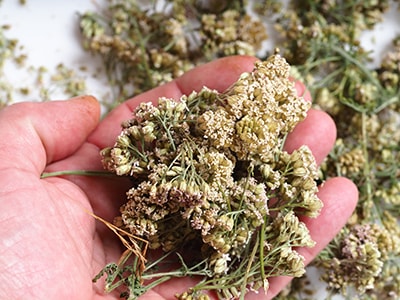
No foraging. No drying. No guessing.
Just a classic old herb prepared by a herbalist I trust.
Click here to see Nicole’s Yarrow Tincture.
For an herb people have gathered from fields for generations, that’s pretty remarkable.
9. Turkey Tail — Where Herbal Medicine Gets Very Interesting
Turkey tail may be the most surprising entry on this list.
This colorful mushroom contains complex polysaccharides that have attracted serious interest for their effects on immune function.
One turkey-tail-derived preparation, PSK, went considerably further.
PSK has been used in Japan as an adjunct alongside conventional cancer treatment.
Now, this distinction matters:
Turkey tail tincture or powder is not the same thing as PSK.
The fascinating part is that compounds from an unassuming medicinal mushroom became important enough for conventional medicine to isolate, standardize, and use clinically.
That’s exactly why dismissing every traditional remedy simply because it came from an herbalist’s shelf doesn’t make much sense.
Turkey tail is where herbal medicine gets very serious. This isn’t just a pretty mushroom on an old log.
Turkey tail has been used around very serious health conversations, and certain turkey-tail-derived preparations have even been used alongside conventional care in Japan.
Now, of course, an ordinary turkey tail tincture is not the same thing as those standardized preparations.
But still, it says a lot that this mushroom was taken that seriously.
Nicole was talking about Turkey Tail long before it became trendy.
And she didn’t turn her apothecary into some giant corporation with overpriced bottles.
Her Turkey Tail Tincture is still accessible, simple, and high quality, exactly the kind of mushroom tincture I’d trust if I wanted to add Turkey Tail to my routine.
Click here to see Nicole’s Turkey Tail Tincture.
Maybe Your Herbal Cabinet Isn’t So “Alternative” After All
Look at this list again.
Most wouldn’t look unusual sitting beside tincture bottles and dried herbs in an apothecary.
Yet some of them also appear in medical guidelines, pharmacies, clinical research, or recognized medicinal preparations.
You don’t need every herb to cure a disease for herbal knowledge to be valuable.
Knowing those remedies before you’re uncomfortable is a lot more useful than trying to learn everything when you’re already desperate for relief.
A Quick Note: Herbs can still cause side effects, interact with medications, and be inappropriate for certain health conditions or during pregnancy. The exact preparation also matters—a studied extract isn’t automatically equivalent to every tea, tincture, powder, or supplement containing the same plant. If you’re managing a medical condition or taking medication, check with your healthcare professional before adding a new herbal remedy.
You may also like:
Kava Tea – How to Prepare It the Traditional Way and Drink It Safely
Never Do This Before Going To Sleep (Video)
How to Make Sun Brewed Tea (And How to Do It Safely)
Red Clover Tea – What It Actually Does and How to Prepare It
🌿 Join Our Private Herbal Community For Free. 👉 Click here!
References
Peppermint Oil
National Center for Complementary and Integrative Health — Peppermint Oil
https://www.nccih.nih.gov/health/peppermint-oil
National Institute for Health and Care Excellence — Irritable Bowel Syndrome in Adults
https://www.nice.org.uk/guidance/cg61
NHS — Peppermint Oil
https://www.nhs.uk/medicines/peppermint-oil/
Psyllium / Ispaghula
NHS — Fybogel (Ispaghula Husk)
https://www.nhs.uk/medicines/fybogel-ispaghula-husk/
U.S. Food and Drug Administration — Health claims relating soluble fiber from psyllium seed husk and risk of coronary heart disease
https://www.ecfr.gov/current/title-21/chapter-I/subchapter-B/part-101/subpart-E/section-101.81
Ginger
National Center for Complementary and Integrative Health — Ginger
https://www.nccih.nih.gov/health/ginger
American College of Obstetricians and Gynecologists — Morning Sickness: Nausea and Vomiting of Pregnancy
https://www.acog.org/womens-health/faqs/morning-sickness-nausea-and-vomiting-of-pregnancy
Senna
NHS — Senna
https://www.nhs.uk/medicines/senna/
National Library of Medicine — Senna
https://www.ncbi.nlm.nih.gov/books/NBK547922/
Cranberry
National Center for Complementary and Integrative Health — Cranberry
https://www.nccih.nih.gov/health/cranberry
Cochrane — Cranberries for Preventing Urinary Tract Infections
https://www.cochrane.org/CD001321/RENAL_cranberries-preventing-urinary-tract-infections
Chamomile
National Center for Complementary and Integrative Health — Chamomile
https://www.nccih.nih.gov/health/chamomile
National Library of Medicine / PubMed — Chamomile and Generalized Anxiety Disorder research
https://pubmed.ncbi.nlm.nih.gov/19593179/
Marshmallow Root
European Medicines Agency — Althaea officinalis L., radix
https://www.ema.europa.eu/en/medicines/herbal/althaeae-radix
Lavender
National Center for Complementary and Integrative Health — Lavender
https://www.nccih.nih.gov/health/lavender
PubMed — Oral Lavender Oil Preparation and Anxiety
https://pubmed.ncbi.nlm.nih.gov/24456909/
Yarrow
European Medicines Agency — Achillea millefolium L., herba
https://www.ema.europa.eu/en/medicines/herbal/millefolii-herba
Turkey Tail / PSK
National Cancer Institute — Medicinal Mushrooms (PDQ)
https://www.cancer.gov/about-cancer/treatment/cam/patient/mushrooms-pdq
Memorial Sloan Kettering Cancer Center — Coriolus versicolor
https://www.mskcc.org/cancer-care/integrative-medicine/herbs/coriolus-versicolor
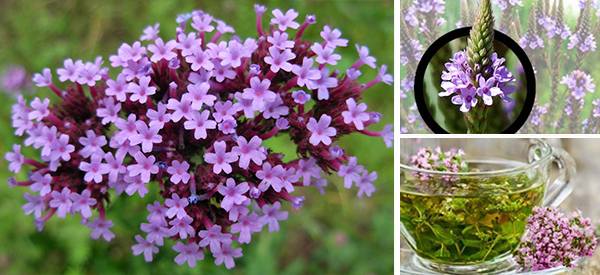
No mention of lavender in the above article? Yet credits in the end?