
Lavender: The Complete Guide to Growing, Harvesting, and Using Nature’s Most Versatile Healing Herb
Lavender (Lavandula) is a flowering, perennial evergreen shrub that is in the same family as mint. Both the blooms and the scent are most distinctive and make this plant popular with gardeners and plant-lovers generally. This plant has a range of uses. It can be used in cooking, for its aromatic properties in the form of potpourri, flower arrangements, or sachets to keep the contents of wardrobes and drawers smelling fresh. 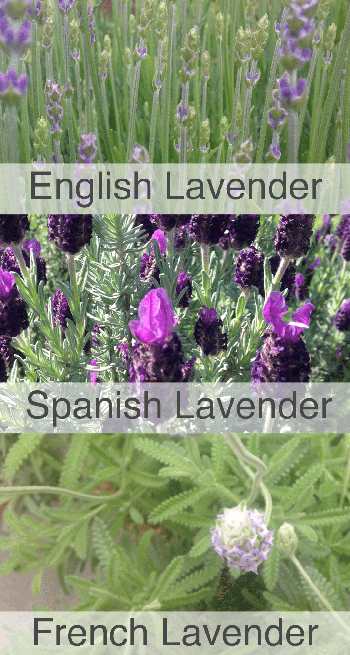
Common types of Lavender
There are a staggering 450 varieties of Lavender arranged in 47 distinct species. There may of course be many that are not classified yet. The most common varieties of Lavender are:
- English Lavender (Lavandula angustifolia) which grows to 24 – 36 inches / 61 – 91 ½ centimeters and has deep blue-purple or light pink or even white blooms
- Spanish Lavender (Lavandula stoechas) which grows to 18 – 24 inches / 46 – 61 centimeters and has deep purple blooms.
- French or Fringed Lavender (Lavandula dentata) which exceeds 36 inches / 91 ½ centimeters in height and has light purple flowers
The range of varieties and cultivars means there are Lavender plants to suit every person’s preference in terms of color, size, and fragrance.
The Remarkable History of Lavender
Few plants have a recorded history as long, as rich, or as widespread as lavender. Its story spans continents, millennia, and some of the most significant chapters of human civilization.
- Ancient Origins The earliest documented use of lavender dates back over 2,500 years to the ancient civilizations of the Mediterranean. The Phoenicians, Arabs, and Berbers of North Africa used lavender as a perfume and preservative. Ancient Egyptians incorporated lavender oil into the mummification process — when archaeologists opened Tutankhamun’s tomb in 1922, traces of a scent believed to be lavender were reportedly still detectable after more than 3,000 years. Egyptians also used lavender-infused oils in cosmetics and as offerings to the gods.
- Ancient Greece and Rome The Greeks called the plant nardus or nard, named after the Syrian city of Naarda, and used it extensively in medicinal preparations. The physician Dioscorides, writing in the first century AD, described lavender as a remedy for indigestion, headaches, and throat infections in his landmark work De Materia Medica — a text that remained the authoritative reference for herbal medicine for over 1,500 years.
- The Romans were perhaps the most enthusiastic users of lavender in the ancient world. They used it to scent their famous public baths (the Latin verb lavare, meaning “to wash,” is the most widely accepted root of the word “lavender”), perfume their clothing and bedding, and repel insects. Roman legions carried lavender across Europe as they expanded the empire, introducing the plant to Britain and the rest of northern Europe.
- Medieval Europe During the Middle Ages, lavender became firmly established as both a medicinal and protective herb. It was strewn across the floors of homes, castles, and hospitals — partly for fragrance and partly because it was believed to ward off plague and evil spirits. The great abbess and healer Hildegard of Bingen (1098–1179) wrote extensively about lavender’s medicinal properties, recommending it for headaches, liver problems, and to maintain “a pure character.” Lavender water became one of the most widely used remedies of the era.
- The Black Death During the devastating bubonic plague epidemics that swept Europe in the 14th century and beyond, lavender was used — often desperately — as a protective measure. Glove-makers in Grasse, France, who scented their leather gloves with lavender, were observed to have unusually low rates of cholera infection during later epidemics, leading historians to speculate that the plant’s antimicrobial properties may have offered real, if partial, protection.
- Tudor and Stuart England By the 16th and 17th centuries, lavender cultivation had become a significant industry in England. Queen Elizabeth I reportedly demanded lavender conserve at the royal table year-round, driving the development of sophisticated forcing techniques to extend the growing season. Queen Victoria later popularized the use of lavender as a household fragrance and personal perfume, cementing its association with cleanliness, refinement, and Englishness that persists to this day.
- World War I Lavender experienced a remarkable medicinal revival during World War I, when conventional antiseptics ran desperately short. Medical officers reportedly used lavender essential oil to dress wounds and sterilize surgical equipment on the front lines. The French chemist René-Maurice Gattefossé, who famously treated his own severe burn with lavender oil after a laboratory accident and observed rapid healing, went on to systematically study the therapeutic properties of essential oils — coining the term “aromatherapy” in 1937 and establishing the modern scientific study of plant-based aromatic medicine.
- Today Today, lavender is one of the most commercially important aromatic plants in the world. France’s Provence region remains the spiritual home of lavender cultivation, producing the majority of the world’s high-quality essential oil supply. Bulgaria has emerged as the world’s largest producer of lavender oil by volume. Global demand continues to grow as interest in natural health, aromatherapy, and botanical beauty products accelerates — and as modern science increasingly validates what the ancient world knew all along.
Where this plant is found
Lavender is thought to have originated in the Mediterranean region, India, and the Middle East. However, it is now commonly found worldwide. It is grown commercially in several countries too. There are incidents of this shrub ‘escaping’ gardens and growing wild. While this does not usually cause any problems, Spanish Lavender has become a problem in Australia and is a declared noxious weed in the state of Victoria. The same plant is considered a weed in some parts of Spain.
Related: The Complete Map of Edible Plants: Find Out What You Have in Your Area! (Video)
How to identify Lavender
The exact color of the foliage and both the shape and color of the flower varies from species to species and variety to variety. The same is true of the height of the plant. Fortunately, there are certain basic characteristics that all lavenders share:
- Shape: This shrub forms a compact bush, and most varieties have a natural, rounded shape rather than being straggly.
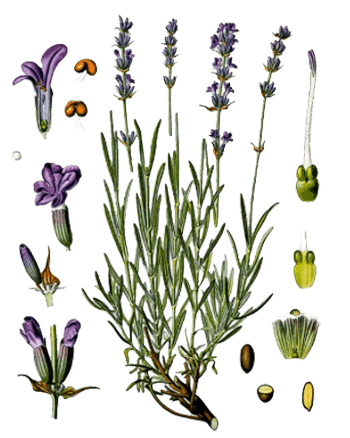
 Leaves: The leaves of Lavender plants are silvery-green. In some varieties, the silver is more dominant and in others, the leaves are greener. In most varieties, the leaves are narrow and elongated. However, a few species have serrated, broader leaves.
- Flower: The flowers appear in summer in upright spikes that form at the end of a stalk. Most blossoms grow along with blunt spikes in a whorl formation consisting of multiple clusters. Each cluster contains 6 to 10 small tube-shaped flowers.
- Stems: The stems are woody can be brittle. They are ideal for propagation.
- Fruit & seeds: Only flowers that have pollinated (usually by bees) will produce the small nut-like fruit that contains seeds. Propagation is rarely achieved with seeds and is carried out using cuttings or dividing and planting roots.
Regardless of the species or variety, the leaves, stems, and flowers are all covered in minute star-shaped hairs (trichomes). These contain the glands that produce the fragrant oil that give Lavender its characteristic fragrance and provides valuable substances used in remedies and beauty and other products.
How to grow this shrub
Lavender is not a challenging plant to grow and can be cultivated either in the garden or in a suitable container. If you are growing outdoors, these shrubs should be planted 3 feet / 90 centimeters apart in:
- Spring as the weather warms up
- a sunny, hot area (they require an average of 8 hours of direct sunlight daily)
- light, loose, sandy, and well-draining soil
- a location that will be sheltered in winter if you live in a colder region
- soil that has an alkaline pH (high acidity levels will kill Lavender)
- an area where the air will circulate around the plant.
Get Your Own Medicinal Seeds, Last 30 Packs Left
If your soil is heavy (loam or clay), use gravel in the soil and plant in a mound to improve drainage. 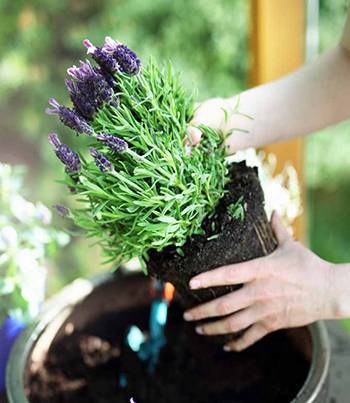 Don’t use organic mulch as the soil needs to dry out. Too much water will compromise the health of the plant or cause the roots to rot.
Overwatering is one of the most common causes of the death of these shrubs. If you are planting in a container, use one that is 12 – 16 inches / 30 – 40 centimeters in diameter. Fill it with high-quality potting soil mixed with a little sand, grit, or gravel and a container that allows effective drainage. Place the container somewhere the plant will receive enough sunlight.
In terms of ongoing care, mature plants may become woody, so you should prune them back by half their height in spring. This promotes new growth and flower formation. Not pruning can result in the shrub sprawling and producing far fewer blooms. In addition, removing spent flowers will encourage continued blooming.
How to harvest, dry, and store Lavender
Harvesting Lavender, regardless of the variety of species, is easy. As a further advantage, the more flowers you pick, the more the plant will bloom and bush.
Harvesting
The best time to harvest flowers is in early spring and when the blooms are still in bud and just beginning to show color. This is important because, although fully opened flower heads are more colorful, they lose some of their fragrance and oil content as they age. As with any crop, it’s best to harvest plant materials in the early morning after the dew has dried but before the heat of the day. To cut flowers: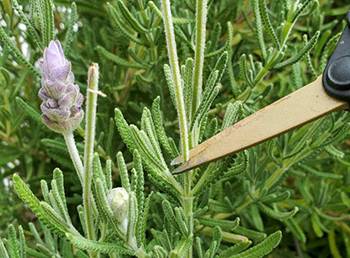
- Select the bloom you want
- Follow the flower stalk downwards until you get to the point where there are side branches, newly forming buds, or leaves
- Use sharp scissors or secateurs to cut off the stalk just above the junction.
For longer stems that include both leaves and flowers, follow the same process as above by identifying a suitable junction further down the stem. You can either place cut lavender in a vase or dry it.
Drying
If you have a bunch of lavender, you can dry it in several ways.
Airdrying: 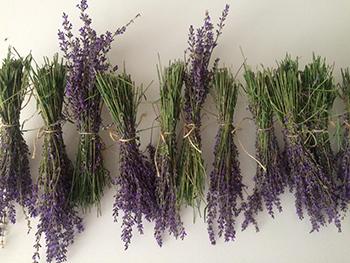
– Bunches can be secured by tying twine or using an elastic band around the stems. Don’t tie them too tightly or air can’t circulate. (Too loose and they will fall apart).
– Hang the bunch(es) upside down to dry in a warm, well-ventilated area and away from direct sunlight. – Don’t make the bunches too large or pack them too closely or they will be slow to dry and make them become moldy.
– This type of drying takes 2 – 4 weeks. You will know the lavender is thoroughly dry if the stems break when bent.
Screen or basket drying: 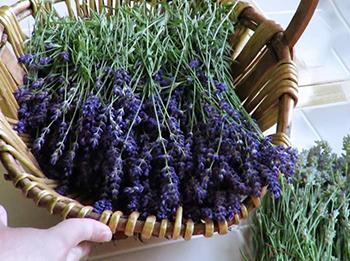
– With this method, the cut lavender is not tied in bunches but laid out loosely- Flowers, buds, or stems are spread out over a suitable rack or cloth or in baskets that allow air to pass through them (for example, wicker or straw baskets).
Alternatively, if you are fortunate enough to own or have access to a food dehydrator you will be able to use it to quickly obtain 100% dry plant material. You should use the lowest setting (1000 Fahrenheit / 37.70 Celsius) to preserve the precious oils.
Storing dried Lavender
If you are not using lavender as a dried floral arrangement, and wish to use it for other applications, remove the dried flowers or buds from the end of the stems and store them in an airtight container. This container should be kept somewhere cool, dry, and dark. Lavender that is stored before it is completely dry may become moldy. If you see any signs of this, throw the plant material away.
Lavender’s Health Benefits
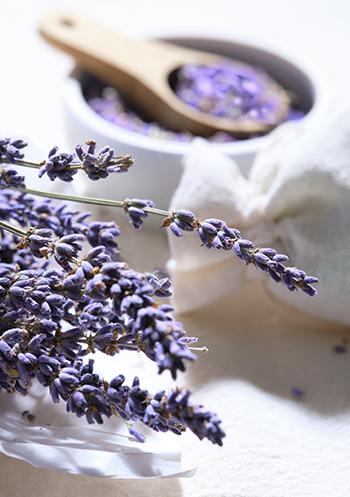 For centuries, lavender was used based on tradition and observation alone. Today, a growing body of scientific research is beginning to validate what healers have known for millennia — and in some cases, the findings are genuinely impressive.
Anxiety and Stress Reduction
One of the most well-researched areas is lavender’s effect on the nervous system. A landmark clinical trial published in the journal Phytomedicine found that Silexan — an oral lavender oil preparation — was as effective as lorazepam (a common prescription anti-anxiety drug) in reducing generalized anxiety disorder symptoms, without the risk of dependency or sedation associated with benzodiazepines. A follow-up study published in the International Journal of Psychiatry in Clinical Practice confirmed these findings across a broader patient group, showing significant reductions in anxiety scores over a 10-week period.
Aromatherapy using lavender essential oil has also demonstrated measurable effects. A study published by the National Institutes of Health (NIH) found that inhaling lavender aroma significantly reduced anxiety levels in patients awaiting dental procedures — one of the most anxiety-provoking clinical settings. Researchers at the University of Miami School of Medicine found that lavender aromatherapy increased beta waves in the brain associated with alertness while simultaneously reducing anxiety scores, suggesting the plant works through direct neurological pathways.
Sleep Improvement
Lavender’s sedative properties have been validated in multiple studies. Research published in the Journal of Alternative and Complementary Medicine found that lavender aromatherapy significantly improved sleep quality in college students with self-reported sleep issues. A separate NIH-indexed study found similar results in elderly patients, a demographic particularly vulnerable to sleep disturbances and reluctant to rely on pharmaceutical sleep aids. The improvement in sleep efficiency, time to fall asleep, and overall sleep quality was statistically significant in both studies.
Antimicrobial and Antifungal Properties
Laboratory research has confirmed that lavender essential oil displays genuine antimicrobial activity. A study in the Journal of Medical Microbiology found that lavender oil was effective against a range of drug-resistant bacteria and fungi, including Candida albicans (a common cause of yeast infections) and dermatophytes responsible for conditions like athlete’s foot. While this research is still largely laboratory-based and clinical human trials are limited, the results are promising enough to support lavender’s traditional use in treating minor fungal skin conditions.
Pain and Inflammation
Research published in the European Journal of Integrative Medicine found that lavender essential oil aromatherapy reduced pain intensity and the need for analgesics in postoperative patients. A separate study on dysmenorrhea (menstrual pain) published in the Journal of Obstetrics and Gynaecology found that topical lavender massage significantly reduced pain compared to a control group, suggesting genuine anti-inflammatory and analgesic properties.
Hair Loss One of the more surprising findings in lavender research involves hair regrowth. A study published in Toxicological Research found that topical application of lavender oil significantly promoted hair growth in mice, outperforming even minoxidil — a common pharmaceutical treatment for hair loss — in some measures. Human clinical trials are still needed, but the results have attracted significant scientific interest.
Important Note: While these studies are encouraging, most involve small sample sizes or laboratory conditions. Lavender should be considered a complementary therapy, not a replacement for medical treatment. Always consult a healthcare professional before using lavender to address a medical condition.
Related: Just Like Xanax, The Anxiety Relieving Plant That Grows In Your Backyard (Video)
Lavender vs. Pharmaceutical Alternatives – How Do They Compare?
One of the most common questions people have about natural remedies is: how does this actually compare to conventional medicine? The table below offers a straightforward, honest comparison across lavender’s most studied applications. It is not intended to suggest you replace prescribed medications with lavender — but it does help you understand where this plant may offer genuine value as a complementary or low-risk first option.
- Condition: Anxiety (mild–moderate)
- Lavender Form: Silexan capsules / aromatherapy
- Pharmaceutical Alternative: Lorazepam, SSRIs
- Lavender Effectiveness: Comparable for mild–moderate anxiety (peer-reviewed)
- Side Effects (Lavender): Minimal; possible skin irritation or headache
- Side Effects (Pharmaceutical): Dependency risk, drowsiness, sexual dysfunction
- Cost Comparison: Lavender significantly cheaper
- Condition: Insomnia / poor sleep
- Lavender Form: Aromatherapy / sleep sachet
- Pharmaceutical Alternative: Zolpidem (Ambien), Melatonin
- Lavender Effectiveness: Effective for mild sleep disruption
- Side Effects (Lavender): Minimal
- Side Effects (Pharmaceutical): Dependency, grogginess, rebound insomnia
- Cost Comparison: Lavender significantly cheaper
- Condition: Mild pain / inflammation
- Lavender Form: Topical oil / aromatherapy
- Pharmaceutical Alternative: NSAIDs (Ibuprofen, Naproxen)
- Lavender Effectiveness: Modest; best for mild, localized pain
- Side Effects (Lavender): Minimal topically
- Side Effects (Pharmaceutical): GI damage, cardiovascular risk with long-term use
- Cost Comparison: Comparable
- Condition: Athlete’s foot / minor fungal infection
- Lavender Form: Essential oil (diluted, topical)
- Pharmaceutical Alternative: Clotrimazole, Terbinafine creams
- Lavender Effectiveness: Promising (lab studies); less proven in humans
- Side Effects (Lavender): Possible skin irritation
- Side Effects (Pharmaceutical): Minimal; occasional skin irritation
- Cost Comparison: Comparable
- Condition: Stress / nervous tension
- Lavender Form: Aromatherapy / tea
- Pharmaceutical Alternative: Beta-blockers, Buspirone
- Lavender Effectiveness: Effective for situational/mild stress
- Side Effects (Lavender): Minimal
- Side Effects (Pharmaceutical): Dizziness, fatigue, dependency risk
- Cost Comparison: Lavender significantly cheaper
- Condition: Acne / oily skin
- Lavender Form: Diluted essential oil (topical)
- Pharmaceutical Alternative: Benzoyl peroxide, Retinoids
- Lavender Effectiveness: Modest antimicrobial effect
- Side Effects (Lavender): Possible irritation if undiluted
- Side Effects (Pharmaceutical): Dryness, peeling, photosensitivity
- Cost Comparison: Lavender significantly cheaper
- Condition: Menstrual pain
- Lavender Form: Topical massage oil
- Pharmaceutical Alternative: Ibuprofen, Naproxen
- Lavender Effectiveness: Significant reduction in pain intensity (clinical study)
- Side Effects (Lavender): Minimal
- Side Effects (Pharmaceutical): GI irritation, cardiovascular risk
- Cost Comparison: Lavender significantly cheaper
Key Takeaway: Lavender performs best as a gentle, low-risk option for mild to moderate conditions, particularly anxiety, sleep, and stress. For severe or persistent medical conditions, pharmaceutical treatments remain the more clinically validated option. The advantage of lavender lies in its minimal side effect profile, low cost, and accessibility — making it an excellent first-line or complementary approach.
What parts of the plant are used in remedies?
The leaves, flowers, and even the smaller stems are used for a range of remedy types such as teas. However, it is the flowers that contain the highest quantities of oils and are therefore processed to produce essential oils so highly prized for use in aromatherapy.
A DIY Lavender recipe
For those times when you are feeling tired, achy, or stressed – or simply want some me-time with a little pampering, a long, relaxing hot or warm bath can be just what you need. To make this a wellness exercise too, using homemade Lavender Bath Salt will really lift your body and mind.
Ingredients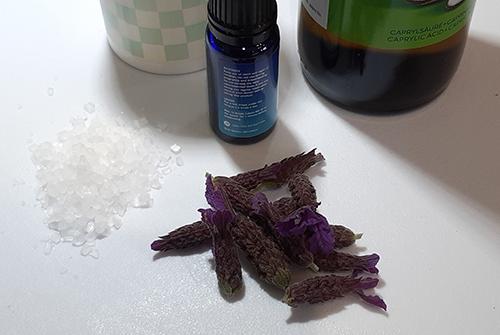
- 2 tablespoons of fresh lavender buds/flowers
- 15 drops of lavender essential oil
- 4 tablespoons of sea salt
- 5 tablespoons of Epsom Salts (you can substitute Baking soda if you need to)
- 1 tablespoon coconut oil (or some other refined, plant-based oil such as almond).
Method
• Combine the sea salt and the Epsom Salts in a bowl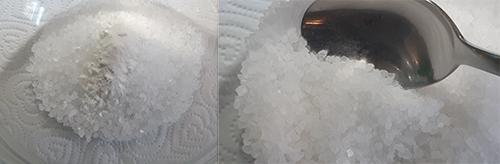 • Add the essential and coconut oils
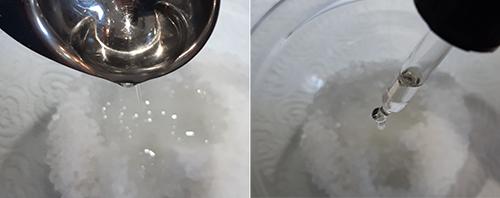 • Scatter the flowers/buds into the bowl
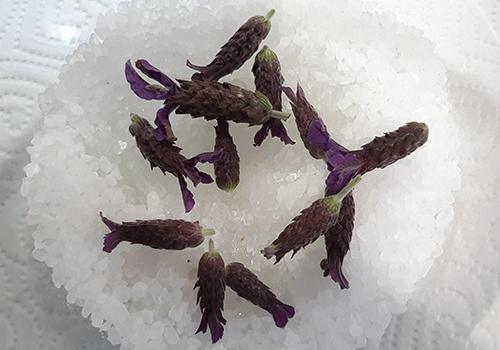 • Mix the ingredients together carefully
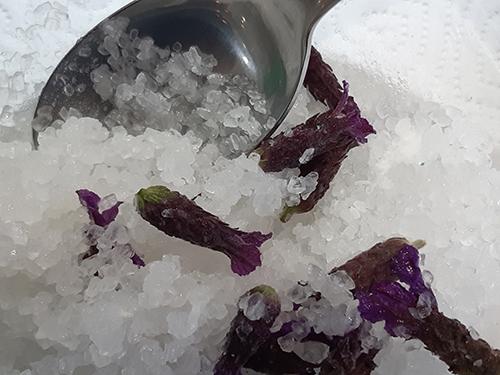 • Spoon the mixture into a suitable container, like a glass jar with a lid.
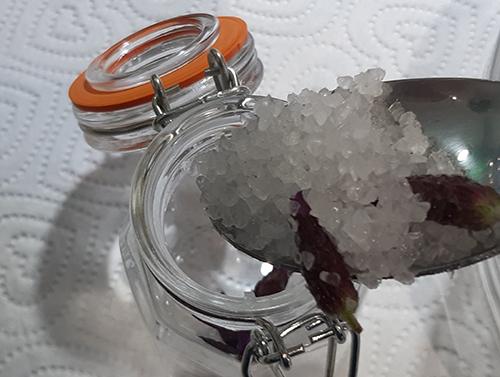 Add a tablespoon or two (depending on how aromatic you like it) to your bath water as it is running so the salts and aroma can circulate. These salts will keep for up to 4 weeks.
Dosage
As with most herbal or plant-based remedies or products, there are no one-size-fits-all doses. How you take or apply a remedy depends on which type you are using and why you are using it.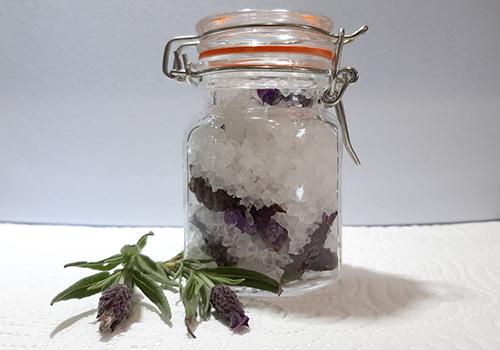 Considering this, and the fact that we are all different, you should be guided by the healthcare practitioner who recommended lavender or can provide advice or by the instructions on any product you purchase.
Finally, only use one form of lavender at a time unless you have been advised to do so by a professional who knows you, your situation, and your needs. Using multiple types can increase the risk of overdosing.
Related: 1 Cup Before Bed Shrinks Belly Fat All Night (Video)
Essential Oil vs. Dried Flowers vs. Fresh Lavender – Which Should You Use?
With so many forms of lavender available, it can be genuinely confusing to know which one is right for your intended use. Each form has distinct strengths, limitations, and appropriate applications. Using the wrong form not only reduces effectiveness — in the case of essential oil, it can even be dangerous.
- Aromatherapy and anxiety relief calls for essential oil, which contains the highest concentration of active compounds. Dilute it before any skin contact and never ingest it undiluted.
- Sleep support is best served by dried flowers in a sachet or pillow, or an essential oil diffuser running overnight. Both provide a slow, sustained scent release. A few drops of essential oil on your pillowcase works just as well.
- Culinary use — including baking, cooking, and teas — requires fresh or dried flowers and buds only. They are safe for consumption and have a mild, pleasant flavor. Always use culinary-grade lavender and never substitute essential oil in food preparation.
- Herbal tea is best made with dried flowers, which are concentrated enough to deliver a therapeutic cup. Use 1 to 2 teaspoons per cup and steep for 10 minutes.
- Topical skin application works best with diluted essential oil or a lavender-infused carrier oil, both of which penetrate the skin effectively. Always dilute essential oil at a ratio of 2 to 3 drops per tablespoon of carrier oil before applying.
- Wound care and minor burns call for diluted essential oil, which brings antimicrobial and anti-inflammatory properties directly to the affected area. It can be applied neat — meaning undiluted — but only to very small areas.
- Bath soaks benefit from a combination of dried flowers and essential oil together. The flowers provide gentle visual appeal and mild ambient scent, while the oil delivers the therapeutic dose. See the bath salt recipe earlier in this article for a complete guide.
- Hair growth and scalp treatments are best done with diluted essential oil, whose active compounds are readily absorbed through the scalp. For enhanced results, combine it with rosemary oil in a carrier oil of your choice.
- Potpourri and home fragrance are ideal uses for dried flowers and stems, which release a long-lasting natural scent without the need for heat or a diffuser. As the scent fades over time, simply refresh the arrangement with a drop or two of essential oil.
- Insect repellent can be achieved either by planting fresh lavender near doors and windows or by diluting essential oil into a spray. The natural linalool content of the plant effectively repels mosquitoes and moths.
A Word on Essential Oil Safety
Lavender essential oil is far more potent than most people realize. It takes approximately 150 pounds (68 kg) of lavender flowers to produce a single pound of essential oil — a level of concentration that demands real respect and care in handling.
Always dilute lavender essential oil in a carrier oil such as coconut, almond, or jojoba before applying it to skin. Never ingest it in its raw form unless it is specifically formulated as an encapsulated supplement by a reputable manufacturer. Keep essential oil stored safely away from children and pets, as it can be toxic in larger doses.
What plants resemble Lavender?
The key features of Lavender are thin leaves, spikes of blue or purple (most often) flowers, and bushy growth. There are a few plants that share one or more of these and may cause confusion, especially when the plant is not in bloom. Many of these look-alikes are edible and have both culinary and healing value.
| Feature | Lavender Lavendula | Russian Sage Perovskia atriplicifolia | Hyssop Hyssopus officinalis | Rosemary Rosmarinus |
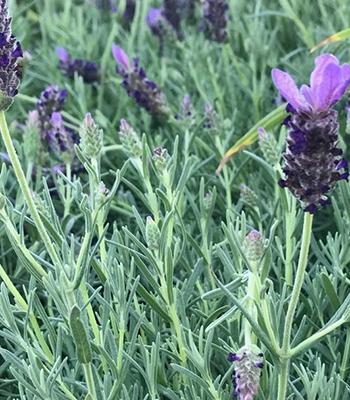 | 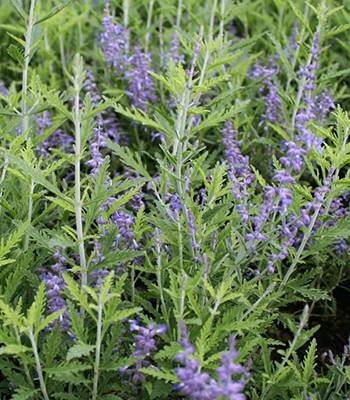 | 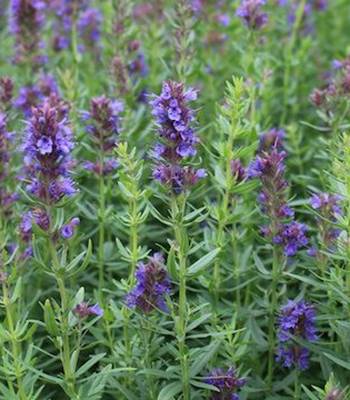 | 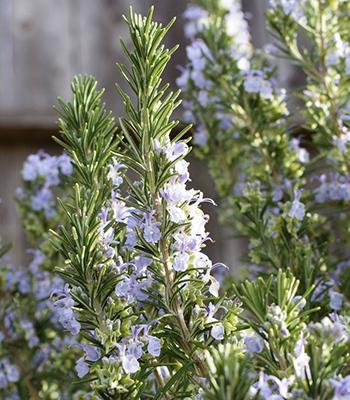 | |
| Size | Height varies depending on species and variety | Reaches 2 – 4 feet / 61 – 122 centimeters in height | Reaches 4 feet / 122 centimeters in height | Reaches a height of 6 – 8 feet / 183 – 244 centimeters |
| Leaves | Silvery-green; narrow in some but serrated in other varieties | Lanceolate leaves; light green; serrated edges; feathery | Opposite leaves & leaflets; thin; pale green; curve up at tip | Dark green upper side, silvery under side; needle-like |
| Flowers | Spikes; flowers form in whorls of multiple clusters; tube-shaped; blue, purple, pink, or white | Form in spiky cluster; buds are pale blue but individual flowers deepen in color as they mature | Flowers are tubular & have two lips; form in whorls on spikes; deep purple | Clusters of pale blue, pink, or white flowers emerge all over the plant, not on stalk ends |
| Warnings | Leaves & flowers are edible; safe limits are not known | The leaves are toxic; the flowers are edible | Leaves & flowers are edible; safe limits are not known | Leaves & flowers are edible; safe limits are not known |
These shrubs or sub-shrubs are all evergreen and welcome additions to the garden.
Common Lavender Problems – Pests, Diseases, and How to Fix Them
Lavender is a relatively tough, low-maintenance plant, but it is not immune to problems. Catching issues early is the key to saving your plants. Here are the most common threats and how to deal with them naturally.
- Root Rot (Phytophthora spp.) Root rot is the single most common cause of lavender death, and it is almost always caused by overwatering or poorly draining soil. Symptoms include yellowing leaves, wilting despite adequate moisture, and a black or brown, mushy root system. Unfortunately, once root rot is advanced, the plant is usually beyond saving. Prevention is everything: ensure your soil drains freely, avoid watering established plants more than once a week, and never let roots sit in standing water. If you catch it early, remove the plant, trim away affected roots, dust with cinnamon (a natural antifungal), and replant in fresh, well-draining soil.
- Gray Mold / Botrytis Blight (Botrytis cinerea) Gray mold appears as a fuzzy, grayish growth on stems, leaves, or flowers — usually during cool, wet conditions or when plants are overcrowded. Improve air circulation around your plants by pruning and ensuring adequate spacing. Remove and dispose of (do not compost) any affected plant material immediately. A diluted neem oil spray can help prevent spread. Avoid overhead watering, and always water at the base of the plant in the morning.
- Lavender Shab (Phoma lavandulae) This fungal disease causes dieback of stems, starting from the tips and moving downward, eventually killing entire branches. It is more common in older, woody plants. Prune affected stems back to healthy growth using sterilized tools, and dispose of clippings. Improve drainage and avoid overhead watering to reduce future risk.
- Aphids Aphids are small, soft-bodied insects that cluster on new growth and the undersides of leaves, sucking plant sap and leaving behind a sticky residue (honeydew) that attracts mold. A strong blast of water from a hose will dislodge most infestations. Neem oil spray or insecticidal soap are effective natural treatments. Encouraging ladybugs in your garden provides excellent natural aphid control.
- Spittlebugs (Froghoppers) Spittlebugs announce themselves with the distinctive white, frothy “spit” they produce on stems. The nymphs hiding inside this froth feed on plant sap. While they rarely cause serious damage, heavy infestations can weaken plants. Remove the froth and nymphs by hand or with a jet of water. Neem oil spray is effective as a deterrent.
- Xylella fastidiosa This serious bacterial disease, spread by leafhoppers, has become a significant concern for lavender growers in parts of Europe — particularly Italy, France, and Spain. It causes rapid wilting, dieback, and plant death with no cure. Infected plants must be removed and destroyed. If you are in an affected region, source plants from certified disease-free nurseries and monitor for leafhopper activity. There is currently no approved treatment; prevention through plant sourcing and pest management is the only defense.
- Woodiness and Poor Blooming This is less a disease and more a natural aging issue. Lavender plants become increasingly woody over time and, if left unpruned, will produce progressively fewer blooms on long, bare stems. Annual pruning in spring — cutting back by up to one-third to one-half — is the solution. Never cut back into old, brown wood as lavender does not regenerate from dead wood the way many other shrubs do.
Warning And cautions
It’s easy to think that because something is plant-based it is 100% safe. The following warnings and cautions should be kept in mind:
- Lavender Oil should never be ingested as it can be toxic unless it is in capsule form and manufactured by a reputable organization
- Some individuals are allergic to lavender and may suffer headaches, gastric distress, joint pains, or more severe reactions. Topical application may cause a rash in some.
- Due to its sedative qualities, lavender may cause sleepiness and should be avoided if you are driving, operating machinery, etc.
- Don’t use this plant if you are taking sedatives or blood pressure medication.
This list is not exhaustive, and it is possible that other medications – both prescribed and over the counter – may interact with Lavender. The same is true of supplements, herbal products, and even vitamins. It is always better to check with your healthcare provider before you introduce any new remedy or substance into your health program or diet.
Frequently Asked Questions About Lavender
- Is lavender safe for dogs and cats? Lavender in its plant form is generally considered mildly toxic to dogs and cats if ingested in significant quantities, causing nausea, vomiting, and loss of appetite. Lavender essential oil is considerably more dangerous to pets and should never be applied to their skin or used in a diffuser in an enclosed space where pets cannot leave. If you suspect your pet has ingested lavender oil, contact your veterinarian immediately. Small amounts of dried lavender in sachets that pets cannot access are generally considered safe.
- Can you eat lavender? Yes — but only specific culinary varieties, and only the flowers and buds. English lavender (Lavandula angustifolia) is the variety most commonly used in cooking. Lavender has a strong, distinctive floral flavor with slightly sweet and herbal notes. It is used in baked goods, honey, salad dressings, teas, and even cocktails. Start with very small amounts as the flavor is potent and can easily overwhelm a dish. Never use lavender that has been treated with pesticides or other chemicals for culinary purposes, and never use lavender essential oil in food.
- Does lavender really help with anxiety? According to current scientific research, yes — particularly in oral supplement form. Clinical studies on Silexan, an oral lavender oil preparation, have shown results comparable to prescription anti-anxiety medications for mild to moderate generalized anxiety disorder, without the dependency risks. Aromatherapy has also shown measurable effects in reducing situational anxiety in clinical settings. That said, severe or chronic anxiety disorders require professional medical assessment and treatment.
- How long does dried lavender last? Properly dried and stored lavender will retain its fragrance and medicinal properties for approximately one to three years. Store it in an airtight container away from light, heat, and moisture. Lavender used purely for decoration may last longer visually, but its aromatic potency will diminish over time. You can refresh faded sachets or potpourri with a few drops of lavender essential oil.
- Can lavender be grown indoors? Lavender can be grown indoors but it is challenging because the plant requires a minimum of 6 to 8 hours of direct sunlight daily. Most indoor environments cannot provide this without supplemental grow lighting. If you want to try, choose a compact variety like ‘Hidcote’ or ‘Munstead,’ place it in your sunniest south-facing window, ensure excellent drainage, and avoid overwatering. Expect less vigorous growth and fewer blooms than outdoor plants.
- Is lavender a good companion plant? Lavender is an excellent companion plant. Its strong scent naturally deters deer, rabbits, aphids, and certain beetles. At the same time, its abundant flowers are highly attractive to pollinators — bees, butterflies, and hoverflies — making it a valuable addition to any productive garden. Lavender pairs well with roses (it deters aphids that commonly attack roses), sage, thyme, rosemary, and most other Mediterranean herbs that share its preference for well-draining, alkaline soil and full sun.
- What is the difference between lavender essential oil and lavender-infused oil? These are two very different products. Lavender essential oil is produced by steam distillation of lavender flowers, creating a highly concentrated, pure aromatic oil. It is potent, should always be diluted before skin contact, and should never be ingested in its raw form. Lavender-infused oil is made by soaking dried lavender flowers in a carrier oil (such as olive, almond, or jojoba oil) over several weeks. The result is a much milder, diluted product that is safe to apply directly to skin and is excellent for massage, moisturizing, and gentle topical applications.
- How do I know if my lavender is getting too much or too little water? Overwatered lavender typically shows yellowing leaves, a drooping or wilted appearance despite wet soil, and a generally unhealthy, soft look at the base of the plant. Underwatered lavender will show dry, brittle leaves and a gray or brown tinge. In most climates, established lavender plants need watering only once every one to two weeks, and even less in cool or rainy periods. When in doubt, always err on the side of less water — lavender is far more tolerant of drought than of excess moisture.
You may also like:
 Soak Your Troubles Away with Homemade Tub Tea
The 10 Medicinal Seeds You Should Plant for a Complete Backyard Pharmacy (Video)
Organic Homemade Ultra-Moisturizing Cream For Face and Body
Avoid Spring Allergies With These 7 Natural Remedies
30 Anti-Anxiety Remedies You Didn’t Know About

Love the knowledge I am buying in my husband and my meails thanks for all you do
Lavendar has xenoestrogens in it. Men beware! Too much or too frequent use may cause feminizing of males.
thanks for the tip 🙂
So, can it be used in cooking? Can it be added to food? If so, which parts of the plant.
There is some lavender in herbes de Provence!
Worked wonders after my long Monday at work!! Thank you!