

This Plant Numbs Joint Pain Like an Ice Bath
You can’t control what’s in the environment. You can’t control how your joints feel after decades of living. But you can control what you reach for first when pain hits.
When your joints ache or you get a bruise, you probably reach for one of the standard creams from the pharmacy shelf.
But somewhere along the way, we forgot what people reached for before laboratories created synthetic versions. Before there were branded pain gels and topical solutions, there were plants. Natural remedies that eased pain and swelling in no time.
Arnica was one of them. And if you ask an elder mountain healer, he’ll know about it. For centuries, that’s what your ancestors reached for when something hurt.
We almost lost that knowledge. Now, most people don’t even know arnica exists as an option. But what if you could reclaim that choice? What if you could reach for something that works amazingly well, natural, and finally backed up by science?
Arnica is waiting for you to remember. Let’s dive in!
Why You Need To Address Your Joint Pain ASAP!
Joint pain usually gets worse. A little stiffness in the morning becomes pain that follows you through your day. This inflammation makes you hesitate before standing up.
Pain that changes how you move, and when you change how you move to avoid pain, everything else gets affected.
You start doing less. Maybe even climbing stairs becomes something you think twice about. You stop gardening because your hands hurt, or you skip walks with friends because your knees don’t feel right. You can’t play with grandkids the way you want to, and you lie in bed at night feeling the throbbing, and by morning, you’re stiff all over again.
Related: Homemade Advil Salve
The longer you ignore it, the more damage accumulates. Inflammation doesn’t heal on its own… rather, it builds. The joint degrades, and the cartilage thins.
What started as discomfort becomes chronic pain that shapes your entire life. You become someone who “can’t do that anymore.” Your world gets smaller, and you become less and less independent.
The Real Reason Your Joints Keep Hurting
Most people assume joint pain is just aging. Wear and tear. Something you accept and manage. But there’s a specific reason joints deteriorate faster than they should, and it has nothing to do with how old you are.
Your joints are held together by collagen. When your body produces enough of the right kind, your cartilage stays cushioned, your range of motion stays wide, and your joints stay comfortable. When collagen production slows down or drops, the cushioning thins, inflammation creeps in, and that familiar stiffness and ache starts taking over your mornings and evenings.
Also Read: Cattails
The problem is most people try to fix this with store-bought collagen powder. Animal collagen. But here’s what’s interesting: the molecular structure of animal collagen is completely different from the collagen your body actually makes. It’s not the same shape, so it doesn’t have the same effect on your joints.
 What actually helps is supporting your body’s own collagen production from the inside. The right nutrients at the right time. Copper, Vitamin C, Vitamin E, hyaluronic acid, and specific peptides that signal your body to produce more of its own triple helix collagen.
If I were looking for something to support my cartilage from the inside, this is what I’d try.
Click here to see what I mean.
How Arnica Actually Works
Arnica montana is a yellow-orange mountain wildflower. The flower contains about 150 different compounds, many of them anti-inflammatory and antioxidant. One powerful compound, helenalin, directly blocks the body’s inflammatory signals. It shuts down the pathways that create swelling and pain.
When you rub arnica gel on a sore joint, those compounds sink into the skin and start working. The inflammation that’s making your joint stiff and throbbing begins to calm. Users often describe it as a cooling, soothing sensation—like the relief of an ice pack, but without the cold shock.
Make sure to read about Nature’s Ibuprofen
Over a few days of consistent use, you feel less throbbing and more freedom of movement. That’s what arnica can do. And it’s been doing so for centuries.
Since we’re talking about plants that work on pain and inflammation, here are a few things most people never find out:
There’s a plant whose gel numbs your gums exactly like a dentist shot. There’s a plant whose tip tastes like aspirin because it literally contains the same compound. There’s a plant you rub on a joint that redirects blood flow and creates warmth that lubricates from the inside. There’s a plant that stopped a deep knife wound from getting infected on day 42 of a wilderness survival show with no antibiotics nearby.
Each one of these is a real plant with a real mechanism. Most people walk past them without knowing what they’re stepping over.
If you want to know which plant does what and exactly how to use it, it’s all documented in one place with field photographs, identification guides, and step by step preparation instructions for over 207 remedies.
Click here to see what these plants actually do.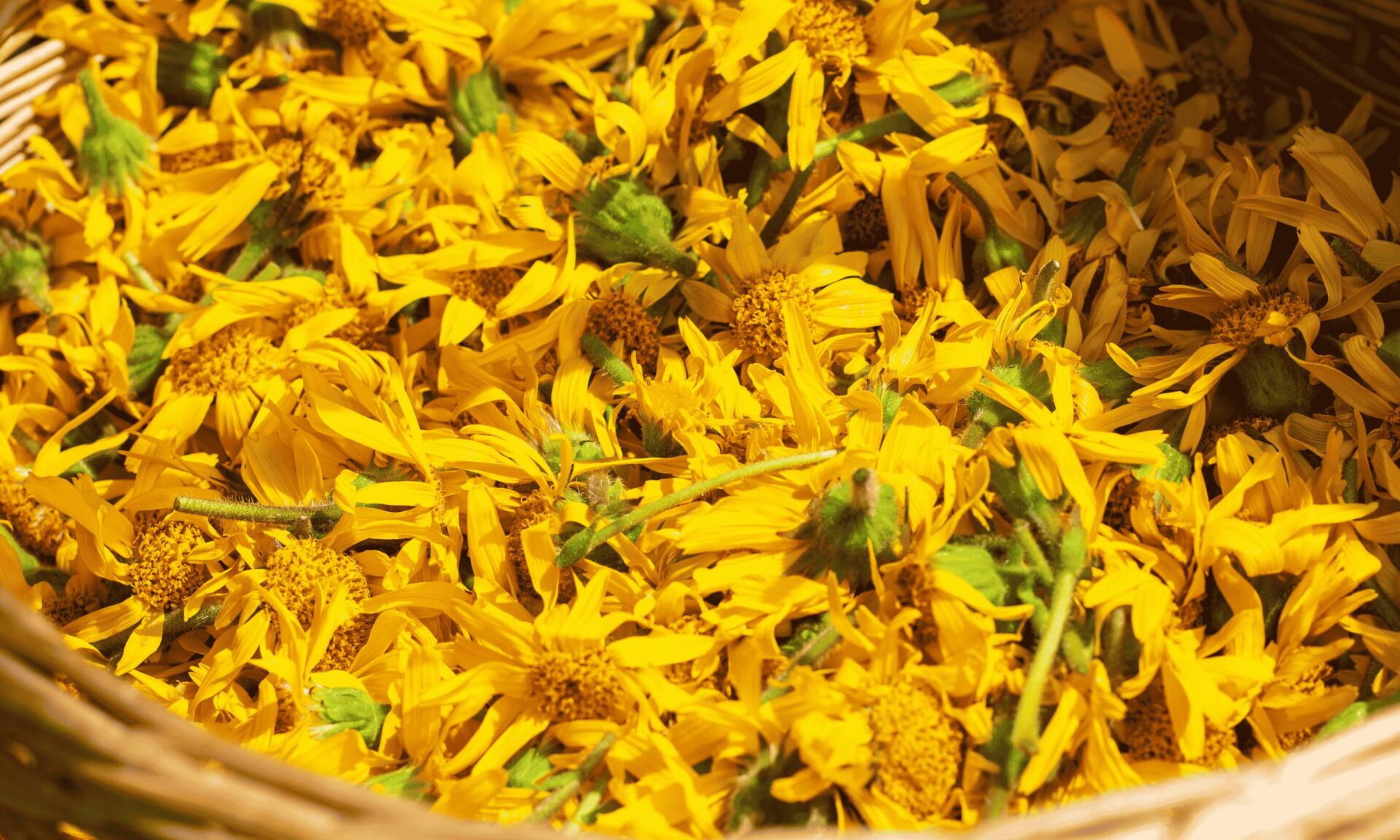
What the Science Actually Shows
Here’s what surprised researchers: Arnica works as well as topical ibuprofen for joint pain.
In a large clinical trial with over 200 people who had hand arthritis, half used arnica gel and half used ibuprofen gel for three weeks. At the end, both groups improved equally. Pain relief was the same. Function improved the same.
The researchers concluded that arnica was “not inferior to ibuprofen.” In other words, the natural plant worked just as effectively as the pharmaceutical cream.
Another trial followed people with knee arthritis who applied arnica gel twice daily for six weeks. Their pain decreased significantly. Their stiffness improved. Their ability to move got better. Seventy-six percent of the people said they’d use it again because it worked and they tolerated it well.
Beyond arthritis, arnica has a reputation for speeding recovery from injuries and trauma. When researchers created bruises on people’s arms, arnica ointment cleared those bruises faster than placebo or even vitamin K creams.
People who had surgery and used arnica had less swelling afterward. Athletes use it for sprains and muscle soreness. The pattern is consistent: arnica helps inflammation settle faster.
If you’d rather skip making it yourself, Nicole Apelian’s All-Purpose Salve contains arnica as its base, boosted with additional herbs known for their antibacterial and antifungal properties. Everything organic, wild-harvested, made in small batches.
The difference between a store-bought arnica gel and this is the same difference between a factory supplement and something made with actual care. You can feel it.
Click here to get Nicole’s Arnica Salve.
Why This Matters
You’ve probably lived with joint pain long enough to know what works for you and what doesn’t. You’ve probably tried things. Maybe your stomach doesn’t handle certain pain medications well. Maybe you’re tired of relying on pills every time something aches. Maybe you just want something gentler that still actually works.
Arnica gives you that option. It’s not a miracle cure that works overnight. It’s a slow, steady easing of pain and swelling over days of use. But it’s real. It’s backed by clinical trials. And it’s something you can control—something you can reach for, rub on your skin, and feel working without any of the worry about what it’s doing to your body internally.
Make Your Own Arnica Salve
If you want, you can make your own salve at home using just a few simple ingredients. It’s nothing complicated, just plants, oil, and a little beeswax to give it the right texture.
This recipe makes a generous batch that will last you several months. The whole process takes about a week if you do a slow infusion, or just a few hours if you use gentle heat. Either way, you end up with a golden, soothing salve that’s ready whenever your joints need it.
Homemade Arnica Salve
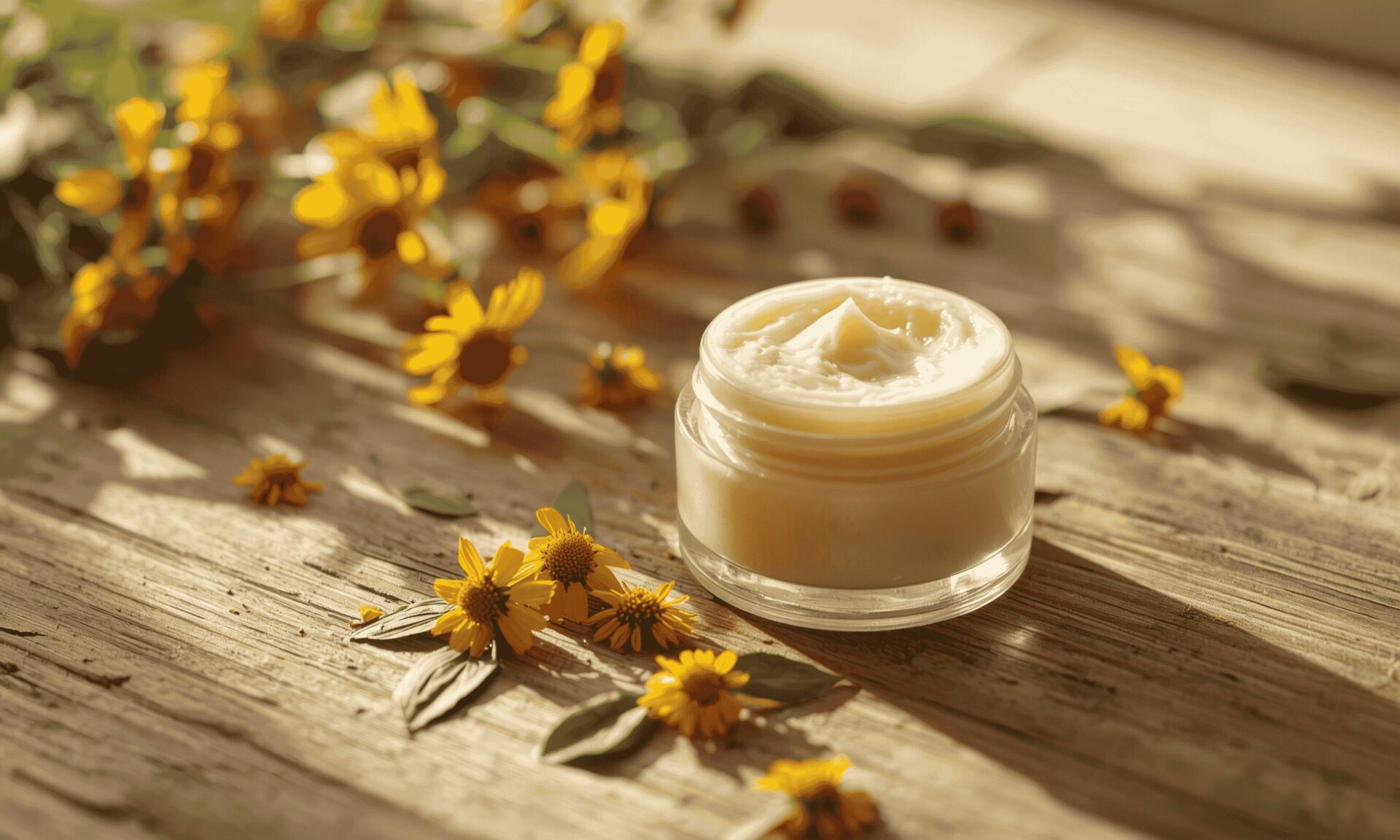
A simple arnica salve for aching joints and bruises
Ingredients
- 1/2 cup dried arnica flowers
- 1 cup olive or coconut oil
- 3 tbsp beeswax pellets
Instructions
- Infuse the oil: Make sure arnica flowers are completely dry. Place in a glass jar with the oil. Infuse at room temperature for 5-7 days (shaking daily) or in a warm water bath for 2-3 hours until oil turns golden.
- Strain: Strain out all flowers through fine mesh. Make sure no plant material remains in the oil.
- Melt beeswax: Pour infused oil into a pot. Add beeswax pellets. Heat gently over low heat, stirring until melted and blended.
- Cool and store: Pour warm salve into clean glass jars. Let cool completely (1-2 hours), then cap and label with date.
- Use: Apply pea-sized amount to joints or bruises 2-3 times daily. Never use on broken skin.
Notes: Use completely dry flowers. Room temperature infusion takes 5-7 days; gentle heat takes 2-3 hours. Store in cool, dark place. Label with date made.
If you made the salve above, you already know what arnica can do on its own.
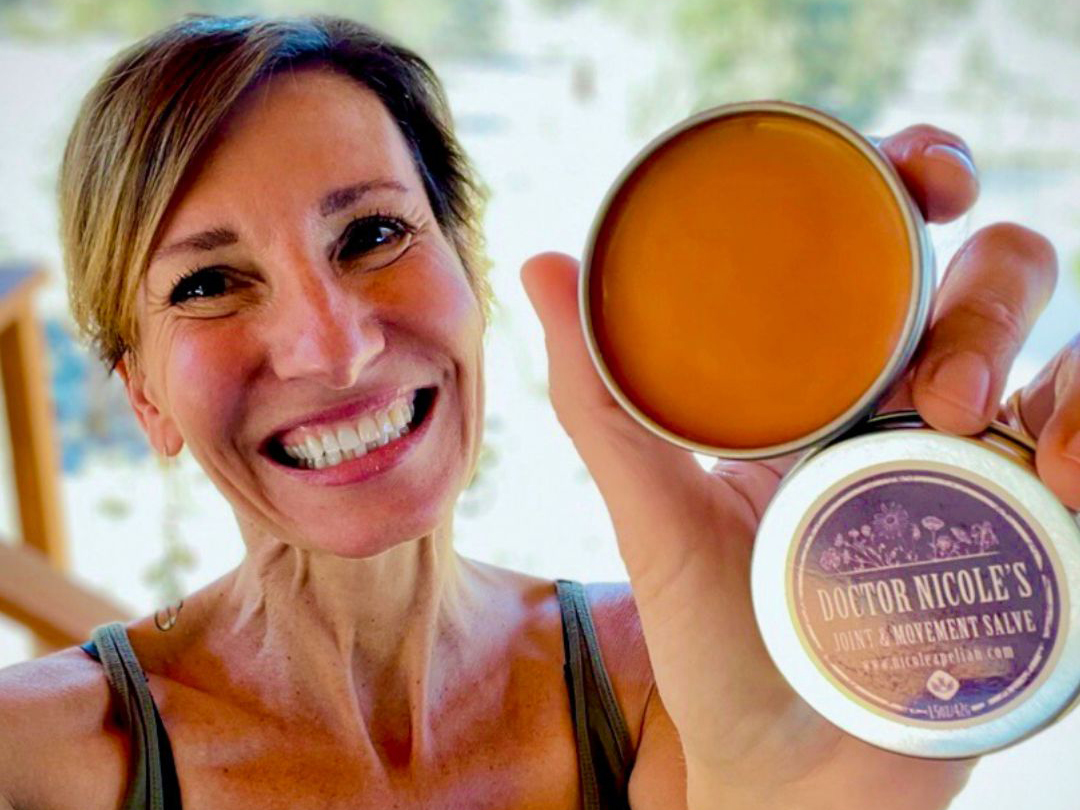 Nicole Apelian’s Joint & Movement Salve has arnica in it, but also calendula, St. John’s Wort, cottonwood buds, cayenne for directing blood flow deep into the joint, helichrysum, frankincense essential oil, and Vitamin E. All organic, all wild-harvested or organically grown, in a 2-ounce tin.
People call it a miracle worker. 43 reviews, all five stars.
If you want the complete version without sourcing eight ingredients separately, it’s right here.
Click here to get the Joint & Movement Salve.
The Choice Is Yours
Your ancestors knew something about that bright mountain flower. They used it because it worked. For centuries, it was just part of how people managed pain and swelling.
You can reach for what the pharmacy has. Or you can reach for what worked for generations before laboratories existed. Both are options. The difference is that arnica lets you choose something older, something gentler, something that carries the weight of time-tested wisdom.
When your joints ache next time, you’ll have a choice. You might remember that choice is yours to make.
If you’re the kind of person who just made this salve from scratch, here’s what else you should know about.
The Forgotten Home Apothecary has an entire Musculoskeletal shelf with remedies that go further than topical arnica:
- Better Than Collagen – reinforces joint cushioning while rebuilding joint and ligament strength
- Bone-Strengthening Juice – supports bone density and protects against fractures as you age
- Painkiller in a Jar – quickly eases muscle aches and joint pain
- Amish Ibuprofen – calms inflammation and stiffness naturally for long-lasting relief
- Joint Pain Reliever – targets deep-rooted discomfort and restores mobility in stiff joints
- Grandma’s Hot Salve for Back Pain – soothes tight muscles and eases tension within minutes
Your ancestors didn’t have ibuprofen. They had these.
Click here to get The Forgotten Home Apothecary.
References: Information drawn from clinical trials comparing arnica to ibuprofen for hand and knee arthritis, research on arnica’s anti-inflammatory compounds, studies on arnica for bruising and injury recovery, and traditional herbal medicine documentation.
You may also like: 
The ‘Nerve Oil’ You Should Use For Shaky Hands
Never Do This Before Going To Sleep (Video)
Parasites 101: Signs, Dangers & Natural Remedies That Actually Work
The Mushroom That Can Regrow Brain Tissue
🌿 Join Our Private Herbal Community For Free. 👉 Click here!
Safety Note: Topical arnica is safe for short-term use on unbroken skin. Never ingest arnica. If you’re pregnant, nursing, on blood thinners, or have skin conditions in the area, check with a healthcare provider first. Always tell your doctor what you’re using, especially before surgery.

What’s the best thing to take for pins and needles in your legs and feet?