Melatonin has become almost synonymous with sleep.
Can’t fall asleep? Take melatonin.
Traveling? Melatonin.
Woke up at 2 a.m. again? Maybe another gummy.
But I don’t think every difficult night automatically means your body needs more melatonin.
Melatonin is a hormone your body naturally produces to help regulate your sleep-wake rhythm. And supplemental melatonin certainly has its place, especially when your internal clock is out of sync.
But when the real problem is a mind that refuses to switch off, tension you carried into bed, or that strange feeling of being exhausted yet somehow still wired, I tend to look elsewhere first.
Because some of the oldest calming herbs are beginning to look surprisingly interesting under modern research.
Why This Matters For You
Sleep is not dead time. While you sleep, your body is busy repairing tissue, supporting immune function, regulating hormones, consolidating memory, and helping your brain process emotion.
When you repeatedly cut that process short, or spend enough nights tossing, waking, and never reaching truly restorative sleep, the effects can start reaching far beyond feeling tired the next morning.
Poor or insufficient sleep has been associated with higher risks of depression and anxiety, impaired concentration and memory, weakened immune function, metabolic problems, cardiovascular disease, and poorer overall health.
That is why I don’t think persistent bad sleep is something to simply “live with.” If you regularly wake up exhausted, struggle to fall asleep, or feel like your sleep isn’t restoring you, it deserves your attention now, not months from now when exhaustion has become your normal.
That is exactly why I wanted to put these herbs on your radar.
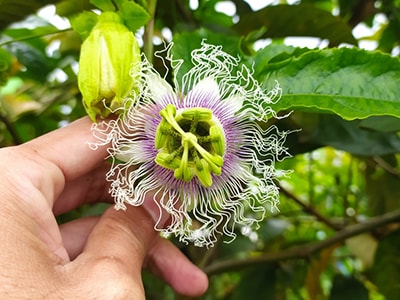
1. Passionflower
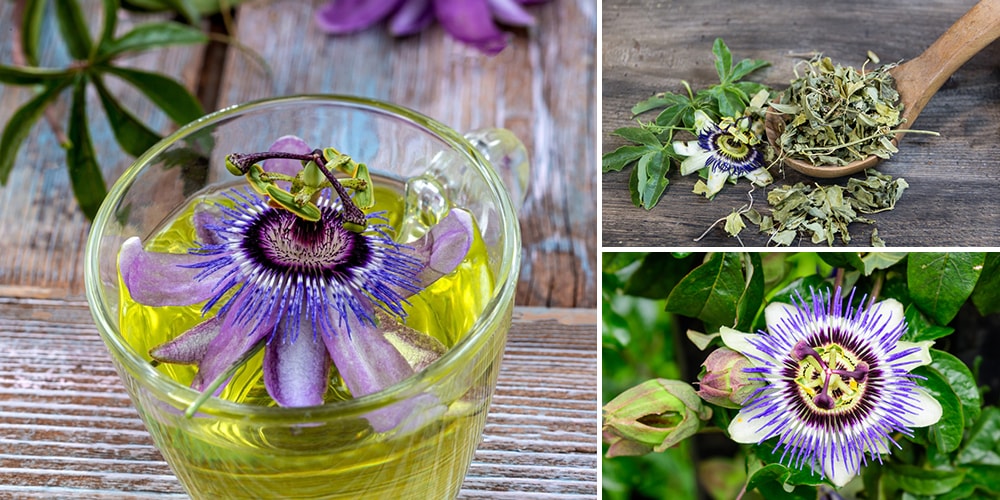
If your body feels tired but your mind keeps replaying the day, passionflower is one of the first herbs I think about.
Traditionally, it has been used as a calming herb rather than simply as something that “knocks you out.” That distinction matters.
You don’t necessarily want to force yourself unconscious. Sometimes you need to quiet the mental noise that is standing between you and sleep.
In adults with insomnia, passionflower extract has been associated with increased total sleep time. Passionflower tea has also been linked with better perceived sleep quality.
That makes this one particularly interesting for those nights when nervous energy seems to follow you all the way into bed.
I like it as a tea in the evening, although concentrated extracts have also been studied.
2. Ashwagandha
Ashwagandha takes a different route.
I wouldn’t think of it as a traditional knockout herb. I think of it more as something for the person whose nervous system has forgotten how to come down from the day.
That may be exactly why it has attracted so much attention for sleep.
Across randomized trials, ashwagandha extract has been associated with improvements in sleep quality, sleep onset, sleep efficiency, and anxiety. The effects appear especially interesting in people already struggling with insomnia and in studies lasting several weeks rather than a single night.
In other words, this may be less about taking something 20 minutes before bed and more about supporting a calmer baseline over time.
That is a very different approach from chasing sleep night after night.
Daily stress has a way of following you into bed.
The bills. The family worries. The emotional load. The “I’ll deal with it tomorrow” thoughts that somehow get louder the moment your head touches the pillow.
That’s why I like the idea of bringing several traditionally calming herbs together instead of focusing on just one.
Nicole’s ready-made calming tincture brings together ashwagandha, lemon balm, and adaptogenic mushrooms traditionally used for stress resilience and a calmer nervous system.
It’s not about knocking you out.
It’s about helping your body stop carrying the whole day into the night.
So if stress has been stealing too much of your life lately, this blend may be worth trying.
Saffron probably isn’t the first thing that comes to mind when you picture a sleep herb.
It should at least be on your radar.
Multiple controlled trials have found improvements in sleep quality and insomnia symptoms among adults taking standardized saffron extracts.
One particularly interesting finding is that saffron has also been studied in people dealing with stress and mood difficulties—the exact things that often follow you into the bedroom.
And unlike some older herbal sleep research, saffron now has several relatively modern randomized trials behind it.
If I were making a list of botanicals to watch over the next few years, saffron would be near the top.
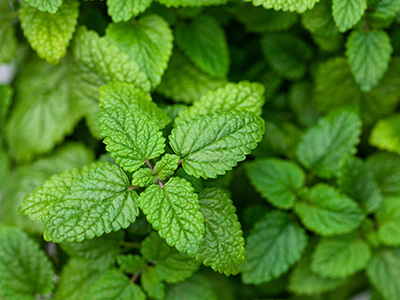
4. Lemon Balm
There is something almost perfectly appropriate about lemon balm being used at the end of a chaotic day.
It has been valued traditionally as a gentle calming herb, and newer research is beginning to catch up with that reputation.
A recent placebo-controlled study using a standardized lemon balm extract found improvements in insomnia severity and reported sleep quality.
Other human trials have also found improvements in sleep disturbances, anxiety, and stress.
That combination matters.
Because you can lie in a perfectly dark room with the perfect pillow and still sleep terribly when your nervous system is running tomorrow’s problems through your head.
Lemon balm is one of my favorite herbs when that seems to be the real issue.
You’ve seen what lemon balm extract did in the study.
Better sleep quality. Lower insomnia severity. Less of that tense, wired feeling that keeps you awake even when your body is exhausted.
Now, Nicole’s tincture is not the exact same extract used in that study, and I don’t want to pretend it is.
But lemon balm is still lemon balm — and when its calming compounds are carefully extracted into tincture form, it becomes much easier to use consistently.
That matters.
Because the herbs that help most are often the ones you actually remember to take.
And if there’s one herbalist I’d trust to make a clean, potent lemon balm tincture, it’s Nicole Apelian.
Most people think of lavender as something you spray on a pillow.
There may be more to it than the smell.
A standardized oral lavender oil preparation has been extensively studied for anxiety-related symptoms, and sleep improved alongside reductions in anxiety.
What’s especially interesting is that the researchers found the sleep benefit appeared to come primarily from the calming effect rather than from simply sedating people.
That’s a distinction I like.
Feeling calmer and becoming sleepy are not necessarily the same thing.
Sometimes sleep comes naturally once the nervous system finally stops fighting it.
Just remember that the strongest research here involves specific standardized oral lavender preparations, so you can’t automatically assume every lavender oil, tea, or supplement will behave the same way.
6. Chamomile
Chamomile almost feels too obvious.
Your grandmother probably didn’t need a randomized trial to make a cup before bed.
Still, the evidence is worth looking at.
A recent review of clinical trials involving hundreds of participants found that chamomile improved overall sleep-quality scores. Several studies also reported easier sleep onset or fewer nighttime awakenings.
It didn’t consistently make people sleep longer, though.
And I actually think that makes the story more believable.
Chamomile isn’t necessarily a herbal sleeping pill.
It is more of an evening ritual with genuine calming potential—something that may help create the conditions in which sleep comes more easily.
Sometimes that’s all you need.
I personally grow my own chamomile because I like knowing where those flowers came from.
No mystery sprays. No dusty old tea bag that’s been sitting in a warehouse for who knows how long.
Just flowers I can pick, dry, and keep for tea the way my grandmother used to do on old newspapers.
And while I first noticed chamomile most for digestion, the sleep research above shows why this little flower deserves a permanent place in your home apothecary.
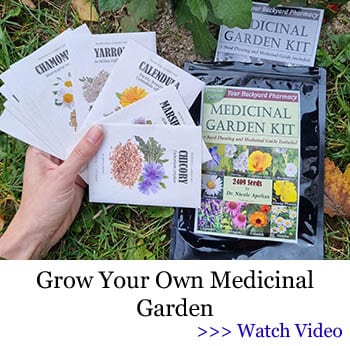
The seed kit I use gives you chamomile plus 9 other medicinal plants, along with a guide that shows you how to turn them into real home remedies.
Valerian may be the most famous herbal sleep aid on this list—and also the most complicated.
Some trials have found meaningful improvements. Others haven’t.
Modern reviews therefore describe the evidence as mixed.
But there are a couple of studies worth knowing about.
In one randomized trial involving more than 200 people with insomnia, a standardized valerian extract produced improvements in sleep quality comparable to low-dose oxazepam, a benzodiazepine medication.
Another U.S. trial compared valerian combined with hops against both placebo and diphenhydramine. The herbal combination showed modest benefits, particularly after longer use, although several differences did not reach statistical significance.
So I would never tell you that valerian has been proven equivalent to sleeping medication across the board.
It hasn’t.
But I also wouldn’t dismiss a plant simply because every trial hasn’t produced the same result.
For me, valerian makes the most sense as one option among several, not the universal answer to insomnia.
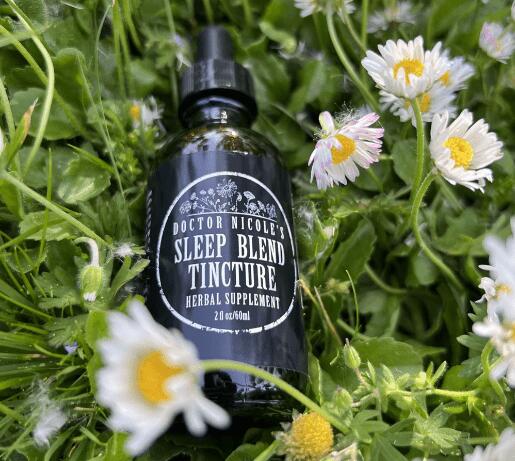
This is the one I’d reach for when sleep itself is the problem.
Not just stress. Not just a busy mind. Not just “I need to relax.”
I mean the whole frustrating cycle: taking too long to fall asleep, waking too often, sleeping lightly, and getting up feeling like the night barely helped.
It brings together valerian root, hops, German chamomile, and passionflower: four herbs from this article, each approaching sleep from a different angle.
Valerian and hops have a long history in sleep formulas.
Chamomile helps create that gentle evening calm.
Passionflower is one of the herbs I think of when the mind keeps replaying the day.
So instead of buying four separate herbs, worrying about quality, waiting weeks for a tincture to infuse, and hoping you got the ratios right, you get them already extracted in one bottle.
No, it’s not the same as a prescription sleeping pill. That’s the point.
It works differently. It supports the body’s own winding-down process instead of forcing the issue.
And because sourcing all these herbs separately can get expensive fast, this is also the most convenient way to try the combination without losing quality.
It’s popular for a reason, so I’ll leave the link for you here.
Melatonin can be useful when your body clock is off.
But if you’re exhausted and still can’t switch your brain off, the problem may not be that you need more melatonin.
Maybe you’re carrying stress into bed. Maybe your nervous system is still running at full speed. Maybe your body needs help winding down, not another signal telling it that it’s nighttime.
That is why I like looking at herbs first.
Passionflower, lemon balm, lavender, valerian, ashwagandha—these aren’t all doing the same thing. Some are traditionally used to calm mental tension. Others may support a more relaxed nervous system or help create the conditions where sleep comes more naturally.
And that matters, because you don’t just want to knock yourself out. You want to wake up feeling like you actually slept.
Melatonin isn’t “bad.” But you also don’t need to assume every bad night is a melatonin problem.
Sometimes the better question is:
What Is Really Keeping You Awake?
Herbs can help.
But sometimes the thing ruining your sleep isn’t a lack of chamomile, valerian, or lemon balm.
It’s the habits around your sleep.
The foods too late at night. The stress you never discharge. The light in your face before bed. The nervous system that never gets a real signal to slow down.
That’s why a full sleep protocol can be more useful than guessing one remedy at a time.
Nicole Apelian developed a detailed sleep protocol that shows you what to do beyond the herbs — the routines, foods, habits, remedies, and small changes that can either support sleep or quietly sabotage it.
And this matters because Nicole isn’t just repeating generic sleep tips. She has lived with MS, pain, stress, and nights where sleep wasn’t simple. So when she talks about building a better routine, it comes from real life, not theory.
The protocol helps you look at the bigger question:
Not just “what herb should I take?”
But “what is keeping my body from resting in the first place?”
Passionflower and objectively measured sleep in adults with insomnia — randomized, double-blind, placebo-controlled trial, International Clinical Psychopharmacology.PubMed study
Passionflower tea and sleep quality — double-blind, placebo-controlled trial.PubMed study
Ashwagandha and sleep — systematic review and meta-analysis of five randomized controlled trials involving 400 participants.PubMed review
Ashwagandha in people with insomnia and anxiety — randomized, placebo-controlled trial.PubMed study
Ashwagandha sleep parameters in healthy adults and people with insomnia — randomized controlled study.PubMed study
Saffron and moderate insomnia — randomized, double-blind, placebo-controlled trial in 165 adults.PubMed study
Saffron and sleep quality, insomnia symptoms, and melatonin concentrations — randomized, placebo-controlled trial.PubMed study
Saffron and sleep quality in adults with poor sleep — randomized, double-blind, placebo-controlled trial published in the Journal of Clinical Sleep Medicine.PubMed study
Lemon balm and sleep quality — double-blind, placebo-controlled crossover trial.PubMed study
Lemon balm and sleep disturbance, anxiety, and stress — double-blind placebo-controlled trial.PubMed study
Oral lavender oil and anxiety-related disturbed sleep — randomized placebo-controlled study.PubMed study
How oral lavender affected sleep through reductions in anxiety — analysis of randomized controlled trial data.PubMed study
Chamomile and sleep — 2024 systematic review and meta-analysis including 10 clinical trials and 772 participants.PubMed review
Valerian compared with oxazepam in insomnia — randomized, double-blind comparative clinical trial.PubMed study
Valerian + hops compared with diphenhydramine and placebo — randomized multicenter clinical trial.PubMed study
2024 umbrella review of valerian for insomnia — useful counterbalance showing why claims about valerian should remain qualified.PubMed review
NIH/NCCIH: Melatonin — What You Need to Know — efficacy, chronic insomnia guidance, safety, interactions, and supplement-label variability.NIH/NCCIH melatonin overview
NIH/NCCIH: Sleep Disorders and Complementary Health Approaches — current summary of melatonin evidence and clinical guideline recommendations.NIH/NCCIH sleep overview
Thanks so much for the list of herbs for sleeping. I’d very much like your opinion about another herb I just found out about: Kanna (Sceletium tortuosum or Mesembryanthemum tortuosum). It’s supposed to be effective for relaxation, sleep, stress, and depression. Do you know anything about it, especially safety, side effects, contraindications, etc. Thanks so much. Mimi
Ray
15 days ago
Hi just wondering when are you going to send your products to Australia.
sharon
3 days ago
I love the sleep blend but, the Valerian root makes me angry and I can’t control it. so I cant take it any more.
We use cookies to ensure that we give you the best experience on our website. If you continue to use this site, we will assume that you are happy with it.
Functional Always active
The technical storage or access is strictly necessary for the legitimate purpose of enabling the use of a specific service explicitly requested by the subscriber or user, or for the sole purpose of carrying out the transmission of a communication over an electronic communications network.
Preferences
The technical storage or access is necessary for the legitimate purpose of storing preferences that are not requested by the subscriber or user.
Statistics
The technical storage or access that is used exclusively for statistical purposes.The technical storage or access that is used exclusively for anonymous statistical purposes. Without a subpoena, voluntary compliance on the part of your Internet Service Provider, or additional records from a third party, information stored or retrieved for this purpose alone cannot usually be used to identify you.
Marketing
The technical storage or access is required to create user profiles to send advertising, or to track the user on a website or across several websites for similar marketing purposes.






Thanks so much for the list of herbs for sleeping. I’d very much like your opinion about another herb I just found out about: Kanna (Sceletium tortuosum or Mesembryanthemum tortuosum). It’s supposed to be effective for relaxation, sleep, stress, and depression. Do you know anything about it, especially safety, side effects, contraindications, etc. Thanks so much. Mimi
Hi just wondering when are you going to send your products to Australia.
I love the sleep blend but, the Valerian root makes me angry and I can’t control it. so I cant take it any more.