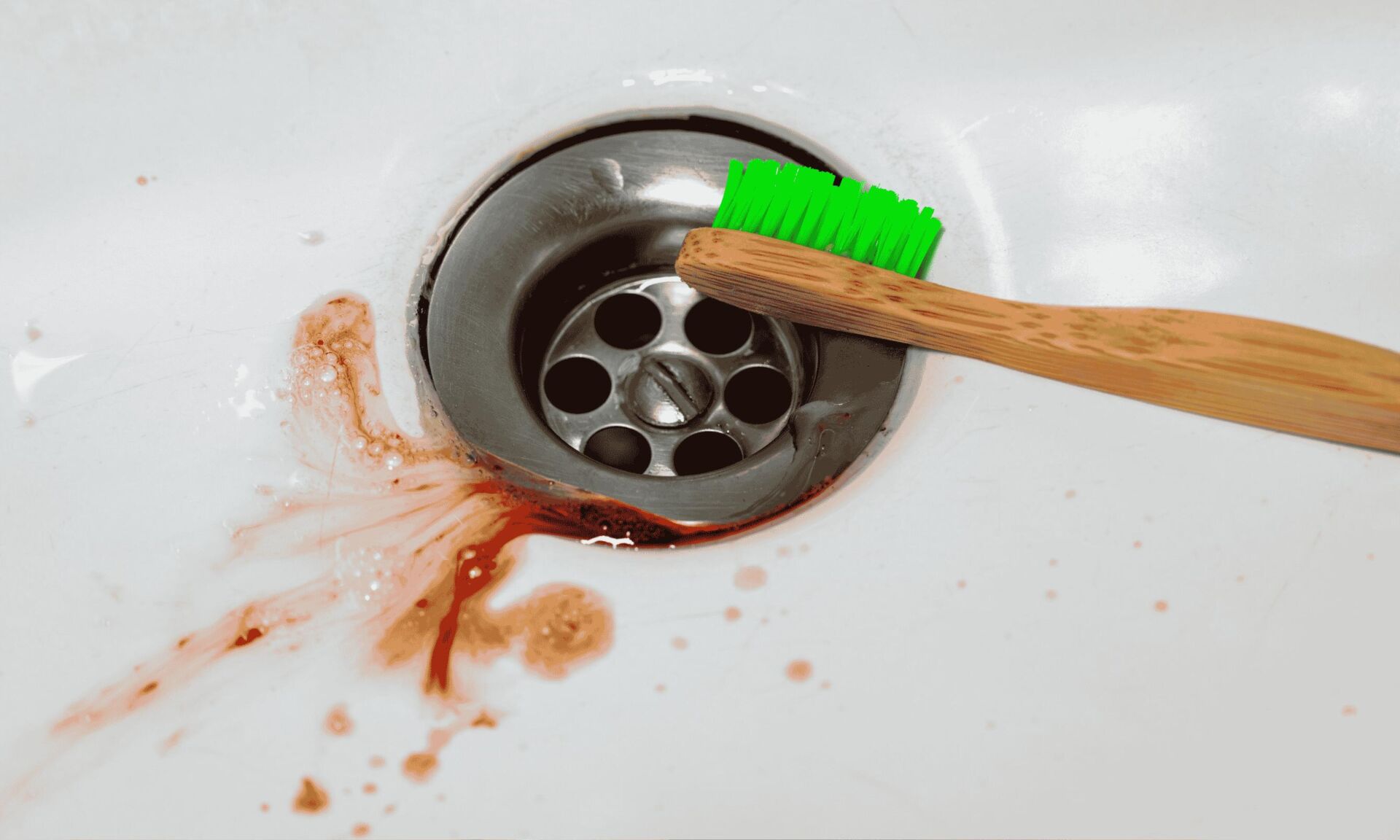
You spit after brushing and see red. Your gums bleed when you floss. Maybe they’re swollen and sore.
Bleeding gums are incredibly common. In most cases, it’s just early-stage gum disease (gingivitis), caused by plaque buildup irritating your gums.
The good news? It’s totally fixable.
The CDC confirms that gingivitis is preventable and usually goes away with daily brushing and flossing. But if your gums are bleeding despite good brushing, adding some natural helpers can make a big difference.
Here’s a DIY herbal tooth powder that soothes irritated gums and helps stop the bleeding.
Why Gums Bleed
Plaque is a sticky bacterial film that builds up on your teeth. When it sits at your gumline, it irritates gums and makes them red, puffy, and prone to bleeding.
If you don’t remove the plaque daily (by brushing and flossing), it hardens into tartar. That’s when gingivitis can turn into periodontitis (serious gum disease that damages bone).
The key is stopping plaque before it causes real damage.
Brushing twice a day and flossing daily is still the gold standard. But certain herbs can give your gums extra support while you stick to those habits.
The Herbs That Support Gum Health
Clove
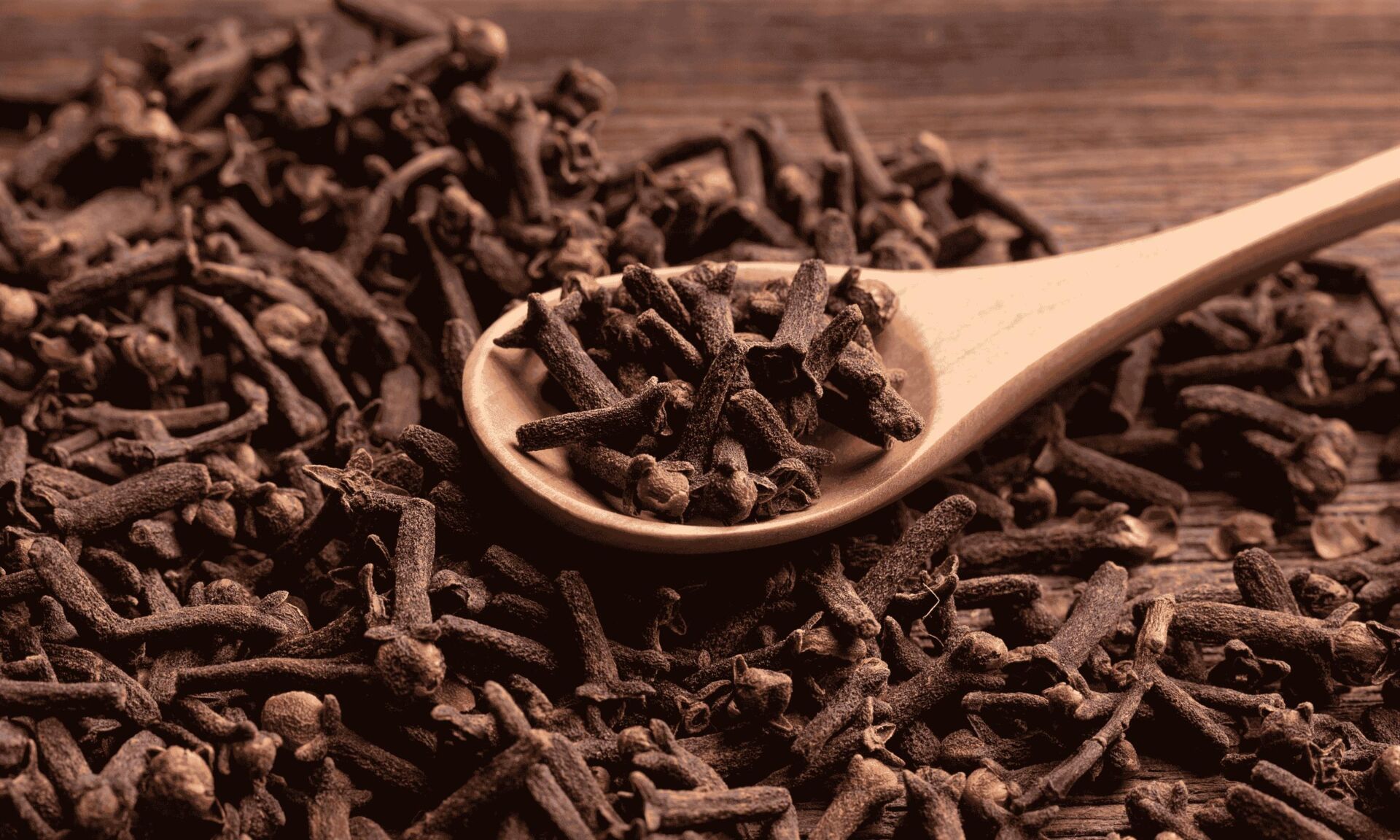
Clove contains eugenol, a natural antiseptic and anti-inflammatory that numbs pain and fights the bacteria causing gingivitis.
Research shows clove calms gum inflammation and even supports bone health in gum disease.
Ever used clove oil for a toothache? Same thing. It works.
You probably already know what clove does to your mouth. Put it near a painful tooth and within a minute, the area goes numb. Keep it there and your breath freshens. It works that fast.
But here’s the thing: if one plant can do that, what else is out there?
You probably already know what clove does to your mouth. Put it near a painful tooth and within a minute, the area goes numb. Keep it there and your breath freshens. It works that fast.
But here’s the thing: if one plant can do that, what else is out there?
Clove is just one. There are thousands of plants, and each one targets something specific. Some handle pain. Others kill infections. Some reduce inflammation, stop bleeding, or heal tissue faster than anything synthetic.
The problem is, most people only know about 5 or 6 of them. Maybe 10 if they’re into herbalism. But the knowledge exists for hundreds more; it’s just scattered, forgotten, or locked away in old texts nobody reads anymore.
That’s why I keep two books on hand that have the complete collection. The Lost Book of Herbal Remedies covers over 800 plants. The Lost Book of Herbal Remedies II adds 139 more plants and 207 powerful remedies you won’t find in the first book. Together, they’re the most complete plant medicine library you can get in one place.
Knowledge is the one thing nobody can take from you. Once you know which plant does what, you have that forever.
Neem has been used as chewing sticks and mouthwash for thousands of years. Modern studies back it up.
Neem extracts kill plaque bacteria and reduce gum swelling and bleeding. One trial found neem gel significantly lowered gum inflammation and stopped bleeding.
Neem’s antibacterial and anti-inflammatory compounds help heal irritated gums.
Turmeric
Turmeric isn’t just a curry spice. It’s a potent anti-inflammatory.
Clinical trials show turmeric significantly reduces gum inflammation and bleeding in people with gingivitis.
It can stain things yellow, so use it carefully in powder form.
Usnea
There’s one herb I need to mention that’s often called “nature’s antibiotic”: Usnea.
This lichen is specifically effective against the bacteria causing gingivitis and gum infections. While clove numbs pain and neem reduces inflammation, usnea actually kills the bacteria at the root of the problem.
You can make usnea tincture yourself: fill a jar with dried usnea, cover with high-proof alcohol (like vodka), seal, and let sit for 4-6 weeks, shaking occasionally. Strain and transfer to a small spray bottle. Spray on your gums 2-3 times daily.
But if you want to skip the 6-week wait and start healing your bleeding gums now, get it here, ready-made.
Aloe Vera
Aloe gel isn’t just for sunburns. Swishing aloe juice or gel soothes irritated gums.
Studies show it works about as well as prescription mouthwash in reducing gingivitis because it calms inflammation.
Peppermint and Cinnamon
These add pleasant flavor and have gentle antiseptic qualities. They freshen breath while providing minor antimicrobial support.
I didn’t truly understand how to unlock the full potential of herbs until Nicole Apelian herself taught me the logic behind remedy-making. Now I can look at any plant and know instinctively how to create a tincture, salve, or tea from it. Now, I don’t need to memorize recipes, because I’ve understood the principles.
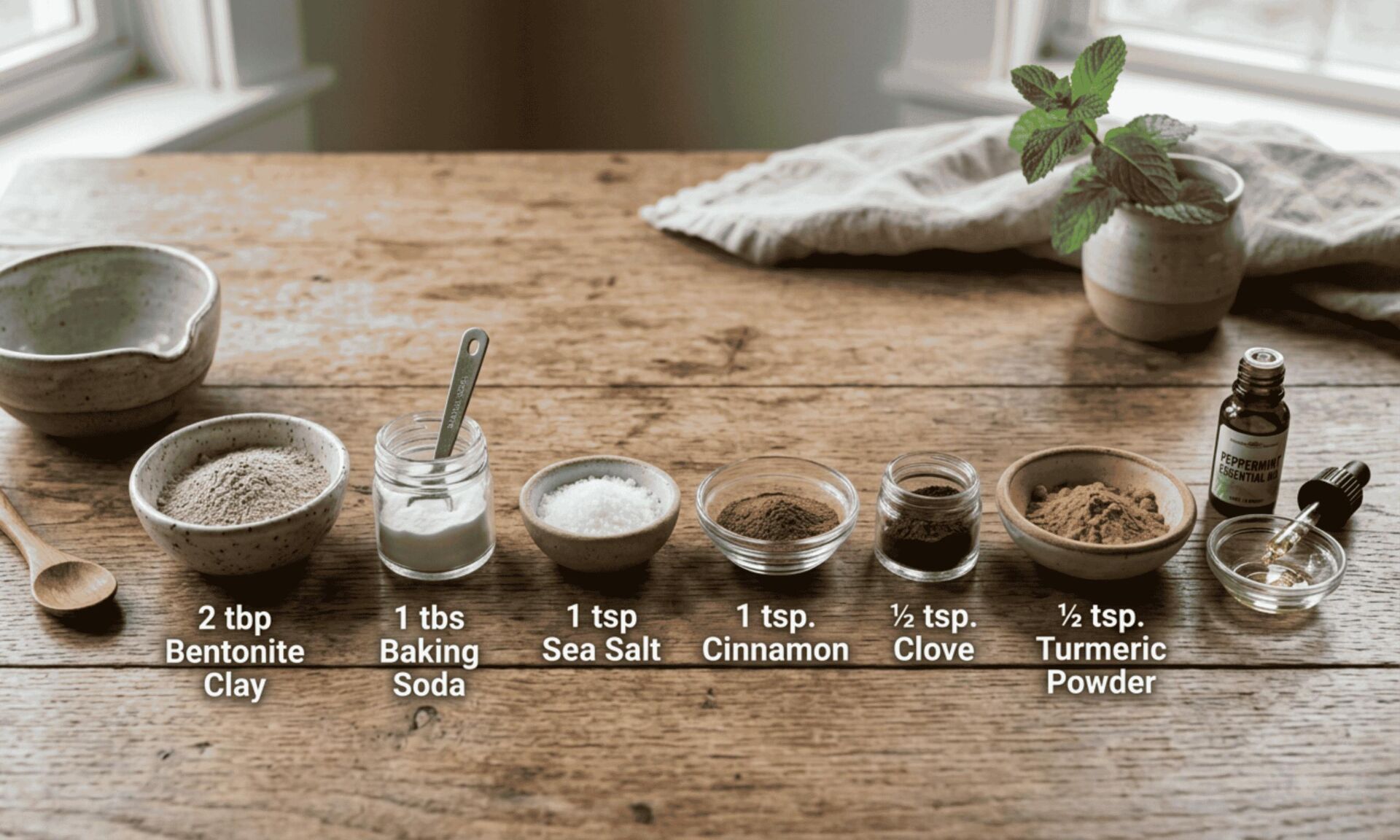
Optional: a few drops of peppermint essential oil for fresh breath
How to make it:
Mix all ingredients thoroughly in a small jar. Store in a cool, dry place to keep moisture out.
How to use it:
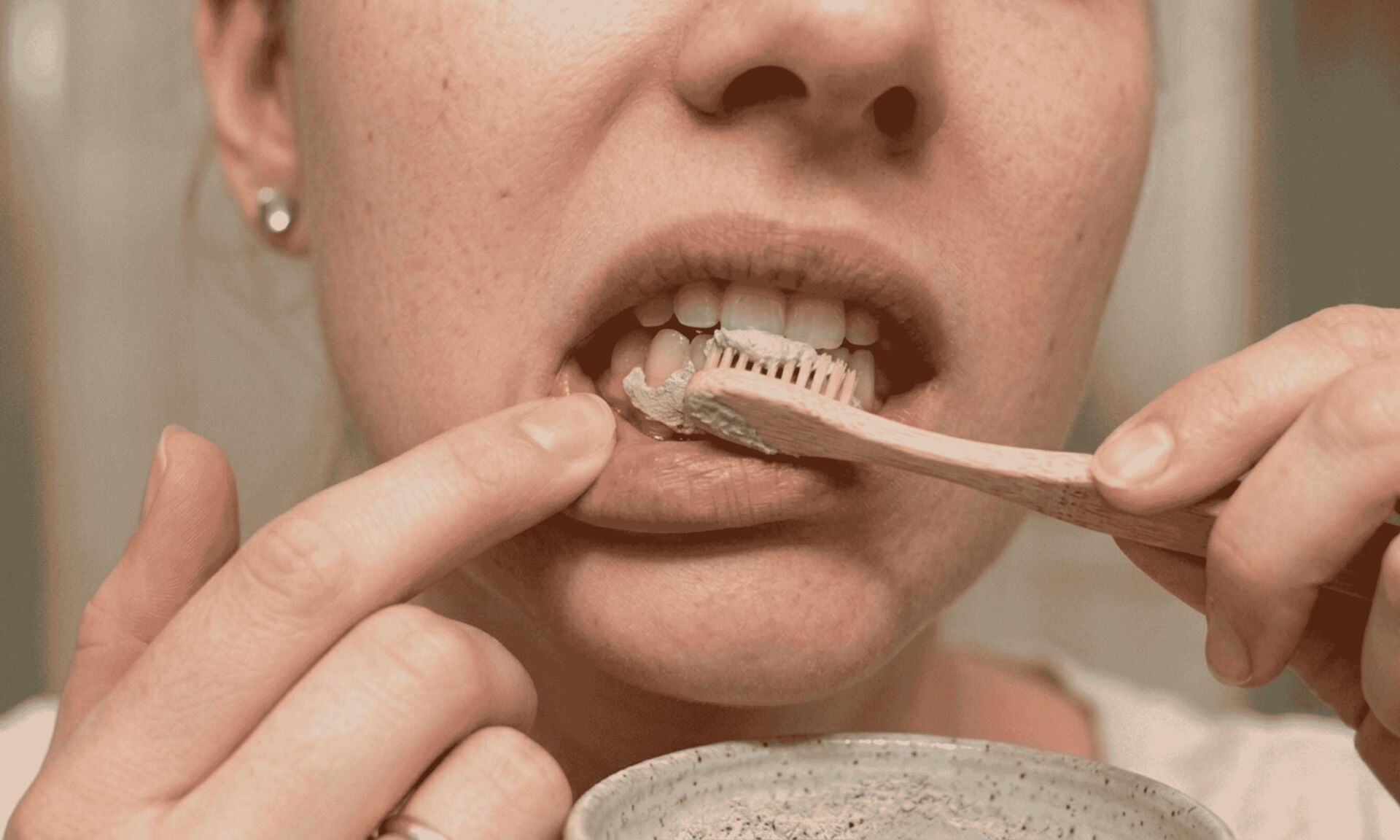
Wet your toothbrush. Dip it into a small amount of powder. Brush gently for 2-3 minutes just like regular toothpaste.
It won’t foam up (that’s normal). Your teeth should feel clean and your gums get the healing herbs directly.
Rinse, spit, and enjoy fresh breath.
Use this once a day or a few times a week in place of regular toothpaste. Keep flossing daily.
The Easier Option
This tooth powder works. But if you want something you can take without mixing, measuring, or storing powders in jars, I found something worth trying.
Imagine getting Xylitol, Grape Seed Extract, Peppermint, Cranberry, and 6 more natural ingredients specifically chosen for your teeth and gums, all in one small capsule. No mess. No preparation. Just a formula backed by clinical research and designed specifically to support healthy gums, oral flora, and strong enamel.
It’s called Biodentex. I tried it, and what I like most is that it works from the inside out. Most dental products work on the surface. This one supports the tissue and bacterial balance underneath.
Studies have also found that people who take their dental health seriously have more energy and a better quality of life as they age. Gum health isn’t just about your mouth. It’s connected to everything.
If you want the DIY route, the powder above is solid. But if you want something simpler that you can just take daily and forget about, this is worth a look.
Your gums should feel less tender within a few days. Bleeding should decrease noticeably within a week or two of consistent use.
If your gums are extra sensitive, adjust the recipe. Double the clay and skip the clove if it’s too strong. Less is more.
Start with this small batch, see how your gums respond, and adjust to taste.
When to see a dentist:
See a dentist if you have mouth ulcers, cuts, serious oral infections, or if bleeding persists after two weeks of good care. This powder is for mild gingivitis, not acute problems.
If you’re on blood thinners or have a bleeding disorder, check with your doctor before using home remedies for bleeding gums.
Pregnant or nursing? Talk to your doctor first before using herbal remedies.
Stop using any ingredient that causes irritation. Every mouth is different.
The Bottom Line
Bleeding gums are usually just plaque irritating your gumline. It’s fixable with good oral hygiene and some herbal support.
The herbs in this tooth powder (clove, neem, turmeric, cinnamon) fight bacteria, reduce inflammation, and help stop bleeding.
Use it consistently alongside daily brushing and flossing. Most people notice their gums stop bleeding within a week or two.
You don’t need expensive treatments. You need a good toothbrush, dental floss, and a jar of herbal tooth powder.
How To Replace Any Personal Care Product
Most personal care products are loaded with chemicals you can’t pronounce. Deodorants with aluminum. Shampoos with sulfates. Lotions with parabens. Mouthwashes with artificial dyes and alcohol. Fluoride everywhere.
What if you could make all of it yourself? Here are just some of the personal care remedies you’ll find in The Forgotten Home Apothecary:
Rosemary Hair Growth Spray
Arnica Salve for Age Spots
Natural Herbal Toothpaste
Gum-Strengthening Mouthwash
“Better Than Botox” Herbal Facial Oil
Natural Deodorant Stick
Natural Herbal Sunscreen
Right now is honestly the best time to get this book. Prices on everything are climbing because of inflation. Books included. This is one of those things you’ll wish you grabbed while it was still affordable.
Plus, if you know someone who’s curious about natural remedies or tired of putting chemicals on their body every day—this makes an incredible gift. You could genuinely change someone’s life by introducing them to plant-based personal care. You might even save their health.
Grac, sometimes you guys focus on making it all so complicated just to sell stuff. Just rinse your mouth with H2O2 after brushing with a soft brush and flossing. Brush softly, swish harshly several times a day. And brush with activated charcoal powder – just use cream or petroleum jelly to keep your lips from staining . A. C . works like a champ and they both will give you whiter teeth! (H2O2 & A.C.) From a retired RDH
We use cookies to ensure that we give you the best experience on our website. If you continue to use this site, we will assume that you are happy with it.
Functional Always active
The technical storage or access is strictly necessary for the legitimate purpose of enabling the use of a specific service explicitly requested by the subscriber or user, or for the sole purpose of carrying out the transmission of a communication over an electronic communications network.
Preferences
The technical storage or access is necessary for the legitimate purpose of storing preferences that are not requested by the subscriber or user.
Statistics
The technical storage or access that is used exclusively for statistical purposes.The technical storage or access that is used exclusively for anonymous statistical purposes. Without a subpoena, voluntary compliance on the part of your Internet Service Provider, or additional records from a third party, information stored or retrieved for this purpose alone cannot usually be used to identify you.
Marketing
The technical storage or access is required to create user profiles to send advertising, or to track the user on a website or across several websites for similar marketing purposes.





Grac, sometimes you guys focus on making it all so complicated just to sell stuff. Just rinse your mouth with H2O2 after brushing with a soft brush and flossing. Brush softly, swish harshly several times a day. And brush with activated charcoal powder – just use cream or petroleum jelly to keep your lips from staining . A. C . works like a champ and they both will give you whiter teeth! (H2O2 & A.C.)
From a retired RDH