
Dandelion Coffee – The Forgotten Brew That Heals From the Ground Up
Dandelions. Most people see them as weeds—those bright yellow flowers popping up in driveways, gardens, and cracks in the sidewalk. But to herbalists and those who cherish natural healing, the humble dandelion is a treasure trove of wellness. In fact, one of the most nourishing and overlooked uses for this plant is something you might not expect: dandelion coffee.
Rich, roasty, caffeine-free, and full of health benefits, dandelion coffee is not only a great coffee substitute—it’s also an age-old remedy that supports digestion, liver health, and detoxification. Our ancestors knew the power of this plant, and now, as we return to the roots of herbal medicine, dandelion coffee is making a well-deserved comeback. In fact, there are several reasons why you may want to pick dandelions. Making coffee is just one of them.
Whether you’re looking to ditch caffeine, soothe your body, or just explore forgotten herbal traditions, dandelion coffee deserves a place in your cup. In this article, we’ll dive deep into what it is, why it’s good for you, how to make it taste amazing, and what our ancestors knew that modern science is finally starting to understand.
Also Learn about: Plantain + Dandelion
What Is Dandelion Coffee?
Despite its name, dandelion coffee doesn’t contain any coffee at all. It’s made from the roasted roots of the dandelion plant (Taraxacum officinale), which have a surprisingly similar taste to traditional coffee: earthy, slightly bitter, and wonderfully aromatic.
Historically, people used roasted dandelion root as a beverage long before modern coffee became widespread. In times of war and scarcity, it was often used as a substitute. But even when coffee was available, many preferred dandelion root for its health benefits and grounding, nourishing properties.
Unlike coffee, which can be acidic and overstimulating for some, dandelion coffee is naturally caffeine-free and gentle on the stomach. It’s one of the few warm beverages that feels indulgent and medicinal at the same time.
The Health Benefits of Dandelion Coffee
Herbalists have long used dandelion root for its powerful effect on the liver, kidneys, and digestive system. Today, scientific studies are beginning to validate what folk medicine has known for centuries. Here’s what makes this plant so special:
1. Supports Liver Function
Dandelion root is considered a natural liver tonic. It helps increase bile production, which supports detoxification and healthy digestion. A well-functioning liver is essential for energy, clear skin, hormonal balance, and overall vitality.
Dandelion coffee is already doing something useful.
But one cup can only take you so far.
The smarter move is to combine dandelion with other classic liver herbs like milk thistle, nettle, and schisandra so you’re supporting the liver from more than one angle.
Doing that yourself means buying four herbs, preparing them separately, and using them consistently.
That gets expensive fast.
A concentrated blend is simply easier and usually cheaper.
Nicole Apelian has worked with medicinal plants for decades, and this is the kind of formula I’d trust from someone like her.
So if you want the easy version, her Liver Blend is the one I’d look at.
2. Aids Digestion
By stimulating the flow of bile and digestive enzymes, dandelion coffee can help relieve bloating, indigestion, and sluggish bowels. Drinking a cup after meals can encourage smoother digestion.
3. Rich in Prebiotics
Dandelion root contains inulin, a natural prebiotic fiber that helps feed the good bacteria in your gut. This supports a healthy microbiome and stronger immune system.
4. Diuretic and Detoxifying
Dandelion is a gentle diuretic, meaning it encourages the kidneys to flush out excess water and toxins. Unlike pharmaceutical diuretics, it also contains potassium, which helps prevent nutrient loss.
5. Balances Blood Sugar
Some studies suggest that dandelion root may help regulate blood sugar levels by improving insulin sensitivity and reducing inflammation.
All of this comes with zero caffeine, no artificial ingredients, and no chemicals—just what the earth provides naturally.
Also read: What Happens When You Put Butter In Your Coffee?
How to Harvest and Prepare Dandelion Root
If you’re lucky enough to live in an area where dandelions grow wild (and pesticide-free), you can easily harvest your own roots. Fall is the best time to dig them up because that’s when the plant stores its energy underground, making the roots more potent.
Here’s how to do it safely:
Choose a clean area. Avoid roadsides or areas sprayed with herbicides.
Use a digging fork or garden trowel to gently loosen the soil around the root and pull the plant out completely.
Wash the roots thoroughly under running water to remove dirt and grit.
Chop the roots into small pieces and let them dry for several days in a warm, well-ventilated space.
Once dry, it’s time to roast and brew.
Once you roast one dandelion root, you start noticing how much medicine is growing right under your nose.
And honestly, growing your own herbs is one of the cheapest ways to keep remedies around.
You plant them once, harvest them, dry them, save seed, and suddenly you’re not paying for every tea, tincture, or dried herb separately.
That’s why I like starting with a small medicinal garden.
Nicole Apelian put together one with 10 medicinal plants and thousands of seeds, including chicory, another root you can roast into a caffeine-free brew.
It’s basically the inexpensive way to turn a patch of soil into your own herbal pantry.
Click here to see the Medicinal Garden Kit.
Recipe: How to Make Delicious Dandelion Coffee

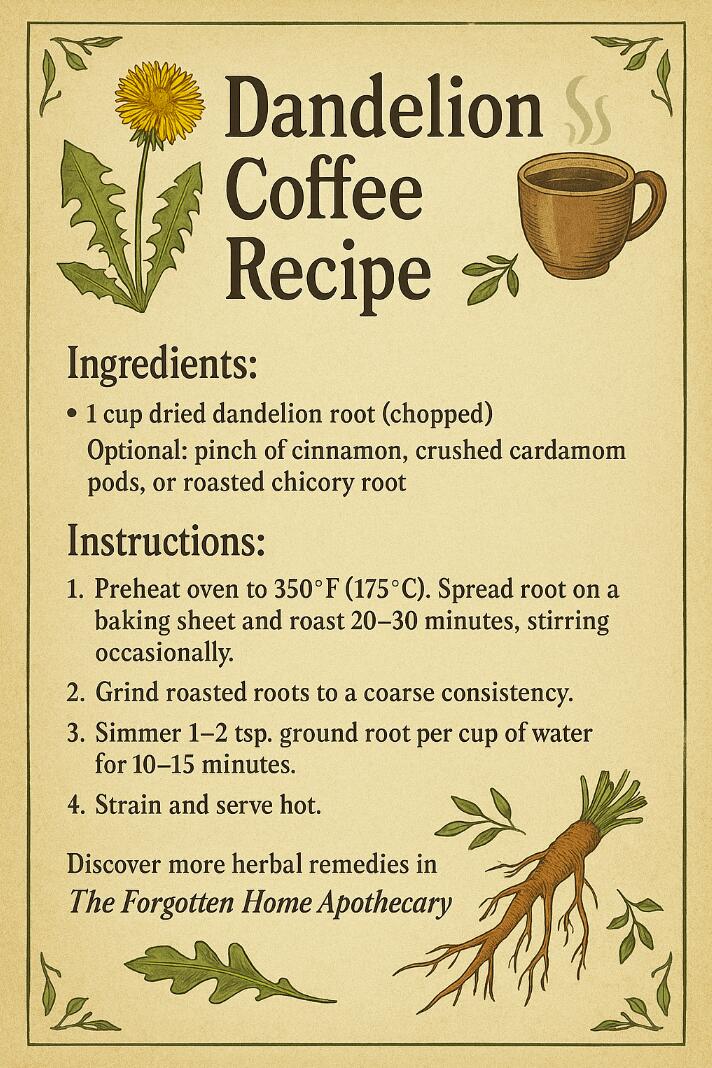
Ingredients:
1 cup dried dandelion root (chopped)
Optional: a pinch of cinnamon, a few crushed cardamom pods, or roasted chicory root (for added flavor)
Instructions:
Roast the roots. Preheat your oven to 350°F (175°C). Spread the dried root pieces on a baking sheet and roast for 20–30 minutes, stirring occasionally. The roots should turn a dark brown color and release a rich, nutty aroma.
Grind the roots. Once cooled, grind the roasted root in a coffee grinder or mortar and pestle until it reaches a coarse coffee-like consistency.
Brew the coffee. Use 1–2 teaspoons of ground dandelion root per cup of water. Simmer in a small saucepan for 10–15 minutes. Strain and serve hot.
Optional Add-ins:
A splash of milk or dairy-free creamer
Raw honey or maple syrup for sweetness
A touch of vanilla or cinnamon
The result? A cup that looks like coffee, tastes like coffee, but feels like a soothing herbal elixir.
You want the recipe in a simple format? Just save the image below and you can print it:
 Want to Learn More About Herbal Remedies Like This?
Making your own dandelion coffee is just one of many ways to reconnect with the healing plants that grow all around us. For centuries, our ancestors turned to the natural world—not pharmacies—for everything from pain relief to energy, immune support, wound healing, and digestion. That wisdom still exists. And you can reclaim it.
Dandelion is just one plant.
That’s what really gets me.
How many more are growing beside your fence, in your lawn, near the sidewalk, or along a trail that you’ve walked past for years?
The value isn’t just knowing one herb.
It’s knowing what you’re looking at before you need it.
Nicole Apelian spent decades studying medicinal plants, and one of the most useful things she put together is a field-style guide with 800+ plants and remedies, plus color photos so you can actually recognize them.
For the amount of knowledge inside, it’s one of the cheapest ways to stop guessing and start learning what’s already growing around you.
It’s called The Lost Book of Herbal Remedies, and you can see it here.
Final Thoughts
Dandelion coffee is more than just a caffeine-free drink. It’s a ritual. A link to the land. A moment of healing in your day. When you sip it, you’re not just nourishing your body—you’re tapping into centuries of herbal wisdom.
So the next time you see a dandelion sprouting up in your yard, don’t pull it in frustration. Pause. Give thanks. And consider digging up the root, roasting it, and letting it warm you from the inside out.
Because sometimes, the weeds we’re taught to hate are actually the healers we need most.
 You May Also Like:
DIY Medicinal Pickled Dandelion
How To Keep Mosquitoes Away With Cattails (Video)
Dandelion Magnesium Balm for Pain Relief