You finish lunch. You can’t brush your teeth right away. Your mouth feels sticky, sugary, like bacteria are throwing a party in there.
So you reach for gum.
But here’s the problem: most commercial gum is loaded with artificial sweeteners, synthetic flavors, and ingredients you can’t pronounce. The “sugar-free” ones might help your teeth, but they’re still processed products with questionable additives.
What if you could make your own gum? With real herbs that have been studied for dental health, no weird chemicals, and ingredients you actually recognize?
Let me show you how.
The Truth About Your Teeth
Here’s a statistic that hits hard: nearly 90% of adults aged 20-64 in the United States have had tooth decay in their permanent teeth. And about 1 in 4 have untreated decay right now.
This isn’t a kids’ problem. It’s an everyone problem.
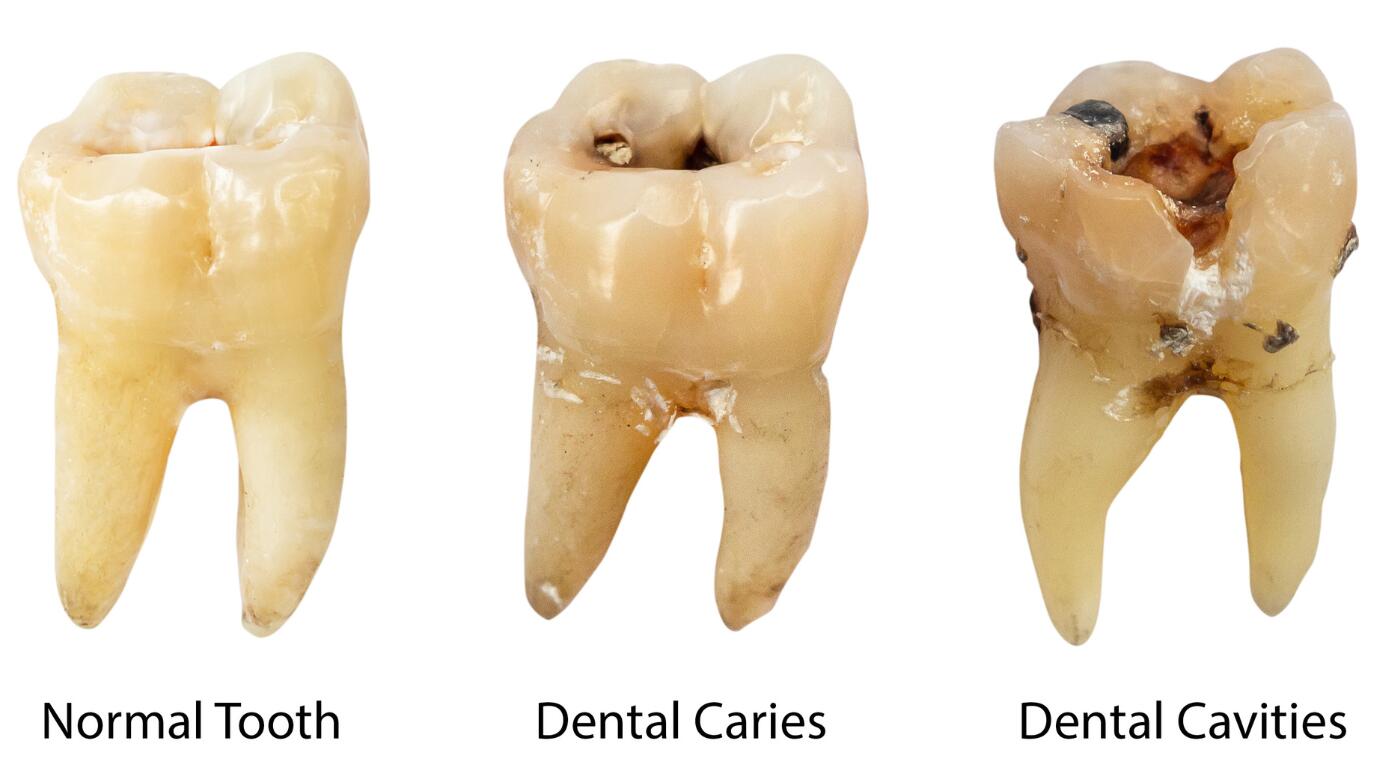
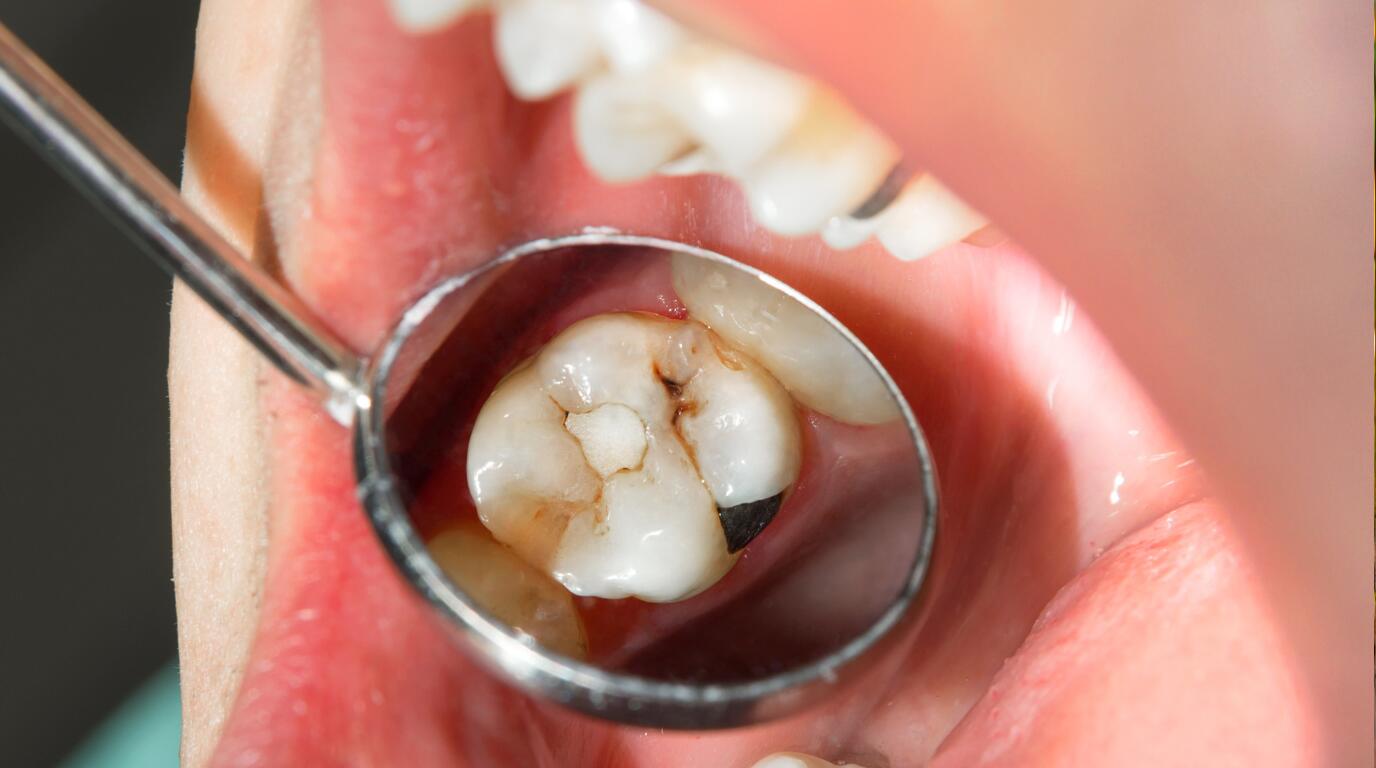
Cavities start when mouth bacteria feed on sugars and starches, turning them into acid. That acid attacks your enamel. If it happens often enough, your enamel keeps losing minerals until the surface finally breaks, and you have a cavity.
Here’s where gum comes in: chewing stimulates saliva. And saliva isn’t just spit—it’s your mouth’s natural defense system. It washes away food particles, buffers acid, and carries calcium and phosphate that help protect your teeth.
Research shows that chewing sugar-free gum after meals has been linked with lower plaque acid and reduced cavity risk. Studies suggest a modest but real cavity-reducing effect, especially when xylitol is involved.
So the idea of using gum for dental health? It’s not nonsense. It’s science.
The problem is what’s in most gum. Sugary gum feeds the bacteria you’re trying to fight. And sugar-free commercial gums are full of artificial everything.
A homemade herbal gum gives you a clean, sugar-free option that works with your mouth’s own defenses—not against them.
There’s one specific plant that’s exceptional at binding to all that chemical buildup—from artificial sweeteners, synthetic additives, and processed ingredients—and flushing it out of your system, along with pounds of other toxins you didn’t even know were there. People report feeling clearer, lighter, less foggy after just one week of using it.
Let’s be honest upfront: this is not a miracle cure.
A homemade herbal gum may help freshen your mouth, stimulate saliva, and gently support a healthier oral environment. But it cannot repair a hole in your tooth. Early enamel damage might still be reversible with proper care. Once a cavity forms, it’s permanent damage that needs a dentist.
If you have pain, swelling, a visible dark hole in a tooth, fever, or sensitivity that’s getting worse—see a dentist. This is not kitchen-craft territory.
The strongest foundation for cavity prevention is still:
Limiting added sugar
Brushing twice daily
Flossing or cleaning between teeth
Using fluoride toothpaste
This herbal gum is an add-on after meals. Not a replacement for basic dental care.
Now that we’ve set realistic expectations, let’s talk about the herbs that actually earn their place here.
But First: Why Do You Keep Getting Cavities And Why Gum Isn’t Enough
Most people reach for gum to mask bad breath or freshen their mouth after a meal. And that’s fine—it helps. But here’s what they don’t realize: bad breath and cavities aren’t random. They’re symptoms of deeper issues happening in your mouth and body.
Chewing herbal gum can support your teeth after meals, but if you don’t address the root causes, you’re just fighting the same battle over and over. Here’s what’s actually causing the damage:
Sugar and starches — Bacteria feed on them and produce acid.
Dry mouth — Less saliva means less natural protection. Medications, mouth breathing, and dehydration all contribute.
Caffeine, alcohol, and acidic foods — Coffee, wine, citrus, and tomatoes lower your mouth’s pH and weaken enamel over time.
Mouth breathing and snoring — Dries out your mouth overnight, leaving your teeth vulnerable for hours.
Dental braces and retainers — They trap food and make proper cleaning harder.
Acid from your gut — This is the one most people don’t connect. Acid reflux, heartburn, or eating disorders that include repeated vomiting send stomach acid up into your mouth. That acid doesn’t just cause discomfort—it literally dissolves your enamel from the inside.
Here’s what most dentists won’t tell you: the real solution to tooth decay isn’t just better brushing—it’s fixing what’s happening in your gut. Acid reflux, heartburn, and digestive issues are eroding your enamel from the inside out. You brush twice a day, chew sugar-free gum, and still get cavities? That’s why.
A proper anti-inflammatory diet addresses the root cause.
But if you need immediate relief while you fix your diet, thisBalanced Gut Tincture has been a game-changer for people dealing with acid reflux and heartburn.
It contains reishi, turkey tail, plantain, slippery elm, marshmallow, and lion’s mane, all herbs that soothe your intestinal tract and stop that acid from coming back up. Less acid reflux means less enamel erosion. It’s that simple.
The Herbs That Actually Work for Dental Health
Mastic: The Star Ingredient
If one herb deserves center stage, it’s mastic.
Mastic is a chewable plant resin from the mastic tree (Pistacia lentiscus), and it has a practical advantage: it behaves like gum because it basically is natural gum. People in the Mediterranean have been chewing mastic for centuries.
But more importantly? Research backs it up.
Studies have repeatedly shown that mastic is associated with less plaque and lower levels of cavity-causing bacteria like Streptococcus mutans. Mastic-based gums have also been linked with more favorable saliva conditions.
That makes mastic the perfect backbone for a DIY formula that needs to be both herbal and genuinely chewable.
Usnea: Probably Nature’s Most Powerful Antibacterial
There’s one herb I need to mention that’s often called “nature’s antibiotic”: Usnea.
This lichen is specifically effective against Streptococcus mutans, the exact bacteria responsible for most cavities. While licorice fights bacteria and oil pulling reduces plaque, usnea actually kills the bacteria causing decay in the first place.
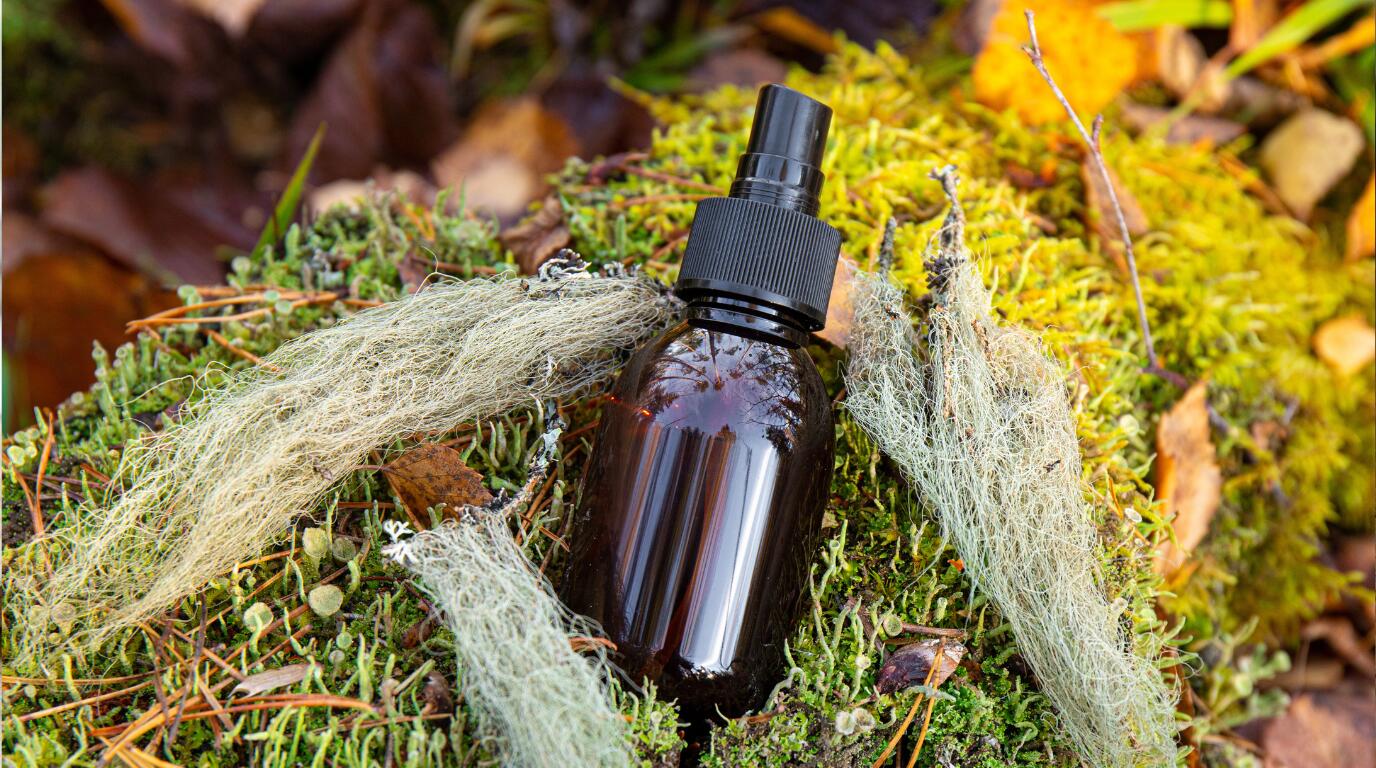
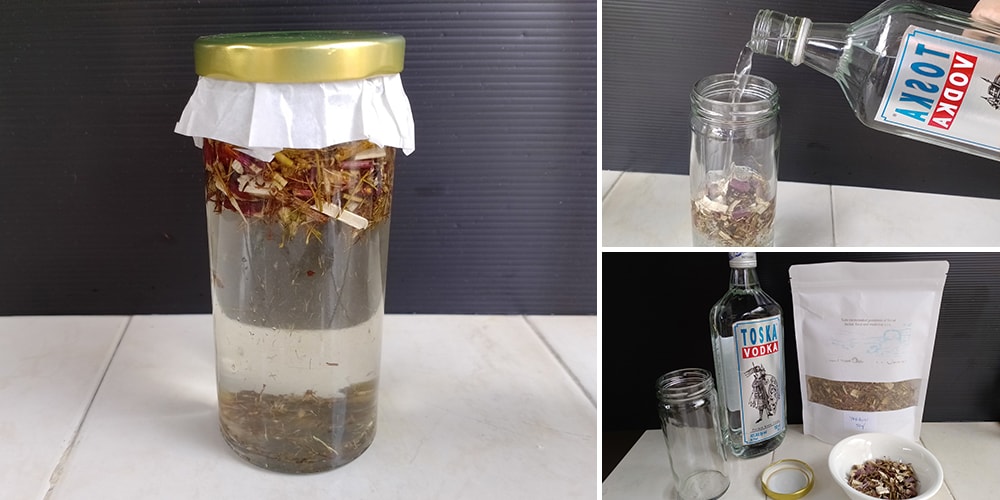
To make usnea tincture: fill a jar with dried usnea, cover with high-proof alcohol (like vodka), seal, and let sit for 4-6 weeks, shaking occasionally. Strain and transfer to a small spray bottle. Spray between your teeth and on your gums 2-3 times daily.
But if you want to skip the 6-week wait and start saving your receding gums and decaying teeth now, get it here ready-made.
Green Tea: The Supporting Player
Green tea has been studied for oral health, and the results are promising. Green tea chewing gum improved plaque and gum inflammation in clinical trials.
In this homemade gum, we’re using matcha or finely powdered green tea in small amounts—enough for gentle antimicrobial support and flavor, not as an aggressive treatment.
Sage: The Subtle Helper
Sage has shown activity against S. mutans in dental plaque. Like green tea, we’re using it in culinary-style amounts—gentle support, not a pharmaceutical dose.
Licorice: Use Carefully
Licorice extract has shown activity against cavity-causing bacteria. But here’s the catch: regular licorice root can affect blood pressure.
If you’re pregnant, have high blood pressure, or take certain medications, skip the licorice or use deglycyrrhizinated (DGL) licorice in tiny amounts. This isn’t a carefree everyday herb for everyone.
Clove: A Tiny Touch
Clove brings that familiar dental-office warmth and slight numbing sensation. But concentrated clove oil is easy to overdo—it can irritate your mouth or become unsafe in larger amounts.
In this recipe, clove is optional and used in trace amounts only.
The Recipe: Herbal Chewing Gum That Actually Chews
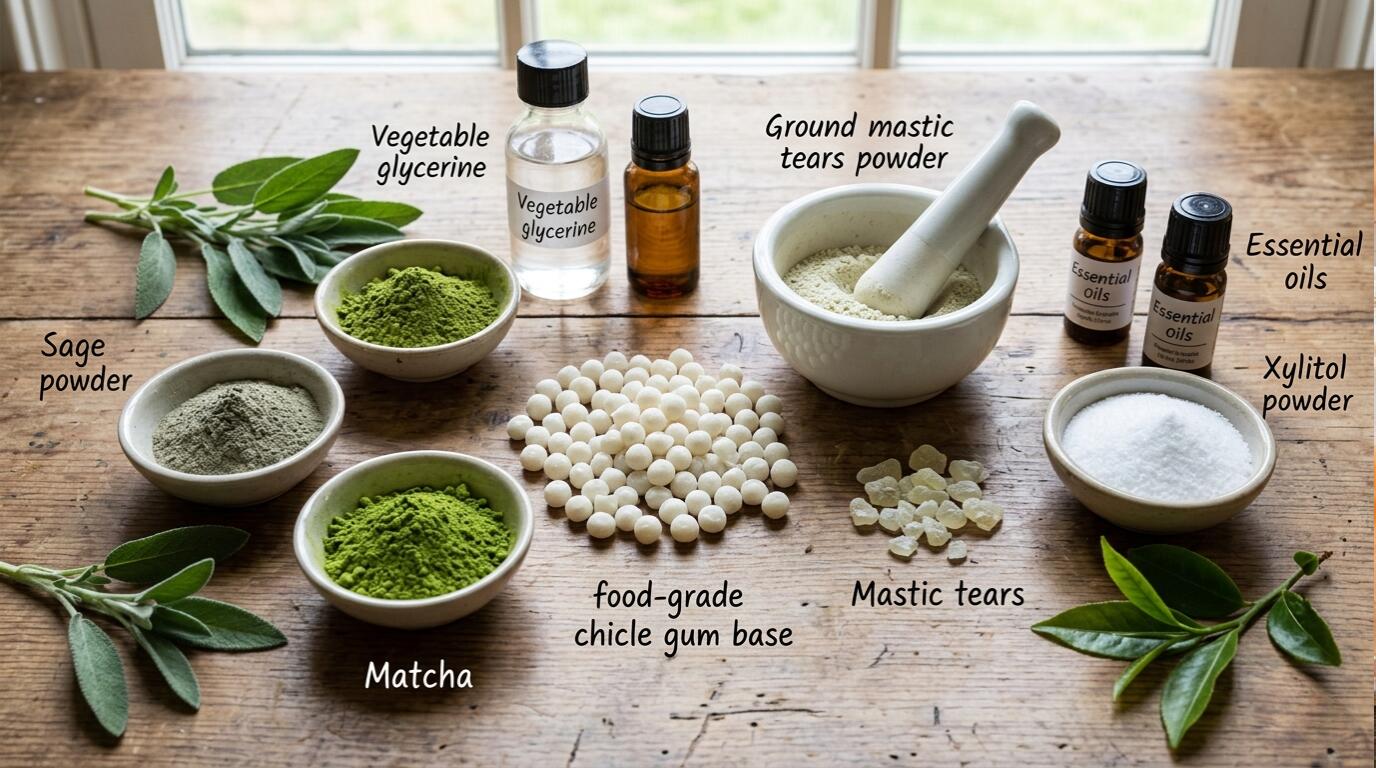
For this to work as real gum, you need a natural gum base. Food-grade chicle works well. And if you want the absolute simplest version? You can chew purified food-grade mastic tears on their own.
DIY Herbal Dental Gum
Ingredients:
30 g food-grade chicle gum base
1 tsp mastic tears, ground to fine powder
2 tsp xylitol powder (optional but helpful for cavity prevention)
1/2 tsp matcha or very finely sifted green tea powder
1/4 tsp finely sifted sage powder
1 tsp vegetable glycerine
1 drop clove essential oil OR 2 drops peppermint oil (optional)
Instructions:
Step 1: Grind the mastic tears with the xylitol first. This prevents the resin from clumping.
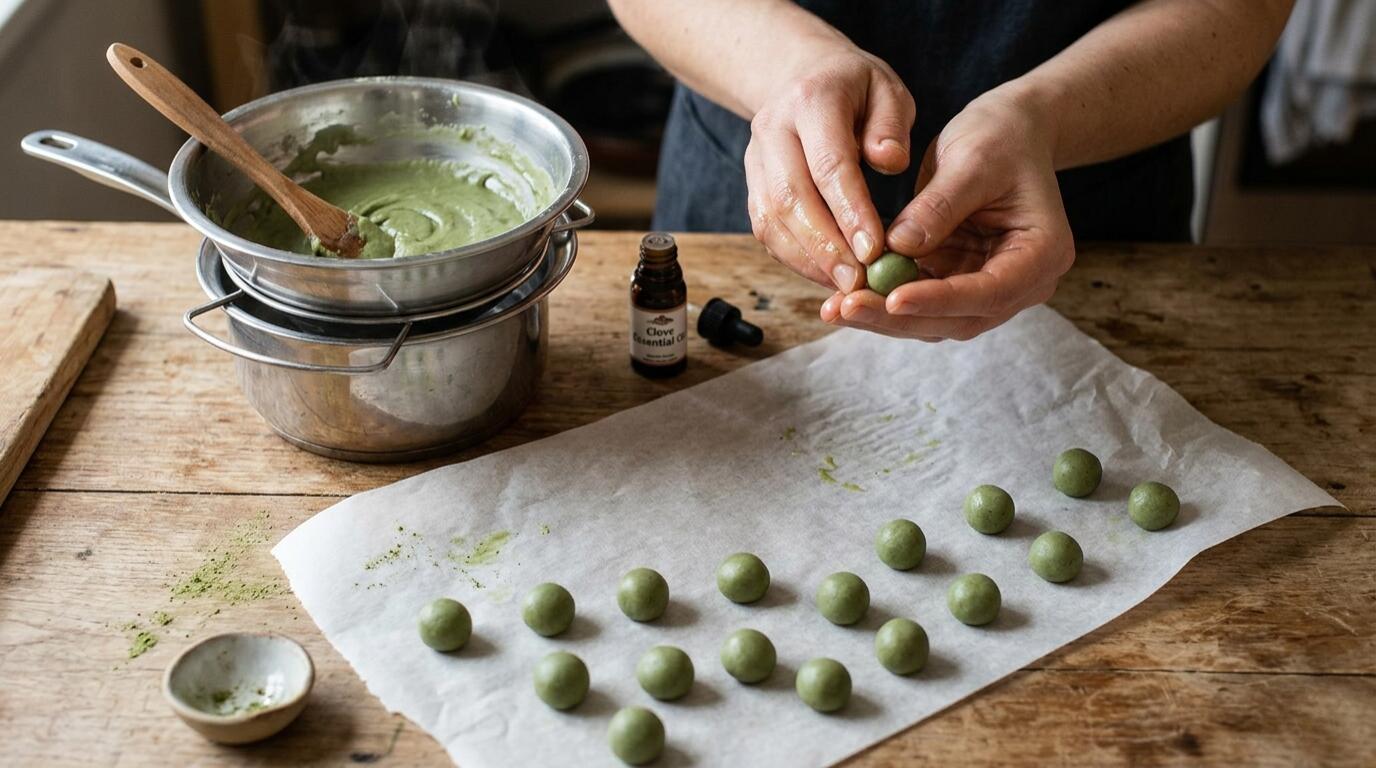
Step 2: Melt the chicle in a heatproof bowl over barely simmering water. Don’t rush this—gentle heat works best.
Step 3: Stir in the glycerine, then add the mastic-xylitol mixture, followed by the green tea and sage powders.
Step 4: If using essential oil, add it last. Keep the amount tiny—one drop goes a long way.
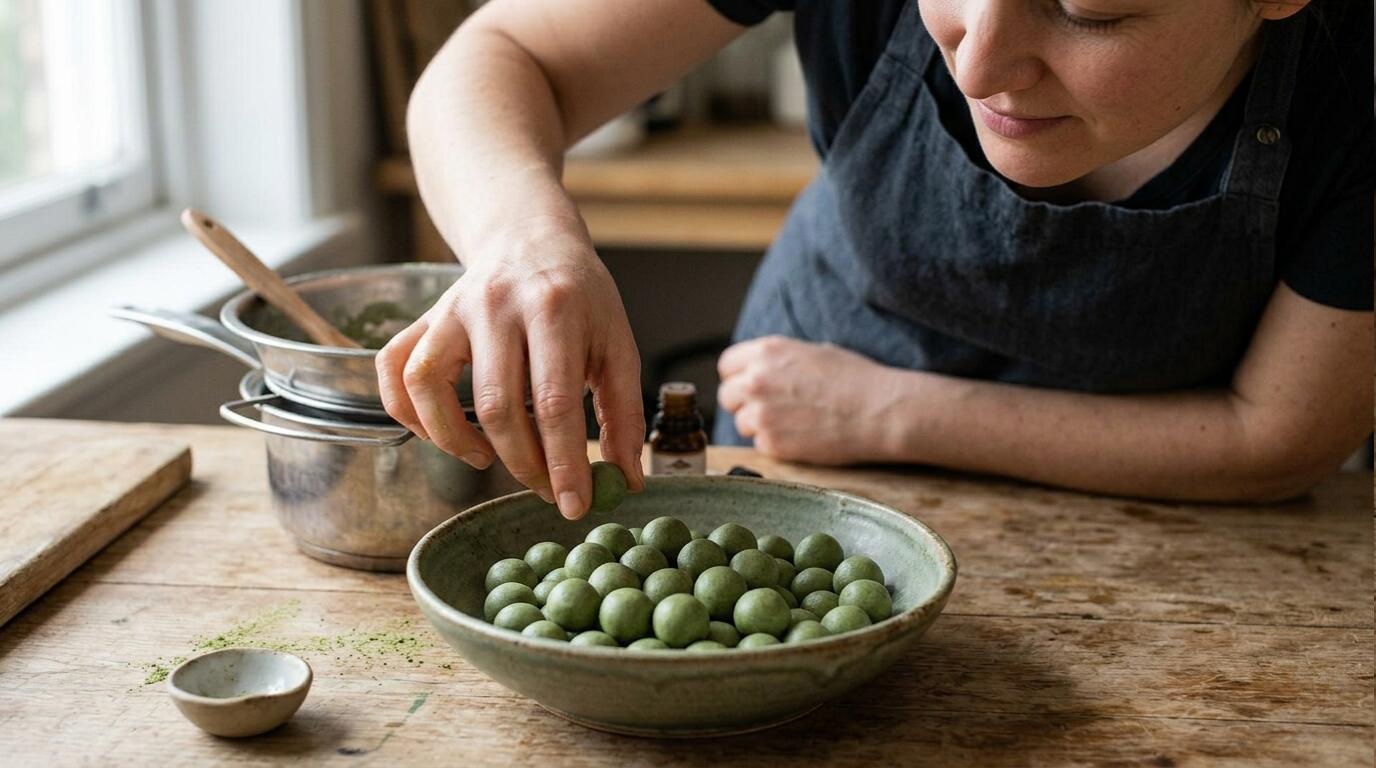
Step 5: Stir until the mixture is smooth and thick. Spoon small buttons onto parchment paper, or lightly oil your fingers and roll into pea-sized pieces.
Step 6: Chill until firm. Store in an airtight container.
How to use: Chew one piece for 10-20 minutes after meals.
Safety
Let’s keep this part honest and unglamorous. Xylitol: Highly toxic to dogs. Even small amounts can cause life-threatening drops in blood sugar or liver failure. Store safely. Sugar alcohols: Can trigger cramps, bloating, or diarrhea in some people. Don’t overdo it. Not for young children: Choking hazard for kids under 5. Licorice: If you’re pregnant, have high blood pressure, or take certain medications, leave it out. Clove: Use only trace amounts. Concentrated clove oil can irritate or become toxic in larger doses.
Variations:
Strongest cavity-support version: Keep the xylitol.
All-herbal version: Leave out the xylitol and let mastic be the hero.
No-fuss version: Simply chew one or two purified mastic tears on their own. No recipe needed.
This herbal gum works beautifully for daily maintenance after meals. But if you’re dealing with stubborn cavities, persistent bad breath, or ongoing gum problems, there’s something more aggressive you should know about.
That Usnea Tincture Spray is more concentrated and effective against tooth decay bacteria than anything in this gum recipe. While mastic and green tea disrupt biofilms, usnea destroys Streptococcus mutans on contact.
Use them together: chew your herbal gum after meals, then spray usnea between your teeth throughout the day. After meals, after coffee, anytime you need a reset.
The National Institute of Dental and Craniofacial Research, CDC, and American Dental Association all emphasize that cavity prevention centers on limiting added sugar, using fluoride toothpaste, and daily plaque removal. This gum belongs beside those habits, not in place of them.
Think of it this way: you’re giving your mouth a sugar-free, herb-infused boost in that critical window after eating—when bacteria are most active and your teeth need extra support.
It’s not magic. It’s just smarter chewing.
How To Replace Any Personal Care Product
Most personal care products are loaded with chemicals you can’t pronounce. Deodorants with aluminum. Shampoos with sulfates. Lotions with parabens. Mouthwashes with artificial dyes and alcohol. Fluoride everywhere.
What if you could make all of it yourself? Here are just some of the personal care remedies you’ll find in The Forgotten Home Apothecary:
Right now is honestly the best time to get this book. With this worldwide chaos and economic situation in the Middle East, prices on everything are climbing fast. Books included. This is one of those things you’ll wish you grabbed while it was still affordable.
Plus, if you know someone who’s curious about natural remedies or tired of putting chemicals on their body every day—this makes an incredible gift. You could genuinely change someone’s life by introducing them to plant-based personal care. You might even save their health.
Disclaimer: This article is for educational purposes only and does not provide medical or dental advice. These remedies are not intended to diagnose, treat, cure, or prevent any disease. Always consult your dentist for dental problems. Never replace professional dental care with home remedies. If you have pain, swelling, or visible tooth damage, see a dentist immediately. Xylitol is toxic to dogs—store safely. Licorice and clove can have side effects—use cautiously or avoid if you have relevant health conditions.
References: Information drawn from research on mastic gum and oral health, studies on xylitol and cavity prevention, clinical trials on green tea chewing gum, NIDCR and CDC guidelines on cavity prevention, and safety data from NCCIH and FDA on herbal ingredients.
So surprised that you suggested fluoride toothpaste as cavity prevention. Fluoride is a TOXIC waste material and it doesn’t prevent cavities and it certainly doesn’t belong in anyone mouth. SHAME ON YOU!!!
We use cookies to ensure that we give you the best experience on our website. If you continue to use this site, we will assume that you are happy with it.
Functional Always active
The technical storage or access is strictly necessary for the legitimate purpose of enabling the use of a specific service explicitly requested by the subscriber or user, or for the sole purpose of carrying out the transmission of a communication over an electronic communications network.
Preferences
The technical storage or access is necessary for the legitimate purpose of storing preferences that are not requested by the subscriber or user.
Statistics
The technical storage or access that is used exclusively for statistical purposes.The technical storage or access that is used exclusively for anonymous statistical purposes. Without a subpoena, voluntary compliance on the part of your Internet Service Provider, or additional records from a third party, information stored or retrieved for this purpose alone cannot usually be used to identify you.
Marketing
The technical storage or access is required to create user profiles to send advertising, or to track the user on a website or across several websites for similar marketing purposes.






I thought usnea required a double extraction.
So surprised that you suggested fluoride toothpaste as cavity prevention. Fluoride is a TOXIC waste material and it doesn’t prevent cavities and it certainly doesn’t belong in anyone mouth. SHAME ON YOU!!!