Acid reflux doesn’t just burn. It can follow you long after the meal is over.
First comes the heat in your chest, the pressure, the sour taste creeping into your throat.
Then comes the awkward part.
That taste can linger on your breath, and suddenly you’re wondering if your family notices it too — especially when someone turns away, covers their nose, or keeps a little more distance.
That’s when reflux stops being “just heartburn.”
It starts affecting how you eat, how you sleep, and how comfortable you feel around other people.
Long before modern digestive remedies, people reached for roots, leaves, flowers, and bark to soothe irritated digestion and bring some comfort back after meals.
And some of the best ones may already be in your herbal cabinet.
Why Does Acid Reflux Happen?
Your stomach is supposed to contain acid. You need it to break down food.
The trouble starts when some of that acidic stomach content travels upward into your esophagus, where it doesn’t belong.
That’s when you may notice:
Burning behind your breastbone
A sour or bitter taste
Burping after meals
Throat irritation
Discomfort when you lie down
That annoying feeling that dinner is trying to make a comeback
Occasional reflux is extremely common.
But if you deal with it frequently, your goal shouldn’t simply be to “erase the acid.”
However, these are the most common reflux-triggering foods you should avoid starting today. Some of them may be making your acid reflux worse without you realizing it. Click here to see the full list.
You also want to think about protecting and soothing the tissues that keep getting irritated.
That’s exactly where traditional digestive herbs become interesting.
Ginger: The Digestive Root Almost Everyone Knows
You’ve probably seen ginger recommended for nausea more times than you can count.
There’s a reason for that.
For generations, people have used ginger after heavy meals, during stomach upset, and whenever digestion just feels… stuck.
It has traditionally been used to support normal digestion and settle nausea, gas, and bloating.
That makes ginger especially useful when your reflux seems to arrive alongside that heavy, overfull feeling after eating.
You don’t need much.
A little ginger brings warmth and digestive support without completely overpowering the rest of this remedy.
And if you want to take ginger further, Nicole Apelian has a DIY Ginger Syrup recipe that feels nothing like the sticky store-bought syrups filled with extra junk.
This is the kind of old-fashioned ginger preparation your stomach would actually recognize.
Most people think of chamomile as the herb you drink when you can’t sleep.
But your grandmother’s evening tea had another advantage.
Chamomile has also traditionally been used to soothe the digestive tract.
That makes a lot of sense when you think about when reflux often shows up: after dinner, when you’re tired, tense, and your stomach is trying to process the day’s biggest meal.
Chamomile gives this remedy a gentler side.
Instead of attacking your stomach, you’re trying to help it settle down.
The best chamomile isn’t always the dusty tea bag sitting in a box for months.
You can grow your own pretty chamomile flowers right at home, even in pots.
And here’s the beautiful part: once chamomile flowers dry and go to seed, they can keep giving you more plants again and again.
You can even grow chamomile indoors during winter.
Ever noticed how your stomach seems to know you’re stressed before you do?
That connection is real.
Stress can show up as tightness, bloating, cramping, indigestion, or that uncomfortable “knotted stomach” feeling.
Lemon balm has traditionally been used for both nervous tension and digestive discomfort, which is why I like it so much in blends like this.
It has a pleasant lemony flavor, too, so it keeps this remedy from tasting like something you dug out of an old apothecary basement.
💧 Tinctures and Capsules If you prefer something stronger and more consistent, tinctures and capsules are your best bet. A standard dose is usually 300–600 mg once or twice a day (always check the label). These concentrated extracts are what many studies used when they tested lemon balm’s effect on stress and sleep. Just add a dropper of tincture to water or tea, and you’ve got an easy way to keep your mood balanced and your mind sharp.
Herbs can be brewed into tea or taken as capsules — but the most potent way to unlock their full power is through a tincture. Unlike tea, tinctures are concentrated and double-extracted, pulling out the complete spectrum of compounds your body needs. That means faster absorption, stronger effects, and consistency every single time.
If you want the highest quality option, I recommend Nicole Apelian’s Lemon Balm Tincture. It’s double-extracted, wild-harvested or organically grown, and crafted to deliver the clearest, most calming dose you’ll ever feel from this plant. With just a few drops, it’s impossible not to notice the difference.
Licorice has traditionally been used to support and soothe irritated digestive tissues.
Rather than thinking of it as something that simply “neutralizes acid,” picture it more as an herb that helps support the natural protective environment around sensitive tissues.
For regular use, deglycyrrhizinated licorice (DGL) is often preferred because much of the glycyrrhizin has been removed.
That matters because ordinary licorice root can raise blood pressure when consumed excessively or for long periods.
Mix the powdered inner bark with liquid and it starts becoming thick and slippery.
That texture comes from mucilage.
And mucilaginous herbs have been treasured by herbalists precisely because they produce this soothing, coating consistency when hydrated.
When your throat and digestive tract feel raw or irritated, that is exactly the kind of herb you want in your corner.
Marshmallow Root: One I Wouldn’t Leave Out
Not the marshmallows you toast over a fire.
Real marshmallow root.
This old-fashioned medicinal plant is another rich source of mucilage.
Once hydrated, it becomes wonderfully slippery and soothing.
Traditional herbalists have long used marshmallow when tissues feel dry, irritated, or inflamed, including in digestive preparations.
And this is one reason I wanted to add it to this recipe.
If acid keeps irritating the same sensitive tissues over and over again, supporting those tissues makes a lot more sense than focusing on stomach acid alone.
And Don’t Forget Plantain
Plantain may be growing outside your house right now.
And no, I’m not talking about the banana-like fruit.
I mean Plantago major or Plantago lanceolata — the little medicinal “weed” herbalists have been collecting for generations.
Plantain has traditionally been used to soothe irritated tissues and support digestive comfort.
It’s another humble plant that most people walk over without realizing what it is.
That’s one of my favorite things about herbalism.
Sometimes the plant you’ve ignored your entire life turns out to have been sitting in old herbal traditions for hundreds of years.
Why I Like Combining These Herbs
You could certainly use some of these herbs individually.
But together, they cover several different angles.
You have warming digestive support from ginger.
Gentle digestive relaxation from chamomile and lemon balm.
Then you have licorice, slippery elm, marshmallow, and plantain bringing that soothing, mucilage-rich herbal tradition into the mix.
Instead of throwing one herb at one symptom, you’re creating something more balanced.
And the recipe itself is extremely simple.
This is why plant knowledge matters so much, cause once you learn it, no one can take it from you.
You can use it for yourself, pass it to your children, help your loved ones, and recognize what’s growing around you before you ever need it.
Because sometimes the plant you’re looking for isn’t in a store.
It’s in your garden. By the fence. Between concrete blocks. Behind the shed.
Or growing where you’ve walked past it a hundred times without knowing what it was.
Nicole Apelian has researched and shared almost 1,000 medicinal plants, so you can choose which ones you want to understand better and finally stop guessing.
This is based on an old Lost Herbs digestive preparation, with marshmallow root and plantain added to give the blend even more of that traditional soothing-herb character.
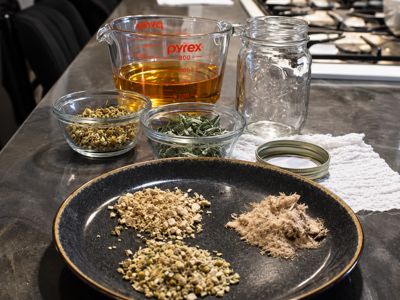
You’ll Need
⅓ cup dried lemon balm
⅓ cup dried chamomile flowers
1 tablespoon dried ginger
1 tablespoon licorice root or an appropriate DGL product
1 tablespoon slippery elm
1 tablespoon marshmallow root
1 tablespoon dried plantain leaf
Approximately 1½–1¾ cups apple cider vinegar
1 clean glass jar
Step 1: Add Your Herbs
Place the lemon balm and chamomile in the jar first.
Then add the ginger, licorice, slippery elm, marshmallow root, and plantain.
Already, you have a combination of herbs our ancestors would immediately have recognized as digestive allies.
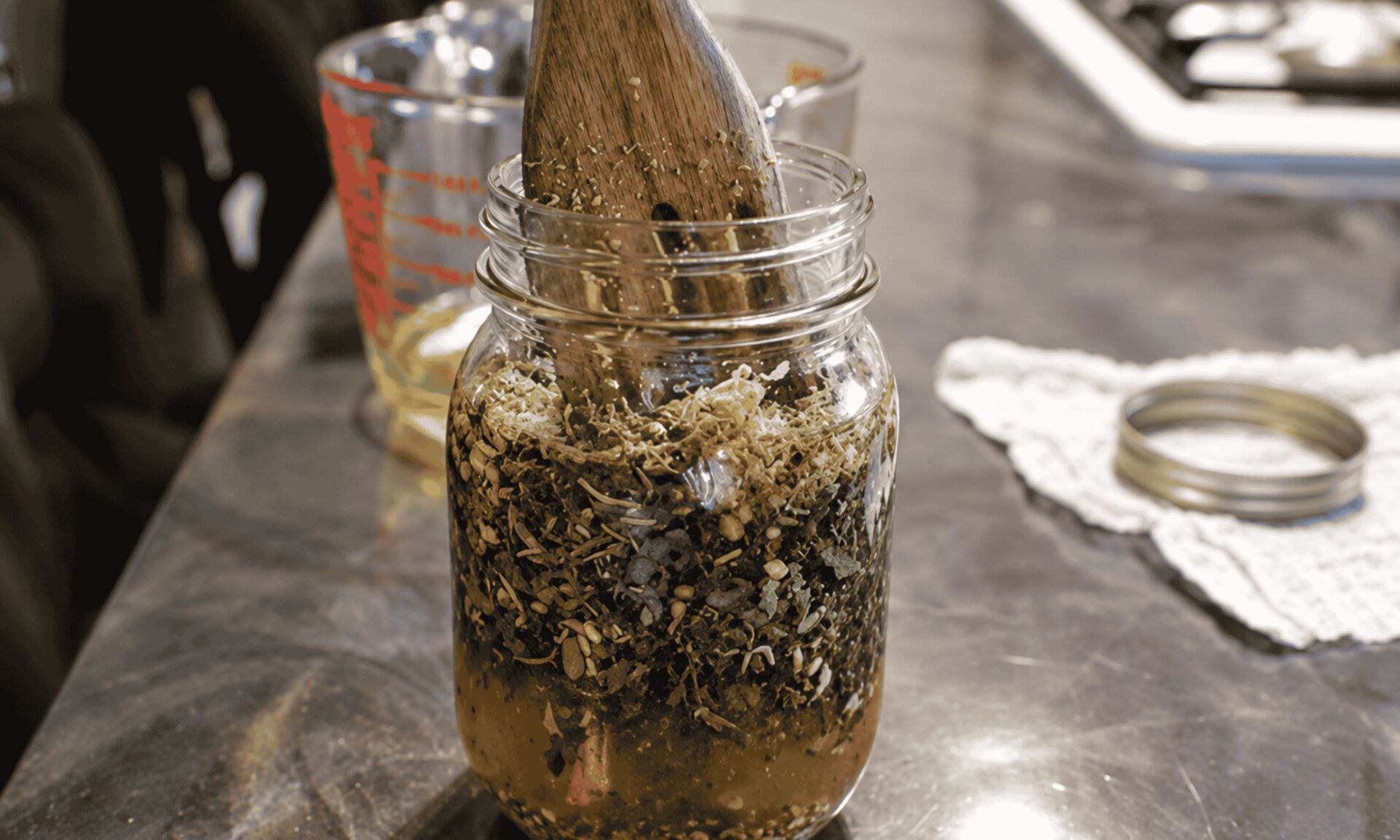
Give everything a quick stir so the smaller ingredients don’t simply sink to the bottom.
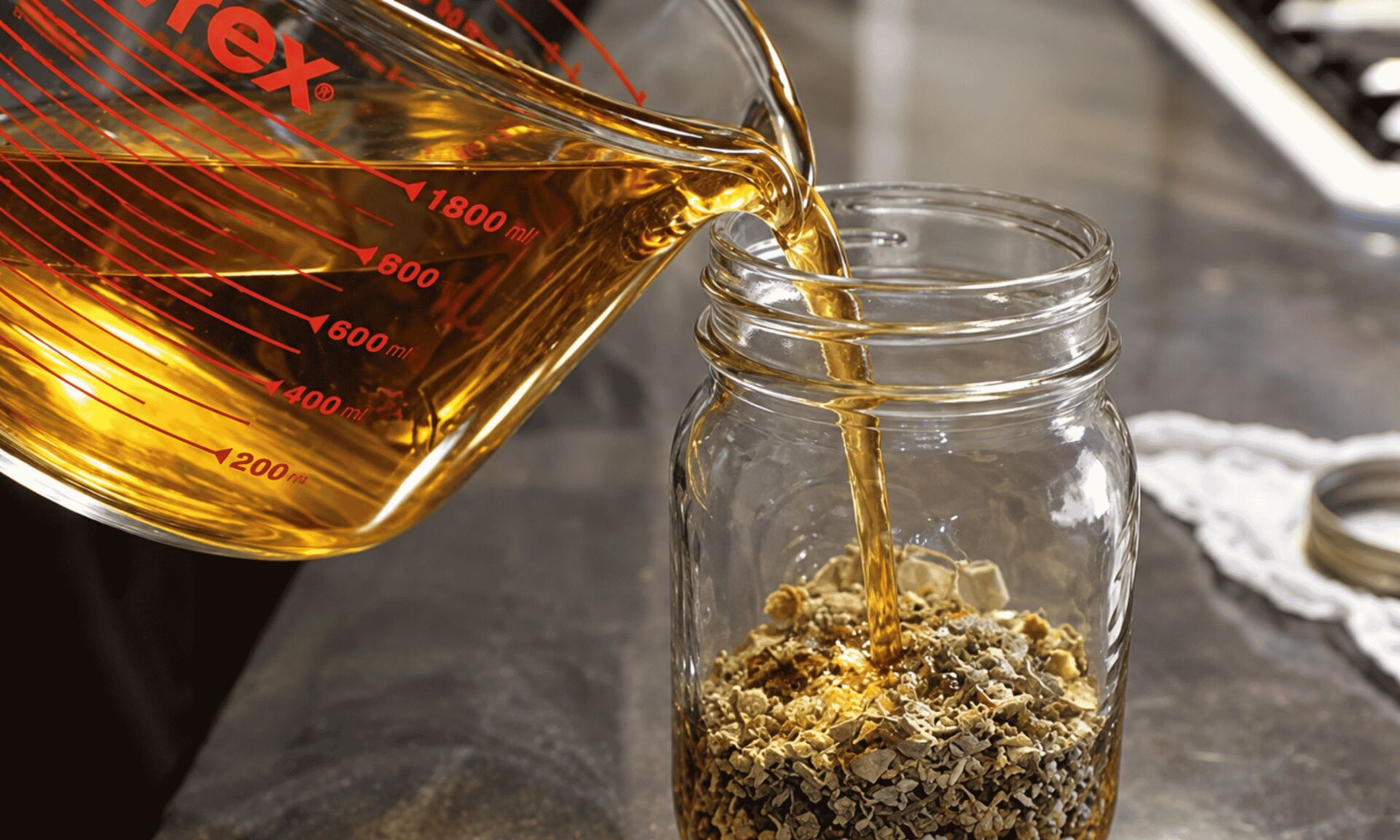
Step 2: Pour In the Apple Cider Vinegar
Pour enough apple cider vinegar over the herbs to cover them thoroughly.
Leave a little room at the top of the jar.
The herbs will absorb some of that liquid as they sit, particularly the mucilaginous ones.
One important note: vinegar does not agree with everyone who has reflux.
It is acidic, so if acidic foods or drinks make your symptoms worse, this may not be the preparation for you. Always dilute it before using it, and stop if it causes burning or aggravates your symptoms.
Herbs are supposed to help you listen to your body — not ignore it.
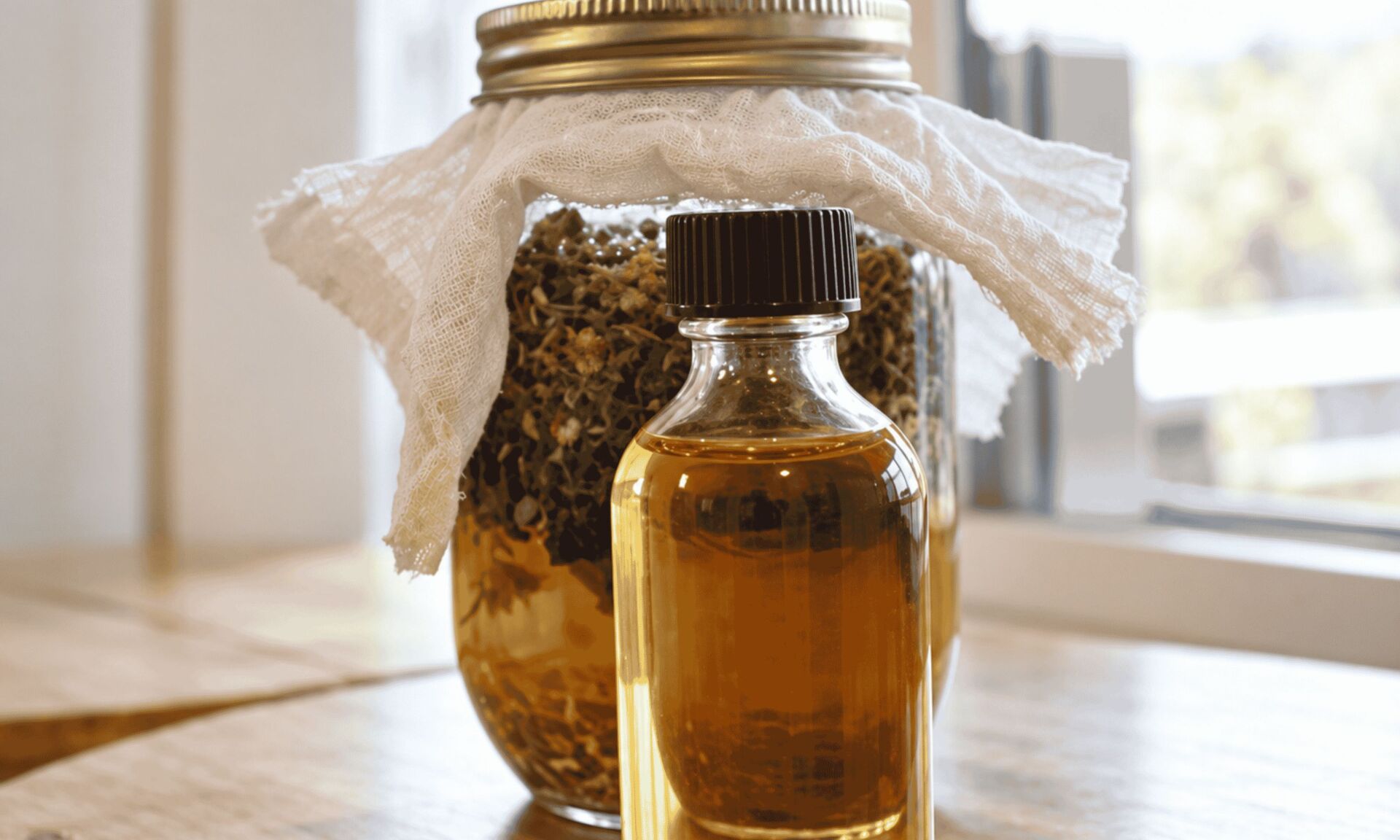
Step 3: Let the Herbs Infuse
Make sure every herb is thoroughly moistened.
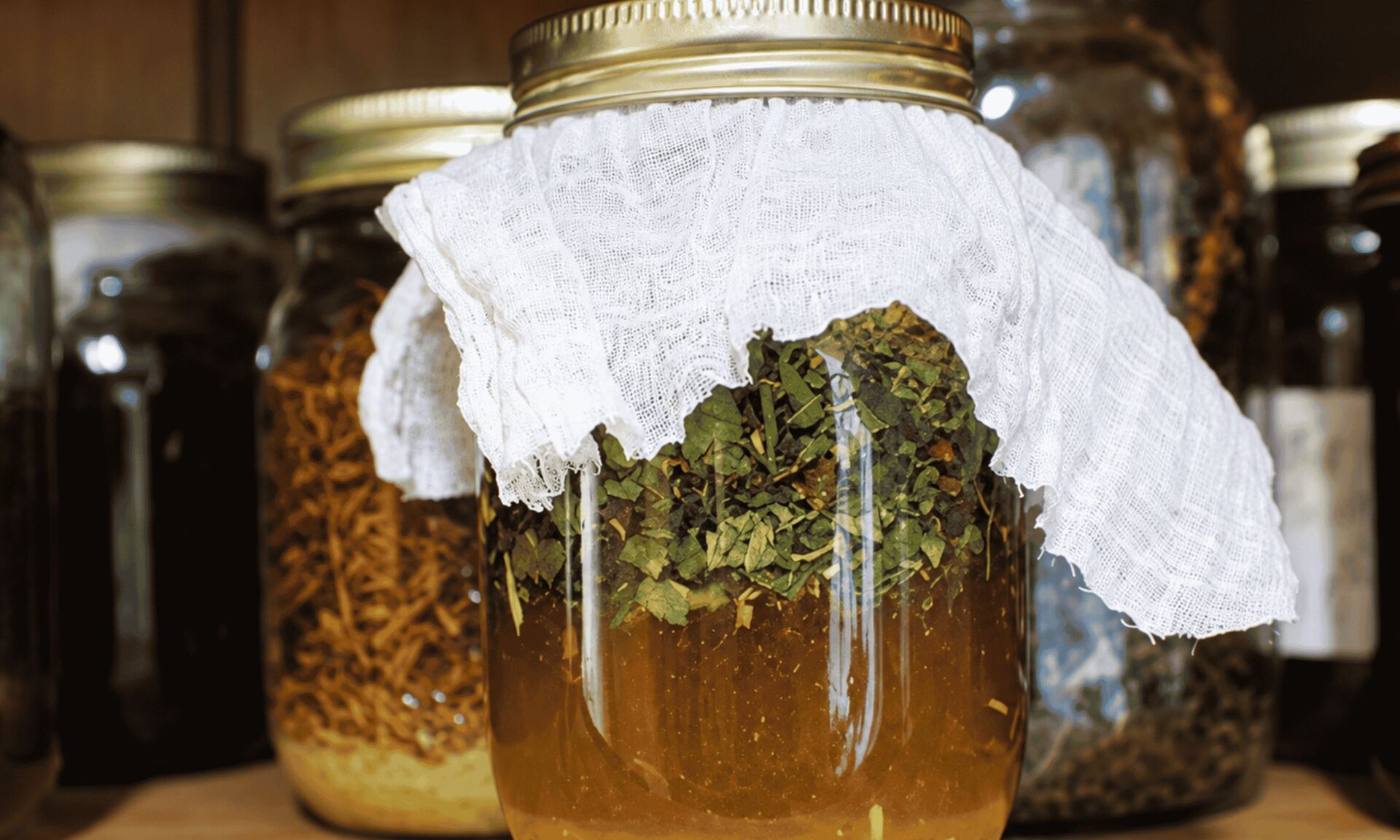
Cover your jar and keep it somewhere cool and dark.
Let the mixture infuse for several weeks, occasionally giving the jar a gentle shake.
Over time, the vinegar extracts compounds from the plants while the marshmallow, slippery elm, and plantain give the preparation more body.
Step 4: Strain It
When your infusion is ready, strain the herbs through a fine strainer or cheesecloth.
Press the plant material well so you don’t waste the liquid trapped inside.
Transfer the finished preparation into a clean glass bottle or jar and label it.
Because this contains vinegar, the flavor will be strong.
You definitely don’t need to drink a shot glass full of it.
Start small and dilute it well in water.
How I Would Use It
Start with a small amount diluted generously in water and see how your body responds.
Because reflux triggers vary dramatically from person to person, more is definitely not better here.
If the vinegar irritates you, skip the vinegar preparation altogether and use the individual soothing herbs as teas or other appropriate preparations instead.
In fact, marshmallow and slippery elm are often especially appealing when prepared with water because that allows their characteristic mucilage to develop.
The Easier Gut-Calming Alternative
However, if you don’t have the time, the tools, or a clean place to source all these ingredients from, you can get a ready-made version instead.
Nicole’s Balanced Gut Blend brings together several of the same gut-soothing herbs we talked about in this article, including plantain, slippery elm, marshmallow, reishi, turkey tail, and lion’s mane.
I like to think of it as a Gut Shield Tincture — something you can keep close when your stomach feels irritated, heavy, or unsettled.
It’s made by Nicole Apelian, one of America’s most trusted herbalists, using herbs that are either wild-harvested or organically grown, which is more than many store-bought supplements can honestly say.
A Few Small Changes Can Make This Work Even Better
An herbal remedy works much harder when you stop doing the things that keep irritating your digestive system.
You don’t need to completely reinvent your diet.
Start with the obvious things.
Eat smaller meals. Your stomach has a much easier job when you don’t completely fill it.
Give yourself some time before lying down. Gravity is surprisingly useful.
Pay attention to your personal trigger foods. Spicy foods, fatty meals, alcohol, caffeine, chocolate, tomato-based foods, and highly acidic foods bother some people more than others.
Your trigger might be completely different from somebody else’s.
That’s why keeping a simple food diary for a week or two can teach you more than blindly eliminating half your kitchen.
What Should You Remember
For most of history, people didn’t reach for a brightly colored bottle every time their stomach complained.
They learned their plants. So don’t just read about these remedies. Keep them close.
Because when your stomach starts burning, twisting, or pushing acid back up, you’ll want something gentle and soothing already waiting for you.
We use cookies to ensure that we give you the best experience on our website. If you continue to use this site, we will assume that you are happy with it.
Functional Always active
The technical storage or access is strictly necessary for the legitimate purpose of enabling the use of a specific service explicitly requested by the subscriber or user, or for the sole purpose of carrying out the transmission of a communication over an electronic communications network.
Preferences
The technical storage or access is necessary for the legitimate purpose of storing preferences that are not requested by the subscriber or user.
Statistics
The technical storage or access that is used exclusively for statistical purposes.The technical storage or access that is used exclusively for anonymous statistical purposes. Without a subpoena, voluntary compliance on the part of your Internet Service Provider, or additional records from a third party, information stored or retrieved for this purpose alone cannot usually be used to identify you.
Marketing
The technical storage or access is required to create user profiles to send advertising, or to track the user on a website or across several websites for similar marketing purposes.