
I Drank Black Milk. Here’s What Happened
A glass of milk is supposed to be white.
So when it comes out jet black, your brain immediately says one thing:
Don’t drink that.
That reaction is exactly what makes Black Milk shockingly good for your herbal cabinet!
The color comes from activated charcoal, a substance traditionally used when people wanted to trap unwanted compounds in the gut, calm digestive upset, and deal with gas, bloating, and that heavy, uncomfortable feeling after eating.
Its porous surface can bind certain substances before your body absorbs them, which is why activated charcoal was long believed to act like a detox magnet inside your gut.
When you combine it with a few traditional digestive herbs, you can turn that strange-looking drink into a soothing herbal recipe that fits surprisingly well into your home remedy cabinet.
And unlike many wellness drinks that require twelve powders, three supplements, and a shopping trip to a specialty store, this one can stay remarkably simple.
The key is knowing why each ingredient is there.
And I’ll explain everything briefly below.
What Exactly Is Activated Charcoal?
Activated charcoal starts with carbon-rich materials like wood or coconut shells, then gets processed at high temperatures until its surface is packed with microscopic pores.
Those pores are what make it so powerful.
Certain compounds stick to that surface through a process called adsorption.
Not absorption.
Instead of soaking into the charcoal, they cling to it.
That same trapping ability is why activated charcoal is still used in some poisoning and overdose cases today: it can bind certain substances inside the digestive tract before more of them are absorbed.
Charcoal acts like a microscopic trap inside your gut.
Certain compounds stick to it, and the charcoal carries them onward through the digestive tract.
What activated charcoal can do is pretty wild.
But here’s my question: who ever taught you this?
Probably nobody.
There’s an old saying: give someone a fish and you feed them for a day; teach them to fish and you feed them for life.
That’s exactly how I look at herbal remedies.
Nicole Apelian has spent decades learning what plants do, how to identify them, and how to turn them into remedies — and now she actually teaches people how to do it themselves through step-by-step video lessons.
You’ll discover things like the plant that can “fertilize” your gut, a Fatty Liver Tea, the herb people add to coffee or tea for bowel support, and two herbs traditionally used in a bowel-cleansing preparation — plus dozens of remedies most of us were simply never taught. Pasted markdown
Click here to let Nicole show you what your herb cabinet can actually do. 
So Is Black Milk a “Detox” Drink?
Your body has sophisticated systems for dealing with waste, particularly your liver, kidneys, lungs, and gut.
Activated charcoal can bind certain substances while they are still in your gut.
That makes it a great digestive tool; its ability to trap certain compounds is fascinating.
But keep reading, and I’ll give you a few other herbs that support your gut in different ways.
Why People Use Charcoal for Digestion
One reason people still reach for it today is gas and bloating.
It helps reduce intestinal gas or the discomfort that comes with it. That’s why it’s used as a base compound in some bloating pills… among many other chemicals.
So if you’ve ever finished a heavy meal and spent the next few hours feeling like your stomach inflated two sizes, you probably understand why many use it.
That uncomfortable fullness can ruin the rest of your evening.
And as I said, instead of relying on charcoal alone, you can pair it with traditional herbs that herbalists have used for generations when digestion feels irritated, sluggish, or simply unhappy.
The Herb That Changes Black Milk Completely
If I were going to add only one herb to this drink, it would be marshmallow root.
The root contains large amounts of mucilage.
When you soak marshmallow root in water, that mucilage creates a slightly thick, slippery liquid.
Your gut is constantly attacked, irritated, and inflamed by pesticides, chemicals, and foods we buy if we don’t have our own land.
That’s why that soothing texture is exactly why herbalists love this plant.
Marshmallow root has traditionally been used for stomach and gut discomfort, as well as irritation of the mouth and throat.
And it happens to work beautifully in Black Milk. You’ve just created an old-fashioned herbal tonic.
How to Make Marshmallow Root Infusion
One mistake most people make, but you won’t because you’re a reader of The Lost Herbs, is not boiling it aggressively.
In fact, a cool infusion works very well because it draws out that characteristic mucilage.
Add roughly 1 to 2 teaspoons of dried, cut marshmallow root to about half a cup of cool water.
Let it sit for several hours, even overnight, then strain it.
You’ll notice that the water feels slightly thicker than before. That’s exactly what you want.
Keep this infusion in the refrigerator and use a splash whenever you’re making your Black Milk.
Don’t Forget Cinnamon
Cinnamon is another ingredient I wouldn’t skip.
Traditionally, it wasn’t used only for digestion. Cinnamon also earned a reputation as a warming brain spice, especially in remedies meant to support memory, alertness, and mental clarity.
Modern research has become interested in some of its compounds for their antioxidant and neuroprotective potential, which makes that old reputation even more intriguing.
And that gives you a clever 2-in-1 spice.
Cinnamon supports the digestive side of the recipe while also fitting beautifully into the brain-gut connection — the same connection you feel when stress knots your stomach, kills your appetite, or suddenly sends you running to the bathroom.
So in Black Milk, cinnamon isn’t just there for flavor.
Cinnamon is great for digestion. But I wouldn’t ignore what’s happening a few inches higher.
Your gut and brain are constantly communicating, which is one reason stress can upset your stomach and digestive trouble can leave you feeling foggy, drained, and completely off.
And think about what your brain deals with every day: endless screens, stress, poor sleep, information overload, and a mind that rarely switches off.
We spend so much time feeding our bodies that sometimes we forget to feed the brain too.
That’s why I like keeping a few serious brain-supporting herbs around instead of waiting until focus and memory already feel different.
I found them put together in one convenient Brain Bundle, so you don’t have to buy and prepare everything separately.
Click here to see the herbs I’d give my brain first.
3 Optional Herbs to Give Black Milk an Extra Boost
You don’t need to turn Black Milk into a ten-herb potion, but a few additions can make sense.
Ginger is the easiest one. Herbalists have long used it for sluggish digestion, nausea, and that heavy feeling after eating. A small pinch also adds warmth without overpowering the drink.
Slippery elm works similarly to marshmallow root. Its inner bark becomes naturally mucilaginous in water, which is why it has traditionally been used in soothing preparations. Use it instead of marshmallow rather than piling on both, unless you want your drink to turn into pudding.
Plantain is another classic herbalist’s plant with a long history of soothing uses. It can fit into a digestive herbal routine, but keep it light here.
The goal isn’t to empty your whole herb cabinet into one mug.
It’s to choose a few plants that actually have a reason to be there.
How to Make Herbal Black Milk
One quick thing before we make it.
The Black Milk recipe below comes from a collection of old remedies and practical skills I’ve only recently started sharing more from here on The Lost Herbs.
And if you haven’t looked through it yet, this is a pretty good time.
The current early-bird offer is still showing 76% off, and it includes 3 free bonus guides. Inside are 200 illustrated skills, including old herbal preparations, food preservation, water, gardening, and things most of us were simply never taught to do ourselves. Pasted text
Now for the part you actually came here for.
Ingredients
You will need: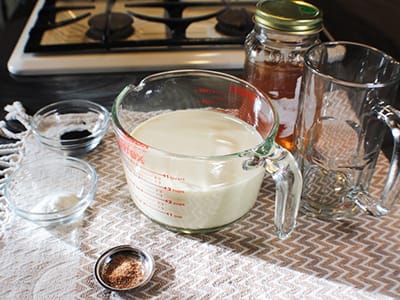
- 1 cup unsweetened almond milk, oat milk, coconut milk, or regular milk
- ¼ to ½ cup marshmallow root infusion
- ¼ teaspoon food-grade activated charcoal
- ¼ teaspoon Ceylon cinnamon
- a small pinch of powdered ginger
- ½ teaspoon vanilla extract
- 1 to 2 teaspoons honey
- optional pinch of nutmeg
I prefer oat or coconut milk because both give the drink a naturally creamy texture.
But use whichever milk works best for you.
There is no need to turn this into an expensive specialty recipe.
Step 1: Make Your Marshmallow Infusion
Soak your dried marshmallow root in cool water for several hours or overnight.
Strain it and set the liquid aside.
Step 2: Warm Your Milk
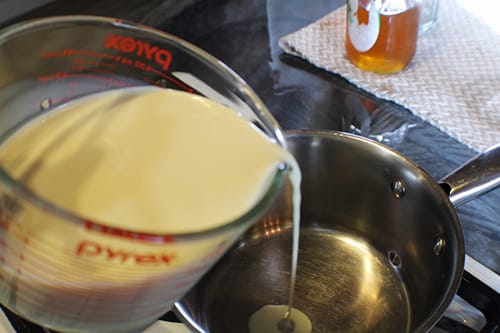
Pour your milk into a small saucepan.
Warm it gently.
You want it hot and comforting, but there’s no reason to aggressively boil it.
Step 3: Add the Good Stuff
Add your marshmallow infusion, activated charcoal, cinnamon, ginger, vanilla, and honey.
Whisk everything together.
For an even creamier drink, use a handheld milk frother or blender. 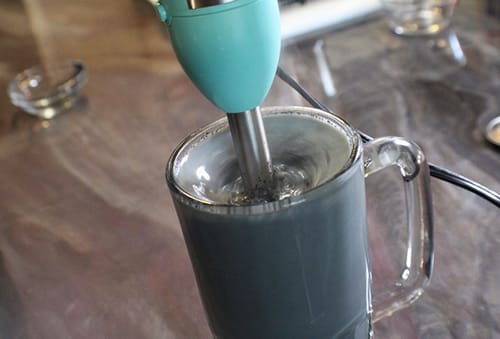
Just remember that charcoal is extremely good at turning everything it touches black.
Your white kitchen towel will remember this recipe forever.
Step 4: Pour and Drink
Pour the finished drink into your favorite mug.
Add a pinch of cinnamon or nutmeg on top.
The finished Black Milk should be:
dark, creamy, lightly sweet, and gently spiced. 
And yes.
It will still look slightly suspicious.
That’s part of the charm.
The Easier Gut-Support Version
Black Milk is great when you want charcoal occasionally, but that’s just one side of the story.
Your gut also needs herbs that soothe and support it, especially if bloating, heaviness, or irritation keeps showing up.
And if you don’t happen to keep marshmallow root soaking in your refrigerator overnight, I’ve got you.
The solution I keep coming back to combines marshmallow, slippery elm, and plantain — three of the exact gut-soothing herbs we’ve just talked about — along with medicinal mushrooms for broader digestive support.
It’s Nicole Apelian’s Balanced Gut Blend, and it’s the one I’d keep around for regular gut support while saving charcoal for occasional use.
Click here to see the gut blend so many people keep within reach.
When Would You Actually Drink Black Milk?
I wouldn’t make Black Milk a daily habit.
Think of it as an occasional herbal drink for those times when your digestion feels heavy, sluggish, or simply off.
The marshmallow, ginger, and cinnamon also make charcoal much easier to take than mixing it into plain water.
Activated charcoal can interfere with medications and supplements, so don’t take them together. Unlike marshmallow, which is gentle enough to fit into a more regular routine, I’d keep charcoal occasional.
The Bigger Lesson Behind Black Milk
You’ve just learned something more useful than another recipe.
You learned why activated charcoal is there, when you might use it, and why marshmallow, ginger, and cinnamon each have a different job.
But that immediately raises another question:
What about every other remedy in your cabinet?
What should you take in the morning?
What makes more sense in the afternoon?
What should you use at night?
And perhaps just as importantly, what should you avoid doing because it may be working against you?
Nicole Apelian actually mapped this out for 45 common ailments, with practical morning, afternoon, and evening steps covering foods, herbs, movement, stress, supplements, remedies, and things to avoid.
So instead of collecting random remedies and hoping you remember when to use them, you start building an actual routine.
That’s when your herbal cabinet stops being a shelf full of jars and starts becoming something you genuinely know how to use.
Click here to take the first step toward handling your health more independently.
You may also like: 
The ‘Nerve Oil’ You Should Use For Shaky Hands
The 10 Medicinal Seeds You Should Plant for a Complete Backyard Pharmacy (Video)
Parasites 101: Signs, Dangers & Natural Remedies That Actually Work
The Mushroom That Can Regrow Brain Tissue
The All-Purpose Plant They Don’t Want You To Know About