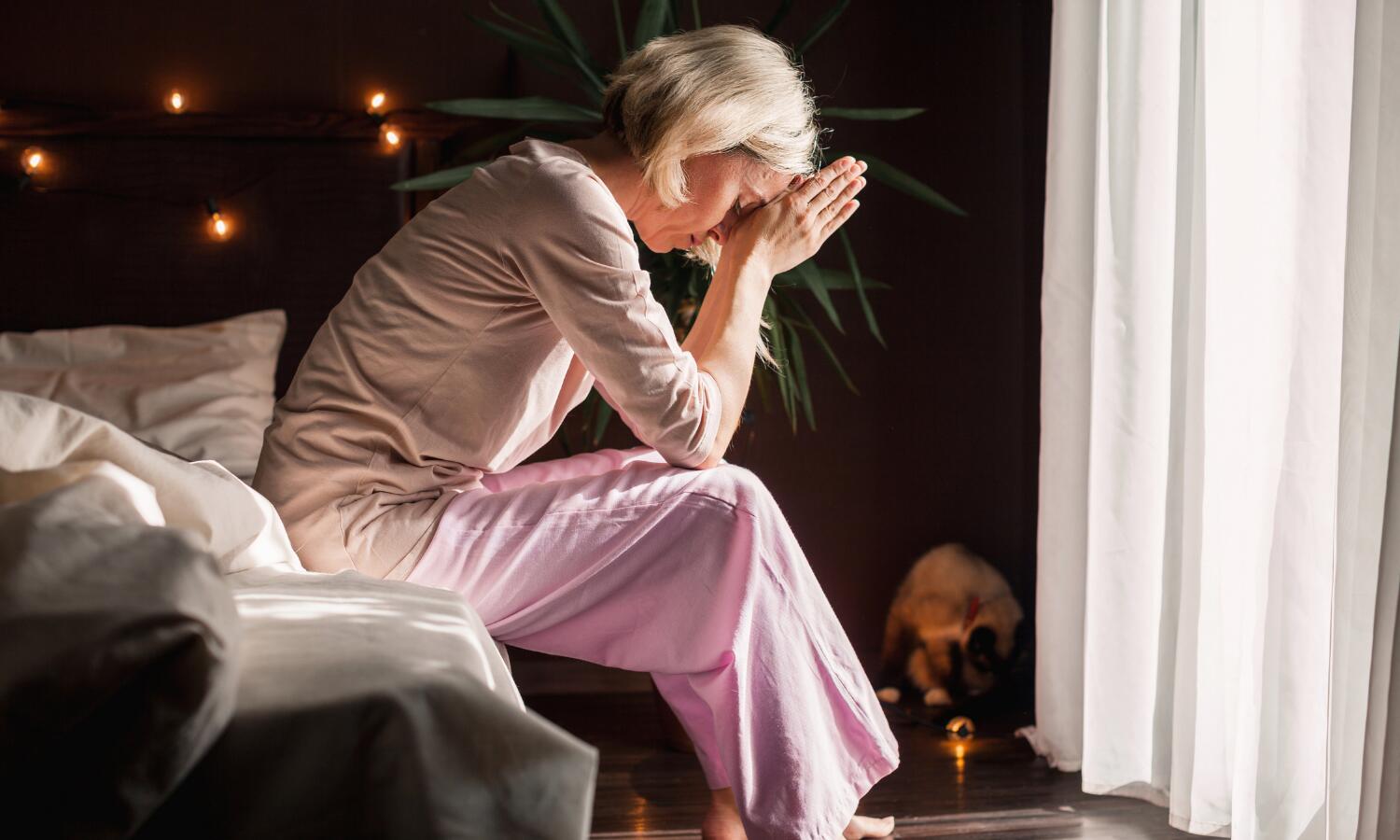
Something feels off. You wake up drenched in sweat at 3 am. Still, after all these years. Your skin feels dry no matter how much lotion you use. Intimacy is uncomfortable, even painful. Your bones ache in ways they didn’t before. You forget words mid-sentence, lose your keys constantly, feel more anxious than you used to.
You tell yourself it’s just aging. It’s normal. Everyone deals with this.
But here’s what many women don’t realize: these symptoms aren’t just “getting older.” They’re signs of low estrogen, and they don’t magically disappear when your periods stop. For some women, they persist for years, even decades.
The hidden cause isn’t that your body is failing. It’s that your estrogen has dropped significantly, and it’s affecting everything from your sleep to your bones to your brain.
Let me show you what’s happening, why it matters, and the gentle plant that women have turned to for generations when their hormones shift.
What Low Estrogen Actually Does to Your Body
When your ovaries stop producing estrogen (or produce very little), the effects ripple through your entire system.
Hot flashes and night sweats – Some women deal with these for years after menopause. You’re not imagining it, and you’re not alone.
Sleep disruption – You wake multiple times, can’t fall back asleep, or never feel truly rested. Low estrogen affects sleep quality directly.
Vaginal dryness and atrophy – This doesn’t “get better with time.” Without estrogen, vaginal tissue becomes thinner, drier, and more fragile. Intimacy becomes painful. Even sitting can be uncomfortable.
Bone loss – Estrogen protects bone density. When it drops, your bones lose calcium faster. This is why osteoporosis becomes a real concern.
Brain fog – That fuzzy thinking, memory lapses, word-finding difficulties? Low estrogen affects cognitive function. Your brain has estrogen receptors too.
Mood changes – Increased anxiety, irritability, even depression. Estrogen affects neurotransmitters like serotonin.
If anxiety and irritability are spiking, you’re not “losing it” — your body is responding to a massive internal shift. When estrogen drops, so does serotonin. Your stress response gets more sensitive.
This is where adaptogenic herbs come in. Adaptogens help your body adapt to whatever it’s dealing with: ashwagandha, rhodiola, holy basil, reishi mushroom. You can’t control that your estrogen dropped. But you can support how your body handles it.
Nicole’s Anxiety & Stress Tincture is built around adaptogens. It takes the edge off without making you drowsy.
Skin and hair changes – Thinner, drier skin. Hair that’s lost its thickness. These are estrogen-related changes, not just “aging.”
Joint pain – Estrogen has anti-inflammatory effects. When it drops, many women notice more aches and stiffness.
As you age, mobility becomes everything. If you’re losing it: stiff knees, achy hips, lower back pain, you need to give it a spark before it gets worse.
I always recommended Nicole Apelian’s Joint & Movement Salve is made with cayenne, arnica, and St. John’s wort. Rub it on sore joints or your lower back. The cayenne brings blood flow. The arnica reduces inflammation. It works fast.
Here’s what frustrates so many women: these symptoms can persist long after menopause is “over.” You’re told menopause ends when your periods stop, but nobody mentions that low estrogen continues affecting your body for years afterward.
When Low Estrogen Needs Medical Attention
Most women naturally have lower estrogen after menopause, but some symptoms shouldn’t be ignored.
See a doctor if you notice unusual bleeding (even spotting), frequent fractures or bone pain, or severe vaginal symptoms like pain, infections, or bleeding. And if your symptoms are seriously affecting your quality of life, medical treatments, including hormone therapy, can help.
Natural remedies can offer support, but sometimes your body needs more, and that’s completely okay.
Red Clover: The Gentle Plant Women Keep Coming Back To
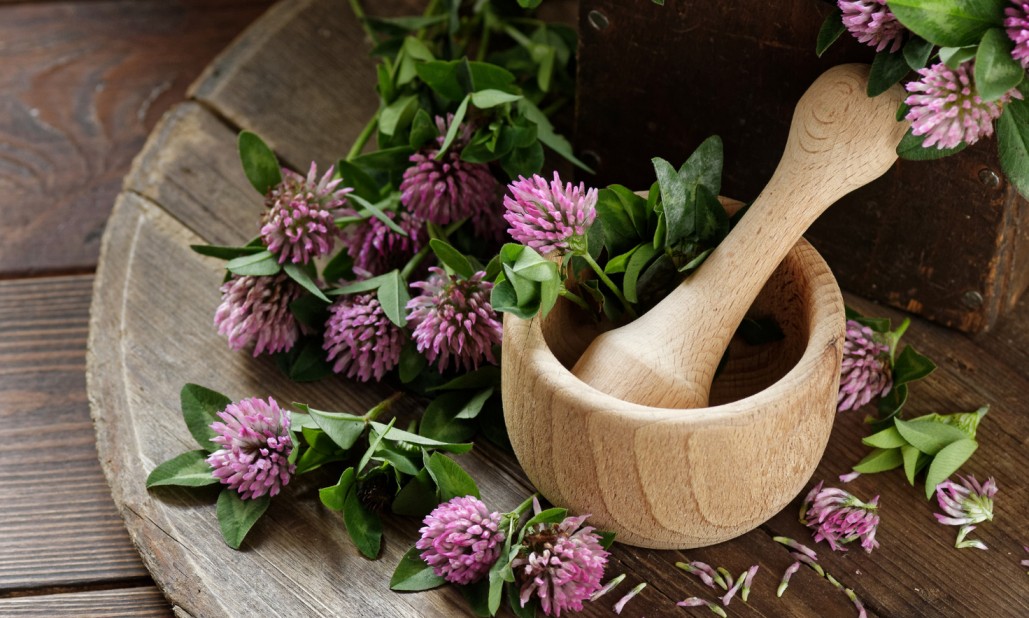
Red clover (Trifolium pratense) is a flowering plant with soft pink-purple blooms. Women have been brewing it as tea for generations during times of hormonal change and beyond.
Here’s why: Red clover contains natural plant compounds called isoflavones, which are structurally similar to estrogen. They’re not the same as taking estrogen—and they don’t replace what your body has lost—but their shape allows them to interact gently with estrogen receptors.
Research on red clover is mixed. Some studies suggest it may help with hot flashes, especially for women still experiencing them frequently. Other studies show benefits for vaginal dryness and discomfort. Some women report it helps with mood and sleep. Other studies show minimal effect.
The fairest summary? Red clover may help some women feel more comfortable despite low estrogen levels. It’s not a cure. It’s not hormone replacement. But many women find it genuinely supportive.
Think of it as a daily ritual of care—something warm, nourishing, and gentle that you do for yourself when your body needs extra support.
What About Black Cohosh?
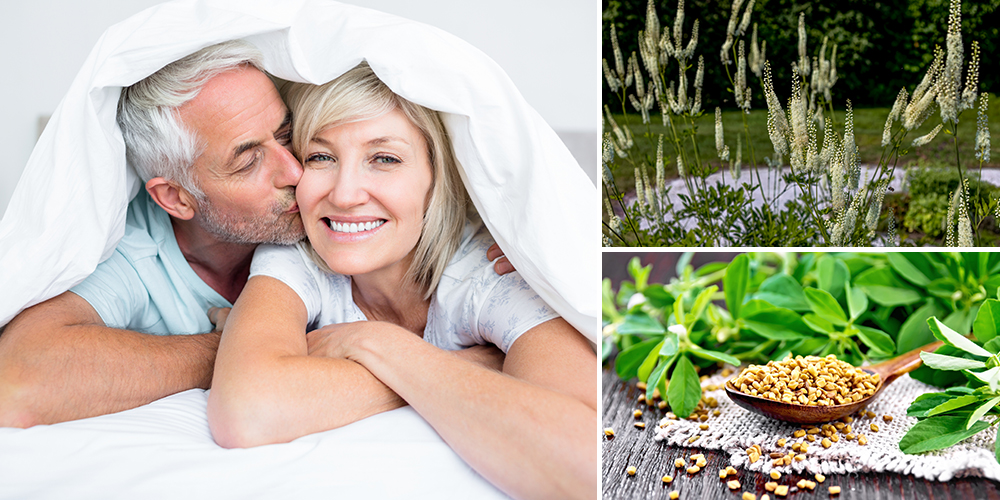
Black Cohosh has long been used to support women’s hormonal and reproductive health, especially during PMS, perimenopause, and menopause.
It’s commonly associated with easing hot flashes, night sweats, and vaginal dryness, while also helping to stabilize mood and reduce feelings of stress, anxiety, or irritability.
Some of its natural compounds are believed to have a serotonin-like effect, which may help regulate body temperature and improve overall emotional balance.
Beyond menopausal support, black cohosh has traditionally been used to promote menstrual health and support the uterus, including preparing the body for labor in late pregnancy.
It’s also valued for its anti-inflammatory and antispasmodic properties, which may offer broader support for issues like muscle tension, joint discomfort, and general physical stress—making it a versatile herb in natural wellness practices.
Red Clover Comfort Tea
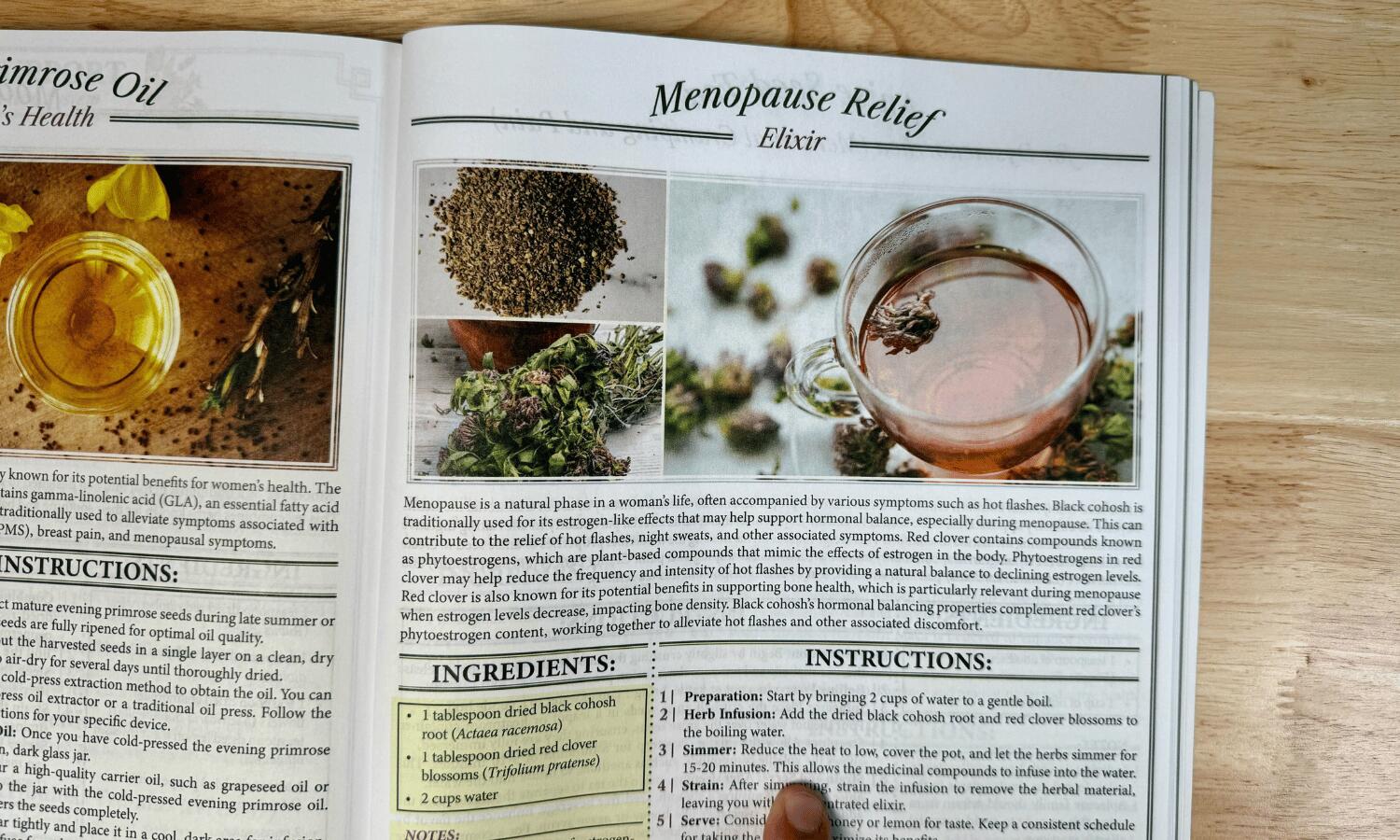
I knew about red clover before I opened Nicole Apelian’s book. What I didn’t know was what it combines best with. She teaches herbal synergies — what goes with what, and why. I learned that red clover works best when paired with black cohosh. Together, they support hormonal transitions in a way neither does alone.
I think every woman dealing with low estrogen should have access to this book to learn these combinations.
But I’m not sure I can slip another one out for you, the book’s organized by body system, and there are dozens more on the Reproductive System shelf alone. You’ll find the Moon Tea (for regulating cycles and easing monthly discomfort), the Menopause Relief Elixir (a more concentrated version of what we’re making below), remedies for PCOS, fertility support, and even formulas for male reproductive health.
Then there’s the Endocrine System shelf — which covers hormonal imbalances, cortisol balance, thyroid support, and adrenal fatigue. The Digestive System shelf has the Herbal Parasite Flush, gut-healing remedies, and liver detox formulas. The Nervous System shelf has remedies for anxiety, brain fog, and sleep issues.
Every remedy has step-by-step instructions, color photos, exact measurements, and dosage guidelines. It’s the kind of book you keep open on your kitchen counter.
This is a simple, traditional tea that women have been making for generations. It’s not a pharmaceutical. It’s just a gentle daily practice.
Ingredients:
1 tablespoon dried red clover leaf and flower
300 ml (about 1¼ cups) freshly boiled water
1 teaspoon honey, if desired
A slice of lemon, if desired
Instructions:
Place the dried red clover in a mug or teapot.
Pour the boiled water over it, cover, and steep for 10-15 minutes.
Strain, then add honey or lemon if you like.
Sip slowly, preferably in the afternoon or evening when you want to pause and rest.
How often: Many women drink 1-2 cups daily. Some drink it for months or years. Others use it during times when symptoms flare.
This isn’t about fighting your body or forcing it to produce what it no longer makes. It’s about giving it gentle support in a new season.
If you don’t want to brew tea every day — or if you need something more concentrated that you can take on the go — there’s a better option. Same herbs above, but the concentrated version for increased potency.
My wife has been using Nicole’s Menopause Blend for the past year, and it’s honestly been a game-changer. It’s based on red clover, but it also includes other traditional herbs women have used for centuries to support hormonal transitions.
The herbs are already extracted and concentrated — so instead of steeping tea for 15 minutes, she just takes a few drops under her tongue or adds them to water. Takes 10 seconds.
I’m telling you this because if you’re dealing with the same thing, you don’t have to white-knuckle through it. This actually works. And it’s gentle — not a pharmaceutical, just plants doing what they’ve done for generations.
The Bigger Picture: Supporting Your Body Long-Term
Herbal tea is only one piece of supporting your body through low estrogen. Here’s what else matters:
Calcium and vitamin D – Your bones need these now more than ever. Food sources are best, but supplements may be necessary.
Strength training – This isn’t optional anymore. Weight-bearing exercise protects bone density and muscle mass.
Protein – Your body needs adequate protein to maintain muscle as you age. Don’t skimp.
Hydration – Low estrogen affects your skin, mucous membranes, joints. Drink more water than you think you need.
Sleep routine – Go to bed at the same time. Keep the room cool. Avoid screens before bed. Low estrogen makes good sleep harder—so good sleep habits become even more important.
Night sweats and sleep disruption go hand-in-hand with low estrogen. If you’re waking up drenched at 3 am, your body’s stress response is on high alert.
The traditional sleep herbs for this are valerian root, hops, passionflower, and chamomile. You can make a tea by steeping 1 teaspoon of each in hot water for 10-15 minutes before bed.
But here’s the thing: tea is diluted. If you need something stronger, Nicole’s Sleep Blend Tincture combines all four herbs in concentrated form — a few drops before bed actually helps you stay asleep.
Social connection – Isolation worsens every symptom. Stay connected to people who matter.
Less alcohol and caffeine – Both worsen hot flashes, disrupt sleep, and can affect bone health.
Women are often told symptoms will “eventually go away.” But for many, they don’t. They just become part of life. And that’s when ongoing support—herbal, lifestyle, and sometimes medical, becomes essential.
The Menopause Protocol for Advanced Support
The beauty of herbal remedies is in the timing. It’s not just what you take — it’s when. Morning vs. evening. Before meals vs. after. During flare-ups vs. daily maintenance. The timing changes everything.
That’s why herbal protocols exist. You don’t have to reinvent the wheel. Dr. Nicole Apelian’s Holistic Guide to Wellness has a complete Menopause Protocol that tells you exactly what to take, when to take it, which foods support it, and how long to follow the plan. She also includes protocols for Anxiety, Insomnia, Osteoporosis, and Hormone Imbalances — all things that overlap with low estrogen.
She built these while managing her own autoimmune condition without pharmaceuticals for over 20 years — they’re what actually worked.
For some women, hormone therapy is life-changing. It can relieve severe symptoms, protect bone density, and improve quality of life.
For others, localized estrogen (creams, rings, tablets) helps with vaginal symptoms without systemic effects.
These aren’t failures of natural approaches. They’re tools that work differently. Red clover tea is a gentle daily practice. Hormone therapy is medical intervention. Both have their place.
The wisest path isn’t choosing one approach because you “should.” It’s choosing what actually helps you feel comfortable in your own body.
The Support You Deserve
You don’t have to accept suffering as normal just because you’re past menopause. You don’t have to dismiss symptoms as “just part of aging” when they’re actually manageable.
Red clover won’t restore your estrogen. It won’t reverse what time has changed.
But it might make daily life more comfortable. It might give you a warm ritual that feels like care, not just another supplement to swallow. It might be the gentle support your body has been asking for.
And sometimes, that small comfort makes all the difference.
Disclaimer: This article is for educational purposes only and does not provide medical advice. Red clover and other herbal supplements are not intended to diagnose, treat, cure, or prevent any disease, and should not be used instead of prescription medicines. If you take medications regularly or have health conditions, check with a qualified healthcare provider before using herbal products. If you experience unusual bleeding, severe bone pain, or symptoms that disrupt your quality of life, seek medical attention.
References: Information drawn from NIH resources on menopause and post-menopausal health, NCCIH reviews of red clover and black cohosh research, systematic reviews of red clover for menopausal symptoms, FDA guidance on dietary supplements, and clinical guidance on managing long-term effects of low estrogen.
We use cookies to ensure that we give you the best experience on our website. If you continue to use this site, we will assume that you are happy with it.
Functional Always active
The technical storage or access is strictly necessary for the legitimate purpose of enabling the use of a specific service explicitly requested by the subscriber or user, or for the sole purpose of carrying out the transmission of a communication over an electronic communications network.
Preferences
The technical storage or access is necessary for the legitimate purpose of storing preferences that are not requested by the subscriber or user.
Statistics
The technical storage or access that is used exclusively for statistical purposes.The technical storage or access that is used exclusively for anonymous statistical purposes. Without a subpoena, voluntary compliance on the part of your Internet Service Provider, or additional records from a third party, information stored or retrieved for this purpose alone cannot usually be used to identify you.
Marketing
The technical storage or access is required to create user profiles to send advertising, or to track the user on a website or across several websites for similar marketing purposes.