

Why You Should Put “Flaming Hot” Potatoes on Your Neck
When your throat feels raw, your neck aches, and every cough seems to rattle through your chest, you want the kind of comfort that feels familiar.
The kind your grandmother might have made without measuring, searching online, or opening a medicine cabinet. She simply reached into the pantry, used what she had, and trusted the remedies passed down through generations.
For many families, one of those humble remedies began with an ordinary potato.
A warm potato poultice may sound unusual today. You probably think of potatoes on the dinner table, not wrapped gently around your neck or laid across your chest. Yet our ancestors valued them for a very practical reason: potatoes hold warmth remarkably well.
That warmth can surround a sore, tense area with a soft, mouldable compress that stays comforting longer than a simple washcloth.
Related: How to Cook Spring Nettles
The potato itself is not a miracle cure. It cannot remove an infection, replace an inhaler, or treat the underlying cause of a serious cough. But when you feel chilled, tight, sore, and completely worn down, its steady warmth may bring the simple relief your body has been asking for.
Keep reading to learn how to use this old-fashioned compress safely, along with complementary herbs that may help soothe an irritated throat, ease a dry cough, and bring comfort when your chest feels heavy and overworked.
What Does “Flaming Hot” Really Mean?
Let us clear this up before anyone places a freshly boiled potato directly against their skin.
“Flaming hot” does not mean burning hot.
It means comfortably hot: as warm as you can safely tolerate without pain, stinging, intense redness, or any risk of burning yourself.
Heat should soothe you, not challenge you.
Related: I Will Never Buy OTCs Again. (Here’s Why!)
Always wrap the potatoes in several layers of cloth and test the compress against the inside of your wrist before placing it on your neck or chest. If it feels too hot on your wrist, it is too hot for the more sensitive skin around your throat.
You should feel deep, pleasant warmth. You should never feel pain.
Related: Forgotten Restorative Foods Grandma Used for Every Ailment
This distinction matters because potatoes hold onto heat. That is one reason they work so well as a homemade compress, but it also means you must treat them with respect.
This is exactly why plant knowledge and clear instructions matter with home remedies.

Even something as simple as a hot potato compress can hurt you if you use it the wrong way. And herbs are the same: the right plant, the right preparation, and the right amount make all the difference.
Inside Nicole Apelian’s Academy, she shows you how to identify plants and prepare remedies step by step, including old respiratory remedies like mullein and practical first-aid preparations you can actually follow without guessing.
Click here to see if there are any seats left and get your herbalist certification diploma today.
Why Potatoes Hold Heat So Well
Boiled potatoes contain a large amount of water. Because water stores and releases heat gradually, a bundle of mashed potatoes can stay warm much longer than a thin wet washcloth.
Once wrapped in fabric, the potatoes become a flexible heat reservoir. They can mould gently around your neck, shoulders, upper chest, or back without the hard edges of a heating pad or hot-water bottle. Do not wrap it tightly around the throat or place a heavy bundle over the airway.
This remedy is intended for adults. Children should only use heat treatments under close adult supervision.
The real benefit comes from this steady, localised warmth.
Also read: Kudzu: The Vine That Ate the South… and More
Heat encourages the blood vessels near the skin to widen, increasing circulation in the area. It can also relax tight muscles, ease stiffness, reduce spasms, and lower the sensation of pain.
Think about how your body reacts when you are coughing repeatedly. Your neck stiffens. Your shoulders creep upward. The muscles between your ribs and across your chest may become tender. Before long, even turning your head or taking a deep breath can feel uncomfortable.
Mild muscular soreness from repeated coughing may respond to warmth. New, severe, unexplained, or pressure-like chest pain requires medical evaluation rather than a compress.
A warm potato compress will not cure the illness behind those symptoms. But it may help your body release some of that tension so you can rest more comfortably.
Related: The Natural Pain Management Protocol You Need
And sometimes, when you have been coughing half the night, comfort is no small thing.
This potato compress is one of those remedies I knew from my grandmother… and then somehow forgot for decades.
Until I found it again in Nicole Apelian’s book.
She gathered hundreds of these old home remedies in one place, including her version called Potato Heating Pad.
I’ll show you what it looks like here: 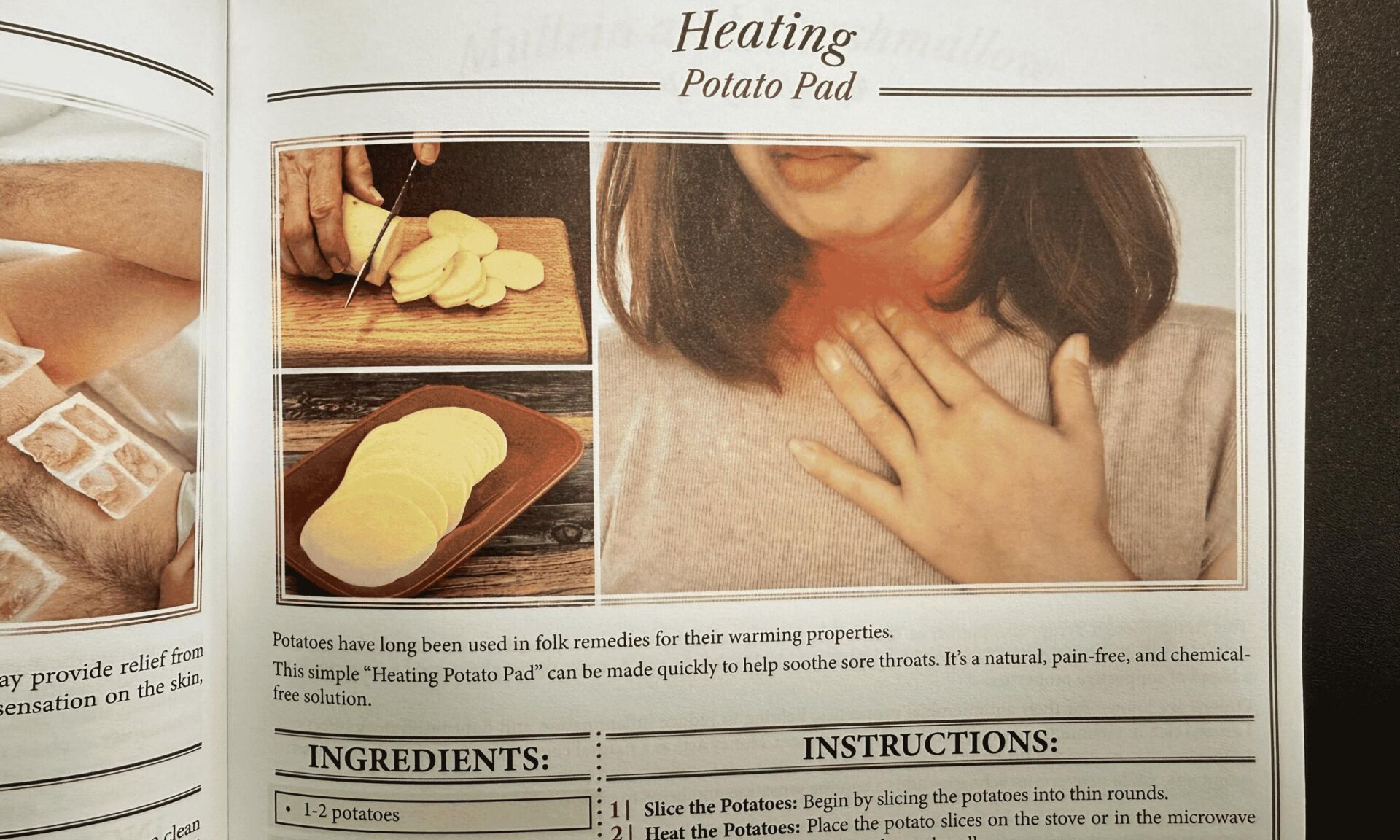
Click here to get the full recipe.
It’s slightly different from the way my grandma did it, and honestly, it may be even more practical.
How to Make a Warm Potato Compress 

You will need:
- 2 or 3 medium potatoes
- A clean cotton or linen cloth
- A second towel or scarf
- A bowl or plate for mashing
- Boil the potatoes with their skins on until they are completely soft.
- Drain them well, then place them in the centre of your cloth. Mash them gently through the fabric or mash them first in a bowl and transfer them carefully.
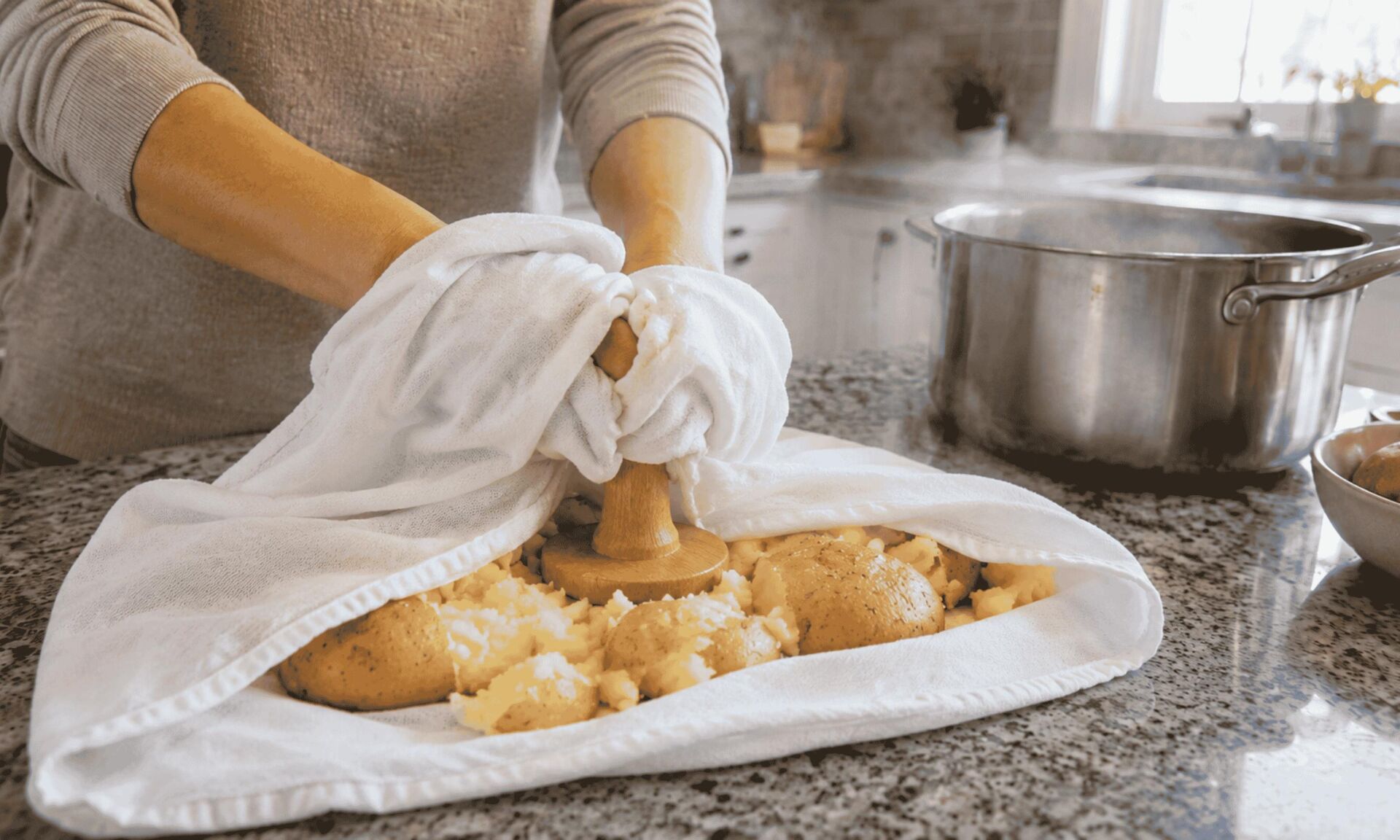
- Fold the cloth around the potatoes so none of the potato touches your skin directly. Add more layers if the bundle feels too hot.
- Test the compress on your inner wrist for at least several seconds.
- Once it feels comfortably hot rather than painful, place it across your upper chest, the back of your neck, or around the shoulders. Avoid placing heavy pressure directly over the front of the throat.
- Wrap a dry towel or scarf around the outside to keep the warmth in place.
- Leave it on while it remains pleasantly warm, checking your skin regularly. Remove it immediately if you notice burning, stinging, numbness, blotchy redness, dizziness, or increased discomfort.
Do not fall asleep wearing it.
People with diabetes, reduced circulation, nerve damage, sensitive skin, or a reduced ability to feel temperature should avoid unsupervised heat treatments.
Herbal Allies for an Irritated Throat and Chest
The potato compress works from the outside by providing warmth. Traditional respiratory herbs work differently, offering internal support for an irritated throat or a stubborn, uncomfortable cough.
Related: What Happens If You Eat Chia Seeds Every Day?
Mullein
Mullein is one of the best herbs to pair with this remedy.
Its flowers have a long history of use for soothing throat irritation associated with dry coughs and colds. A warm cup of carefully strained mullein tea may feel especially comforting when your throat feels dry, scratchy, and overworked.
Always strain mullein through a fine filter. Its tiny hairs can irritate the throat if they remain in the tea.
And mullein has one more strange use most people have never heard of.
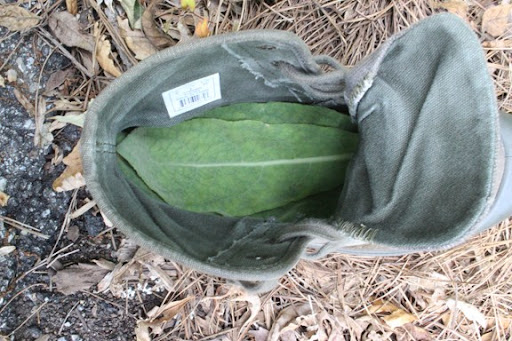 What happens if you put a soft mullein leaf inside your shoe before a long walk?
You don’t even need to get into the Academy for this one; Nicole shares this little trick for free right here.
Click here to see what mullein does in your shoes.
Iceland Moss
Despite its name, Iceland moss is a lichen rather than a moss.
It contains soothing compounds that can coat irritated tissues in the mouth and throat. This makes it a useful traditional choice when your throat feels dry and every cough seems to scrape across it.
Lungwort and lungwort lichen also have a long folk association with respiratory wellness. However, the human evidence behind them remains limited. Iceland moss has clearer traditional support for soothing throat irritation and associated dry cough.
Yerba Santa
Yerba santa has been valued for generations in the western United States, particularly in traditional Native American herbal practices.
Herbalists often turn to it when the chest feels heavy or when thick mucus makes coughing feel unproductive. Modern research has identified numerous plant compounds in yerba santa, although strong human trials for respiratory symptoms are still limited.
It should be treated as a respected traditional herb—not a replacement for medical treatment.
Yerba santa is not always easy to find, and even if you do find it, you still have to dry it, prepare it, and hope you got the quality right.
That’s where most people stop.
And I get it, not everyone has time to forage and prepare traditional herbs from scratch.
That’s why I’d rather get it from a trusted herbalist than from some random big-brand bottle on a shelf. Nicole Apelian’s Yerba Santa Tincture gives you the ready-made version from someone who actually knows plants.
Get your Yerba Santa Tincture here.
Yarrow
Yarrow may be more useful when a respiratory complaint arrives with that chilled, achy, “something is coming on” feeling.
Traditionally, herbalists have included warm yarrow tea in remedies used during feverish colds. However, yarrow is not the leading herb for persistent chest or throat symptoms, and people allergic to plants in the daisy family may also react to it.
Usnea
Usnea has attracted attention for its antimicrobial compounds, but it deserves considerably more caution.
Concentrated usnic acid products and some usnea supplements have been linked to liver concerns, particularly when used in high amounts or without proper guidance.
That does not mean usnea has no place in herbal practice. It simply means this is one herb to use thoughtfully, in an appropriate preparation, and according to the product directions rather than treating it like an unlimited everyday remedy.
I actually started using usnea first for a fungal issue on the big toe of my right foot.
That was the reason I tried it out.
Then I realized how many ways herbalists use usnea, not just for skin, but also as a throat spray and even around the home when you want to keep things cleaner during sick season.
I had no idea I’d end up using the same bottle for more than one purpose.
That’s why I like remedies like this. When a plant has several traditional uses, one bottle can earn its place on your shelf fast.
Get the Usnea Tincture Spray I’m using here.
Know When Warmth Is Not Enough
A potato compress can support comfort. It cannot tell you why you are coughing.
Seek medical help if you have trouble breathing, chest pain, wheezing, blue or grey lips, confusion, coughing up blood, a persistent high fever, symptoms that are rapidly worsening, or a cough lasting longer than about three weeks.
Natural remedies work best when you use them wisely, not when you ask them to hide a warning sign.
The beauty of this old remedy lies in its simplicity. A few potatoes, a piece of cloth, and a little patience can create a period of steady, comforting warmth when your body feels tight, cold, and exhausted.
It may not be glamorous. It certainly is not modern.
But when you are wrapped in a blanket, nursing an irritated throat and waiting for the tension in your shoulders to finally let go, that humble potato may feel far more useful than it looks.
If you’re looking for a more complete herbal setup for throat, chest, mucus, and seasonal lung support, Nicole Apelian already put it together.
Her Lung Support Bundle brings several tinctures into one shelf-ready kit, so you’re not attacking the problem from only one angle.
It includes:
Bronchial Blend — with mullein and lungwort lichen for lung and mucus support.
Yerba Santa — traditionally used when mucus feels thick and the chest feels heavy.
Stinging Nettle — useful during allergy season and inflammatory flare-ups.
Reishi — for immune support, stress resilience, and recovery.
Cordyceps — for lung, body, and energy support.
Buying them together also makes more sense than grabbing each tincture separately.
And with autumn only about a month away, flu season is not exactly far off. This is the kind of bundle I’d rather have before the first cough moves through the house.
Prepared people don’t panic.
Get the Lung Support Bundle here while it’s still available.
You may also like:
The ‘Nerve Oil’ You Should Use For Shaky Hands
Never Do This Before Going To Sleep (Video)
The Mushroom That Can Regrow Brain Tissue
🌿 Join Our Private Herbal Community For Free. 👉 Click here!
References
https://pubmed.ncbi.nlm.nih.gov/25526231/
https://pubmed.ncbi.nlm.nih.gov/34440524/
https://pubmed.ncbi.nlm.nih.gov/20536800/
https://pubmed.ncbi.nlm.nih.gov/16437495/
https://pmc.ncbi.nlm.nih.gov/articles/PMC3650506/
https://webbook.nist.gov/cgi/cbook.cgi?ID=C7732185&Mask=2
https://www.nhs.uk/conditions/burns-and-scalds/
https://www.gloshospitals.nhs.uk/your-visit/patient-information-leaflets/ice-and-heat-treatment/
https://pubmed.ncbi.nlm.nih.gov/28849871/
https://www.ema.europa.eu/en/medicines/herbal/verbasci-flos
https://www.ema.europa.eu/en/documents/herbal-summary/mullein-flower-summary-public_en.pdf
https://pubmed.ncbi.nlm.nih.gov/16222647/
https://pubmed.ncbi.nlm.nih.gov/35088467/
https://www.ema.europa.eu/en/medicines/herbal/lichen-islandicus
https://www.ema.europa.eu/en/documents/herbal-monograph/final-european-union-herbal-monograph-cetraria-islandica-l-acharius-sl-thallus-first-version_en.pdf
https://pubmed.ncbi.nlm.nih.gov/33530389/
https://www.mdpi.com/2076-3417/12/13/6678
https://pubmed.ncbi.nlm.nih.gov/37473504/
https://www.ars.usda.gov/research/publications/publication/?seqNo115=433830
https://www.ema.europa.eu/en/documents/herbal-report/final-assessment-report-achillea-millefolium-l-herba-revision-1_en.pdf
https://www.ncbi.nlm.nih.gov/books/NBK548493/
https://pubmed.ncbi.nlm.nih.gov/19034791/
https://pubmed.ncbi.nlm.nih.gov/33276059/
https://www.nccih.nih.gov/health/dietary-and-herbal-supplements
https://www.mayoclinic.org/symptoms/cough/basics/when-to-see-doctor/sym-20050846
https://www.nhs.uk/conditions/chest-infection/


I use an over the calf tube sock with 2 pounds of uncooked rice in it. I put it in the microwave till it feels warm enough, then put it where needed.
That’s a great idea, LueRell!
Rice holds warmth really well too, and I like that you can reuse the same sock whenever you need it.
Just like with the potato compress, it’s always worth checking the temperature carefully before putting it against the skin.
Thank you for sharing what works for you, I’m sure other readers will find this helpful too!
Let me know what other topics you’d like to see us cover!