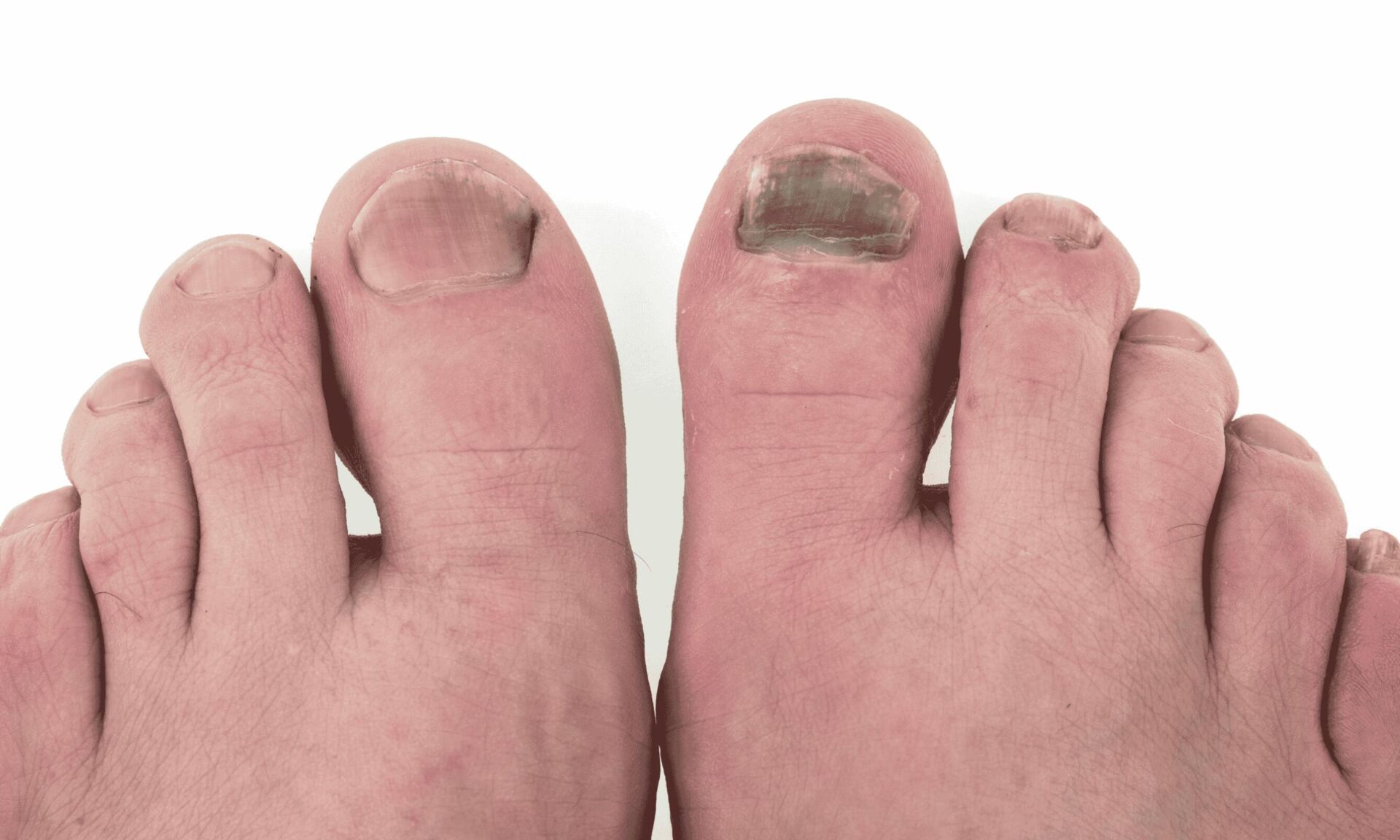
Fungus rarely arrives with drama. It starts with a little itching, a patch of flaky skin, or one nail that suddenly looks thicker and duller than the others.
Then it refuses to leave.
You wash. You dry. You change your socks. Yet the same uncomfortable spot keeps coming back. And while conventional antifungal treatments can help, you may prefer to begin with something simpler—especially when your herbal cabinet already holds plants traditionally valued for protecting troubled skin.
This DIY salve brings several of those ingredients together in one practical remedy. It will not replace medical care or guarantee that a fungal infection disappears, but it may help support clean, comfortable skin when used consistently.
Why Fungus Can Be So Stubborn
Fungi thrive in warm, damp places. That makes sweaty feet, tight shoes, shared showers, skin folds, and moist socks especially inviting.
Once established, a fungal problem may linger because treating the skin is only part of the solution. You also need to remove the conditions that allow it to flourish.
That means keeping the area clean, drying it thoroughly, changing damp clothing, and giving your skin room to breathe. A salve can support this routine, but consistency matters far more than applying a large amount once and forgetting about it.
More Than a Cosmetic Problem
Fungus is not just about flaky skin or a discolored nail. It is a living microorganism that can spread, cause persistent itching, and damage the skin or nail over time. Scratching may also crack the skin, creating an opening for bacteria.
Most fungal infections are manageable, but they deserve attention—especially if you have diabetes, poor circulation, or a weakened immune system. Treating the problem early is not only about appearance. It is about protecting your skin and overall health.
There’s a guide about fungal infections which includes Candida Overgrowth and it’s symptoms. I learned that chronic fatigue, mood disorders, recurring urinary tract infections and brain fog can be symptoms of candida being present in your life.
For me it was just the mood disorders that went away once I followed the Gentle Food Cleanse recommended on page 47. It truly worked, and the herbal remedies recommended in this book really did the job, and I didn’t have to pay a dime for any pills!
Oregano or Thyme: Powerful but Pungent
Oregano and thyme contain aromatic compounds such as carvacrol and thymol. These compounds give the plants their sharp scent and much of their antifungal potential.
They also make the essential oils extremely concentrated.
Use only a very small amount. Adding extra drops will not necessarily improve the salve, but it may leave your skin red, tender, or burning. When you work with strong essential oils, restraint is part of the remedy.
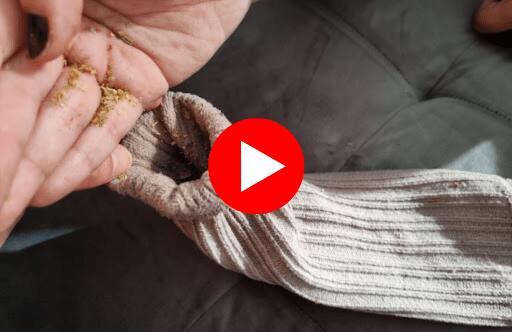
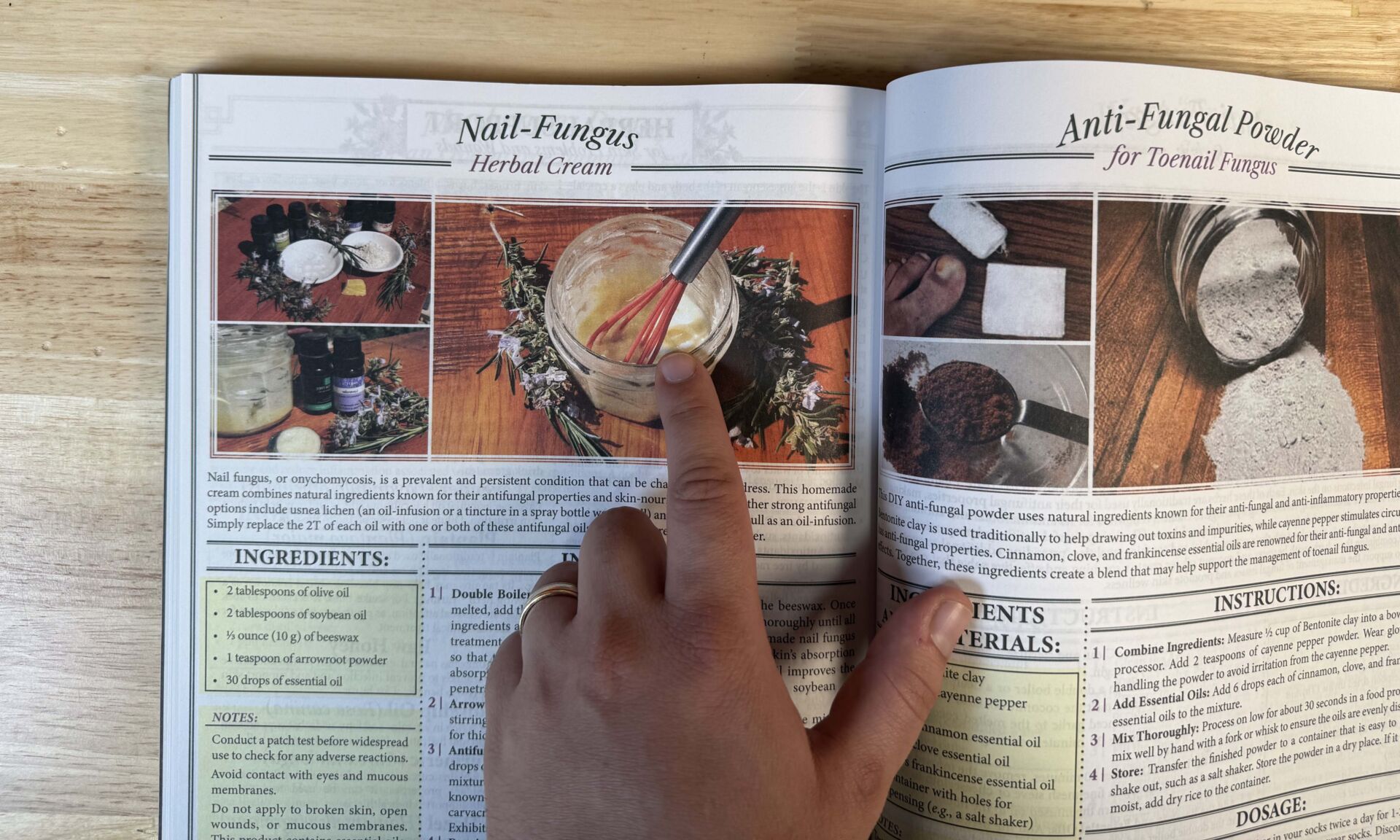
If you want something that works while you’re just going about your day, Nicole teaches a clever remedy inside The Lost Remedies Academy: a 3-herb antifungal powder you put directly in your socks.
You make it by combining three fungal-killing plants with a moisture-absorbent base, then sprinkle it in your socks each morning. The powder stays in contact with your toenails all day, slowly breaking down the fungus from the outside. People dealing with stubborn toenail fungus for years have told us this was the thing that finally worked.
Nicole walks you through the whole process on video: which herbs to use, how to grind them, how much to apply. See the video recipe here.
Tea Tree Oil: A Familiar Skin Ally
Tea tree oil has become one of the best-known essential oils for problem skin. It has shown antifungal activity and may be helpful for mild athlete’s foot, although it may not perform as reliably as standard antifungal treatments.
Because undiluted tea tree oil can irritate or sensitize your skin, you should never treat “more” as “better.” A few drops spread throughout the salve are enough.
Where Vinegar Fits In
Apple cider vinegar often appears in traditional foot-soak recipes because its acidity may create a less welcoming surface environment for certain microbes.
However, vinegar has not been conclusively shown to eliminate toenail fungus, and strong or prolonged applications may irritate or burn sensitive skin.
If your skin is not cracked or inflamed, you can use a diluted vinegar soak separately from the salve:
Combine one part apple cider vinegar with two to three parts warm water. Soak the area for 10 to 15 minutes, rinse if irritation develops, and dry your skin completely.
Never apply the salve while the area is still damp. Trapped moisture gives fungus exactly what it wants.
Garlic contains compounds with antifungal activity, but fresh garlic can irritate the skin and has caused burns when left in direct contact with it.
For that reason, this recipe does not ask you to tape a raw clove against your skin. Instead, you may use a small amount of carefully prepared garlic-infused oil—or leave it out entirely if your skin is sensitive.
A salve should calm your skin, not start another problem.
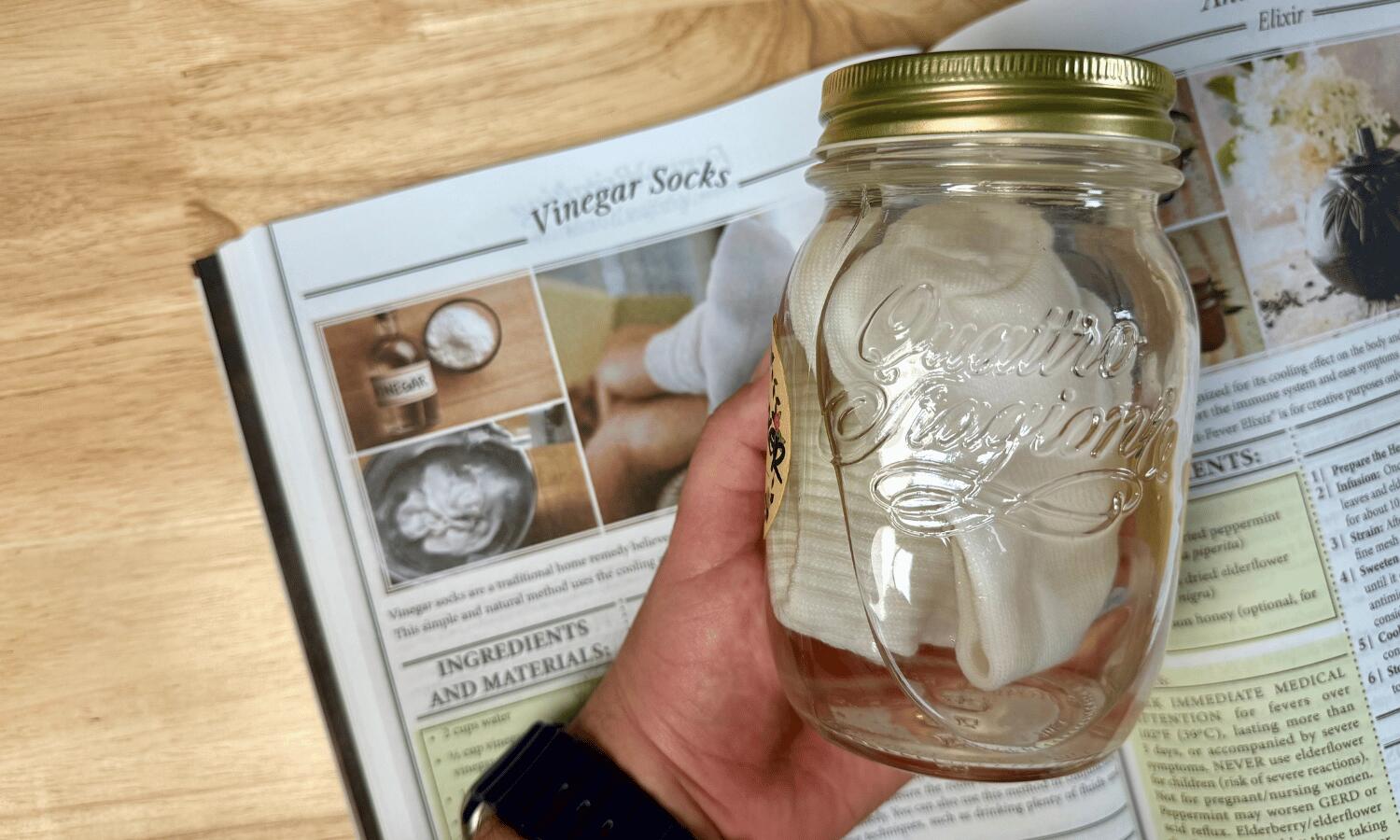
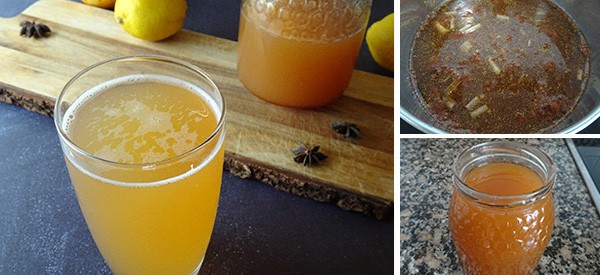
Vinegar creates an acidic environment fungi hate. You soak cotton socks in diluted vinegar, wring them out, put them on your feet, and leave them on overnight.
The vinegar pulls toxins through the feet while creating an inhospitable environment for fungus. It sounds odd, but it works.
Nicole includes the exact Vinegar Socks recipe in The Forgotten Home Apothecary. Complete with the right vinegar-to-water ratio, how long to soak, and how often to do it. It’s one of those old-world remedies that actually delivers. Get the recipe here.
Usnea: The Heart of This Herbal Salve
You may know usnea as “old man’s beard,” the pale green lichen that hangs from trees like tangled threads.
Herbalists have long valued usnea for topical preparations, particularly when the skin needs cleansing and protection. It contains usnic acid, a naturally occurring compound associated with antimicrobial and antifungal activity.
That makes usnea a fitting centerpiece for this recipe.
However, “natural” does not mean harmless. Usnea is potent, and its internal use raises important safety concerns. This recipe uses it only as a topical infused oil. Always patch-test the finished salve before applying it to a larger area.
I first heard about usnea as “old man’s beard,” that pale, stringy lichen you see hanging from trees in clean forests.
And once I started looking into it, I understood why herbalists have respected it for so long.
Usnea contains a powerful compound called usnic acid, which has been studied for its antifungal and antimicrobial activity. That’s why many herbalists use usnea when the skin needs extra cleansing and protection.
But this is not something I’d pick randomly from a tree and throw into a jar.
If you want to harvest usnea yourself, make sure to do it responsibly to protect this slow-growing lichen. Look for usnea on fallen branches after storms rather than pulling it from living trees, so you don’t harm the environment.
Always check for its stretchy white core to correctly identify it and avoid confusing it with similar lichens. And since usnea absorbs toxins from its surroundings, only gather it from clean, unpolluted areas.
Once you’ve collected your usnea, dry it thoroughly before using it. To make a tincture, you’d usually need high-proof alcohol to extract its active compounds properly.
And that’s where I’ll be honest: this can become a long, time-consuming process.
You need the right lichen, from the right place, prepared the right way. And after many unsatisfying attempts from multiple suppliers, I finally found the apothecary I trust most for this.
So if you want to skip the harvesting, drying, guessing, and extraction, this is the only ready-made usnea I’d personally recommend.
1 tablespoon dried thyme or oregano leaf, optional
1 to 2 tablespoons grated beeswax
6 drops tea tree essential oil
1 to 2 drops oregano or thyme essential oil, optional
A clean, dry jar or tin
Step 1: Infuse the Herbs
Place the carrier oil and dried herbs in a heat-safe bowl over a pan of gently simmering water.
Warm the mixture on very low heat for one to two hours. Do not boil it. Stir occasionally and make sure no water enters the oil.
Strain the herbs through cheesecloth or a fine mesh strainer.
Step 2: Turn the Oil Into a Salve
Return the infused oil to the double boiler. Add one tablespoon of beeswax and stir until it melts.
Place a spoonful in the freezer for a minute to test the texture. Add more beeswax if you prefer a firmer balm.
Remove the mixture from the heat. Allow it to cool slightly, then stir in the essential oils.
Pour the salve into a clean container and let it harden uncovered.
How to Use It
Wash the affected area and dry it thoroughly, paying special attention between the toes or inside skin folds.
Apply a thin layer of salve once or twice daily. You do not need to coat the skin heavily. A small, consistent application is more useful than a thick, greasy layer that traps moisture.
Patch-test the salve first and stop using it if you develop burning, swelling, blistering, or worsening irritation. Do not apply it to open wounds, broken skin, your eyes, mouth, or other sensitive areas.
The #1 Mistake People Make After Fungal Infections
No matter what you use to clear out the fungus and heal your skin, in the process your skin can become damaged, dry, or irritated.
So you need to soothe it.
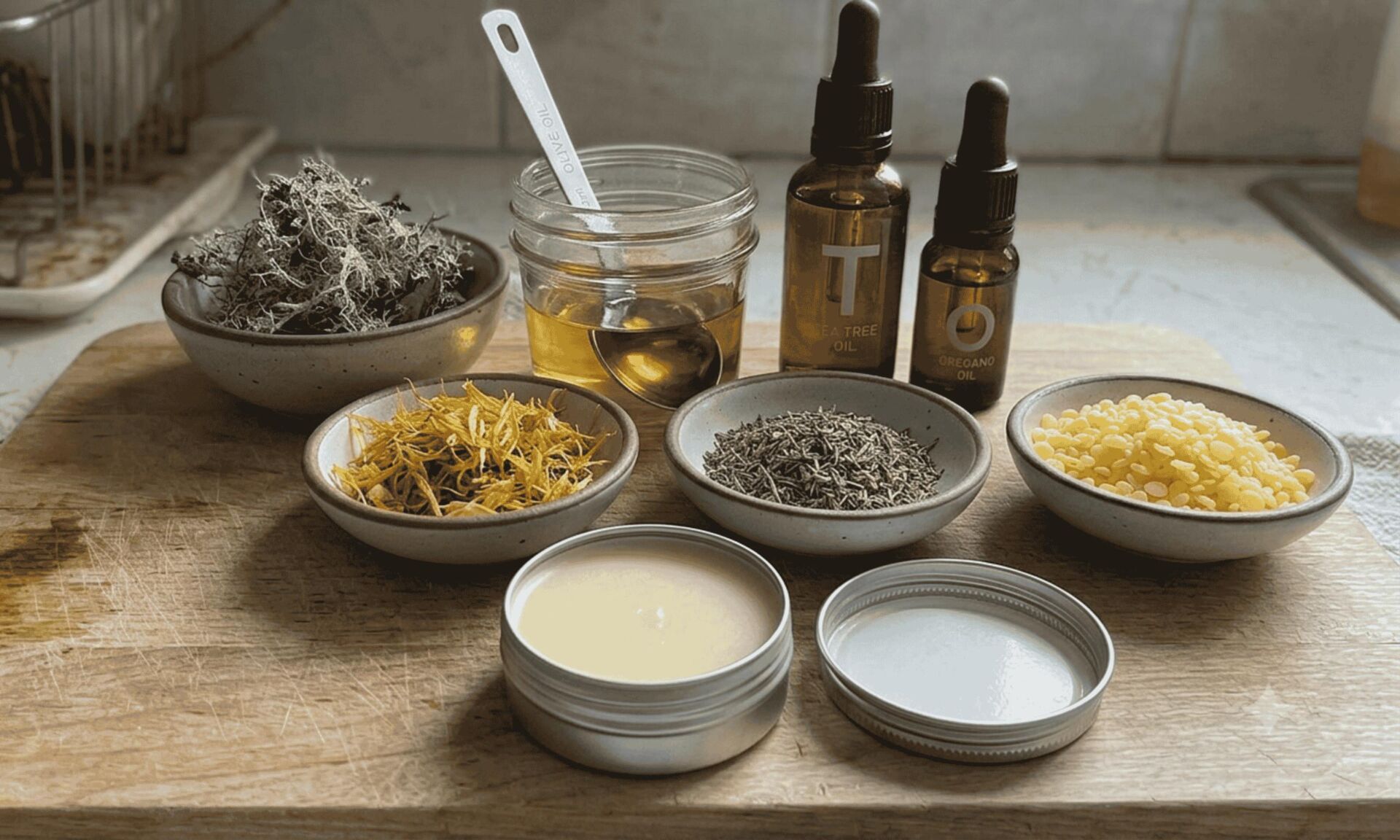
That’s why I recommend you make a salve at home like this one in the image below that I learned how to make. It restores balance, reduces inflammation, and promotes healing—so your skin doesn’t stay vulnerable to reinfection.
And listen—if you don’t want to make it yourself, I highly recommend the All-Purpose Salve I’m using daily.
I use it on my cracked skin and lips from the cold, rashes I get on my skin, itches, bug bites now that spring has arrived—and honestly, because it contains lavender, it smells amazing too.
You can get it here for a fraction of the price you’d spend getting the herbs yourself.
Your skin is resilient, your body knows how to heal, and now you have the tools to support it naturally—one remedy at a time.
Give Your Skin the Best Chance
A salve cannot overcome damp socks, sweaty shoes, or towels that keep reintroducing the same problem.
Change your socks daily. Rotate your shoes so they can dry completely. Avoid sharing towels, nail clippers, or footwear. Wear sandals in communal showers, and keep the affected area as dry as possible.
Seek medical advice when the area becomes painful, swollen, warm, or increasingly red, or when you notice pus, fever, spreading symptoms, or no improvement. You should also speak with a healthcare professional before treating a suspected fungal infection at home if you have diabetes, poor circulation, reduced immunity, or significant nail damage.
Herbal remedies give you practical tools, but they work best when you use them with patience, good judgment, and respect for what your body is telling you.
I agree with all your choices for herbs included in your “Fungus Killer Salve”. However, there is an additional herb that you might try in your formulation: Chaparral (Larrea tridentata). I used to live in New Mexico and we could find this shrub/tree in the desert. It is also called Creosote Bush. It is very pungent and should probably be handled with cloth gloves. There are many folk uses for the plant, that I can’t really speak to, such as it’s uses in cancer treatment. According to medical authorities, it is no longer recommeded for internal use due to liver toxicity. Many of the local “Curanderas” would disagree. However, used externally, it is not toxic and is very effective for a number of skin conditions. I have found it to be extremely effective as an antifungal. The dried leaves are available from most of the well known herb suppliers. BTW, I said it was pungent; that may be an understatement. Prepare yourself for the smell. It doesn’t bother me but, some people can’t stand it.
my father told me years ago that this is great at getting rid of foot fungus. I love the smell as it reminds me of my childhood. We had so much just growing around the house.
We use cookies to ensure that we give you the best experience on our website. If you continue to use this site, we will assume that you are happy with it.
Functional Always active
The technical storage or access is strictly necessary for the legitimate purpose of enabling the use of a specific service explicitly requested by the subscriber or user, or for the sole purpose of carrying out the transmission of a communication over an electronic communications network.
Preferences
The technical storage or access is necessary for the legitimate purpose of storing preferences that are not requested by the subscriber or user.
Statistics
The technical storage or access that is used exclusively for statistical purposes.The technical storage or access that is used exclusively for anonymous statistical purposes. Without a subpoena, voluntary compliance on the part of your Internet Service Provider, or additional records from a third party, information stored or retrieved for this purpose alone cannot usually be used to identify you.
Marketing
The technical storage or access is required to create user profiles to send advertising, or to track the user on a website or across several websites for similar marketing purposes.




I agree with all your choices for herbs included in your “Fungus Killer Salve”. However, there is an additional herb that you might try in your formulation: Chaparral (Larrea tridentata). I used to live in New Mexico and we could find this shrub/tree in the desert. It is also called Creosote Bush. It is very pungent and should probably be handled with cloth gloves. There are many folk uses for the plant, that I can’t really speak to, such as it’s uses in cancer treatment. According to medical authorities, it is no longer recommeded for internal use due to liver toxicity. Many of the local “Curanderas” would disagree. However, used externally, it is not toxic and is very effective for a number of skin conditions. I have found it to be extremely effective as an antifungal. The dried leaves are available from most of the well known herb suppliers. BTW, I said it was pungent; that may be an understatement. Prepare yourself for the smell. It doesn’t bother me but, some people can’t stand it.
my father told me years ago that this is great at getting rid of foot fungus. I love the smell as it reminds me of my childhood. We had so much just growing around the house.