How to Make Hot Honey at Home
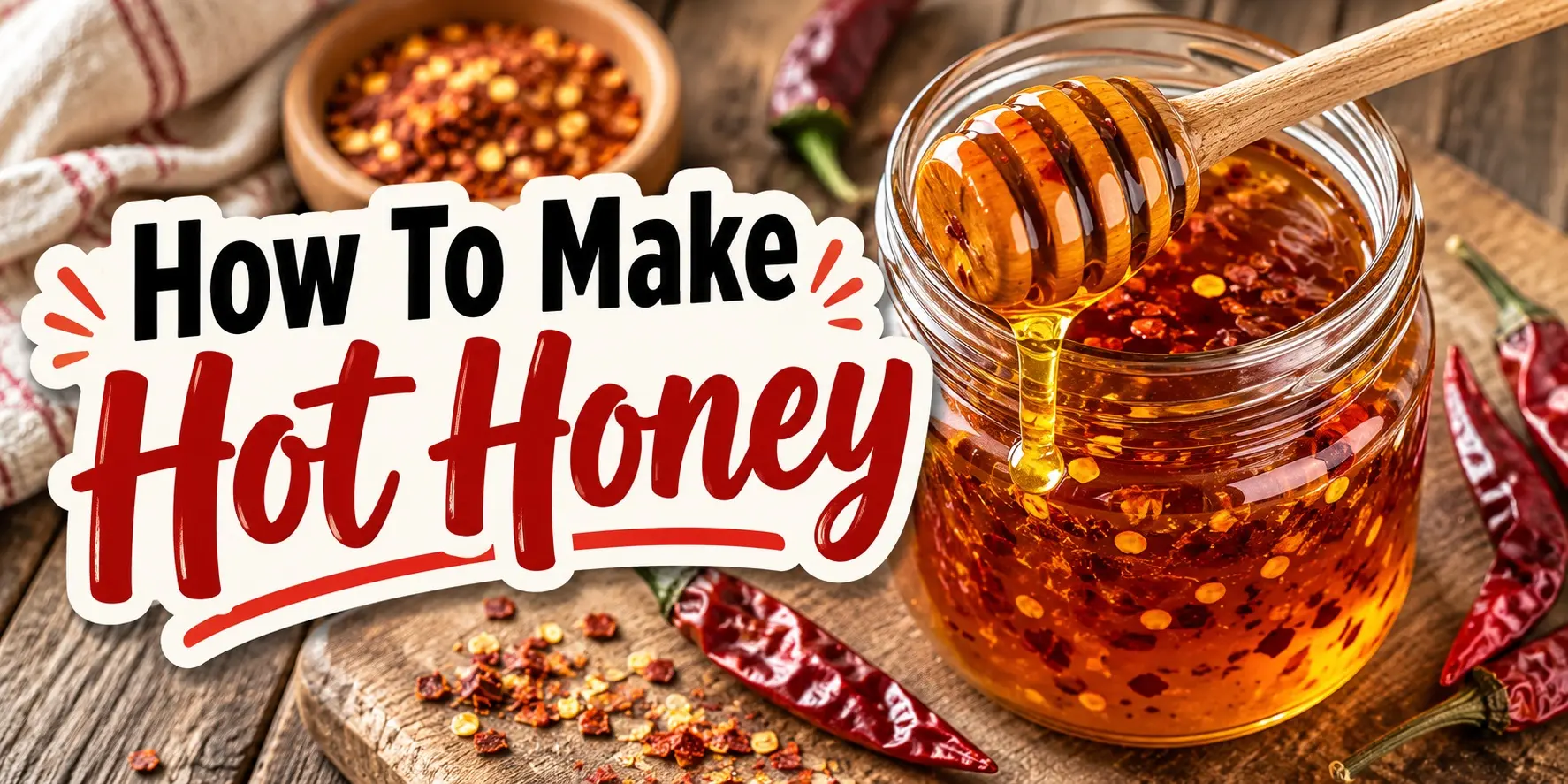
Hot honey has gone from a pizzeria secret to a pantry staple, and once you understand how it is made, it is easy to see why. It is nothing more than raw honey gently warmed with chili peppers or chili flakes so the honey absorbs their heat, color, and flavor. What starts as a simple kitchen project, though, sits right at the intersection of two things herbalists think about constantly: how honey behaves as a natural preservative, and how easy it is to accidentally turn a safe infusion into a risky one. This guide walks through a reliable method for making hot honey at home, the food safety facts worth knowing before you start, and how to store and use it once it is done.
Herbalist’s Note
This article is for educational purposes and is not a substitute for medical advice. Honey infusions, including hot honey, are a food preparation, not a treatment for any medical condition. If you are pregnant, immunocompromised, managing a chronic illness, or feeding a child under one year old, read the safety section below before making or serving any infused honey.
What Is Hot Honey, Exactly?
Hot honey is raw or regular honey that has been infused with heat from chili peppers, dried chili flakes, or hot sauce. The honey carries the sweetness up front, and the capsaicin in the chilies follows a beat behind, which is part of what makes it so moreish on pizza, cornbread, roasted vegetables, or a spoonful stirred into tea. It is not a new invention. Cooks in the American South have long paired honey with cayenne and hot sauce, and infusing honey with botanicals of all kinds, chili included, is a technique herbalists have used for generations to make bitter or pungent ingredients easier to take.
Learn how to make: Medicinal Honey Garlic Pickles
Why Make Your Own Instead of Buying It
Making hot honey at home lets you control the honey source, the chili variety, and the final heat level, none of which you can adjust once a bottle is sealed at the store. It is also worth knowing what raw honey itself brings to the table. Research reviewed by the National Institutes of Health describes honey’s natural antimicrobial activity as multifactorial, drawing on its low pH, high sugar content, hydrogen peroxide production, and plant-derived phenolic compounds working together. None of that means hot honey is a remedy, but it does explain why herbalists have long valued raw honey as a base for other preparations, from cough syrups to soothing throat blends.
Also Read: What Happens If You Drink Pickle Juice?
Safety First: What You Need to Know About Infused Honey
Before you reach for a saucepan, it is worth understanding why infused honey has specific safety rules, because the risks are real even though they are manageable.
Important Safety Warning
Honey can naturally carry dormant spores of Clostridium botulinum. These spores are harmless to healthy adults and older children, but they can be deadly to infants under one year old, whose digestive systems cannot yet control them. Never feed honey or hot honey, in any form, to a child under 12 months.
Adding fresh, low-acid ingredients such as fresh chilies, fresh garlic, or fresh herbs to honey and storing it at room temperature can create conditions where those spores grow and produce toxin, even though the honey itself looks, smells, and tastes normal. Use dried chili flakes or fully dried peppers whenever possible, keep any fresh-ingredient version refrigerated, and use it within about one to two weeks.
Read this: Turmeric + Cayenne
This is not a theoretical concern invented to be cautious. The Oregon State University Extension Service notes that bacteria have been shown in lab trials to grow at the interface between a submerged low-acid ingredient and the honey around it, despite honey’s reputation for being self-preserving. Standard kitchen heating and store-bought pasteurization do not reach the sustained temperatures needed to destroy botulism spores, so the safeguard is in ingredient choice and storage, not in how hot you get the honey on the stove.
Also read: How to Grow Luffa and Turn Them Into Sponges
The other half of this warning is about infants specifically. The Centers for Disease Control and Prevention advises that honey should never be given to a baby under 12 months old, regardless of whether it is raw, pasteurized, filtered, or organic, because none of those processing methods eliminate the spores. If hot honey is going in your kitchen rotation, treat it the same way you would treat plain honey around infants: it does not belong in their food at all.
What You’ll Need
This recipe scales easily, and the ratios below make roughly one cup of finished hot honey.
- 1 cup raw or regular honey (a lighter, more neutral variety such as clover lets the chili flavor come through; a darker honey adds its own depth)
- 1 to 2 tablespoons dried red chili flakes, or 4 to 5 whole dried chili peppers (arbol, guajillo, or Thai chilies all work well)
- 1 teaspoon apple cider vinegar or white vinegar (optional, for tang and brightness)
- A small saucepan, a fine mesh strainer, and a clean, dry glass jar with a lid
Step-by-Step: Stovetop Hot Honey
- Combine the honey and dried chili flakes or peppers in a small saucepan. If using whole dried peppers, slice or crack them open first so more surface area is exposed to the honey.
- Warm the mixture over medium-low heat, stirring occasionally, until you see small bubbles form around the edge of the pan. This usually takes 3 to 5 minutes. Do not let it come to a full rolling boil, since honey scorches easily and can turn bitter or crystallize oddly once cooled.
- Remove the pan from the heat as soon as it reaches a light simmer, and let the mixture rest for 10 to 15 minutes so the chilies have time to infuse. The longer it sits, the spicier it becomes.
- Taste carefully with a clean spoon (honey straight off the stove will be hot in temperature as well as flavor, so let it cool slightly first). If you want more heat, stir in a bit more chili flakes and let it rest another few minutes.
- Stir in the vinegar, if using, once the honey has cooled slightly. This is optional but adds a pleasant tang that balances the sweetness.
- Strain the honey through a fine mesh strainer into a clean, dry jar to remove the chili solids, pressing gently with a spoon to extract as much flavor as possible. Straining is optional if you like the visual and texture of flecks of chili suspended in the honey, but note that leaving solids in shortens the safe storage window.
- Let the jar cool completely with the lid off before sealing, since trapped condensation introduces moisture that honey does not need.
Also Read: What Happens If You Add Cinnamon To Your Honey Jar
A Faster Microwave Method
If you only need a small batch, combine the honey and chili flakes in a microwave-safe glass measuring cup and heat in 20 to 30 second intervals, stirring between each, until it reaches a light simmer, roughly one to two minutes total depending on your microwave. Watch it closely, since honey can boil over quickly once it gets going. Let it rest, strain, and store the same way as the stovetop version.
Choosing Your Chilies
The type of chili you use shapes the final flavor as much as the heat level does.
- Crushed red pepper flakes: the most common choice, giving straightforward, consistent heat
- Dried arbol or guajillo peppers: add a fruitier, slightly smoky note along with the heat
- Dried Thai chilies or bird’s eye chilies: sharp, clean heat with less added flavor complexity
- Chipotle flakes: bring a deep, smoky, almost barbecue-like character
As a general rule, stick with dried chilies for anything you plan to store at room temperature. Fresh chilies can be used for a small batch you plan to refrigerate and use within a week or two, in keeping with the safety guidance above.
A Note on Capsaicin
The heat in hot honey comes from capsaicin, the compound responsible for a chili pepper’s pungency. Beyond flavor, capsaicin has been studied for a range of physiological effects. A review published in PMC (National Library of Medicine) reports that habitual consumption of spicy foods has been associated with lower rates of certain cardiometabolic conditions in population studies, and that capsaicin’s interaction with the TRPV1 receptor is an active area of research. These are population-level associations rather than proof that hot honey itself affects any individual’s health, and capsaicin in large amounts can cause gastrointestinal discomfort in sensitive people, so building heat gradually is the more comfortable approach.
Storage and Shelf Life
- Hot honey made with dried chilies and no fresh, moisture-heavy ingredients can be stored in a sealed jar at room temperature, away from direct light, for several months
- Hot honey made with fresh chilies, fresh garlic, or unstrained solids should be refrigerated and used within one to two weeks
- If the honey crystallizes over time, this is a normal, harmless process and not a sign of spoilage. Set the sealed jar in a bowl of warm (not boiling) water and let it sit until it returns to liquid
- Always use a clean, dry spoon when scooping from the jar, since introducing moisture or food residue can shorten shelf life
Ways to Use Hot Honey
- Drizzled over pizza, fried chicken, or cornbread
- Whisked into a vinaigrette for a sweet-spicy salad dressing
- Brushed onto roasted vegetables or grilled meat in the last few minutes of cooking
- Stirred into hot tea or a hot toddy for a warming, spicy sweetness
- Swirled into softened cream cheese or goat cheese as a quick spread
Common Questions
Can I give hot honey to my toddler?
No. Honey in any form, including hot honey, should never be given to a child under 12 months old due to the risk of infant botulism, and it is wise to check with a pediatrician about timing beyond that age as well.
Does heating honey destroy its nutrients?
Yes, to some degree. Gentle warming for a few minutes has a much smaller effect than commercial pasteurization, but heat gradually reduces enzyme activity and some heat-sensitive compounds. Keeping the temperature at a light simmer rather than a boil helps preserve more of honey’s natural qualities.
Is hot honey safe to can or water-bath process for long-term storage?
No. Honey infusions are not appropriate for home canning using standard water-bath methods, because honey’s sugar content and low water activity behave differently from the acidic foods those methods are designed for. Refrigeration or short-term room-temperature storage with dried ingredients, as described above, is the safer path for a home kitchen.
Can I make hot honey vegan?
Yes. Substituting a plant-based syrup such as agave for the honey produces a similar sweet-heat condiment, though it will lack honey’s natural antimicrobial properties and enzyme content, and the flavor and texture will differ somewhat.
Want to Learn More Traditional Skills Like This?
Making hot honey is just one example of the kind of practical kitchen wisdom our grandparents took for granted. Long before supermarkets and processed foods, families relied on simple ingredients, time-tested preservation methods, and natural remedies to keep their homes stocked year-round.
If you enjoy learning forgotten techniques like this, you’ll love the Amish Ways Book.
Inside, you’ll discover hundreds of practical skills inspired by generations of Amish living, including:
- Traditional food preservation without unnecessary gadgets
- Natural cleaning solutions made from common household ingredients
- Homemade pantry staples and kitchen essentials
- Simple herbal preparations and old-fashioned home remedies
- Gardening secrets that improve harvests naturally
- Frugal homesteading skills that help you become more self-sufficient
Whether you live on a large homestead or in a small suburban home, these timeless methods can help you save money, waste less, and become more resilient using everyday resources.
Bringing It Together
Hot honey is a small, satisfying project that rewards a bit of care in exchange for a condiment you will reach for constantly. Choose dried chilies for anything you want to keep on the counter, respect the storage guidance if you experiment with fresh ingredients, and keep it well away from any child under one. Beyond that, the ratios above are a starting point rather than a rulebook. Once you understand how the honey and chili interact, adjusting the heat, the chili variety, and the finishing touches to suit your own table is simply a matter of taste.
You May Also Like:

Discover The Most Effective Natural Antibiotic Growing In Your Backyard (Video)
Sage Honey Benefits and Uses You Should Know
Why You Should Rub Honey On Your Skin