When was the last time you got out of bed without thinking about your knees?
Or walked down the stairs without reaching for the railing?
Or spent an entire afternoon with your family without wondering how much your joints would hurt afterward?
That’s the cruel thing about joint pain.
It doesn’t just steal your comfort. It slowly steals the little things that make life worth living.
The walks you used to love. The gardening. The family outings you now think twice about.
Eventually, you start believing aching joints are just part of getting older.
But they don’t have to control your life.
Our grandparents knew a thing or two about soothing hardworking joints with herbs.
And with colder weather approaching, there’s one old-fashioned herbal preparation worth bringing back.
Especially if your knees are starting to feel like rusty hinges.
I like to call it Nature’s WD-40 for Rusty Joints.
And that’s only half the story.
But soothing your joints from the outside is only half the battle. What’s happening inside matters just as much.
Let’s start with those rusty hinges.
Why Your Joints Hate Cold Weather
If you know a day before how the weather will be tomorrow and you feel it in your joints… this is for you.
First, you’re not imagining things. Changes in air pressure may increase joint sensitivity, while the cold can make your muscles tighten up.
But here’s what makes it even worse. When it’s cold, you move less.
You skip your walks, spend more time on the couch, and stay indoors.
And the less you move, the stiffer your joints become.
Your joints hurt, so you move less. You move less, so they hurt more.
It’s a vicious cycle.
Luckily, a little warmth, gentle movement, and some old-fashioned herbal care can help you break it.
And that’s where a remedy your grandparents might recognize comes in.
If your joints are getting stiff, don’t just think about what to rub on them.
Think about how you move, what you eat, how much inflammation you carry, and what you do every day to keep your musculoskeletal system strong.
That’s exactly why I like Nicole’s holistic approach.
She lays out what you can do morning, afternoon, and evening for common health problems, including the habits, foods, movement, herbs, and remedies that support your body as a whole.
Think of an old garden gate. When its hinges get rusty and start squeaking, you don’t throw it away.
You give it a little oil, get it moving, and suddenly it works better.
Your knees aren’t that different when it comes to needing some attention.
And instead of reaching for another store-bought cream, why not try something herbalists have used for generations?
A homemade salve you can massage into your aching knees after gardening, before a walk, or whenever they start complaining.
Its secret? A handful of powerful herbs working together.
Some have traditionally soothed aches, others bring warmth, and a few care for your skin.
Here’s the problem with learning herbalism online:
The information is scattered, watered down, and often so cautious that you never really learn what the plant was traditionally used for or how an herbalist would actually prepare it.
If you’re going to trust this kind of knowledge, I’d rather you get it from someone who has spent decades living it.
Nicole Apelian poured 28+ years of plant knowledge into The Lost Book of Herbal Remedies. The first book covers 800+ plants and remedies, with color photos, identification guidance, medicinal uses, and preparation instructions. Pasted text
And even that wasn’t enough room.
So she created The Lost Book of Herbal Remedies II with 139 completely new plants and 207 additional remedies.
Those sticky, fragrant buds have been used by Indigenous communities in North America to make traditional salves for sore muscles, aching joints, and bruises.
Just be careful if you’re sensitive to aspirin, as cottonwood buds contain related compounds.
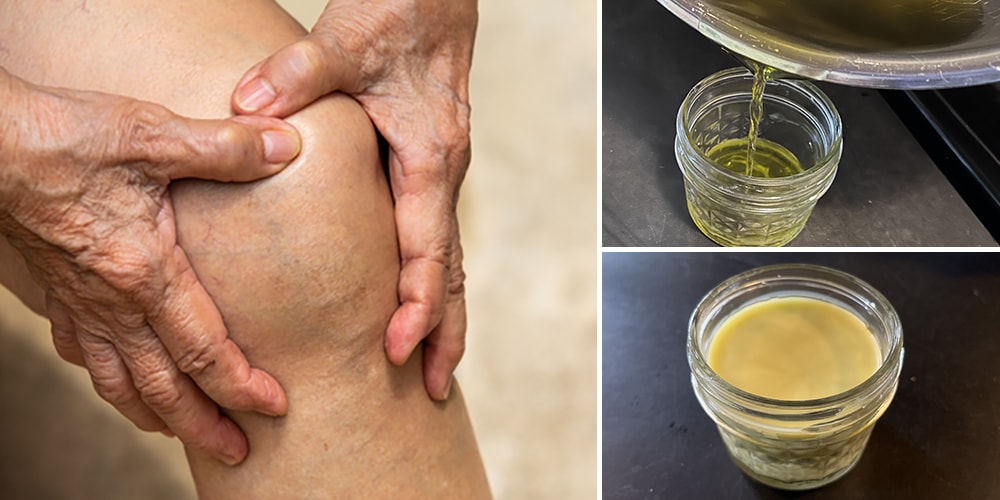
How to Make Your Own Herbal WD-40 for Rusty Joints
Ready to make your own herbal joint balm?
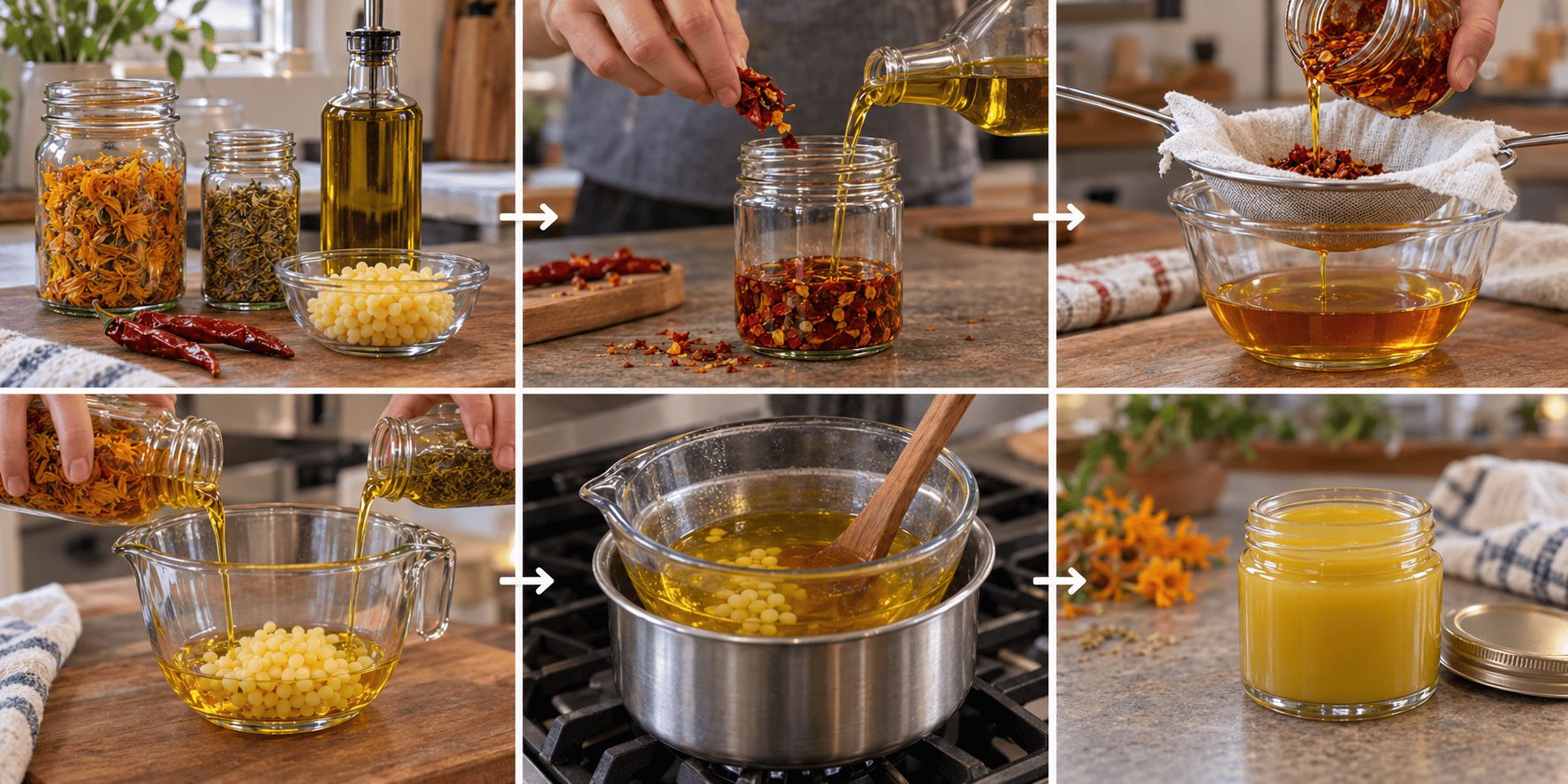
This recipe brings together arnica, calendula, and cayenne in a traditional oil-and-beeswax preparation.
You’ll need:
¼ cup calendula-infused olive oil
¼ cup commercially prepared arnica-infused oil (labeled for topical use)
1 small dried cayenne pepper
¼ cup olive oil (for the cayenne infusion)
1 tablespoon cosmetic-grade beeswax pellets
A few drops of vitamin E oil (optional)
A clean, dry glass jar
Here’s how to prepare it:
Prepare your cayenne infusion. Break up one completely dried cayenne pepper, place it in a dry jar, and cover it with ¼ cup olive oil.
Let the pepper infuse. Seal the jar and leave it in a cool, dark place for 1–2 weeks, gently shaking it every few days.
Strain thoroughly. Remove the pepper and filter the oil until no particles remain. Label and set it aside. Because its capsaicin strength is unknown, don’t add it to the finished skin balm without concentration testing.
Combine your herbal oils. Add the calendula and arnica oils to a heatproof container with the beeswax.
Melt gently. Place the container over a double boiler and stir until the beeswax melts.
Finish your balm. Remove from the heat, add vitamin E if using, and pour into a clean, dry jar.
Let it set. Allow the balm to cool completely before putting on the lid.
And there you have it! Your homemade arnica and calendula joint balm, with your cayenne infusion prepared separately.
Important Note For This Recipe: Not every pepper has the same strength.
Use too much and you can irritate your skin badly. Use too little and you may barely feel anything.
That’s why, for a warming joint salve, I personally prefer having the concentration properly formulated instead of guessing with a pepper from my kitchen.
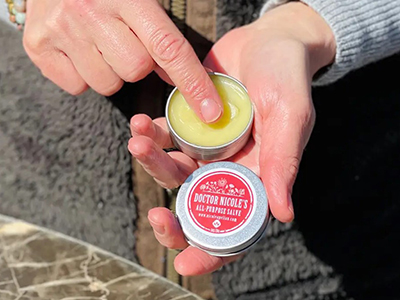
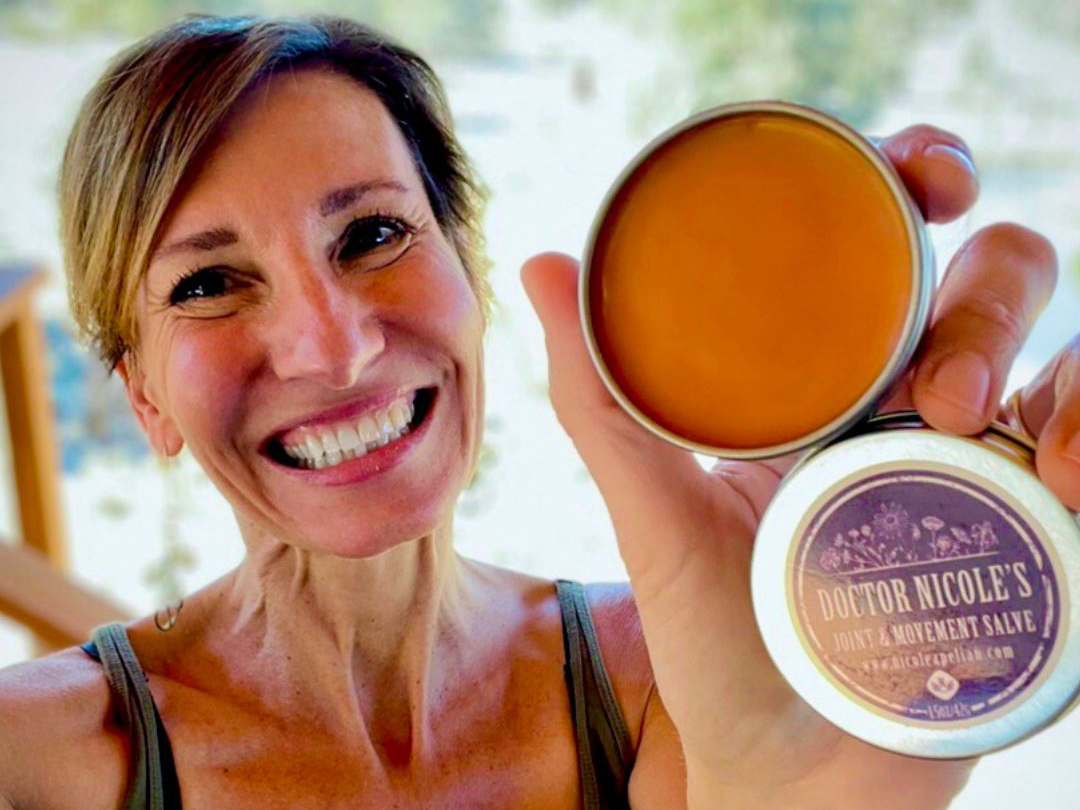
Nicole already did that with her Joint & Movement Salve, combining cayenne with arnica, calendula, St. John’s wort, cottonwood buds, frankincense, and helichrysum.
Now, that doesn’t mean poor gut health causes every aching knee. But it does mean caring for your joints shouldn’t stop at what you rub on them.
And supporting your gut can be surprisingly simple.
Foods like oats, beans, apples, vegetables, and nuts provide fiber that nourishes beneficial gut bacteria.
But there are also some fascinating herbs and mushrooms worth knowing about.
If you’re looking for the best herbal blend for gut support, check it out here.
Starting with a plant you’ve probably tried very hard not to touch.
Stinging Nettle: The Plant That Stings but Soothes
Funny how nature works, isn’t it?
The same plant that stings your skin has been used for centuries to soothe aching joints.
Nettle contains compounds with anti-inflammatory properties and has also been used for seasonal allergies and supporting healthy blood sugar levels.
Try it as a tea or add cooked nettle leaves to your soup. Just check for medication interactions, especially with blood-sugar or blood-pressure drugs.
There’s an old practice where people actually rubbed or struck painful joints with fresh stinging nettle.
Yes, deliberately.
The idea was to trigger a strong local reaction in the skin.
Personally? No chance.
If you want to use nettle at home, I’d much rather make a tea or poultice — and even then, you need gloves and some care when handling the fresh plant.
Or you can skip the stings, harvesting, drying, and preparation completely.
Reishi has been treasured for centuries for supporting vitality and resilience.
Its natural compounds have shown anti-inflammatory and immune-modulating properties, making it interesting for overall immune health and joint wellness.
You can enjoy it as a traditional decoction or mushroom preparation, though it’s not a proven arthritis treatment. Check for interactions, especially with blood thinners.
Turkey Tail
Remember how your gut and joints are connected?
Turkey tail contains natural polysaccharides that interact with your immune system and may help support beneficial gut bacteria.
It won’t directly relieve joint pain, but supporting your gut and immune health is another way to care for your body from within.
Don’t Let Rusty Joints Steal the Things You Love
Maybe your knees aren’t what they used to be.
Maybe cold mornings have become harder, and you’ve started skipping things you once loved because you already know how your joints will feel afterward.
That’s exactly why I wouldn’t support them from only one direction.
If you really want professional-grade herbal support, I’d look at both inside and outside.
Use the plants internally to support your body as a whole, and use a properly formulated salve externally where your joints actually bother you.
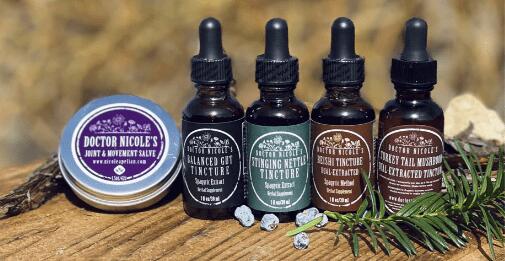
It brings together the kind of herbal support we’ve been talking about throughout this article, so you’re not using one random herb and hoping for the best.
And I managed to get a better price for The Lost Herbs community, so you can try the remedies together without paying for everything separately.
Because the whole point isn’t just to think about your joints less.
It’s to move more, do more, and enjoy life at your full potential.
We use cookies to ensure that we give you the best experience on our website. If you continue to use this site, we will assume that you are happy with it.
Functional Always active
The technical storage or access is strictly necessary for the legitimate purpose of enabling the use of a specific service explicitly requested by the subscriber or user, or for the sole purpose of carrying out the transmission of a communication over an electronic communications network.
Preferences
The technical storage or access is necessary for the legitimate purpose of storing preferences that are not requested by the subscriber or user.
Statistics
The technical storage or access that is used exclusively for statistical purposes.The technical storage or access that is used exclusively for anonymous statistical purposes. Without a subpoena, voluntary compliance on the part of your Internet Service Provider, or additional records from a third party, information stored or retrieved for this purpose alone cannot usually be used to identify you.
Marketing
The technical storage or access is required to create user profiles to send advertising, or to track the user on a website or across several websites for similar marketing purposes.