
The Teapot We Didn’t Know We Needed. Here’s Our Honest Take.
Full transparency: we loved this teapot so much that we started promoting it ourselves. The good news for you is that through our link, you get our Anniversary Sale price of $96 off, plus two free ebooks, for a limited time only. And because we share it with you, we’ve been extra careful to show you its weak spots too.
Before you read another word, go to your kitchen, lift the lid of your teapot, and look inside. If you see brown rings that never scrub out, a rusty tea ball, or a spout crusted with old leaves, you’re not alone.
Most of us brew our healing herbs in vessels we wouldn’t let near anything else we put in our bodies.
We brew herbal tea every day here at The Lost Herbs, and we’d made peace with all of it. Then this pot landed on our counter.
We filled it with butterfly pea flowers, watched the color climb to deep sapphire, and pressed the switch on the handle.
The whole pot of blue tea dropped into the chamber below, leaving the leaves behind. That was the moment we knew our readers needed to see this.
What’s Really Hiding in Your Old Teapot

Nobody prints this on the box, so let us say it plainly: the pot you brew in can put things into your tea that have no business being there.
Lead in old glazes. Many older, handmade or cheaply imported ceramic teapots were glazed with lead, and health authorities have warned for years that it can leach into food and drink. There is no safe level of lead in the human body.
Worse, acidic drinks pull out far more of it than plain water, and hibiscus and lemon are acidic. Your healing brew may be the very thing drawing poison out of the pot.
Rust and cheap metal. If your tea ball, strainer or chipped enamel pot has turned orange in the corners, that metal is breaking down, and the pieces are going somewhere. Low-grade steel can also release nickel and chromium into hot, acidic tea.
Some older kettles were sealed with lead solder, and aluminum pots release more aluminum when acidic tea sits in them.
Hidden cracks and plastic. Old glazes develop fine cracks that trap residue and bacteria where no sponge can reach. And many modern pots hide plastic baskets or filters that shed microscopic particles every time boiling water hits them.
The One-Click Teapot touches your tea with only two things: borosilicate glass, trusted in laboratories because it doesn’t react with what’s inside it, and 316 marine-grade stainless steel, made to stand up to salt water without rusting.
No lead. No rust. No plastic. No mystery.
If your teapot looks anything like the ones above, it’s time. And if you’ve always wanted a high-end teapot but couldn’t justify the price, keep reading. This one costs less than you’d think.
Tea Bags and Strainers Aren’t the Answer Either
Many “silky” pyramid tea bags are woven from plastic. When researchers in Canada steeped just one, it released an estimated 11.6 billion microplastic particles into the water.
Many paper bags are sealed with plastic too, and most are filled with “dust”, the broken scraps left once the whole leaves are sold. You pay for a remedy and get the sweepings.
Tea balls are no better. Pack leaves inside and the ones in the center barely touch the water, so you get a weaker remedy and a dripping mess.
And with a ceramic pot, you can’t see inside, so you guess until it’s bitter.
The leaves either can’t move, can’t be seen, or can’t be stopped. The One-Click Teapot fixes all three.
The Click That Changes Everything 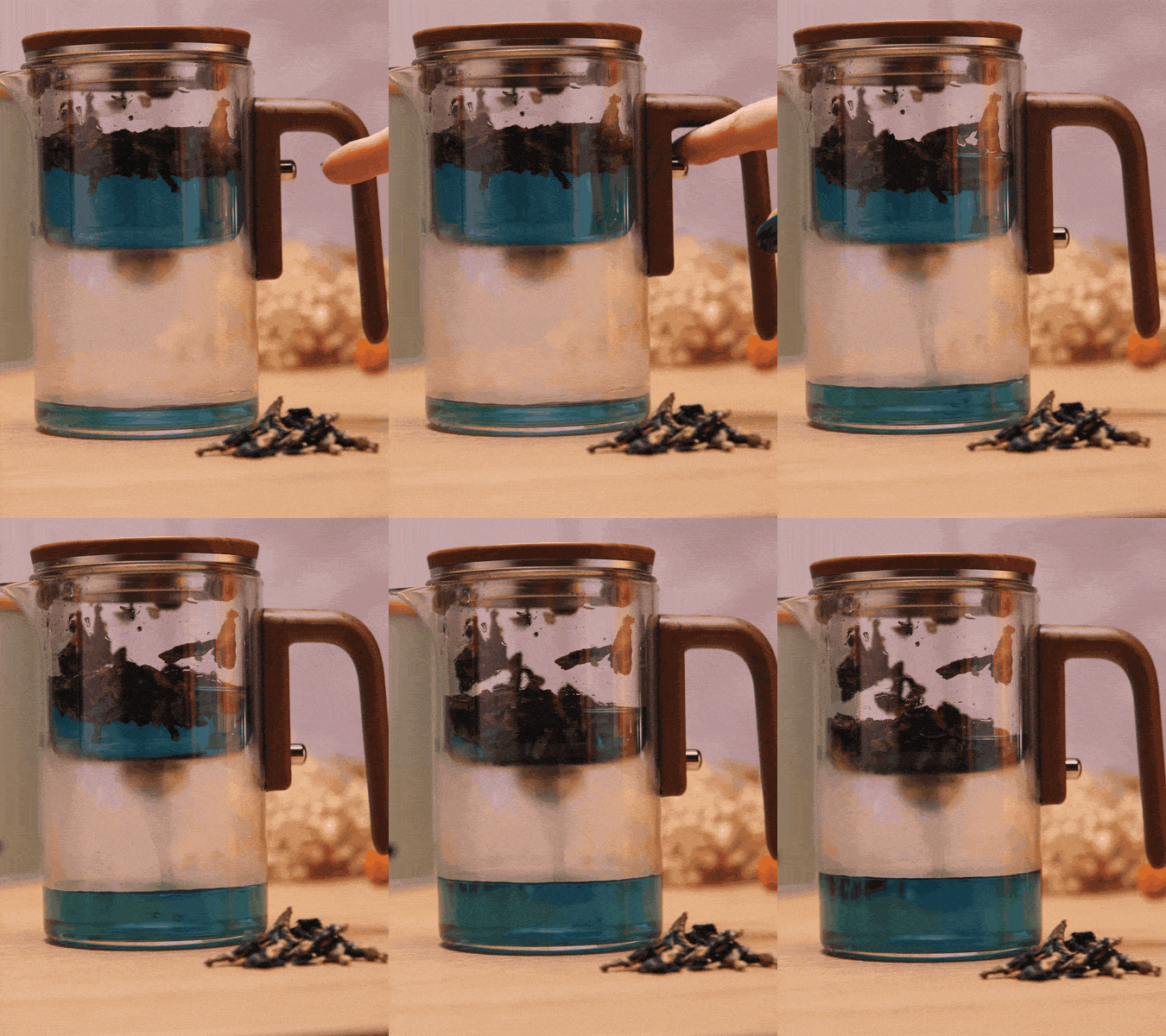

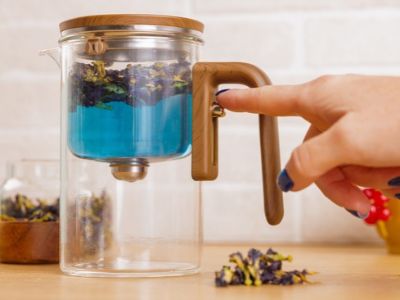
The One-Click Teapot is a 20 fl oz (600 ml) pot of clear borosilicate glass with two chambers. Your leaves and hot water sit in the top one, with all the room they need to unfurl, while you watch the color bloom through the glass.
When it looks right to you, press the magnetic switch on the handle. Your tea drops through a stainless steel filter with more than 3,000 tiny holes into the chamber below.
The leaves stay up top, and steeping stops that very second. No timer, no guessing.
As Maya R. put it: “I’d forget about my tea and it would end up bitter. Now I just slide it shut when it’s ready and walk away.”
The leaves wait up top for a second and third steep, and when you’re done, the whole pot goes in the dishwasher.
The Three Healing Teas We Brewed in It
 Blue tea for a clear mind.
Butterfly pea flower has been honored for centuries in India’s Ayurvedic tradition as a tonic for memory and focus. We paired 1 tablespoon of it with a sprig of fresh rosemary, the herb of remembrance, and 1 tablespoon of lemon balm, steeped for about 5 minutes. We watched it deepen to sapphire and pressed the switch right there, before the rosemary turned sharp. Add a squeeze of lemon and it turns violet in your cup.
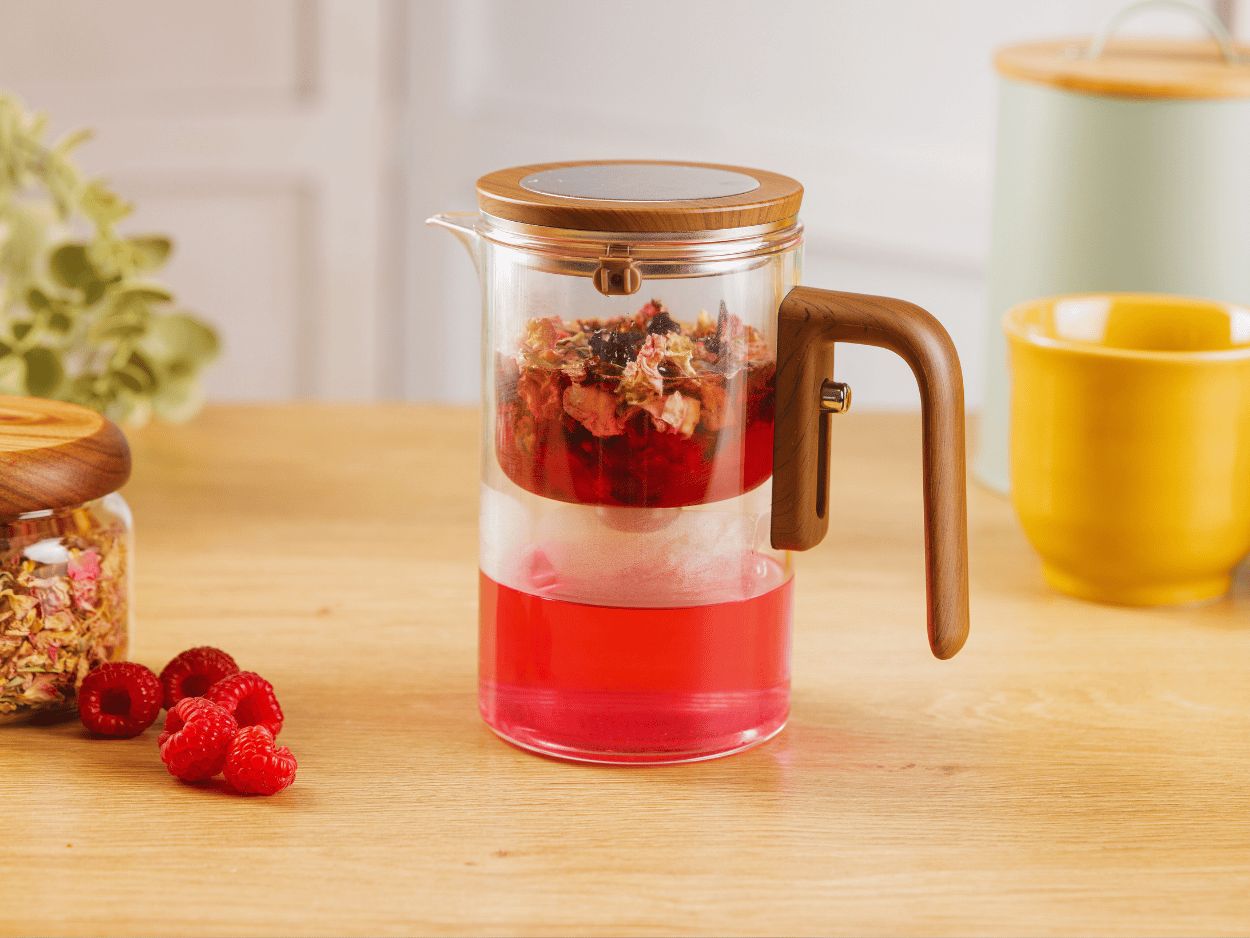
 Red tea for the heart and blood sugar.
Families from Egypt to Mexico brew hibiscus to keep the heart strong and blood pressure in a healthy range, and cinnamon helps steady blood sugar after a meal. We used 2 tablespoons of hibiscus, 1 tablespoon of rosehips and a cinnamon stick, steeped for about 6 minutes. Hibiscus races from ruby to sour fast, so stopping it at the right shade made all the difference. If you take medication for blood pressure or blood sugar, check with your doctor first.
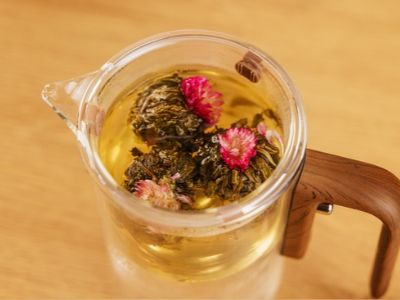 Golden tea for a calm stomach.
This is the cup our grandmothers handed us when our stomachs ached. We combined 1 tablespoon of chamomile, a few slices of fresh ginger, half a teaspoon of fennel seeds and a few rosebuds, steeped for about 5 minutes. In a tea ball, chamomile clumps. Here, every flower opened fully, and the lid held in the gentle oils an open mug lets drift away.
What It Won’t Do
It isn’t made for the stove, and it never goes in the microwave with the metal filter inside. It holds two or three cups, so it’s not the pot for a crowd. You’ll need loose leaves or dried herbs. And it’s tough glass, but still glass: a hard fall onto a stone floor can break it.
High-End Quality, Without the High-End Price
Lab-grade glass, marine-grade steel and a magnetic mechanism usually mean luxury pricing, and this pot regularly sells for $185.99. But it pays you back. Loose leaves brewed at home cost around 10 to 30 cents a cup and steep two or three times. Swap one $3–$5 café tea a day for a home-brewed pot, and you save around $1,387 a year.
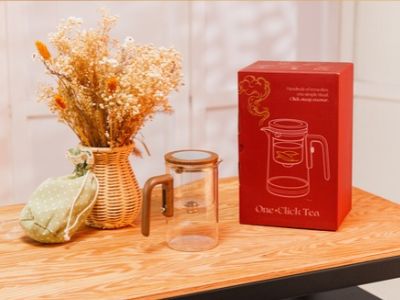 It also makes a beautiful gift. It arrives in gift-ready packaging, with no price or invoice in the parcel. Claire B. wrote: “Bought this for my mom’s birthday and ended up ordering a second one for me a week later.”
Our Verdict
We weren’t looking for a new teapot. We found one that honors the plants and protects the person drinking them. If you brew herbs for your health, if your old pot is stained or rusting, or if you’re tired of bitter cups, this is the upgrade.
The Current Offer
For as long as our Anniversary Sale runs, the One-Click Teapot is $89.99 instead of $185.99. That’s $96 off.
You’ll also receive two books from our own Lost Herbs library, free: The Lost Book of World Remedies (normally $27), full of traditional infusions you can brew the day your teapot arrives, and The 80-Square-Feet Medicinal Garden (normally $29), which shows you how to grow 22 healing herbs in a small plot, balcony or windowsill.
Every order is covered by our 60-day money-back guarantee. If you don’t love it, email us within 60 days for a full refund, and keep both books.