

Licorice Root: What It Heals, How to Grow It, and When to Avoid It
Licorice (Glycyrrhiza glabra) is one of the oldest and most widely used medicinal herbs in the world. Its roots appear in ancient Egyptian papyri, Traditional Chinese Medicine texts, and the writings of Greek physicians dating back over 3,000 years. Today, it remains a valued herb in natural medicine, prized primarily for its root, which contains glycyrrhizin, a compound that is 30 to 50 times sweeter than sugar and carries potent anti-inflammatory, antiviral, and adaptogenic properties. Licorice root is used in herbal teas, tinctures, supplements, and food flavorings across cultures.
Licorice belongs to the legume family (Fabaceae) and is native to Southern Europe, the Mediterranean, and Central Asia. Its medicinal use spans millennia: licorice root was found in the tomb of Tutankhamun, referenced in the ancient Egyptian Ebers Papyrus as a treatment for chest and digestive complaints, and used by Greek physician Dioscorides to treat coughs and stomach ailments.
In Egypt, it was brewed into a sweet drink called mai-sus, consumed both as a refreshment and a remedy. Traditional Chinese Medicine has incorporated licorice root, known as gan cao, for over 2,000 years, using it as a harmonizing herb to enhance the effectiveness of other botanicals. Along the Silk Road, licorice root was among the most traded medicinal commodities, valued for its ability to soothe respiratory conditions, calm digestive disorders, and support adrenal function.
The licorice plant is cultivated mostly for commercial purposes in countries like Spain, Italy, Germany, Southern Russia, and Syria. It is also grown in France and China, which constitute the world leaders in Licorice export along with Uzbekistan and Iran. Some regions in the United States also cultivate licorice for sale in many grocery stores.
Related: The Complete Map of Edible Plants: Find Out What You Have in Your Area! (Video)
How To Identify Licorice
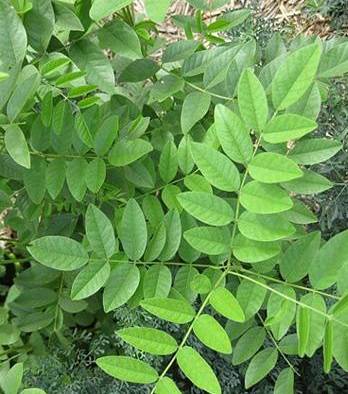
- Leaf. Licorice is a woody deciduous plant with green and oval or lanceolate leaves. The leaves are a compound of about four to eight pairs of leaflets. They are alternate and measure around 3 to 6 inches long and less than an inch wide.
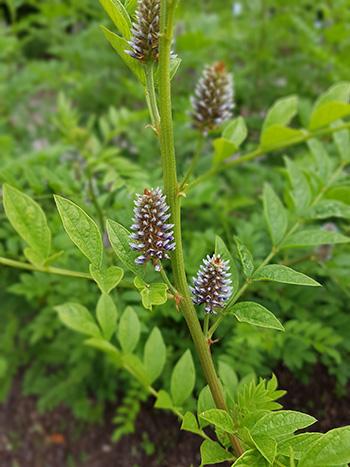
- Flower. The licorice plant produces axillary racemes of small flowers during summer. Individual blooms are funnel-shaped and pea-like, typically blue, lavender, or light purple, measuring around half an inch wide. The flowers grow in elongated clusters along the stem, similar in appearance to sweet pea blooms.
- Roots. The root is the most medicinally valuable part of the plant. It contains glycyrrhizin, the compound responsible for licorice’s characteristic sweetness, which is approximately 30 to 50 times sweeter than sugar. The root is soft, fibrous, and flexible with a distinctly yellow interior. Licorice has an extensive root system, with a taproot that can reach 1.2 meters underground and rhizomatous lateral roots that can extend up to 10 meters in favorable, permeable soil.
- Seeds. Licorice seeds are legumes that are ellipsoid in shape or wide at the middle and taper at the end. It is about 8 to 10 mm in size and enclosed in a pitted pod where each pod contains 3 to 5 licorice seeds.
- Stems. The stems of the licorice are upright and they can grow up to 3 to 3.3 feet tall. The colors are either cream that dries into tan, or gold that turns to yellow when dry. It is solitary with a hairy surface (pubescent) and is aromatic.

Related: Plant Identification Guide – 400 Wild Plants That You Can Forage For (Video)
Licorice is just one of the spices that exude a sweet taste on their own. And there are about 14 known varieties, but only 4 of them are cultivated for commercial use as a sweetener. The most common is the Glycyrrhiza glabra, where the popular licorice flavoring is extracted. Other licorice varieties are:
- Glycyrrhiza glandulifera
- Glycyrrhiza echinata
- Glycyrrhiza uralensis (Asian variety)
- Glycyrrhiza lepidota (American Licorice)
How To Grow Licorice
It is easy to propagate licorice through seeds, cuttings, or division of its rhizomes. They proliferate better in meadows and fields or even in disturbed habitats. But you can also grow them in containers so they can easily overwinter in the shade. With proper care, the plants will develop some three to four months after planting. This plant can live up to four years when it will be ready for harvest.
Licorice is a hardy temperate perennial, native to the Mediterranean and Central Asia, that thrives in USDA hardiness zones 5 to 9. It tolerates heat well but is not a tropical plant.
Growing Licorice from Seeds
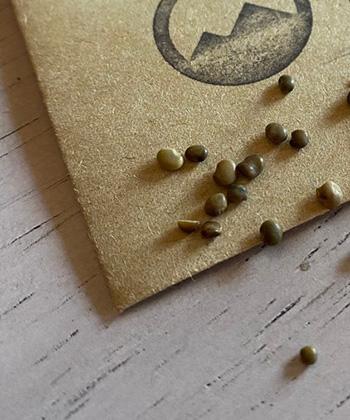 You may buy licorice cultivar seeds for growing in some specialty and online stores. Soak these seeds in a clean glass jar with lukewarm water for two hours. Stratify the seeds for 3 to 4 weeks by folding them in a moistened towel. Place the towel in a bag and store it in the refrigerator, constantly moistening it when necessary until the seeds germinate.
Sow the germinated seeds in well-draining potting soil and cover it lightly with the medium. Keep the soil moist until the seedlings grow their first set of leaves. Transplant the seedlings after the final frost in spring, preferably during a cloudy or overcast day.
Growing Licorice from Cuttings
 If you are growing a healthy cultivar, propagating through cutting is the easiest way of growing licorice. It will also ensure that you will grow a plant similar to its parent variety.
Cut 4 to 6 inches of the licorice stem, wrap it in a moist towel, and put it in a plastic bag overnight. Plant the cutting in a moist, fertile, and well-draining soil 1 to 1 ½ feet apart.
Keep everything moist until new leaves emerge from the cutting. Once established, the licorice plant hardly needs maintenance as long as it remains under full sun and part shade.
Related: 10 Plants That You Should Never Plant Together (Video)
Growing Licorice from Division
Licorice is a rhizomatous plant that can also propagate through root division. You can divide the root in spring or fall while making sure that each division has at least one bud. Plant it in loosened soil in a hole approximately 20 inches deep and 24 inches wide. Licorice prefers sandy-loam soil that is well-draining, so add compost or sand if the medium is clayish. It is best to grow licorice in a sunny area where it can also receive an afternoon shade.
Remember: Licorice prefers a soil pH between 6.0 and 8.0, leaning slightly alkaline. Because it is a legume, it fixes atmospheric nitrogen and does not require high-nitrogen fertilization. Avoid nitrogen-heavy feeds, which promote leafy growth at the expense of root development.
Plant Care and Maintenance
The licorice plant enjoys sunshine and detests winter. If you live in colder climates, grow your licorice in a pot and keep it indoors during winter. In places where it doesn’t overwinter, you may grow it in a greenhouse while using a deep pot. However, licorice grows best in the ground outside to allow its roots to spread.
Here is the easy-to-remember licorice plant growing requirements: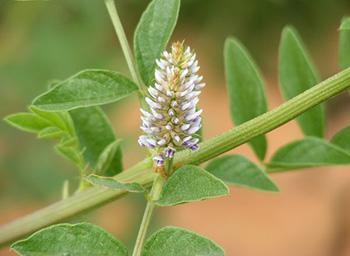
- A sunny location with ample afternoon shade
- Light, rich, well-draining, and slightly neutral soil
- Regular and deep watering (reduce watering in winter)
- An average temperature of 60 to 85°F (15-30°C)
- Mulching
How To Harvest Licorice Roots
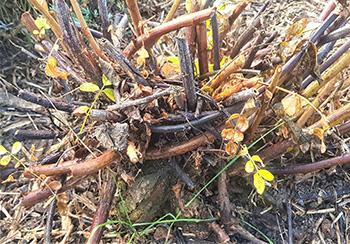 Some two to three years after planting, the licorice root is ready for harvest. The best time to harvest is in the autumn. By this time, the plant has completed its growing phase. You can harvest licorice by digging the horizontal roots with a sharp spade, preserving the taproot. With the taproot intact, the plant will still be able to grow its offspring. Divide the licorice roots using secateurs or scissors.
Air-dry the roots by tying them in a small bundle and hanging them in a cool, dry place. Air-drying prevents the roots from getting moldy. The licorice roots dry thoroughly at about three to six weeks. The dry licorice roots are now ready for brewing into teas and drinks. Dried licorice roots can keep up for several months without losing their potency.
How To Make Licorice Root Powder
Licorice root powder is one of the most versatile preparations you can make from a home harvest. It can be stirred into teas, mixed into honey, encapsulated, or used as a base for topical pastes for skin conditions. Making it at home is straightforward once the roots are fully dried.
What you need:
Fully dried licorice root pieces or chips, a high-powered blender or spice/coffee grinder dedicated to herbs, a fine mesh sieve, an airtight glass jar for storage.
Steps:
- Step 1 — Confirm the roots are fully dry. Properly dried licorice root should snap cleanly when bent, not flex. If the root bends without breaking, return it to the drying space for another week. Any residual moisture in the root will cause the powder to clump and degrade quickly.
- Step 2 — Break the dried roots into small pieces approximately 1 to 2 cm long. This reduces the load on your grinder and produces a more even powder. A sharp knife or secateurs work well for this step.
- Step 3 — Grind in small batches. Add a small handful of root pieces to the grinder and process in 15 to 20 second bursts, pausing between each burst to let the motor cool. Licorice root is dense and fibrous and can overheat grinders if run continuously.
- Step 4 — Sieve the powder through a fine mesh sieve. Any coarse fibrous material that does not pass through can be returned to the grinder for another pass or discarded. The resulting powder should be fine, pale yellow to tan, and have a strong sweet anise aroma.
- Step 5 — Transfer immediately to an airtight glass jar. Label with the date and store in a cool, dark location. Do not use plastic containers, which can absorb the volatile aromatic compounds in licorice root over time.
Yield note: 100 grams of dried licorice root produces approximately 80 to 90 grams of powder, depending on the fiber content of the roots. Roots harvested at the three-year mark typically yield finer, more aromatic powder than younger roots.
Storing Licorice Root: Shelf Life and Best Practices
How you store licorice root after harvest determines how long it retains its medicinal potency. The three main culprits that degrade dried herbs are moisture, light, and heat. Licorice root is relatively stable compared to leafy herbs, but its glycyrrhizin content and aromatic compounds will still degrade over time if stored improperly.
Whole dried roots:
Store in an airtight glass jar or a sealed paper bag inside a tin, in a cool, dark cupboard away from the stove or any heat source. Properly stored whole dried roots retain full potency for 2 to 3 years. Check periodically for any signs of moisture, mold, or off-smell, which indicate compromised storage conditions.
Licorice root powder:
Powder has a larger surface area than whole root, making it more vulnerable to oxidation and moisture absorption. Store in a small airtight glass jar with minimal air space. Shelf life is 12 to 18 months at peak potency. After this window the powder is still safe to use but progressively less effective. Label jars with the grinding date.
Licorice root tea (brewed decoction):
Brewed licorice tea should be consumed the same day or stored in the refrigerator in a sealed glass container for no more than 48 hours. It does not preserve well due to its high sugar content (glycyrrhizin), which can support microbial growth at room temperature.
What to avoid:
Never store dried licorice root or powder in plastic bags long-term. Aromatic compounds in the root permeate plastic and degrade faster. Avoid storing near strong-smelling spices, as licorice root can absorb surrounding odors. Do not refrigerate whole dried roots or powder, as the temperature fluctuation and humidity of refrigerators accelerates moisture absorption.
What Licorice Is Good For And Natural Remedies Made From It
Licorice root has been a cornerstone of herbal medicine across cultures for millennia, valued for a broad spectrum of therapeutic properties driven primarily by its active compounds: glycyrrhizin, glycyrrhetinic acid, and a range of flavonoids. Its root extract carries many medicinal values. It is an adaptogenic herb that is beneficial for regulating hormonal balance to stimulate good mental health. Thus, it can ward off the effects of stress, depression, and anxiety.
One of the best-documented uses of licorice root is in supporting digestive health. Glycyrrhizin and its derivatives have been shown to reduce inflammation of the stomach lining, making licorice root a traditional remedy for gastritis, peptic ulcers, and acid reflux. Deglycyrrhizinated licorice (DGL), a processed form with glycyrrhizin removed to reduce blood pressure-raising effects, is widely used as a digestive supplement and is considered safe for long-term use.
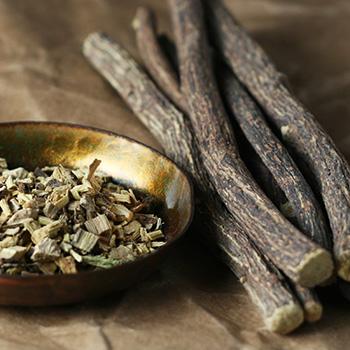 The antiviral, antifungal and antibacterial properties of the licorice help combat infections too, attributed to glycyrrhizin, which has demonstrated activity against several viruses including influenza and herpes simplex. The licorice root gel is an effective cure for skin disorders and can reduce pain and inflammation in canker sores.
For a long time, licorice roots have also served as a treatment for respiratory disorders. The tea made from licorice roots is an effective expectorant to cure cough and colds. It is also an important herb for the treatment of stomach disorders and for cleaning the colon.
In small quantities, licorice helps in the proper functioning of the circulatory system. Thus, it may improve blood flow and reduce the risk of heart diseases. Licorice can further detoxify the body to protect and strengthen liver function.
Taking licorice root extract or tea helps women manage menstrual disorders. Likewise, men with prostate problems may also find a cure in the herb.
When taken properly, licorice roots can cure the following ailments:
- Aphthous ulcers
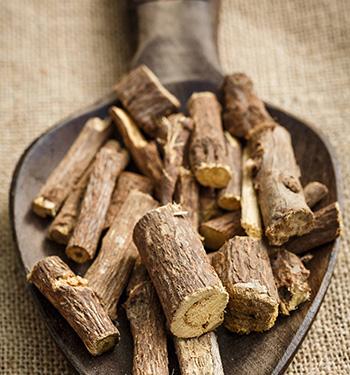

- Skin problems (psoriasis, eczema, rashes, athlete’s foot)
- Oral health
- Respiratory disorders
- Liver diseases
- Hypoglycemia
- Anxiety and other mental health issues
- Alopecia
- Reproductive health problems (PCOS, PMS, menopausal, prostate cancer, infertility)
- Low blood pressure
- Nausea and altitude sickness
Licorice Root Dosage Guide
Dosage varies significantly depending on the form of licorice root used. The following is a general reference for healthy adults. Always start at the lower end of any range and do not exceed the maximum duration of six weeks of continuous use without a break.
- Dried Root (chewed or decocted): 1 to 5 grams per day. Use the lower end (1-2g) for daily maintenance; up to 5g per day for active symptoms such as sore throat or cough. Do not exceed 5g daily.
- Licorice Root Tea (decoction): 1 tablespoon of dried root simmered in 1 cup of water for 10-15 minutes. Adults: up to 3 cups per day for acute complaints (cough, sore throat, indigestion). For general wellness, 1 cup per day is sufficient. Children over 50 lbs: 1/3 cup up to 3 times daily. Not recommended for children under 50 lbs.
- Licorice Root Powder: 1/2 to 1 teaspoon (roughly 1.5 to 3 grams) per day, mixed into warm water, honey, or smoothies. The powder is more concentrated than a tea decoction. Start with 1/2 teaspoon and assess tolerance before increasing.
- Tincture (1:5 ratio, 40% alcohol): 2 to 4 ml (approximately 40 to 80 drops), up to three times per day. Dilute in a small amount of water before taking. This is the most potent common preparation; use at the lower dose initially.
- Standardized Extract (capsules/tablets): Follow the manufacturer’s dosage. Most standardized extracts are dosed at 200 to 800 mg per day. DGL (deglycyrrhizinated licorice) supplements are generally considered safe for longer-term use and are preferred for people with blood pressure concerns.
- Maximum duration: Do not use any form of whole licorice root continuously for more than four to six weeks without a two-week break. This limit applies to all forms except DGL supplements.
What Parts Of Licorice Is Used For Remedies
Glycyrrhiza glabra is an edible plant, but its most noteworthy part is the roots. The root extract is not only used as a sweetener or flavoring agent but can also cure certain diseases. It is also prepared as an infusion or decoction and made into tinctures, syrups, and pills.
The wooden chips of the licorice roots are chewed raw to release their sweetness. Today, you may also find licorice leaves in select groceries. Loose leaves are made into teas. However, the leaves are not as popular as the roots.
Sweet and Healing Licorice Tea Recipe
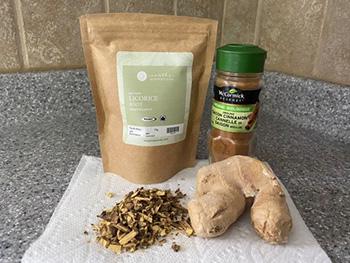
Ingredients
- 1 tbsp dried licorice root slices
- 1 cup water
- 1 cinnamon stick or ½ tsp ground cinnamon
- Ginger, optional
Steps
- In a saucepan, add the licorice roots, ginger, and cinnamon stick to water and bring to a boil. If using ground cinnamon, check step 2. You may also increase the amount using the ratio of 1:1 of licorice root to water.
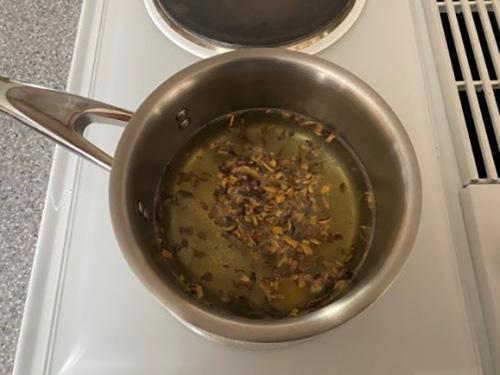

- Stir in ground cinnamon once the water has started to boil already. Then, lower the temperature to let the licorice tea simmer for 10 minutes.
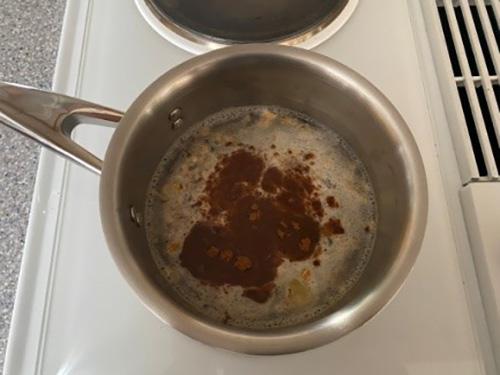
- Strain the decoction into a cup and enjoy your sweet healing tea hot or warm. Stir before drinking when using ground cinnamon since particles may settle at the bottom of the cup.
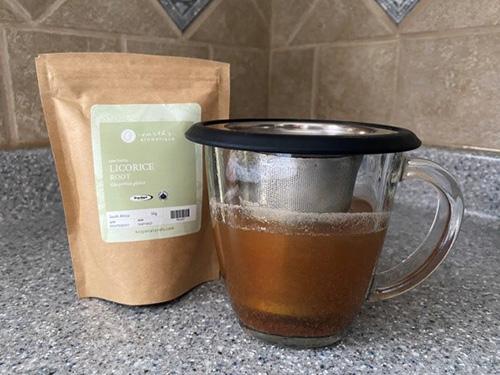
How to Use this Remedy
This decoction is an excellent cure for sore throat with the added healing effect of ginger. Children over 50 lbs. may take 1/3 cup of licorice tea up to three times a day for cough relief. Always consult a qualified herbalist or pediatric physician before giving herbal teas to children. There is no specific dosage for adults, but they should limit the intake to avoid side effects.
With the cold and influenza seasons being so common and often seen, we need all the help we can get to keep our immune systems healthy and strong. Here are a few of Nicole’s top picks that are found in the Essential Winter Defense Bundle. Whether maintaining lung health, boosting immunity, or reducing fevers, each herb supports overall well-being this winter and beyond.
Optional additions: A few fennel seeds complement licorice’s anise-like flavor while also supporting digestion. A teaspoon of raw honey added after straining enhances the soothing effect on the throat and balances the tartness of the root.
What Plants Resemble Licorice
| FEATURE | Licorice (Glycyrrhiza glabra) | Wild Licorice (Glycyrrhiza lepidota) | Holy Clover (Onobrychis viciifolia) |
|---|---|---|---|
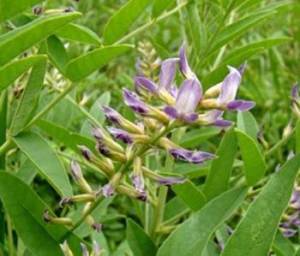 | 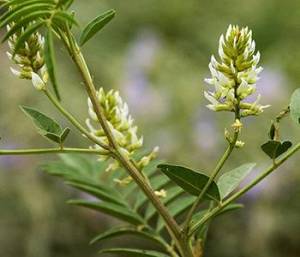 | 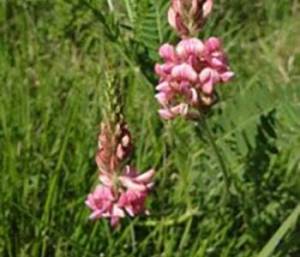 | |
| Size | 3 to 4 ft | 1 to 3 ft | 1 to 2 ft |
| Leaves | Ellipsoid, green, alternate; compound | Ovate; alternate; green | Long, narrow, and sharp; light green |
| Flowers | Clustered; funnel-shaped; blue or lavender | Dense; White to cream-colored flowers | Lanceolate; symmetrical; hairy; alternate |
| Stem/Trunk | Herbaceous; straight; hairy; cream/tan, gold/yellow | Herbaceous; upright; hairy | Upright; herbaceous |
| Scent | Edgy aroma with sweet notes of anise, tarragon and fennel | Fragrant anise-like scent | Unpronounced smell with floral notes |
Licorice Root and Drug Interactions
Licorice root is pharmacologically active and interacts with a significant number of medications. If you are taking any prescription or over-the-counter drug regularly, consult your doctor or pharmacist before adding licorice root to your routine. The following are the primary interaction categories:
- Antihypertensive medications (blood pressure drugs): Licorice root raises blood pressure by causing sodium retention and potassium loss. It directly counteracts the effect of ACE inhibitors, calcium channel blockers, beta-blockers, and diuretics. People on blood pressure medication should avoid whole licorice root entirely.
- Diuretics (water pills): Licorice amplifies potassium loss, which is already a side effect of many diuretics (particularly loop diuretics like furosemide and thiazides). The combination can lead to severe hypokalemia (dangerously low potassium), causing muscle weakness, cramps, and heart rhythm disturbances.
- Corticosteroids (prednisone, hydrocortisone): Licorice inhibits the same enzyme that breaks down corticosteroids in the body. Taking both simultaneously can lead to excessive steroid accumulation and intensified side effects including fluid retention, immune suppression, and adrenal suppression.
- Blood thinners (warfarin, aspirin): Some constituents of licorice root may affect platelet aggregation and alter the metabolism of warfarin, potentially increasing or decreasing its anticoagulant effect. People on blood-thinning therapy should avoid licorice root without medical supervision.
- Hormone therapies (oral contraceptives, HRT, testosterone therapy): Licorice root has demonstrated estrogen-modulating and anti-androgenic effects. It may interfere with the effectiveness of hormone-based contraceptives and amplify or disrupt the effects of hormone replacement therapy. Women on hormonal birth control should use licorice root cautiously and only in small amounts.
- Diabetes medications (insulin, metformin): Licorice root affects blood glucose levels and may alter insulin sensitivity. In people taking diabetes medication, this interaction can cause unpredictable blood sugar fluctuations. Monitor blood glucose carefully if combining, and consult your physician.
- Laxatives: Licorice combined with stimulant laxatives increases the risk of potassium depletion. This combination should be avoided.
Warnings And Cautions
Many of licorice root’s side effects stem from glycyrrhizin’s effect on the body’s hormone regulation. Glycyrrhizin inhibits the enzyme 11-beta-hydroxysteroid dehydrogenase type 2 (11-beta-HSD2), which normally inactivates cortisol in the kidneys. When this enzyme is suppressed, cortisol accumulates and mimics aldosterone, causing sodium retention, potassium loss, and elevated blood pressure. This is why people with hypertension, kidney conditions, or heart disease should exercise particular caution.
Libido effects: Licorice has demonstrated anti-androgenic effects in both men and women. Regular consumption may reduce testosterone levels in men and lower libido in both sexes. This effect is reversible upon discontinuation.
Licorice root is a good pacifier of other herbal remedies that enhances their effectiveness when taken in smaller doses. It is also considered safe as a food ingredient. In large amounts and prolonged consumption, licorice may pose potential adverse side effects such as headache, increased blood pressure, and absence of menstrual flow. Thus, people should limit the consumption and dosage when taking licorice root.
The plant may also cause preterm delivery and miscarriage and should be avoided by pregnant women. It is also not safe for the consumption of lactating mothers. Likewise, women should avoid prolonged use to avoid the risk of breast, uterine, or ovarian cancer.
Licorice can enhance the effect of medications; therefore, it should be avoided by people taking maintenance medicines.
People taking medication for any of the following conditions should avoid licorice root or consult a physician before use:
- High blood pressure
- Water retention or edema
- Diabetes
- Kidney disease or reduced kidney function
- Heart disease or arrhythmia
- Liver cirrhosis
- Erectile dysfunction
- Low potassium (hypokalemia)
Do not consume licorice root continuously for more than four to six weeks. Prolonged use beyond this window can cause electrolyte imbalance, potassium depletion, and sodium retention, particularly at doses exceeding 100mg of glycyrrhizin per day. Women should also be aware that prolonged daily use (defined as more than four weeks of continuous consumption) has been associated in some studies with increased risk of hormone-sensitive conditions including certain breast, uterine, and ovarian cancers.
Licorice root should not be combined with hijiki or other high-arsenic sea vegetables, as there is concern that licorice’s effect on metabolism may compound heavy metal absorption. Consult a healthcare provider before combining licorice with sea vegetables or seaweed-based supplements.
To be safe, always check with your doctor about complementary medicines before starting a medication.
Licorice is a deeply rewarding herb to grow and use, offering one of the most complex medicinal profiles of any plant you can cultivate at home. With patience during its two-to-three-year root maturation and respect for appropriate dosing, it can become a staple of your home herbal practice. As with all potent herbs, use it with awareness of your own health conditions and in consultation with a qualified practitioner when in doubt.
You may also like:
 Soothing Elixir For Cold and Flu Season
The Plant That Is Sweeter Than Sugar And Helps People With Diabetes (Video)
Foods And Herbs That Increase Libido and Others That Kill It
Sugar Substitutes for Diabetics: Five Sugars That are OK to Eat

Good Morning, Read with great excitement your article on Licorice. I live in Western Oregon. In the woods out here we have a small fern like looking plant that grows on Maple trees under layers of moss. I attaches it self to the bark, is the size of beverage straws. They are tentacle like and are brown on the surface. Peeling them reveals a whiteish colored woody stem. there is a good licorice flavor one gets out of them when holding in mouth. You ever heard of this plant before?
Hi Steve,
Thank you for your comment. We are glad to hear that you liked our article.
From your description, the plant might be Licorice Fern. Its favorite place to grow is on the bigleaf maple trees.
https://en.wikipedia.org/wiki/Polypodium_glycyrrhiza
https://calscape.org/Polypodium-glycyrrhiza-(Licorice-Fern)
However, the plants should be identified in their environment, by looking at all their parts (leaves, flowers, color, root). There are also some useful apps out there to help you identify plants but always double-check the result! Good ones to try include: Picture this, PlantNet, and PlantSnap.
Many blessings and good health!
Did I read or licorice helps control blood sugar? If so do you have more details?
Hi Jimmy,
Licorice root has become increasingly popular in studies related to diabetes.
Licorice root contains natural substances called amorfrutins that reduce blood sugar levels. These amorfrutins also prevent fatty liver, which often arises in people with diabetes. However, the level of amorfrutins found in licorice root might not be high enough to actually replace conventional treatment.
It can also have an adverse effect on certain medications including blood pressure medications and cholesterol medications. To be safe, always check with your doctor about complementary medicines before starting a medication.
Many blessings and good health!
Where can I buy licorice seeds or plants?
I was going to look for Organic Licorice Candy you say dont eat it forever but i wonder about Lozenges or just candy to suck on? Thank you for the information always
Yes , you mention that licorice may help with blood sugar ( I have heard this elsewhere as well) but then, you say in the warnings that if you have diabetes you should NOT use licorice! Conflicting information, that should be explained further.
My naturopathic doctor has given me instructions to take licorice extract for my diabetes.
Can you tell me where to purchase Licorice and Verbena plants?
you can buy both at this site https://plantaddicts.com/search-results-page
Can you tell me how to cut these roots? I have tried scissors and knives. I can’t seem to cut through them. Maybe a cleaver, or a chainsaw?