
Instant Herbal Powder For Common Ailments. Just Add Water.
Open your medicine cabinet.
How many bottles are sitting there “just in case”?
One for headaches. One for indigestion. One for aching joints. One for restless nights. Another for that scratchy throat that always arrives at the worst time.
You may have spent more than you realize building that collection. And every time you reach for another pill, you may also accept side effects or take more than your body truly needs.
Of course, some symptoms require medical care, and prescribed medication has an important place.
But what about the smaller, everyday discomforts?
What if you didn’t automatically reach for a tablet every time you ate too much, slept badly, felt tense, or overworked your body?
What if you opened your pantry instead?
Imagine a few labeled mason jars filled with prepared herbal powders for digestion, stress, focus, seasonal support, throat comfort, or occasional aches.
When you need one, you simply scoop, add hot healing water, stir, and sip.
No complicated recipe. No measuring herbs while your head is pounding. You prepare everything beforehand, so it is ready when your body asks for support.
Related: How to Make Cinnamon – Ginger Salve
Sometimes less really is more.
Keep reading, and I’ll teach you how to build your own instant herbal cabinet. And if you are in a hurry, here is a quick video that will help you create an instant herbal power blend fast:
How to Make Instant Herbal Powder Blends
You do not need expensive equipment or a cabinet that looks like an apothecary.
Start with high-quality dried herb powders from a trusted supplier. Mix the ingredients according to the ratios below, then store each blend in a clean, airtight mason jar.
Label every jar with:
- The name of the blend
- The ingredients
- The date you prepared it
- Any important safety notes
To prepare most blends, place ½ to 1 teaspoon in a mug and add approximately 8 ounces of hot water. Stir well, cover, and let it sit for 5 to 10 minutes.
Some powders will settle at the bottom. You can strain them, allow them to settle, or simply stir again before sipping.
Also learn about: Potassium Permanganate: Why You Need It in Your Survival Kit?
A little honey, cinnamon, or lemon can make bitter blends much more enjoyable.
Just one little tip, because one small mistake can weaken a good remedy.
Even honey can lose some of its value if you stir it into boiling water. Let your drink cool closer to 104°F / 40°C before adding it.
That’s the thing with herbs: the plant matters, but the preparation matters too.
If you want to learn how to make teas, tinctures, salves, syrups, poultices, and other remedies the right way, Nicole Apelian shows you step by step.
Click here to see if there are any seats left.
The Evening Exhale Blend
You finally get into bed, but your mind keeps going.
You’re thinking about bills, tomorrow’s responsibilities, unfinished conversations, and everything that still feels uncertain.
You’re tired, but you can’t switch off. This blend below gives you a simple way to slow the evening down and help your body settle into rest.
Mix:
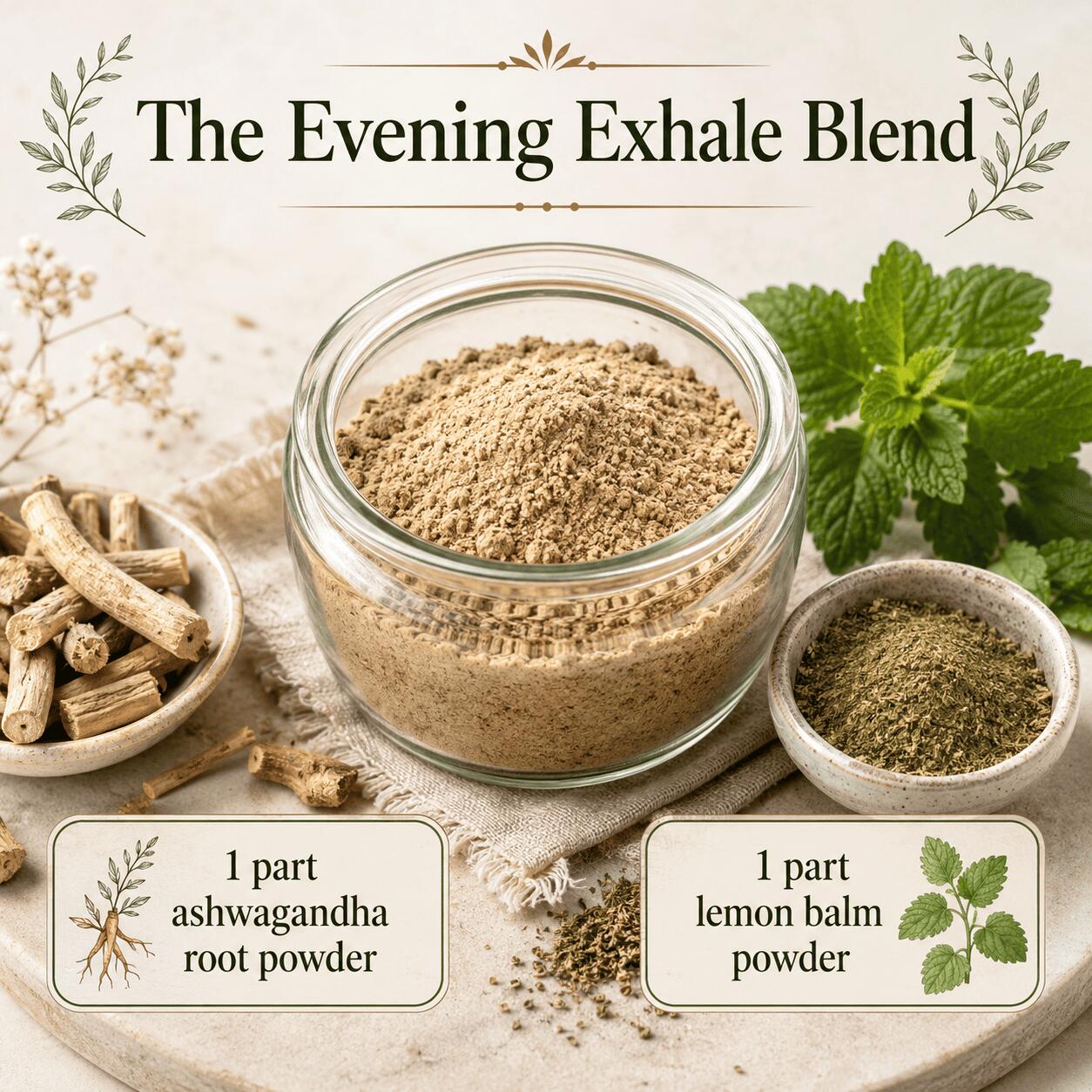

- 1 part ashwagandha root powder
- 1 part lemon balm powder
Ashwagandha may help your body cope with stress and support better sleep, while lemon balm has a long history of use for nervousness, restlessness, and occasional sleeplessness.
Add ½ teaspoon to hot water and sip it slowly in the evening.
This drink won’t knock you out. Think of it as a gentle signal that the day is over and you are allowed to let go.
Ashwagandha became popular for a reason.
You Might Also Want To Learn About: Betony
But a lot of people try cheap capsules or old powders and think, “That’s it?” Freshness, preparation, and extraction matter more than people realize.
That’s why I prefer it as a tincture. It’s easier, faster to use, and you don’t have to force down gritty powder at night.
Nicole’s ashwagandha-based tincture is the one I’d keep close when stress starts living in the body. Check it out here.
The Clear Mind Blend
You may know the feeling: rereading the same sentence, losing your train of thought, or walking into a room and forgetting why you went there.
When your mind feels scattered, another cup of coffee may not be what you need. And as concerns about age-related cognitive decline and Alzheimer’s become harder to ignore, giving your brain steady, everyday support can feel more important than ever.
This blend will not prevent or treat Alzheimer’s, but it can become part of a thoughtful routine built around long-term cognitive wellness.
Also Read: What Happens If You Bathe in Oats?
Mix:
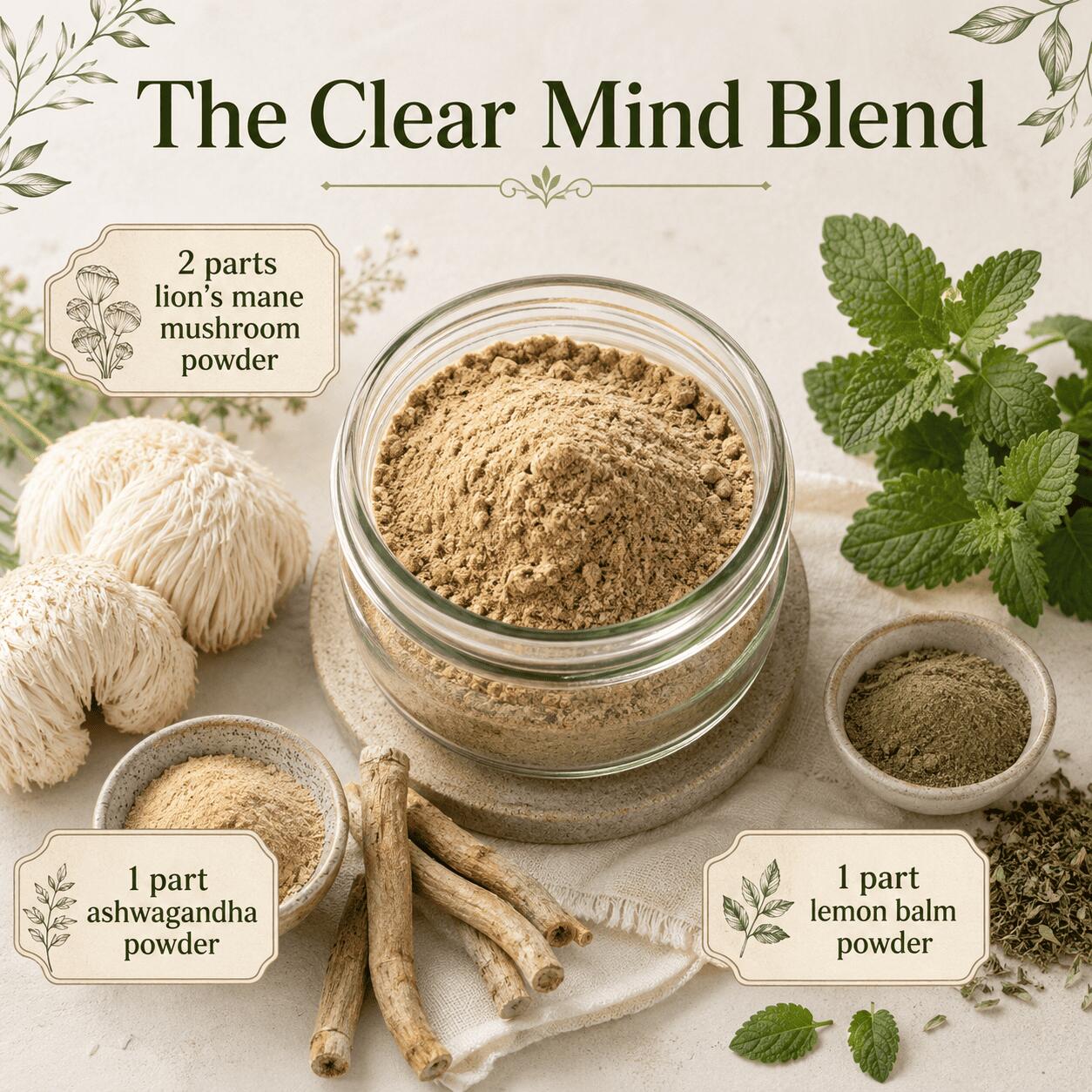
- 2 parts lion’s mane mushroom powder
- 1 part ashwagandha powder
- 1 part lemon balm powder
Lion’s Mane contains compounds linked to NGF, a protein that helps support nerve-cell growth and survival.
In early research, it encouraged stronger neural connections, while a small human trial found improved cognitive scores after 16 weeks.
The evidence is still developing, but Lion’s Mane may offer steady support for memory, focus, and long-term brain health.
Also Read: Top 5 Anti-Inflammatory Diet Changes for Autoimmunity
You may be wondering why ashwagandha appears in both blends. That is because it is an adaptogen, a herb traditionally used to help your body adjust to stress and maintain balance when mental or physical pressure starts to wear you down.
Use ½ to 1 teaspoon in hot water during the morning or early afternoon.
If brain fog is the reason you’re reading this section, Lion’s Mane is the mushroom I’d take seriously.
But quality matters. A weak powder sitting on a shelf for months is not the same as a properly prepared tincture.
Nicole’s Lion’s Mane Tincture gives you the clean, ready-made version for long-term brain support, no foraging, drying, or guessing.
Get it here while it’s still in stock.
The Seasonal Defense Blend
You may know that uneasy moment when something feels slightly off: a heavy head, a sudden chill, or the first tickle in your throat.
You are not fully sick, but your body may already be asking for extra support. That is when having this blend ready can make all the difference.
That is when having this jar ready feels especially comforting.
Mix:
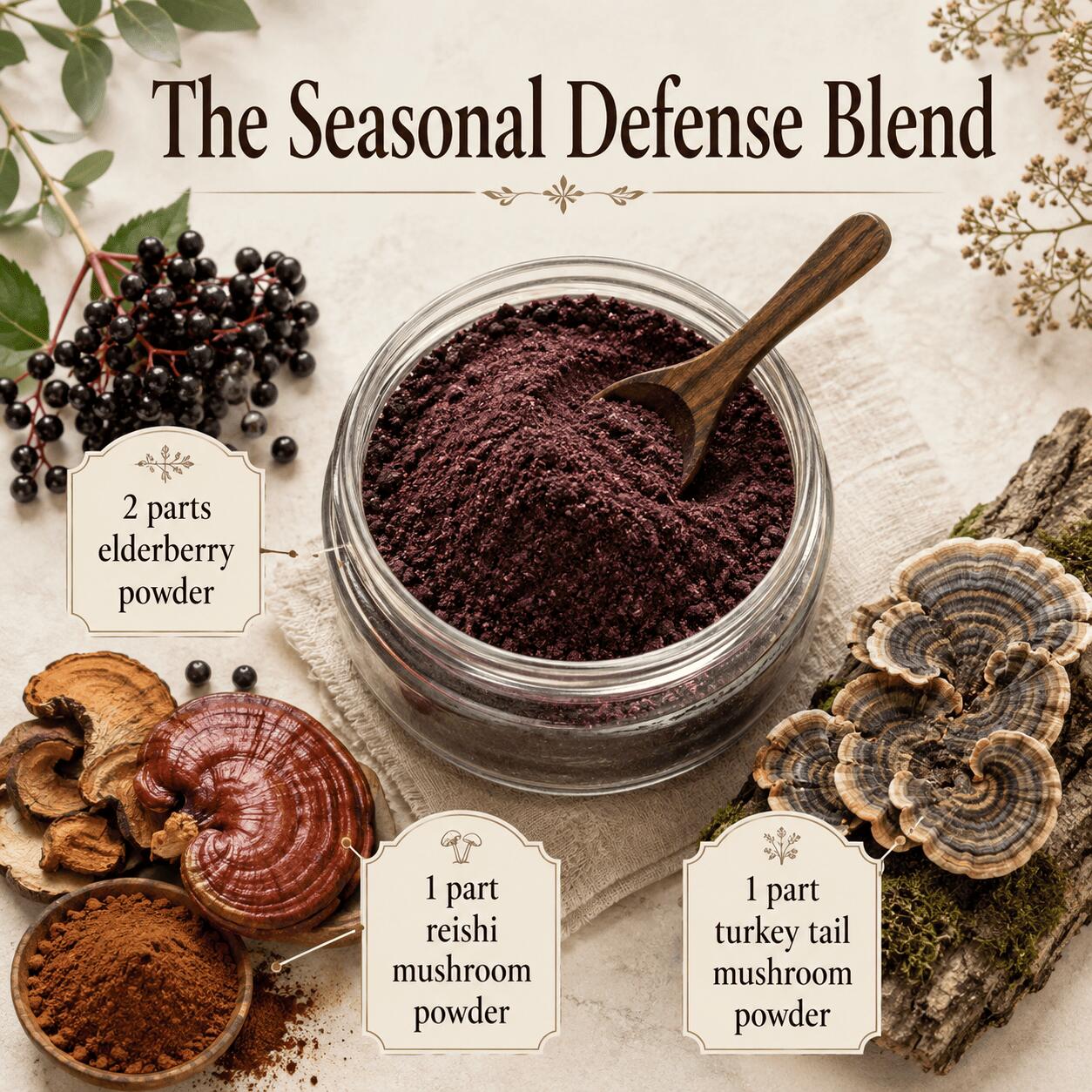
- 2 parts elderberry powder
- 1 part reishi mushroom powder
- 1 part turkey tail mushroom powder
Elderberries contain deeply colored anthocyanins and may help support recovery from cold and flu symptoms, although the available evidence remains limited.
Reishi and turkey tail are the kind of mushrooms you keep around for the long game. Reishi has carried the nickname “mushroom of immortality” for centuries, and turkey tail is so respected for immune support that purified extracts have been studied and used alongside conventional care in clinical settings in parts of Asia.
That doesn’t make your jar of mushroom powder a miracle cure. But it does make these two mushrooms far more interesting than the average “immune support” product on the shelf.
Use 1 teaspoon in hot water. Add cinnamon or ginger for warmth.
Only use properly prepared elderberries. Raw or unripe elderberries and other parts of the plant can cause illness. For a ready-made elderberry tincture, click here.
Mushrooms are powerful, but they’re also not something I’d casually forage unless I really knew what I was doing.
Some are wonderful. Some are useless. Some are dangerous.
That’s why I get my Reishi and Turkey Tail in tincture form from Nicole’s apothecary. And recently, they added a bundle that makes them cheaper together.
I’m sharing it in case you want to take advantage of it too.
Get the mushroom bundle here while it’s still available for a special price.
The Soothed Stomach Blend
You may know the discomfort that follows a heavy meal: bloating, pressure, gas, or that sluggish feeling that lingers long after you have finished eating.
Related: What Happens If You Soak Your Feet in Garlic Water?
When indigestion leaves your stomach unsettled, this blend offers a gentler way to help things feel calm again.
Mix:
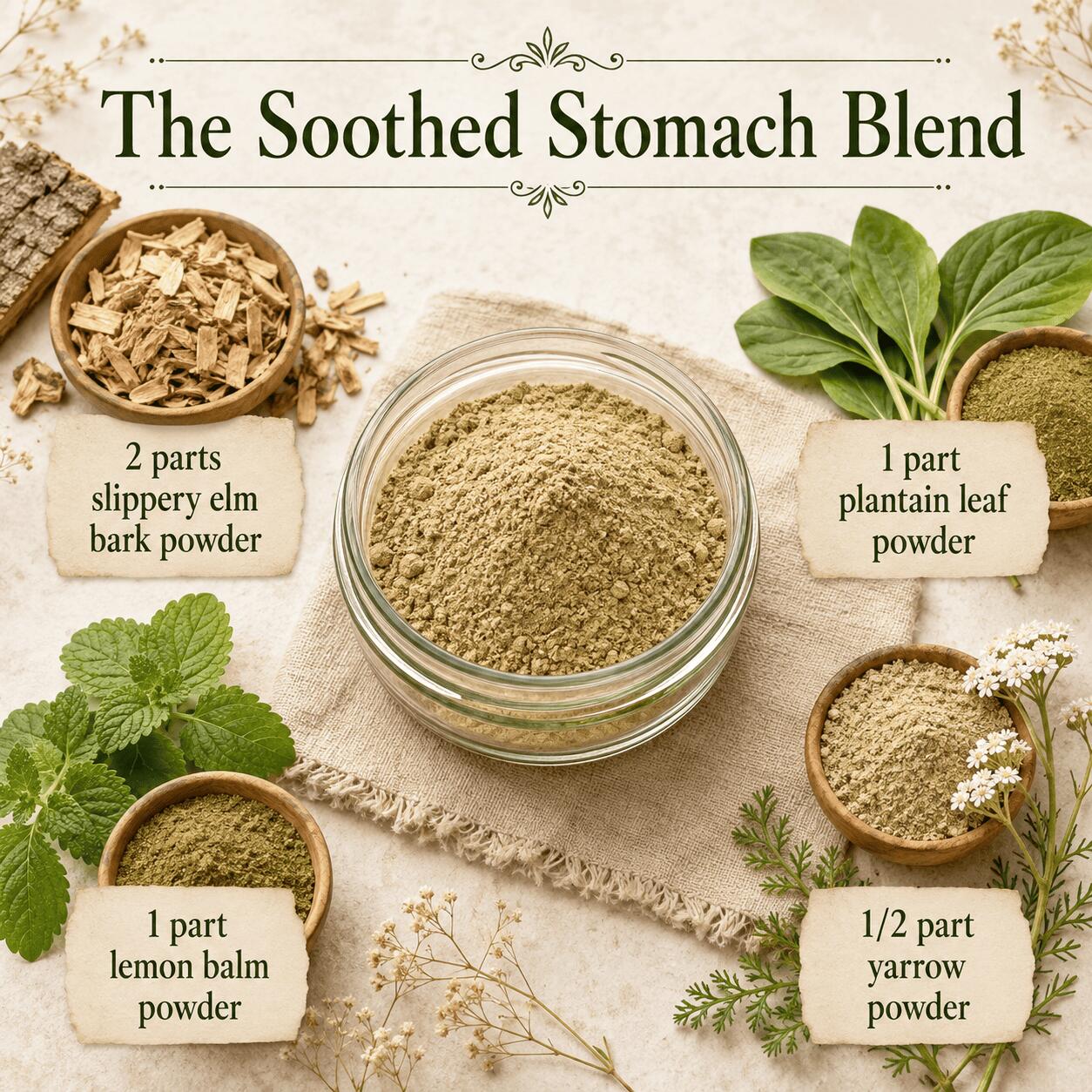
- 2 parts slippery elm bark powder
- 1 part plantain leaf powder
- 1 part lemon balm powder
- ½ part yarrow powder
Slippery elm becomes thick and soothing when mixed with water because it contains mucilage. Plantain also contains soothing plant compounds, while lemon balm is traditionally used for digestive tension and occasional cramping.
This is the tincture that became popular for people whose stomach is rarely happy.
Slippery elm, plantain, lemon balm, reishi, turkey tail, and lion’s mane all make sense together when digestion needs support from more than one angle.
Nicole already did the hard part and turned them into this popular gut-support blend.
Yarrow brings bitterness to the blend. Bitter herbs have traditionally been used before or after meals to encourage the digestive process, although research into many of yarrow’s specific digestive uses remains preliminary.
Use ½ teaspoon after a heavy meal or whenever your stomach feels unsettled.
Because slippery elm may affect how medicines are absorbed, take this blend at least two hours away from oral medication.
Related: The Natural Pain Management Protocol You Need
The Throat and Chest Comfort Blend
A dry throat can make every swallow annoying. A stubborn cough can steal your sleep and leave your chest feeling exhausted.
This blend focuses on comfort.
Mix:
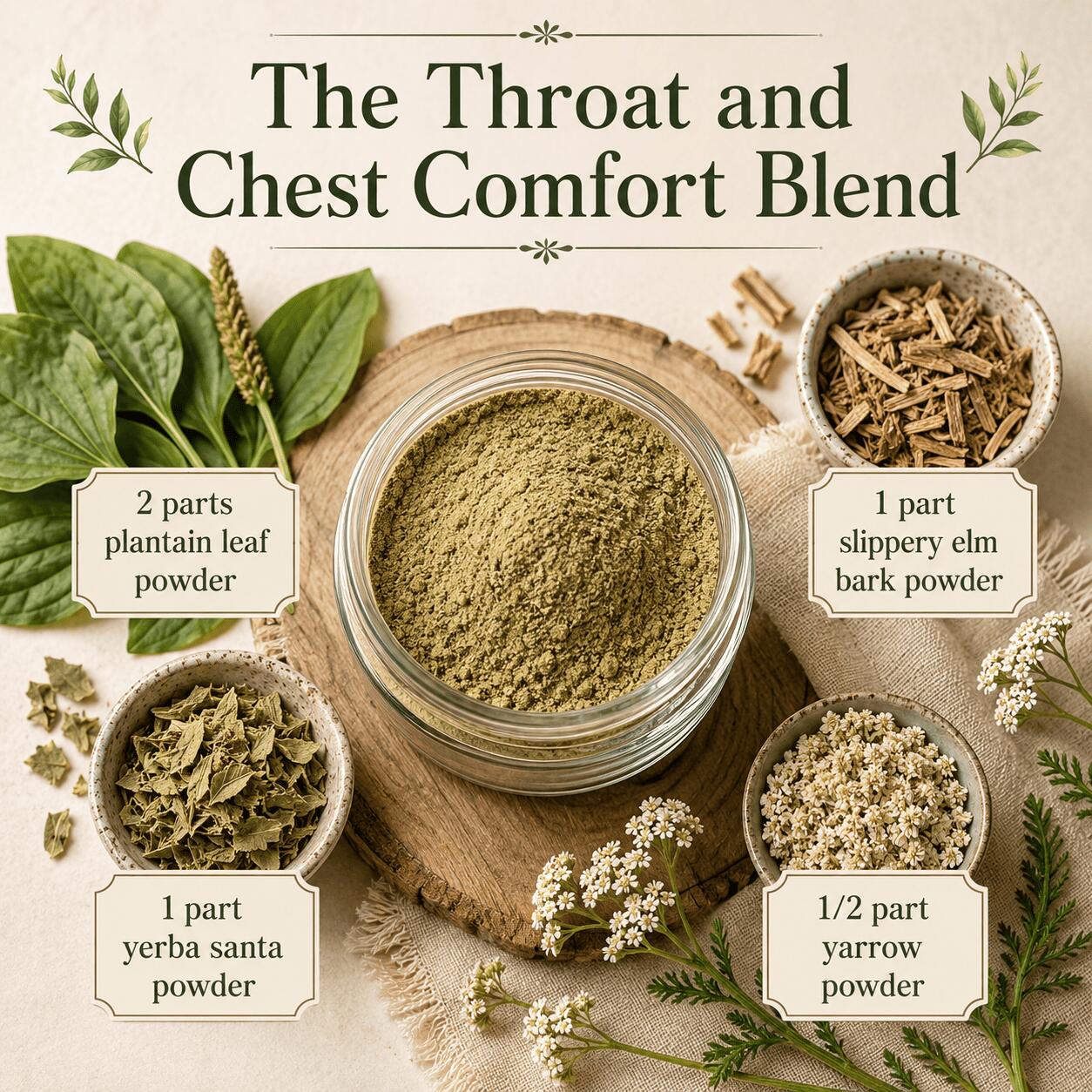
- 2 parts plantain leaf powder
- 1 part slippery elm bark powder
- 1 part yerba santa powder
- ½ part yarrow powder
Plantain has traditionally been used to soothe irritated respiratory tissues and support productive coughing. Slippery elm coats a dry, scratchy throat, while yerba santa has a long history of traditional use for thick mucus and chest congestion.
Add 1 teaspoon to hot water and sip while warm.
Seek medical care for breathing difficulty, chest pain, coughing blood, blue lips, high fever, or symptoms that worsen instead of improving.
Yerba santa can stand on its own when your chest feels heavy and mucus feels stuck.
Yarrow can stand on its own too — one of those old folk herbs people kept around for fevers, digestion, and “something feels off” days.
So if you don’t want to mix powders every time, you can keep both in tincture form instead. Try out the Yerba Santa Tincture here and the Yarrow Tincture here.
The Everyday Inflammation Blend
You may know how quickly a dry, scratchy throat can turn every swallow into a chore, or how a stubborn cough can keep you awake long after you should be resting.
When your throat and chest feel irritated, this blend offers warm, soothing support exactly when you need it most.
Mix:
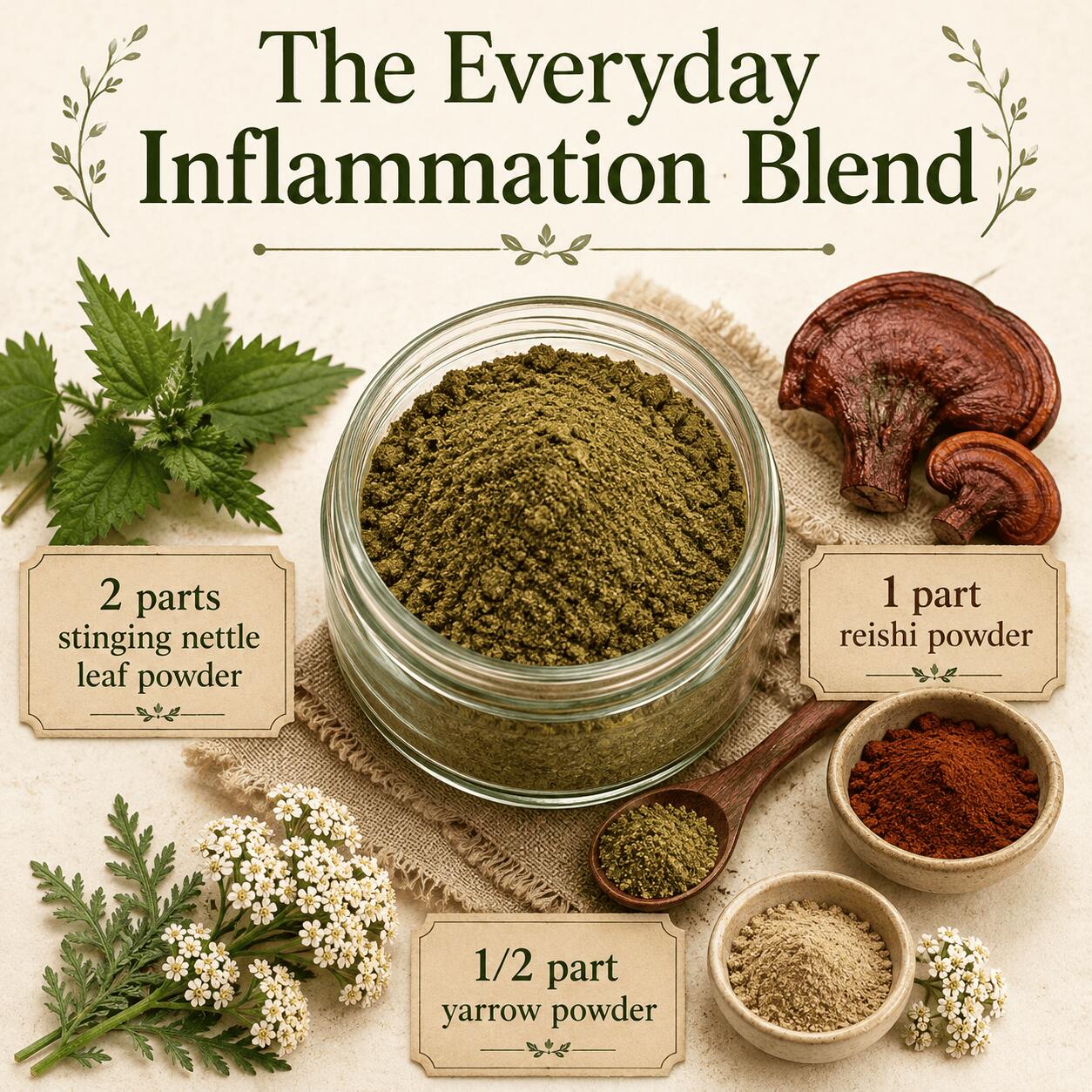
- 2 parts stinging nettle leaf powder
- 1 part reishi powder
- ½ part yarrow powder
Use ½ to 1 teaspoon in hot water.
Do not use this blend as a substitute for medical evaluation when pain is severe, sudden, persistent, or accompanied by swelling, weakness, fever, or injury.
Stinging nettle contains vitamins, minerals, and plant compounds being studied for their effects on inflammatory processes. Reishi contains triterpenes and polysaccharides, while yarrow adds traditionally valued anti-inflammatory plant compounds.
Nettle is one of those herbs that does more than people expect.
It’s mineral-rich, traditionally used for inflammatory balance, and many people also use it in hair routines when they want to support stronger-looking hair.
But I’ll be honest: I’m done getting stung.
I’d rather use Nicole’s Stinging Nettle Tincture than dry and powder it myself.
Skip the sting and get your nettle tincture here.
The Berry Heart Blend
You may not think much about your heart until a blood-pressure reading gets your attention or heart health suddenly becomes part of the conversation.
But your heart works for you every second of the day. This blend offers a simple way to make general cardiovascular wellness part of your daily routine, alongside the habits that matter most.
Mix:
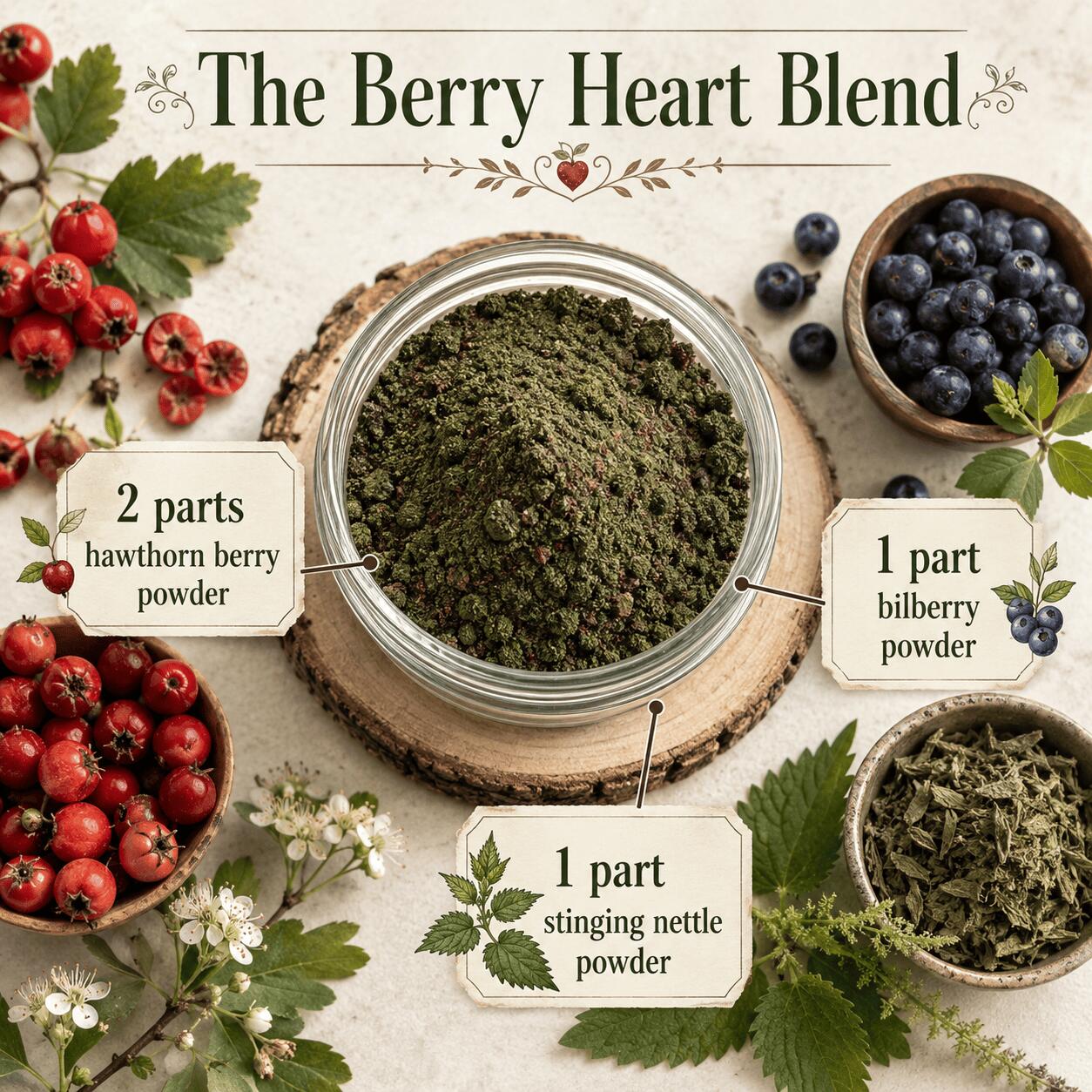
- 2 parts hawthorn berry powder
- 1 part bilberry powder
- 1 part stinging nettle powder
Hawthorn has traditionally been used for the heart and circulation, although evidence for treating specific cardiovascular conditions is uncertain.
Bilberry provides anthocyanins—antioxidant pigments associated with vascular and metabolic health. Nettle adds minerals and a rich, green herbal base.
Related: What Happens If You Drink Raisin Water?
Use ½ teaspoon in hot water once daily.
Hawthorn may interact with heart and blood-pressure medications. Never use this blend to treat chest pain, an irregular heartbeat, uncontrolled blood pressure, or diagnosed heart disease without medical supervision.
If I had to recommend just one tincture from this whole article, it might be this one.
Your heart works every second. No breaks. No weekends. Around 100,000 beats a day, quietly keeping everything else alive.
That’s why hawthorn and bilberry make so much sense here.
Nicole’s Heart Health Blend brings them together with other supportive herbs for daily cardiovascular and metabolic support.
Build the Herbal Shelf You Will Actually Use
The best herbal remedy is not always the most complicated one.
It is the one you can reach for when you are tired, uncomfortable, or too busy to prepare something from scratch.
Also Read: The Nerve Soothing Remedy You Need on Hand
A few carefully labeled jars can turn your pantry into a practical wellness station, one that helps you slow down, pay attention to your body, and work with plants more consistently.
Use herbs thoughtfully. Start with small amounts, introduce one blend at a time, and stop using anything that causes an unwanted reaction. Pregnant or breastfeeding individuals, children, people preparing for surgery, and anyone taking prescription medication should speak with a qualified healthcare professional before using concentrated herbal preparations.
Related: What Happens When You Soak Ginger in Apple Cider Vinegar?
Herbs can be powerful allies. They work best when you respect both their possibilities and their limits.
You may also like:
The ‘Nerve Oil’ You Should Use For Shaky Hands
Never Do This Before Going To Sleep (Video)
The Mushroom That Can Regrow Brain Tissue
🌿 Join Our Private Herbal Community For Free. 👉 Click here!
References
- NIH Office of Dietary Supplements — Ashwagandha: https://ods.od.nih.gov/factsheets/Ashwagandha-HealthProfessional/
- NCBI LiverTox — Lemon Balm: https://www.ncbi.nlm.nih.gov/books/NBK600583/
- NCBI LiverTox — Lion’s Mane: https://www.ncbi.nlm.nih.gov/books/NBK599740/
- NCBI Bookshelf — Ganoderma lucidum, Reishi: https://www.ncbi.nlm.nih.gov/books/NBK92757/
- National Cancer Institute — Medicinal Mushrooms and Turkey Tail: https://www.cancer.gov/about-cancer/treatment/cam/hp/mushrooms-pdq
- Harvard Health — Elderberry: https://www.health.harvard.edu/preventive-care/what-are-the-health-benefits-of-elderberry
- NCCIH — Hawthorn: Usefulness and Safety: https://www.nccih.nih.gov/health/hawthorn
- NCBI Bookshelf — Bilberry: https://www.ncbi.nlm.nih.gov/books/NBK92770/
- PeaceHealth Health Information Library — Plantain: https://www.peacehealth.org/medical-topics/id/hn-2148003
- Trinity River Restoration Program — California Yerba Santa: https://www.trrp.net/plant-spotlight-california-yerba-santa/
- Healthline — Slippery Elm Bark: https://www.healthline.com/health/food-nutrition/slippery-elm-bark
- Healthline — Stinging Nettle: https://www.healthline.com/nutrition/stinging-nettle
- Healthline — Yarrow Tea: https://www.healthline.com/nutrition/yarrow-tea