You’re sleeping more than ever but waking up exhausted. The weight is piling on even though you’re eating less. You’re freezing when everyone else is comfortable. Your brain feels wrapped in fog.
Maybe your hair is thinning, and your skin is dry. Or maybe you feel depressed for no reason.
Sometimes people blame stress. Or aging. Or that you just need to exercise more.
But deep down, you know this isn’t normal.
Here’s what might be happening: About 5% of U.S. adults have hypothyroidism (underactive thyroid), and women are hit hardest. That small butterfly-shaped gland in your neck controls your metabolism, energy, body temperature, and brain function. When it slows down, everything slows down.
And here’s what nobody tells you: natural approaches backed by clinical research can support your thyroid—sometimes dramatically.
Doctors are trained to prescribe medications, not nutrients and herbs. But the research exists. Clinical trials show certain supplements can lower TSH, raise T3 and T4, reduce antibodies, and help you feel human again.
Let me show you what actually works—and why it’s been kept quiet.
What Hypothyroidism Is Really Doing to Your Body
When your thyroid can’t make enough metabolic hormones (T3 and T4), everything slows down. Your metabolism. Your digestion. Your brain function. Your body temperature regulation.
The symptoms creep in so gradually that you might dismiss them as “just getting older” or “being stressed”:
Crushing fatigue
Weight gain or inability to lose weight
Always feeling cold
Brain fog and memory problems
Depression or mood swings
Thinning hair and dry skin
Constipation
Irregular periods
Muscle aches
But untreated hypothyroidism has serious consequences. It raises cholesterol and blood pressure, leading to heart disease or heart failure. It weakens bones, increasing osteoporosis risk. In extreme cases, “myxedema” coma can occur, a life-threatening emergency. It also complicates pregnancy, raising miscarriage and preeclampsia risks.
Your sluggish thyroid isn’t just making you tired. It’s stealing your health.
In fact, there’s one common cooking oil that damages your thyroid, and you’re probably using it every day.
Start Here: The Nutrients Your Thyroid Actually Needs
Before herbs, fix your nutritional foundation. Your thyroid can’t make hormones without the right raw materials.
Selenium: The Game-Changer Most Doctors Ignore
Your thyroid contains more selenium per gram than any other organ. Selenium-dependent enzymes protect your thyroid gland and help activate hormones.
Clinical trials in Hashimoto’s patients found that ~200 µg daily of selenium (especially selenomethionine) significantly lowered thyroid antibodies and TSH over a few months. A meta-analysis of 21 trials with 1,600+ people showed selenium reduced anti-thyroid antibodies and TSH while improving mood and well-being.
What this means for you: Two Brazil nuts daily often provide ~200 µg naturally, or take a standard supplement. Don’t exceed 400 µg daily—too much causes “selenosis” (hair loss, nail brittleness, nausea).
Iodine: The Misunderstood Mineral
Iodine is the raw material for thyroid hormones. But here’s the catch: too much iodine can actually worsen hypothyroidism, especially if you have Hashimoto’s (autoimmune thyroiditis).
Most Americans get enough iodine from iodized salt. A small amount of seaweed a few times weekly is fine, but high-dose kelp supplements can backfire—one trial found they actually raised TSH in healthy people.
What this means for you: Get normal amounts (iodized salt, occasional nori sheets) but avoid megadoses. If you have Hashimoto’s, be extra cautious with iodine supplements.
Other Key Nutrients
Make sure you’re getting adequate:
Vitamin D (many hypothyroid patients are deficient)
Iron (low iron worsens fatigue)
B12 (supports energy and metabolism)
Adequate protein (provides amino acids that make T4/T3)
Focus on whole foods, lean protein, nuts, seeds, cooked vegetables (raw cruciferous vegetables contain goitrogens that can interfere with thyroid function), and healthy fats.
The Herbs That Actually Have Clinical Evidence
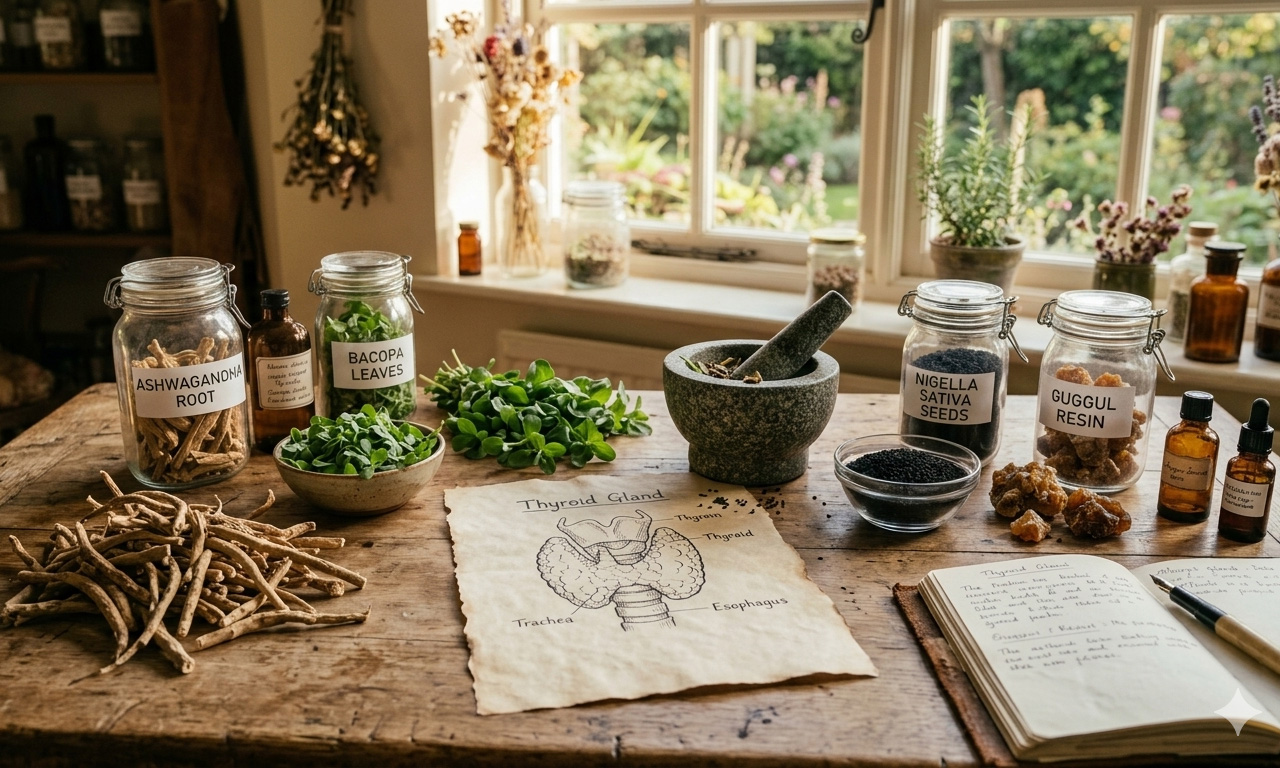
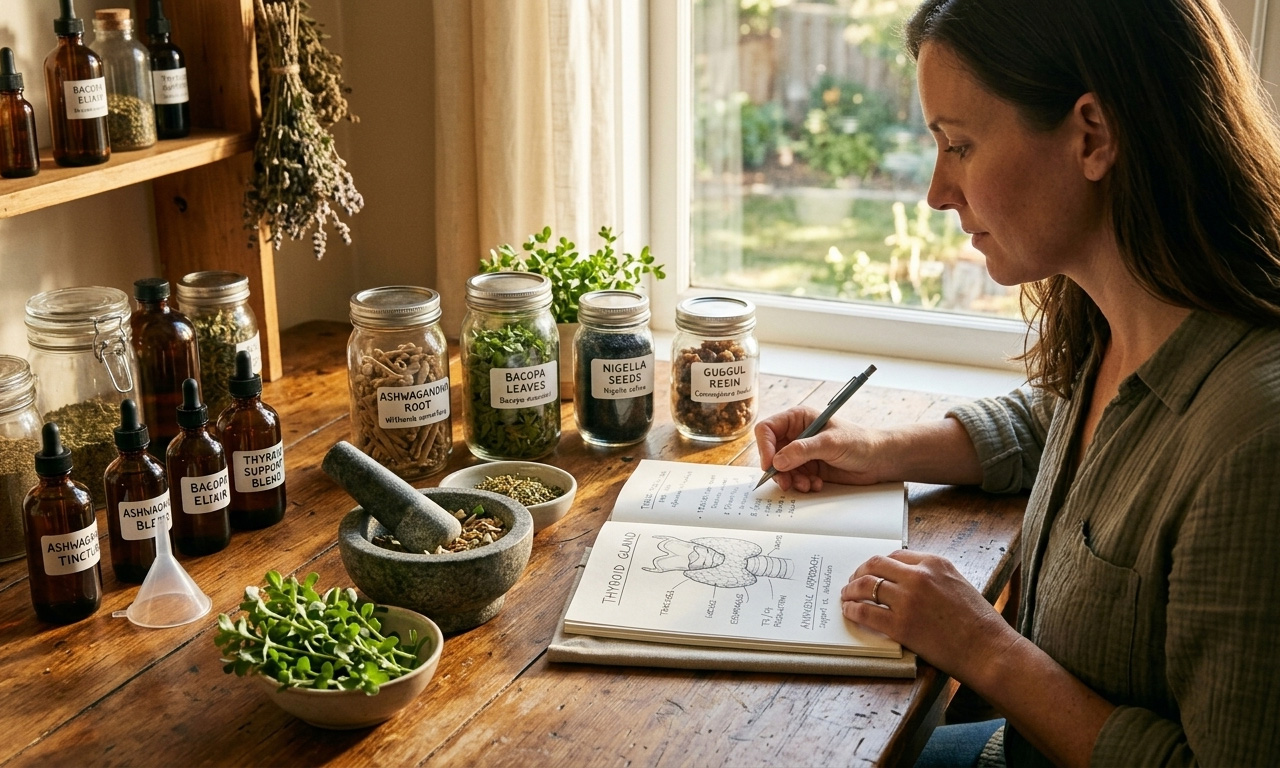
Ashwagandha: The Thyroid Wake-Up Call
This Ayurvedic adaptogen is the most studied herb for hypothyroidism. In a double-blind trial of people with subclinical hypothyroidism, 8 weeks of ashwagandha root extract (600mg daily) significantly lowered TSH and raised T3/T4 levels versus placebo.
The authors concluded ashwagandha “may be beneficial for normalizing thyroid indices.” The NIH confirms ashwagandha can boost thyroid hormones.
What this means for you: Ashwagandha can help wake up a sluggish thyroid while reducing stress. Start with 250-300mg daily of extract and recheck labs after a month or two.
Caution: Rare cases link it to transient hyperthyroid symptoms. It may interact with thyroid medications—monitor closely.
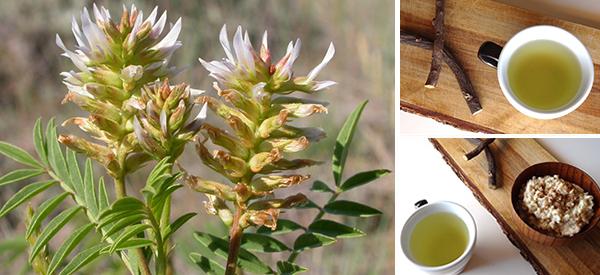
Nigella Sativa (Black Cumin): The Hashimoto’s Fighter
This one’s exciting. In an 8-week trial of women with Hashimoto’s thyroiditis, daily black cumin seed powder (2g) significantly lowered TSH and anti-TPO antibody levels while raising T3 compared to placebo.
The Nigella group also lost more weight and BMI, suggesting improved thyroid metabolism. The authors concluded black cumin “potently” improved thyroid status in Hashimoto’s.
What this means for you: If you have Hashimoto’s (autoimmune hypothyroidism), black cumin addresses the autoimmune component while supporting thyroid function. Use high-quality cold-pressed oil or powder (1-2g daily).
Bacopa: The Memory Herb That Boosts Thyroid
Traditionally used for memory and stress, bacopa also supports thyroid function. In lab studies, bacopa leaf extract caused a 41% increase in blood T4 levels without toxicity.
Less human data exists, but moderate doses (100-200mg daily of standard extract) may gently support thyroid output while reducing anxiety and cortisol.
Caution: Can amplify thyroid hormone levels—monitor TSH/T4 if you’re on levothyroxine.
This remedy is so powerful that herbalists use it to make products like the Natural Brain Booster and the Memory Elixir (this one is believed to improve memory by up to 75%).
Bacopa doesn’t just wake up your thyroid—it clears brain fog, sharpens memory, and reduces the cortisol that’s been dragging you down.
Coleus Forskohlii (Forskolin): The Thyroid Stimulator
Forskolin is a potent stimulator of thyroid gland activity in lab studies. Research shows it “increases the production of thyroid hormones and stimulates their release.”
While human trials in hypothyroid patients are limited, commercial thyroid support formulas often include forskolin for this reason.
Caution: Can raise heart rate and blood pressure mildly. Start low and observe your response.
Guggul: The Ayurvedic Thyroid Booster
This resin has a long history in Ayurveda. In a 2005 study, guggul extract reversed chemically-induced hypothyroidism in rats—it raised T4/T3 and normalized thyroid enzyme activity.
Human data is limited, but guggul’s ability to stimulate thyroid function may help counter Hashimoto’s-induced sluggishness.
Typical dose: 500-1,000mg daily of standard extract.
Critical Safety Information You Need to Know
Natural doesn’t mean risk-free. These herbs can interact with thyroid medications.
If you’re on levothyroxine or liothyronine:
Ashwagandha and bacopa can amplify thyroid hormone—you might need a lower medication dose
Your doctor should recheck TSH/T4 after starting supplements
Never stop thyroid medication without medical guidance
Selenium: 200 µg daily (2 Brazil nuts or supplement)
Ashwagandha: 300-500mg extract daily
Black cumin: 1-2g daily (especially if you have Hashimoto’s)
Optional: Bacopa 100-200mg, Forskolin, or Guggul based on your response
Monitor how you feel: more energy, improved mood, easier weight control, sharper thinking. Retest thyroid panel after ~3 months to see if TSH is dropping or T3/T4 rising.
Important: These approaches complement conventional care—they don’t replace it. Continue prescribed medication. Natural support may let you use a lower dose eventually, but work with your doctor on adjustments.
The Bottom Line
Supporting an underactive thyroid naturally is a marathon, not a sprint.
The science shows that selenium, ashwagandha, and black cumin have the strongest evidence for lowering TSH, raising thyroid hormones, and reducing autoimmune antibodies.
Your doctor won’t mention these because they’re trained to prescribe levothyroxine, not herbs. But clinical trials prove they work—often dramatically improving energy, mood, weight, and brain function alongside medication.
Hypothyroidism steals your energy and health. But by combining good nutrition (selenium, adequate iodine, vitamin D), stress management, and targeted herbs, you can recover vitality without dramatic extremes.
The research exists. The nutrients and herbs are available. The only question is: will you keep accepting exhaustion as your new normal, or will you give your thyroid the support it’s been asking for?
Your energy—and your life—are worth more than “just take this pill and deal with it.”
Recipes for Your Thyroid You Should Start Making Now
By using these remedies regularly, you’ll actually feel it. The crushing fatigue lifts. The weight starts coming off. You stop feeling cold all the time. Brain fog clears. Your hair stops falling out.
All the symptoms I mentioned at the beginning of this article might get better—because you’re finally giving your thyroid what it needs.
I recommend you making these thyroid-supporting remedies at home:
Glycerite for Thyroid Balance – Whether your thyroid is sluggish or overactive, this may help bring it back to its natural rhythm
We use cookies to ensure that we give you the best experience on our website. If you continue to use this site, we will assume that you are happy with it.
Functional Always active
The technical storage or access is strictly necessary for the legitimate purpose of enabling the use of a specific service explicitly requested by the subscriber or user, or for the sole purpose of carrying out the transmission of a communication over an electronic communications network.
Preferences
The technical storage or access is necessary for the legitimate purpose of storing preferences that are not requested by the subscriber or user.
Statistics
The technical storage or access that is used exclusively for statistical purposes.The technical storage or access that is used exclusively for anonymous statistical purposes. Without a subpoena, voluntary compliance on the part of your Internet Service Provider, or additional records from a third party, information stored or retrieved for this purpose alone cannot usually be used to identify you.
Marketing
The technical storage or access is required to create user profiles to send advertising, or to track the user on a website or across several websites for similar marketing purposes.






What is this symbol for the dosage of selenium “µg” ? How are we in America supposed to know what that is?
That symbol stands for micrograms (mcg). I had to look it up since that’s not a standard measurement in the US, as least as far as I know.