

Why Your Remedies Keep Going Rancid (It’s Not the Herb)
The most powerful thing about herbal remedies is that they put you back in control. You’re not waiting for a pharmacy, and neither are you losing your hard-earned money on ‘solutions’that may bring you other problems. You’re making something yourself, from plants you understand, in your own kitchen.
But that power only works if you actually know what you’re doing.
What I’m about to say is a pill hard to swallow… but I’ve been there myself: a remedy that goes rancid isn’t a failure of the herb. It’s a failure of how you handled it.
And the frustrating part? Most people don’t realize they’re doing it wrong until they open a jar six months later and it smells like stale peanuts instead of healing plants. I was there, I tell you. By then, the work is wasted. The plants are wasted. Your time and intention are wasted.
In this article, I want to help you not make the mistakes I did, because rancidity isn’t mysterious. It’s chemistry. And once you understand what causes it, preventing it becomes simple.
What’s Actually Happening
Rancidity is just oil breaking down. It’s the same chemistry that makes a cut apple turn brown. When oil sits exposed to oxygen, light, and heat, its fats react with oxygen and form off-smelling compounds.
The herb itself isn’t the problem. Dried herbs are stable. The problem is the oil you’re infusing them in, and how you’re treating it.
Related: 43 Remedies from My Childhood that Still Work Today
Some oils are more vulnerable than others. Oils like regular sunflower, grapeseed, and flax oxidize quickly—sometimes in weeks. Other oils like coconut, jojoba, and olive oil are much more stable and can last months or even over a year.
Most people don’t think about which oil they’re using. They just grab whatever is in the cupboard. This is where it starts going wrong.
4 Critical Mistakes You Should Avoid
Using fresh herbs instead of dried. You bring home beautiful fresh herbs, excited to infuse them. But fresh herbs have water in them, and moisture in oil promotes mold and bacteria. Make sure your herbs are completely dry… crispy dry, not just slightly damp. If you grow your own, hang them until they crumble.
Not cleaning your jars properly. I know it feels like overkill to boil a jar, but a tiny speck or drop of water accelerates spoilage. This is one of those invisible mistakes that ruins everything else you did right. Boil your jars and lids for ten minutes before use. Work with clean hands on a clean surface.
Choosing the wrong oil. Most people don’t think about which oil they’re using, you just grab what’s there. But some oils oxidize in weeks while others last months. High-PUFA oils like regular sunflower oxidize fast. Better choices are olive oil (stable and flavorful), coconut oil (excellent for salves), or jojoba oil (barely oxidizes at all). Spend two minutes choosing the right oil and you’ll save yourself trouble.
Storing in the wrong place. That sunny windowsill looks lovely, but light and warmth speed up oxidation. Store finished oils in dark glass bottles in a cool, dark cupboard. Better yet, refrigerate them.
You just read four ways a remedy can fail before it ever helps anyone. And those are just the storage mistakes.
There are also mistakes in the infusion itself. Mistakes in which part of the plant you use. Mistakes in when you harvest. Mistakes in extraction method. Mistakes in ratio. Mistakes that don’t smell wrong or look wrong but mean your remedy is half as strong as it should be, or completely ineffective.
You might want to learn more about: Native American Remedies That We Lost to History

Most people making herbal remedies at home are working from fragments. A recipe here. A tip there. Something they half-remembered from a video. They have no idea what they don’t know.
Nicole Apelian spent 30 years building the complete picture. She didn’t just study plants in books. She lived with the San Bushmen, one of the oldest cultures on Earth, and watched how traditional healers actually work. She foraged, processed, extracted, and refined until she understood not just what works but exactly why it works.
Inside The Lost Remedies Academy she takes you through everything on video. You watch her hands. You see exactly how she dries, infuses, strains, and stores. You see which oils she uses and why. You learn the logic behind every decision so you never have to guess again.
This isn’t a recipe collection. It’s a complete education. The kind that means next time you open a jar six months later it smells exactly the way it should.
How to Make It Right
Start with completely dry herbs. You’ve already done the hard work sourcing them. Don’t lose them to moisture at the finish line.
Sterilize your tools. Boil jars and lids for ten minutes. Use glass or food-grade stainless steel. Work cleanly. These small acts of care compound into a remedy that works. I like to put them in the oven for a while until they reach temperatures bacteria can’t survive.
Choose a stable oil. Olive oil is your workhorse. Coconut oil is wonderful for salves. Jojoba oil is nearly impossible to spoil.
Infuse gently. Room temperature takes a few days. Gentle heat takes hours. Once you can smell and taste the plant clearly, strain out all the herbs through fine mesh.
Add vitamin E. A few drops per cup extends shelf life noticeably. It’s not a chemical—it’s a natural antioxidant that makes a real difference.
Store properly. Pour into dark bottles, fill nearly to the top, cap tightly. Label with the date made and when to use by. Store cool and dark, or refrigerate. 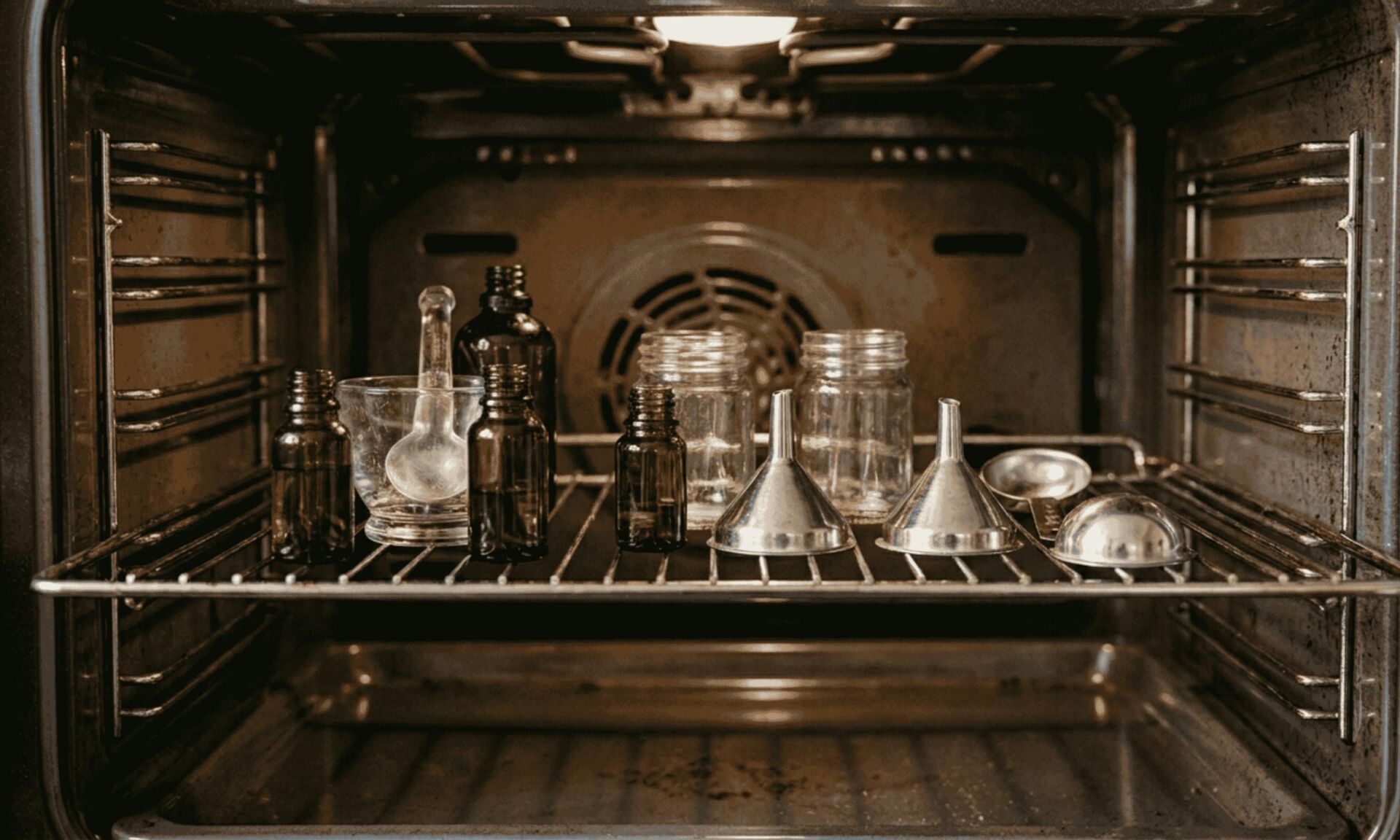
How to Know It’s Gone Bad
Trust your nose. Rancid oil smells distinctive. It’s sharp smell, bitter, soapy, or musty. If your remedy smells noticeably off, don’t use it.
You now know how to make an infused oil without ruining it. The technique is solid. The storage is handled. You’re not going to make those mistakes again.
But here’s the next question nobody talks about: what are you actually making?
Because knowing how to infuse properly is only half the equation. The other half is knowing which herbs to combine, in what proportions, for which specific condition. Which plants target joint pain versus nerve pain. Which combination soothes a burn versus which one pulls out an infection. Which remedy you want on hand before flu season hits and which one you need ready for the middle of the night when the pharmacy is closed.
Nicole Apelian has been refining these recipes for three decades. She made them in the field. She made them in her kitchen. She tested them on herself, on her family, and with the communities she worked with.
The Forgotten Home Apothecary contains 250 of the ones that actually worked. Every single one comes with color pictures, exact measurements, step-by-step instructions, and the page number where you’ll find it. Organized by body system so you go straight to the shelf you need instead of searching through hundreds of pages.
You’ve learned the technique today. Now get the recipes that are worth using it on.
Using this link allows you to get 3 free books and an entire video collection of herbal recipes. Click here to get The Forgotten Home Apothecary.
Why This Matters
The herbs themselves are powerful. Your intention matters. Your care matters. But none of that works if the remedy falls apart before you use it.
When you make a salve or infused oil, you’re creating something that will either improve or degrade over time. The outcome depends entirely on decisions you make upfront: which oil you choose, how thoroughly you dry the herbs, whether you sanitize your tools, how you store the finished product.
This is where the power actually lives: in your knowledge and your care. Once you understand what causes rancidity, you can prevent it. Once you prevent it, your remedies stay fresh. Once they stay fresh, you actually use them. And once you use them, they work.
That’s where the real power is.
After everything you just read, here’s the honest truth: getting every step right every single time is hard. Most people don’t have perfectly dried herbs, the right oil, sterilized jars, and proper dark storage all lined up at once.
Nicole Apelian does.
She’s created ready-made versions of the exact tinctures she teaches in her DIY guides, for the ones of you who prefer the easy way out from someone you really trust.
Every remedy made in small batches, giving each one the attention it needs to be genuinely potent. No mass production. No cutting corners. No sitting in a warehouse for months. That’s exactly why people keep coming back for a second bottle before the first one runs out.
Here’s what she has ready for you right now:
- Elderberry Tincture – immune support and respiratory health
- Usnea Tincture – antibacterial and antimicrobial properties, throat spray
- Reishi Tincture – adaptogenic support, immune modulation, stress response
- Balanced Gut Tincture – marshmallow root, slippery elm, plantain, turkey tail, lion’s mane for gut lining support
- Heart Health Blend – hawthorn, tulsi, fenugreek, bilberry for cardiovascular and metabolic support
- Anxiety & Stress Tincture – ashwagandha, lemon balm, reishi, lion’s mane for calm and focus
- Menopause Blend Tincture – black cohosh and red clover for hormonal balance support
- Bronchial Blend Tincture – lungwort and mullein for lung and respiratory support
- All-Purpose Salve – antibacterial and antifungal herbs for cuts, burns, rashes, and wounds
- Joint & Movement – capsaicin-based for joint and muscle pain relief
- Winter Defense Bundle – elderberry, usnea, bronchial blend, yarrow, yerba santa, and salve combined
- Mushroom Fortress Bundle – cordyceps, reishi, turkey tail, lion’s mane for immune and metabolic support
You now know what it takes to make a remedy that actually works. These were made that way.
Click here to see Nicole’s full collection.
You may also like: 
Each Tbsp of This Oil Fries Your Brain (Video)
What People Are Saying About The Lost Book of Herbal Remedies II
Inside and Out Remedy for Toenail Fungus
Important: If using fresh garlic or herbs, refrigerate and use within three to four days, or follow proper acidification methods. When in doubt, keep infused oils refrigerated.
Disclaimer: This article is for educational purposes and provides general guidance on infusion and storage. For questions about safe food preservation, consult your local extension service or food safety guidelines.
References: Information drawn from university extension publications, research on lipid oxidation, carrier oil stability guidance, and FDA/USDA food safety standards.
I get most of what this post is saying. But, what can one do when dealing with herbs that HAVE TO be processed into oils when they are fresh, such as St. John’s Wort and Scullcap? What are the best ways to store these oils and the salves made from them until the next Summer?
I used to sterilize my jars simply by pouring filtered boiling water into them (after scrubbing them with soap and water), swishing the water around thoroughly, then pouring out the water. But after a time, I started having problems with all my ferments developing mold. Then, some years ago, I discovered that in Japan, fermentation barrels are periodically scoured out with salt. Now, I still sterilize my jars simply by cleaning them with soap and water, then using the filtered boiling water to sterilize them, but I scour out the jars every 3 or 4 times after use, and my ferments have never gone bad since.