
Gargle This Every Morning to Get Rid of Strep Throat
Your throat starts to feel scratchy, and it hurts to swallow. You peek in the mirror and see telltale white spots and redness that could only mean one thing…strep throat. This bacterial infection is among the most pesky and can lead to serious complications—not to mention the impact it has on daily life! But before you reach for antibiotics, try this simple strep throat gargle to ease the pain and fight the bacteria naturally.
Before we go further, an important note: strep throat is a bacterial infection with the potential for serious complications if it goes untreated or is treated only symptomatically. Untreated strep can progress to rheumatic fever, which causes permanent heart valve damage, and post-streptococcal glomerulonephritis, a form of kidney inflammation. These are not rare worst-case scenarios. They are documented, predictable outcomes of inadequately treated strep infection. The remedies in this article are real, evidence-supported tools for easing symptoms, supporting your immune response, and speeding recovery. They are not a replacement for medical evaluation in severe or worsening cases. Read the warning signs section before you start, and keep them in mind throughout your recovery.
Many prefer a treatment of traditional antibiotics, but there are natural remedies you can use to ease symptoms and speed the healing process.
In this post, we’ll discover why strep throat occurs, how to lower your chances of getting it and uncover an herbal gargle that combines potent ingredients for fast relief. Gargle this every morning to eliminate strep throat and possibly prevent future infections.
This simple gargle is a great addition to your morning routine. It can also freshen your breath and keep harmful bacteria away. It’s great for the entire family!
This apple cider vinegar remedy targets the source of the problem but also soothes pain, allowing you to thrive in the midst of illness. Be sure to read our instructions on how to best utilize this recipe. We guarantee you’ll want a batch to keep on hand when strep throat is on the rise.
What Is Strep Throat?
Strep throat is a bacterial infection caused by Streptococcus pyogenes. It’s highly contagious and is spread through respiratory droplets, like fluid from sneezes or coughs, but you can also get it through contaminated surfaces.
Bacteria from Streptococcus pyogenes enter the body and release toxins in the throat that cause inflammation. This rise in inflammation leads to a myriad of symptoms, such as pain when swallowing, fever, and swollen lymph nodes.
You’re most likely to find this illness in fall and winter, though sometimes it occurs in warmer months. Some adults find themselves in bed with strep, but it’s most common among children ages 5-15.
This may be because children are in closer contact than adults, with time spent in schools and daycare. Other vulnerable groups include the immunocompromised.
Those with persistent strep throat (5-7 cases a year) often undergo a tonsillectomy, but antibiotics are the usual treatment. These can be useful in the most harmful cases.
However, if you feel strep throat coming on, an all-natural remedy may help stop it before it progresses into something unmanageable. Be sure to check out our safety tips for when it might be time to call your doctor.
Strep throat doesn’t just stop at a scratchy throat and fever. If left unchecked, it can cause congestion, mucus buildup, and lingering coughs that make it harder to recover fully. You might find yourself battling not just the strep but the domino effect it creates—your lungs feel tight, every breath feels heavier, and that stubborn mucus refuses to budge. It’s frustrating and exhausting, right?

Don’t wait until the mucus gets thicker or the congestion turns into something worse. A few drops of Bronchial Blend Tincture could be the difference between struggling to breathe and finally feeling relief. Click here to learn more about this must-have remedy and how it can help you breathe easier—even when your achy throat tries to hold you back.
Strep or Viral Sore Throat: How to Tell the Difference
Not every sore throat is strep, and the distinction matters because the two conditions respond to different treatments. A viral sore throat, which is far more common, will not respond to antibiotics or to antibacterial herbal protocols targeting Streptococcus pyogenes. Applying a strep-specific remedy to a viral infection wastes time and delays the rest and supportive care that actually helps a viral illness resolve.
Strep throat tends to arrive suddenly rather than building gradually over a day or two. The throat pain is typically severe and comes on fast, often within hours. Look for white or yellow patches on the tonsils, a bright red throat, and swollen and tender lymph nodes along the sides of the neck. Fever is common, often above 101 degrees Fahrenheit. A characteristic sign of strep that distinguishes it from most viral sore throats is the absence of cough. If your sore throat is accompanied by a runny nose, cough, hoarseness, or conjunctivitis, a virus is the more likely cause.
Other signs pointing toward strep include a fine red rash that feels like sandpaper on the skin, known as scarlet fever rash, headache, stomachache, and nausea, particularly in children. The Centor criteria, a clinical scoring tool used by physicians, assigns one point each for the absence of cough, presence of swollen tender lymph nodes, fever, and tonsillar exudate. A score of three or four suggests a strep infection worth treating. A score of one or two suggests a viral cause.
None of this replaces a rapid strep test, which your doctor can perform in minutes and which gives a definitive answer. If you are uncertain, get tested before beginning any treatment course so you know what you are actually dealing with.
How to Prevent Strep Throat
Strep throat can’t always be avoided, but there are some holistic steps you can take to strengthen your immune system. These strategies combine to create a balanced approach to help you prevent illness and heal faster.
Usnea and Its Antibacterial Power
If you want to skip the hassle and get straight to feeling better, this ready-made usnea tincture spray is the one I swear by. It’s effective, easy to use, and the best option I’ve found after trying way too many that didn’t deliver. Why wait for strep throat to get worse when you’ve got such a simple, natural solution?
Usnea, also known as old man’s beard, is one of the more potent natural tools available for bacterial throat infections. Its primary active compound, usnic acid, has demonstrated antibacterial activity against gram-positive bacteria including Streptococcus pyogenes in multiple laboratory studies. It works by disrupting bacterial cell membrane integrity and interfering with metabolic function, making it genuinely relevant to strep rather than a general wellness ingredient.
For practical use, usnea is most commonly taken as a tincture. A standard adult dose is 1 to 2 milliliters of a 1:5 tincture in 40 percent alcohol, taken two to three times daily for the duration of symptoms. For direct throat application, a spray tincture applied directly to the back of the throat delivers usnic acid to the site of infection more efficiently than a tincture swallowed with water. Hold the spray in contact with the throat tissue for 30 seconds before swallowing if possible.
A typical course runs five to seven days. There is no strong evidence for longer use providing additional benefit, and usnic acid in high doses has been associated with liver stress in supplement form, though topical and tincture use at standard doses does not carry the same risk profile as concentrated oral supplements. Do not use usnea tinctures during pregnancy without consulting a qualified herbalist or healthcare provider, as safety data in pregnancy is limited.
If you prefer to source your own, usnea grows on tree bark and fallen branches in clean, unpolluted forest environments. Confirm identification by gently pulling the lichen apart: genuine usnea has a white elastic inner cord that stretches rather than breaking cleanly. Harvest minimally and only from abundant sources, as it is slow-growing and ecologically sensitive.
Cut out sugar. Processed sugar lowers your immune system, making it harder to fight illnesses. It also inhibits your white blood cells, which are your best weapon against sickness. Avoid processed sugar and instead incorporate rich, nourishing fruits and veggies into your diet.
Practice good hygiene. This may sound elementary, but washing your hands can prevent many illnesses. When out and about, wash your hands often to eliminate harmful germs. Be sure to cover your mouth if coughing or sneezing so you don’t spread germs to others!
Did you know your mouth is one of the first battlegrounds for bacteria and germs that cause illness, including strep throat? Keeping your oral hygiene in check isn’t just about fresh breath—it’s about protecting your overall health. A clean mouth makes it harder for harmful bacteria to thrive, giving your immune system one less thing to worry about.
 And no, I’m not talking about those lab-made, chemical-filled mouthwashes you find at the store. Most of them actually hurt your mouth’s microbiome—yes, your mouth has its own microbiome! Instead, this natural DIY mouthwash uses simple ingredients like mineral sea salt, peppermint, and clove buds to reduce harmful bacteria, keep your gums strong, and leave your mouth feeling refreshed. Let me show you how to make it by clicking here — you’ll never want to go back to store-bought!
Utilize throat-soothing teas. Herbal tea with raw local organic honey can coat the throat and reduce irritation. The best herbal teas for strep throat include thyme, licorice, and barberry, but you can always experiment to see which you like best.
Diffuse essential oils. Research has examined oregano and sage essential oils for their activity against Streptococcus pyogenes, and the findings are worth understanding in context. A study published in the journal Phytotherapy Research identified carvacrol and thymol, the primary active compounds in oregano oil, as effective against Streptococcus strains in vitro. Sage oil contains thujone and camphor, which have demonstrated antimicrobial properties against gram-positive bacteria in laboratory settings. These are genuine findings, not folk claims.
The important caveat is delivery method. Diffusing essential oils disperses them into the air as fine particles, which means the concentration reaching your throat and nasal tissue is a fraction of what was used in controlled studies. Diffusion is most useful for reducing airborne bacterial load in a shared space and for supporting respiratory comfort through the anti-inflammatory effects of inhaled compounds. It is not a direct treatment for an established infection in the same way that a throat spray or gargle is.
For more targeted application, a steam inhalation using two to three drops of oregano or thyme oil in a bowl of hot water, with a towel draped over your head to concentrate the steam, delivers a higher dose of active compounds directly to the throat and sinus tissue. Do this for five to ten minutes, two to three times daily. Keep eyes closed during the inhalation as essential oil vapor causes significant eye irritation. Do not apply undiluted essential oils directly to throat tissue, as the concentrated compounds can cause chemical burns at full strength.
Apple Cider Vinegar Gargle for Strep Throat Relief
This cost-effective gargle is antimicrobial, anti-inflammatory, and antibacterial. It contains simple ingredients that, when combined, work synergistically to provide relief and quick healing.
If you’re wondering how I’ve learned so much about plants and their healing power, it’s all thanks to The Lost Book of Herbal Remedies II. This guide has been my go-to for discovering the incredible ways nature can support our health.
Apple cider vinegar is acidic and can prevent the progression of strep bacteria. We combined this tangy vinegar with pink Himalayan salt, eliminating infection and numbing the throat. A little dried thyme is antifungal and an effective infection fighter.
Here is what the research actually shows about these ingredients and why the combination works. Apple cider vinegar contains acetic acid, which studies published in peer-reviewed journals including the Journal of Food Science have confirmed demonstrates antimicrobial activity against a range of bacterial strains. The mechanism is disruption of bacterial cell membranes and interference with enzyme function. That said, most in vitro studies use direct application at controlled concentrations, and the diluted form used in a gargle delivers lower acidity than laboratory conditions. The benefit in a gargle is primarily the direct contact with the throat tissue and the hostile acidic environment it creates for bacteria, rather than systemic antibacterial action. Pink Himalayan salt draws fluid from swollen tissue through osmosis, which reduces inflammation and creates a high-salinity environment that most bacteria, including Streptococcus pyogenes, cannot survive in for long. Thyme contains thymol and carvacrol, two compounds with well-documented antimicrobial and anti-inflammatory properties. A 2011 study in the journal Arzneimittelforschung found thyme-based preparations effective against respiratory pathogens including Streptococcus species. Together these three ingredients address bacterial activity, inflammation, and tissue swelling through complementary mechanisms rather than a single pathway.
Here’s how to make this comforting Apple Cider Vinegar Gargle.
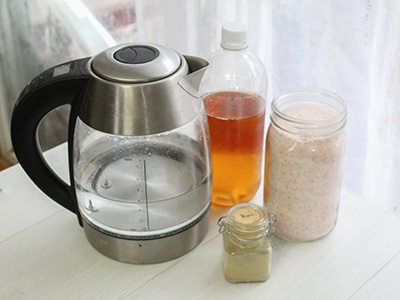
 Ingredients
- 1 teaspoon pink Himalayan salt
- 1 tablespoon raw, unfiltered apple cider vinegar
- 1 teaspoon dried thyme
- 1 cup hot water
Step One
Add a teaspoon of pink Himalayan salt to a large cup. 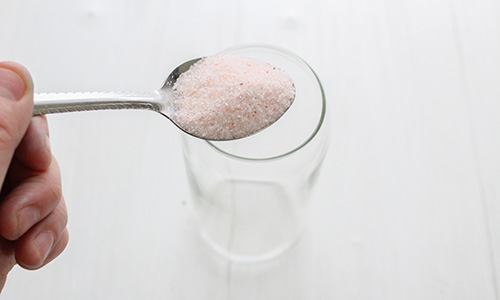
Step Two
Pour in the apple cider vinegar and stir to mix. 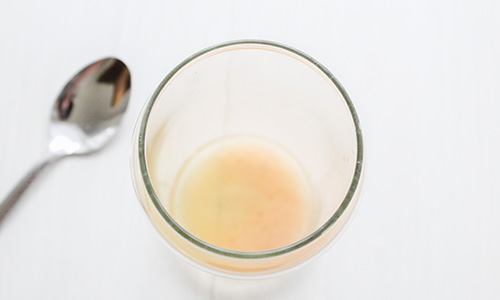
Step Three
Place the dried thyme into a tea strainer and place it in the cup. Pour over 1 cup of warm water and let the mixture steep for 5 minutes. Remove the tea strainer and stir the gargle until the salt is dissolved. Enjoy your soothing strep throat remedy! 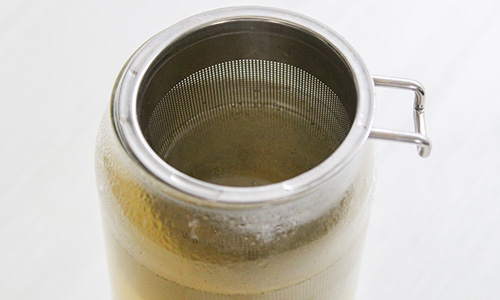
How to Use Apple Cider Vinegar Gargle for Strep Throat Relief
To use, drink a big swig of the mixture, gargle for at least 30 seconds, and spit it out. Do not swallow the mixture! Repeat this process two to three times a day: once in the morning, once in the afternoon, and once in the evening. This remedy is ideal for children over the age of five who know how to gargle and spit. Kids should always be supervised so they don’t swallow the mixture. 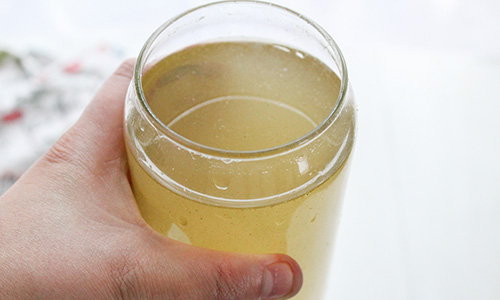
The gargle is also safe for pregnant/nursing mothers. If you have mouth ulcers, be sure to consult with your oral health doctor before using.
This remedy is fabulous, but be sure to call your care practitioner if you have difficulty drinking liquids, develop a red rash, have a fever lasting a few days, if your symptoms persist or get worse, or if you have breathing issues. Be especially cautious with children, as their strep throat can worsen within hours.
The gargle is most potent when made fresh daily, as the volatile antimicrobial compounds in thyme begin to dissipate once steeped and cooled. That said, a batch prepared in the morning will retain meaningful potency through the evening of the same day if stored correctly.
To store, transfer the gargle to a clean sealed glass jar and refrigerate immediately after it cools to room temperature. Use within 24 hours. Before each use, check that the mixture smells clean and herbal. A sour or fermented smell beyond the normal vinegar note, or any visible cloudiness that was not present when the batch was made, indicates the mixture has degraded and should be discarded. Do not use a batch that has been left at room temperature for more than two hours, as the warm liquid environment can support bacterial growth rather than inhibiting it.
To reheat a refrigerated batch, warm gently over low heat on the stove until it reaches a comfortable gargling temperature. Do not boil, as heat above 140 degrees Fahrenheit degrades the acetic acid in the apple cider vinegar and destroys the volatile thymol compounds that give thyme its antibacterial activity. A few seconds of gentle warming is sufficient. Do not microwave, as uneven heating creates hot spots and the same degradation risk applies.
Do not freeze the recipe. Freezing disrupts the structural integrity of the bioactive compounds in raw apple cider vinegar and alters the salt concentration as ice crystals form and separate from the liquid. A frozen and thawed batch will not perform the same way as a fresh one.
You know how it goes—one day, it’s just a sore throat, and you think it’ll pass. The next, you’re drowning in mucus, coughing so hard you can’t sleep, and battling fevers that drain every ounce of energy.
Adapting These Remedies for Children
Children are the demographic most affected by strep throat, and several of the remedies in this article require adjustment before they are appropriate for young patients.
The apple cider vinegar gargle is suitable for children aged five and older who can reliably gargle and spit without swallowing. Always supervise gargling sessions. For children who struggle with the taste, reduce the apple cider vinegar to half a teaspoon per cup and add a small amount of raw honey to improve palatability without reducing the salt concentration, which is the primary active component for throat tissue. Children under five should not use this gargle, as the aspiration risk from swallowing the mixture is not worth the benefit at that age. For younger children, a warm saline rinse using only salt and water is a safer alternative.
For herbal remedies including usnea, dosing for children follows a body weight-based calculation rather than a fixed adult dose. A commonly used formula is Clark’s Rule: divide the child’s weight in pounds by 150 and multiply by the adult dose to get the child’s dose. For a 50-pound child, that means roughly one third of the adult tincture dose. Do not give tinctures preserved in alcohol to children under two. Glycerin-based tinctures are available as an alternative and carry the same herbal content without the alcohol base.
Thyme tea with raw honey is one of the safest and most effective remedies for children across a wide age range. Honey should never be given to children under 12 months due to the risk of infant botulism. For children over one year, raw local honey has documented throat-coating and mild antibacterial properties that make it a genuine therapeutic addition rather than just a sweetener.
Monitor children with strep closely. Their condition can deteriorate within hours, and fever, difficulty swallowing, drooling, or a rash spreading beyond the throat are all reasons to seek medical attention immediately rather than continuing home treatment.
One thing worth being clear about: this gargle is a supportive care tool, not a cure. It reduces bacterial load in the throat, eases inflammation, and makes the recovery process more comfortable. It does not penetrate deep tissue the way systemic antibiotics do, and it does not carry the same clinical guarantee of eliminating the infection at its source. Antibiotics, specifically penicillin and amoxicillin, remain the only treatments with a strong evidence base for reliably preventing the serious complications of strep throat, including rheumatic fever and kidney disease. If your symptoms are severe, if you have a high or persistent fever, if you are managing strep in a young child, or if you have a history of rheumatic fever, this gargle is a complement to medical care rather than a replacement for it. Use it alongside your recovery plan, not instead of one.
What to Expect Day by Day: Natural Remedies vs. Antibiotics
One of the most anxiety-producing parts of managing strep at home is not knowing whether what you are experiencing is normal progression or a warning sign. Here is a realistic timeline for both treatment paths so you know what to watch for.
With antibiotics, most people begin to feel noticeably better within 24 to 48 hours of starting a full course. Fever typically resolves within the first day. Throat pain begins to ease by day two and is largely gone by day four or five. The full antibiotic course runs ten days for penicillin-based treatments, and completing it matters even after symptoms resolve, as stopping early allows surviving bacteria to rebound and increases resistance risk.
With natural remedies and supportive care, the timeline is slower. Expect the first two days to feel roughly the same or marginally worse as the infection peaks. Days three and four typically bring the first meaningful reduction in throat pain and fever if the immune response is progressing well. By day five to seven, most otherwise healthy adults with a mild to moderate case will be through the worst of it. Full recovery including energy restoration often takes ten to fourteen days.
Children, elderly individuals, and immunocompromised people move through this timeline less predictably and should be monitored more closely throughout.
Stop home treatment and seek medical attention immediately if any of the following occur at any point: fever above 103 degrees Fahrenheit that does not respond to supportive care, difficulty breathing or swallowing liquids, a fine red sandpaper rash spreading across the body, symptoms that improve and then sharply worsen after day three, swelling on one side of the throat only, which may indicate a peritonsillar abscess, or any symptom in a child that causes you concern regardless of how it fits the timeline. These are not situations to wait out.
According to the CDC, prompt antibiotic treatment of confirmed strep throat reduces the duration of symptoms, lowers the risk of transmission to others, and is the only reliably effective prevention for rheumatic fever as a complication.
And let’s be real—who has the time to run around gathering ingredients or the energy to make remedy after remedy when your whole household starts dropping like flies? Between work, kids, and just trying to survive the chaos, finding a simple solution feels impossible. That’s why the Winter Defense Bundle is a lifesaver.
It’s packed with everything you need to tackle strep and seasonal bugs:
- Usnea Spray Tincture for fast throat relief.
- Bronchial Blend Tincture to clear mucus and soothe lungs.
- Elderberry and Yarrow Tinctures to boost immunity and reduce fevers.
- Yerba Santa Tincture for sinus and chest congestion.
- All-Purpose Salve to stop germs before they spread.
Don’t wait for strep to take over—this bundle has everything ready to go when you need it most. Click here to grab yours and stay ahead of the season.
If you’re like me, you want solutions that actually work—without relying on endless chemicals or quick fixes that leave you worse off. That’s why The Holistic Guide to Wellness has been a game-changer for me. It’s not just about strep throat; this book is packed with practical, natural remedies for everything from respiratory issues to gut health, immune support, and even stress and anxiety.
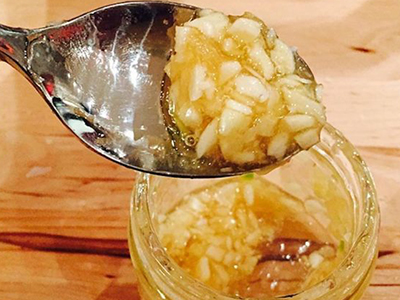
For example, did you know you can make black garlic at home? It’s a powerhouse for boosting immunity and supporting respiratory health. Or how about this: cover fresh garlic cloves in honey and let them ferment for a few days. The result? A sweet, tangy remedy that works wonders for soothing sore throats, clearing sinuses, and strengthening your immune system. Add a little lemon, and you’ve got a natural tonic that helps you bounce back faster from illness.
This book doesn’t stop at garlic and honey. It’s a treasure trove of tips and protocols, like the Lungs and COPD Protocol, Sinusitis Protocol, and even a step-by-step Allergy Protocol—all designed to help you take control of your respiratory health naturally. And it doesn’t stop there! You’ll also find remedies for IBD, parasite elimination, digestive issues, anxiety, and so much more.
If you’re ready to ditch the guesswork and discover how to use natural remedies for a wide variety of health challenges, this guide is for you. Click here to explore the full list of protocols and see why this book has become a must-have for anyone passionate about holistic health.