

St. John’s Wort: Identify, Harvest & Use This Powerful Antidepressant Herb
That “weed” choking out your garden might be treating depression better than prescription drugs.
For over 2,000 years, St. John’s Wort has been healing wounds and lifting spirits. Today, German doctors prescribe it more often than Prozac. Clinical studies analyzing over 5,000 patients confirm it works just as well as prescription antidepressants for mild to moderate depression—with fewer side effects and a fraction of the cost.
It’s probably growing wild within a mile of your home right now.
But here’s what nobody tells you: St. John’s Wort is so powerful it interferes with dozens of medications—birth control, heart drugs, chemotherapy, antidepressants. It can render prescriptions useless or create life-threatening complications. This isn’t a gentle herb. It’s serious medicine.
The other problem? There are 400 species in the Hypericum family, but only one—Hypericum perforatum—offers real medicinal benefits.
In this guide, you’ll learn how to correctly identify true St. John’s Wort, where to find it, how to prepare it safely, what it actually treats, who should never use it, and the critical drug interactions that could save your life.
Let’s separate science from folklore.
The History of St John’s Wort
There are records of this plant being used for over 2000 years. The Greeks in the 1st century recommended its use for a variety of medical problems ranging from wound-healing to a cure for intestinal parasites.
In addition, the ancient Greeks and early Christians believed the plant has mystical powers and warded off evil. It is unclear how this group of plants became known as St John’s Wort. One theory is that the plant flowers in the northern hemisphere around the feast day of St John in June.

The medicinal use of St John’s Wort continued in Europe for centuries and, in the 16th century, it was also recorded as being used to alleviate pain, anxiety, and depression. In the 18th and 19th centuries, the use of this herb spread to other continents where it was used in the same way. It was, by this time, additionally used to treat insomnia, gastric inflammation, and oil made from the plant was considered effective against inflammation, hemorrhoids, and minor burns.
With a ‘rediscovery’ of natural and traditional remedies, preparations using St John’s Wort have experienced a resurgence of popularity in recent decades.
Where This Plant is Found
Hypericum perforatum, or common St John’s Wort, is thought to be native to Europe and parts of Asia. However, it has spread to North Africa, Australia, North America, New Zealand, and South America.
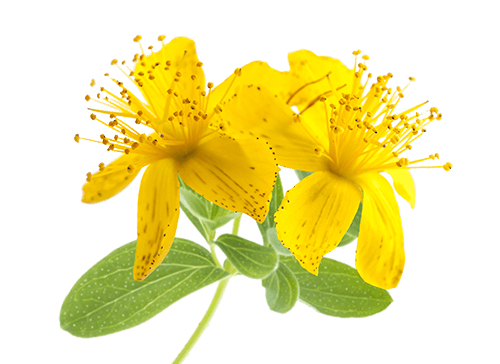
The reasons for its success are, firstly, that it thrives in a range of climates and is happy in poor soil. Secondly, it grows wild in rural areas such as meadows and fields and more urban settings such as waste areas, abandoned commercial and industrial sites, and at roadsides. Finally, these plants don’t need a lot of water.
This hardy and invasive nature, and the plant’s toxicity for animals, has led to several US states, Canada, and Australia declaring it an invasive weed and running eradication programs.
How to Identify St John’s Wort
Common St John’s Wort is a leafy shrub that stands at between 2 feet / ½ meter and 3 feet or 1 meter high. A mature, fully grown bush will also have a spread of 2 feet or ½ meter and will take about 5 years to reach this size. This plant more typically looks leggy as it is taller than it is wide. It doesn’t form a compact bush like some other Hypericum varieties.
There are two useful and easy ways to identify this specific St John’s Wort:
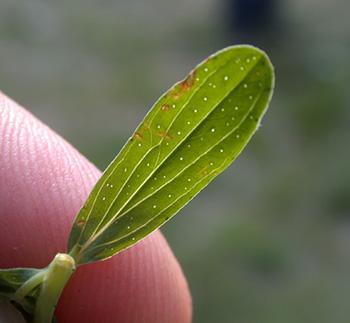
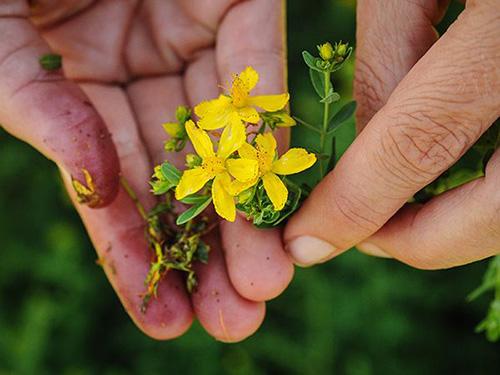
- Crush a flower of bud between your fingertips. It should leave a dark red stain
- Hold a leaf up to the light and look for little pinprick-sized holes or perforations (hence the name Perforatum) that let the light through. Each part of this medicinal plant has distinctive characteristics.
- Leaf: The veined leaves are small, oblong, smooth-edged, and yellow-green or pale green in color. Each leaf is 1 – 3 centimeters or 0.4 – 1.2 inches long and ½ – 1 centimeter or 0.16 – 0.4 inches wide.
The leaves, as mentioned, have distinctive holes.
- Flower: St John’s Wort blooms in summer and each plant will carry multiple blooms and buds throughout the flowering season.
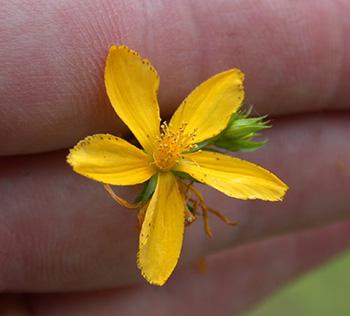
The star-shaped flowers are bright yellow, have 5 petals that have black dots along the edges, and have many yellow stamens.
The flowers grow to approximately 2 ½ centimeters or 1 inch in diameter.
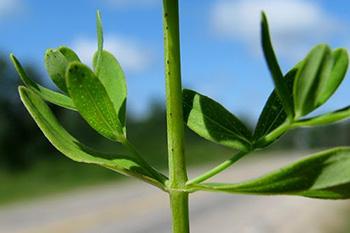
 Stems: The branches and stems of the common St John’s Wort are woody and have a reddish color.Every branch has numerous stems each of which bears many leaves. The leaves are found on the bottom half of the plant and the flowers on the top half.
- Seeds: In late summer, the flowers go to seed and form capsules. Each of these contains several dozen tiny dark-brown seeds.
While it’s not hard to identify H. Perforatum, it is important not to confuse it with other members of the Hypericum family.
How to Grow St John’s Wort
There are other propagation methods with St John’s Wort:
- Seeds: These can be sown at any time from mid-spring to early in autumn. Seeds should be planted in loose soil and about 5 centimeters / 2 inches apart. The soil should always be moist but not too damp, especially until the seeds germinate.
- Division: You can divide the rhizomes by lifting the plant from the ground and gently separating the root mass. Plant the divided plants immediately and water them well to ease any shock to the roots. Don’t divide plants during the summer when they are actively growing or in the winter when they are dormant.
- Softwood cuttings: The best time to take cuttings from St John’s Wort is in summer when the plant is in bloom. Remove 10 centimeters / 4 inches of non-flowering, new growth from just above a bud. Strip off the lower leaves, dip the bottom of the cutting in rooting or hormone powder and plant it in compost. Keep the cutting(s) most and warm. They should root after 8 – 10 weeks.
The easiest way to grow this herb is, of course, by purchasing young or more established plants from a garden center or reputable online seller.
Optimal planting times are spring or autumn. In fact, this hardy plant can be planted year-round provided the ground isn’t frozen. If you live in a hot region, it’s preferable to plant this herb in partial shade. This species of St John’s Wort will grow well in sand, chalk, or even clay, regardless of the pH levels, but requires moist, well-drained ground.
It’s not necessary to prune this plant although it can be shaped in early spring if you want to. However, it’s better not to cut St John’s Wort as new branches and shoots don’t flower in the first year. Conversely, mature plants can become unruly if they are not kept in check!
As mentioned, Hypericum perforatum is considered an invasive weed in some regions. It is also toxic to animals, including domestic pets. The rhizomes can spread significantly, and it can be hard to get rid of, so think carefully about introducing this species into a garden. Some people believe putting them in large pots is preferable as they are contained this way.
How to Harvest this Herb
The best time to harvest is when the plant is in full bloom. You can either just collect flowers and buds, or you can cut the top 2 – 3 inches / 5 – 7 ½ centimeters off a branch. The second method is faster but not ideal as it (a) alters the plant and (b) you must still remove the flowers and buds later.
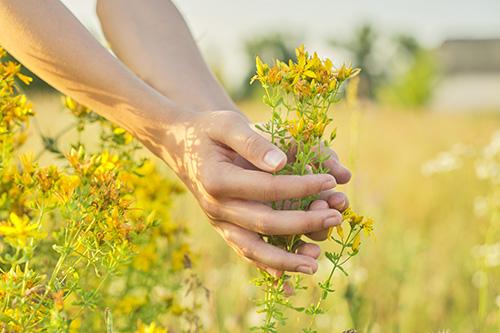
If you are harvesting in the wild, avoid plants that grow at the roadside or other locations where they will be exposed to toxins and air-borne pollutants. These can contaminate plants which in turn may adversely affect the safety and effectiveness of the plant material.
5 Science-Backed Health Benefits of St. John’s Wort
St. John’s Wort’s reputation as a healing plant isn’t just folklore—it’s backed by extensive scientific research. While it’s best known for treating depression, this remarkable herb offers several other well-documented benefits. Here’s what the science actually says, with links to the actual studies.
1. Mild to Moderate Depression (Primary Use)
This is St. John’s Wort’s claim to fame, and it’s where the research is most robust.
What the science shows:
A comprehensive Cochrane Review analyzing 29 trials with 5,489 patients found that St. John’s Wort was:
- Significantly more effective than placebo for treating depression
- As effective as standard prescription antidepressants (SSRIs and tricyclics)
- Associated with fewer side effects than pharmaceutical drugs
Key findings:
- Response rates: 50-60% (comparable to prescription antidepressants)
- Effective specifically for mild to moderate depression
- NOT effective for severe depression or suicidal ideation
- Takes 4-6 weeks of consistent use to see full benefits
How it works:
St. John’s Wort contains two primary active compounds—hypericin and hyperforin—that affect multiple neurotransmitter systems:
- Inhibits reuptake of serotonin (like SSRIs)
- Inhibits reuptake of dopamine and norepinephrine
- Modulates GABA receptors
- May affect glutamate signaling
Unlike prescription drugs that typically target one neurotransmitter system, St. John’s Wort works on multiple pathways simultaneously, which may explain its effectiveness with fewer side effects.
Clinical evidence:
In a 2008 study published in the British Medical Journal, researchers compared St. John’s Wort to paroxetine (Paxil) in 251 patients with moderate depression. Results: both treatments were equally effective, but St. John’s Wort had significantly fewer adverse effects.
Best for:
- Mild to moderate depression (not severe)
- Depression with anxiety
- Depression without suicidal thoughts
- People who can’t tolerate SSRI side effects
- Those not taking other medications
Important limitation: If you have severe depression, thoughts of suicide, or can’t function in daily life, you need professional medical care. St. John’s Wort is not appropriate for severe cases.
2. Anxiety Disorders
While less researched than its effects on depression, St. John’s Wort shows promise for anxiety, particularly when it occurs alongside depression.
What the research shows:
Several studies indicate St. John’s Wort can reduce symptoms of:
- Generalized anxiety disorder (GAD)
- Social anxiety
- Stress-related anxiety
A 2016 study in Phytomedicine found that St. John’s Wort extract significantly reduced anxiety symptoms in patients with mild to moderate anxiety disorders.
How it works:
- GABA modulation (the brain’s main calming neurotransmitter)
- Reduction in stress hormone (cortisol) levels
- Serotonergic effects that calm racing thoughts
Best for:
- Anxiety that accompanies depression
- General worry and nervousness
- Stress-related anxiety
Less effective for:
- Panic disorder
- OCD
- Severe anxiety disorders
Important: For pure anxiety without depression, other herbs like passionflower or ashwagandha might be more appropriate first-line treatments.
3. Menopausal Symptoms
St. John’s Wort shows promise for alleviating both the physical and emotional symptoms of menopause.
What the research shows:
Multiple studies indicate St. John’s Wort can help with:
- Hot flashes
- Night sweats
- Mood swings and irritability
- Depression associated with menopause
- Sleep disturbances
A 2010 study published in Menopause found that women taking St. John’s Wort experienced significant reductions in the severity and frequency of hot flashes compared to placebo.
Why it works:
Menopause-related symptoms often involve both hormonal changes and mood disruptions. St. John’s Wort addresses:
- Mood symptoms through neurotransmitter modulation
- Physical symptoms through anti-inflammatory effects
- Sleep quality through calming effects
Best combined with:
- Black cohosh (for hot flashes)
- Regular exercise
- Stress management techniques
Dosage for menopause: Studies typically use 300mg three times daily, or 20 drops of tincture (0.2mg/mL hypericin) three times daily.
4. Wound Healing and Skin Conditions
Topical application of St. John’s Wort has been used for centuries to treat wounds, burns, and various skin conditions—and modern research supports this traditional use.
What the research shows:
Studies demonstrate that St. John’s Wort oil or salve applied topically can:
- Speed wound healing
- Reduce inflammation
- Prevent infection (antimicrobial properties)
- Minimize scarring
- Relieve pain at wound sites
Research published in Planta Medica demonstrated St. John’s Wort’s effectiveness in promoting wound healing and reducing inflammation when applied topically.
Effective for:
- Minor cuts and abrasions
- First-degree burns
- Sunburn (though taking it internally increases sun sensitivity)
- Bruises
- Muscle soreness when used as massage oil
- Eczema and dermatitis
- Hemorrhoids
How it works:
The compounds in St. John’s Wort provide multiple healing mechanisms:
- Anti-inflammatory: Reduces swelling and redness
- Antimicrobial: Fights bacteria that could infect wounds
- Analgesic: Relieves pain
- Tissue regeneration: Promotes healing of damaged skin
Traditional use: In folk medicine, fresh St. John’s Wort flowers were crushed and applied directly to wounds. Today, the infused oil or prepared salves are more practical.
Important: For serious wounds, deep cuts, or burns covering large areas, seek medical attention. St. John’s Wort is for minor injuries only.
5. Anti-Inflammatory and Pain Relief
Chronic inflammation underlies many modern diseases. St. John’s Wort demonstrates significant anti-inflammatory effects that can help with various pain conditions.
What the research shows:
Laboratory and clinical studies demonstrate that St. John’s Wort:
- Reduces pro-inflammatory cytokines
- Inhibits inflammatory pathways (COX-2, similar to NSAIDs)
- Decreases markers of oxidative stress
- Protects tissues from inflammation-related damage
A study in the Journal of Pharmacy and Pharmacology demonstrated St. John’s Wort’s anti-inflammatory properties, showing it inhibits key inflammatory mediators.
Potentially beneficial for:
- Arthritis and joint pain
- Inflammatory bowel conditions
- Muscle soreness and exercise-induced inflammation
- Nerve pain (when applied topically)
- General chronic inflammation
How it works:
Multiple compounds in St. John’s Wort contribute to anti-inflammatory effects:
- Hyperforin: Primary anti-inflammatory compound
- Hypericin: Reduces inflammatory mediators
- Flavonoids: Antioxidant and anti-inflammatory properties
Application: Both internal use (capsules, tea, tincture) for systemic inflammation and topical application (oil, salve) for localized pain and inflammation.
Traditional use: St. John’s Wort oil has been massaged into sore muscles, arthritic joints, and areas of nerve pain for centuries—a use now supported by modern research.
What St. John’s Wort Does NOT Do
It’s important to address common misconceptions:
St. John’s Wort does NOT:
- Cure severe or clinical depression (requires professional treatment)
- Work immediately (takes 4-6 weeks)
- Replace necessary medications for serious conditions
- Treat bipolar disorder (can trigger mania)
- Prevent or cure cancer
- Work for everyone (50-60% response rate means 40-50% don’t respond)
The Bottom Line on Benefits
St. John’s Wort’s primary, well-established benefit is treating mild to moderate depression with a safety and efficacy profile comparable to prescription antidepressants. Its secondary benefits—particularly for anxiety, menopausal symptoms, wound healing, and pain relief—are also well-supported by research and traditional use.
The key is using St. John’s Wort for appropriate conditions and being realistic about what it can and cannot do.
Most importantly: these benefits are only relevant if you can safely take St. John’s Wort. If you’re taking other medications, have certain medical conditions, or fall into high-risk categories, the risks may outweigh any potential benefits.
Always consult a healthcare provider before using St. John’s Wort medicinally, especially if you’re considering it as treatment for depression or any medical condition.
A DIY St John’s Wort Recipe
It’s important to note that you can use dried St John’s Wort for remedies, but fresh herbs are more potent. Fresh flowers also give the oil a red hue. However, this recipe uses dried plant material as we were unable to get fresh Hypericum perforatum but gives information for using fresh St John’s Wort too.
Because St John’s Wort has anti-inflammatory and pain-relieving properties, a salve is a valuable addition to a home first aid kit for minor wounds, dry and / or itchy skin, abrasions, and aching muscles.
The following recipe for a DIY St John’s Wort salve is in two parts: making an infused oil and then the salve. Alternatively, you can buy the oil and make the salve using it.
Ingredients for The Oil
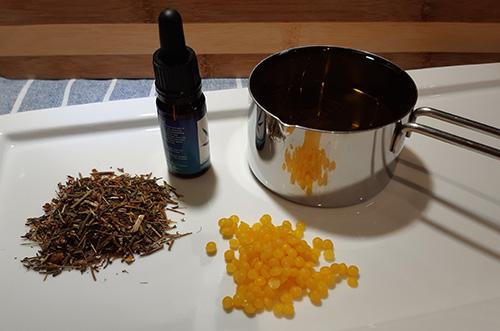
- 1 ounce / 30 grams of dried St John’s Wort.
- 10 fluid ounces / 280 milliliters of room temperature good quality olive oil
- Vitamin E oil (optional as a preservative)
Method for the oil
- Place the dried herb into a dry, sterilized glass jar
- Pour the oil over the herbs
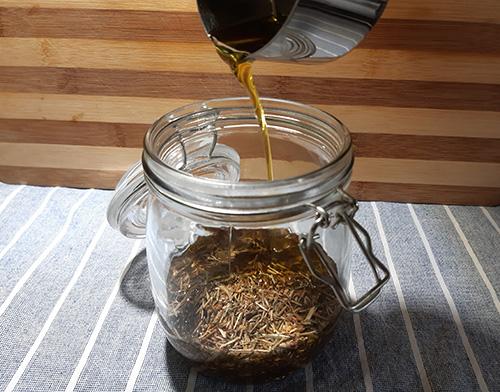
- Use a clean, dry spoon to mix the herb and oil thoroughly to coat the St John’s Wort and remove air bubbles
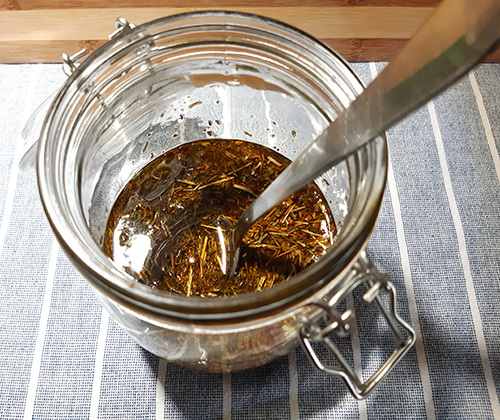
- Seal the jar with a tight-fitting lid
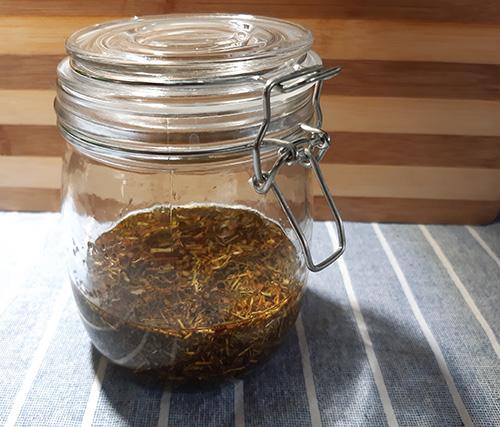

- Label the jar and place it somewhere dark and warm
- Leave the mixture to infuse for 4 to 6 weeks
- Gently shake the jar every few days
- Strain the oil into a clean jar using cheesecloth or kitchen muslin and squeeze out as much oil as possible
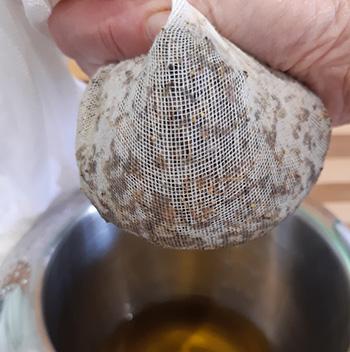
- Add 8 drops of Vitamin E oil to the St John’s Wort infused oil
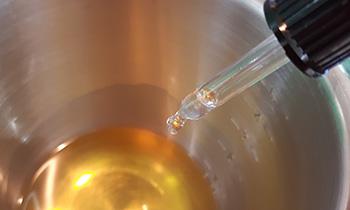
- Cover the jar and leave the oil to settle
- Pour the oil into dropper bottles
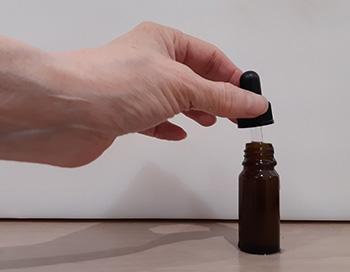
- Label the bottles and store them in a cool, dark place.
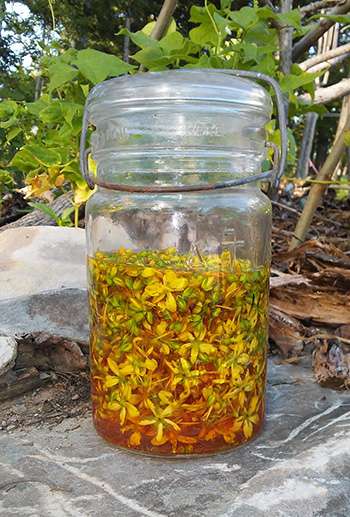
If you use fresh St John’s Wort flowers and buds, allow the plant material to wilt and dry in an open, well-ventilated area for 24 hours. Fill a jar with flowers to 2 centimeters or 1 inch from the top and fill the jar with oil. Cover the jar and leave it in a warm place for 2 to 3 weeks. Strain the oil. Store it in clean, labeled jars in a dark, cool place.
Ingredients for The Salve
- 1 cup St John’s Wort infused oil
- 1 ounce / 30 grams of beeswax pellets
Method for the salve
- Place the oil in a double boiler or in a small stainless-steel bowl
- Add the beeswax pellets to the oil
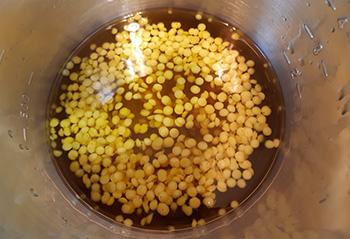
- Place the jar/bowl inside a pot in a few inches of water
- Heat the water slowly over an extremely low heat
- Stir or swirl the mixture until the pellets have all melted
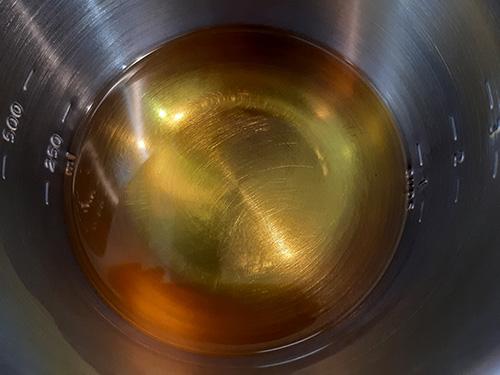
- Remove the mixture from the heat and allow it to rest for a few seconds
- Gently and carefully pour the hot mixture into aluminum tins or glass apothecary jars
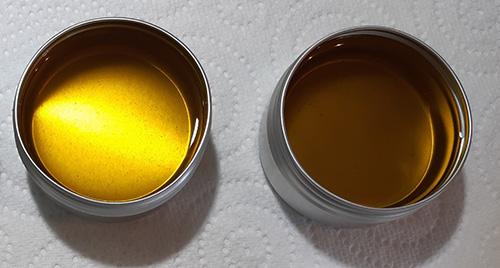
- Leave the salve to set for several hours, and don’t move the tins or jars during this period.
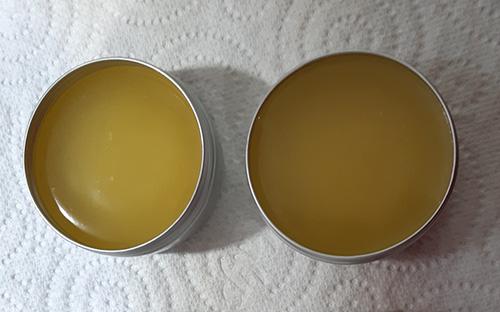
- Label the salve by stating the name and the date you made it.
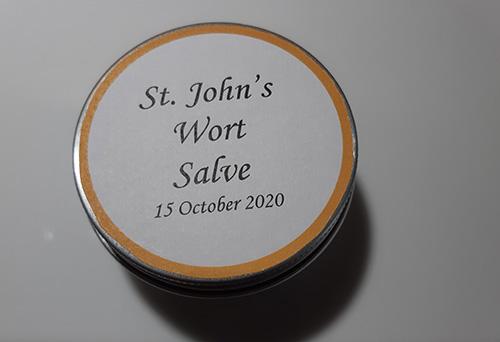
- Store the tins or jars in a cool, dry area.
Dosage
If you purchase a remedy from a health store, it’s important to follow the directions for dosage and application provided by the manufacturer for that specific product. Generally, however, studies indicate that certain doses are effective and safe for adults.
- Depression: Studies indicate that the dose for a product that contains 0.3% hypericin or 5% hyperforin is 300 mg three times a day.
- Menopause: 20 drops of tincture made with 0.2 mg / mL of hypericin can be taken three times a day for 2 months or 300 mg three times a day for up to 4 months.
- Skin problems including minor wounds and burns: The salve or ointment can be applied up to three times a day.
- Bruises and pain: For bruises and muscle or nerve pain, a small amount of the oil is massaged into the affected area.
The dose for tincture, made with 90% proof or more alcohol, is 15 – 20 drops three times daily or 5 drops more often during the day.
The tea is made with 2 – 3 teaspoons of fresh flowers steeped in boiling water for 4 minutes. Tea made with dried flowers is not as potent but still pleasant.
How to Preserve and Store this plant
There are a couple of options in terms of how to keep St John’s Wort when it is not the flowering season so you can use it or make DIY remedies.
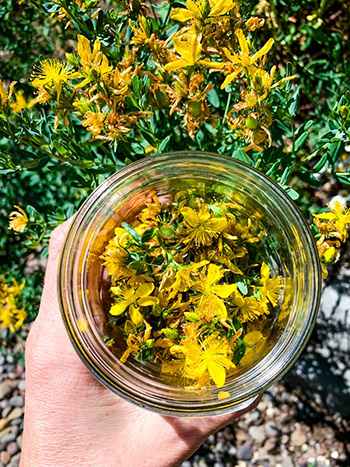
 Dry fresh plant material: Spread freshly harvested stems out in a single layer on top of a mesh screen or a drying rack. Leave them in a sunny, well-ventilated area until the flowers, buds, and leaves are crisp. Strip the flowers from the stems and place them in an airtight, labeled jar, or another type of container. Store the container away from heat and light.
- Infuse oil: You can use dried herbs but fresh is far better. Once the infusion is complete, strain the oil carefully into clean containers. Store the oil in airtight jars either in a cool, dark place or in a refrigerator. Oil made with fresh plant material must be used within 30 days or it will go rancid. If you use Vitamin E oil in the mixture this will be extended to 6 weeks.
 Make salve: Follow a recipe to make your own St John’s Wort salve. The jars must be stored somewhere cool and, if stored correctly, a salve made with dried St John’s Wort and Vitamin E can last for up to 6 months.
- Manufacture tincture: If tincture is made with alcohol that is 90% or higher proof it can be kept for several years. It is still best, however, to store it somewhere dark.
- Freeze dry: You can’t freeze fresh plant material in an ordinary freezer as the water content must be extremely low before freezing even occurs. Freeze-drying involves first phase drying, vacuuming, and secondary drying. It’s not an option for most of us but the result is a very high-quality product that keeps for 25 years.
So, there are ways you can benefit from remedies made from St John’s Wort all year.
What Plants Resemble St John’s Wort?
This is a more complicated question than it seems. The issue is not how to identify St John’s Wort. This is, as stated, a large group of plants with hundreds of varieties within it. So, if you want to use it for its health benefits the important issue is identifying the correct variety of St John’s Wort: Hypericum perforatum.
Sometimes, it can be easy to confuse St John’s wort with Ragwort, but you only need to count the petals and you can easily figure out which one is which.
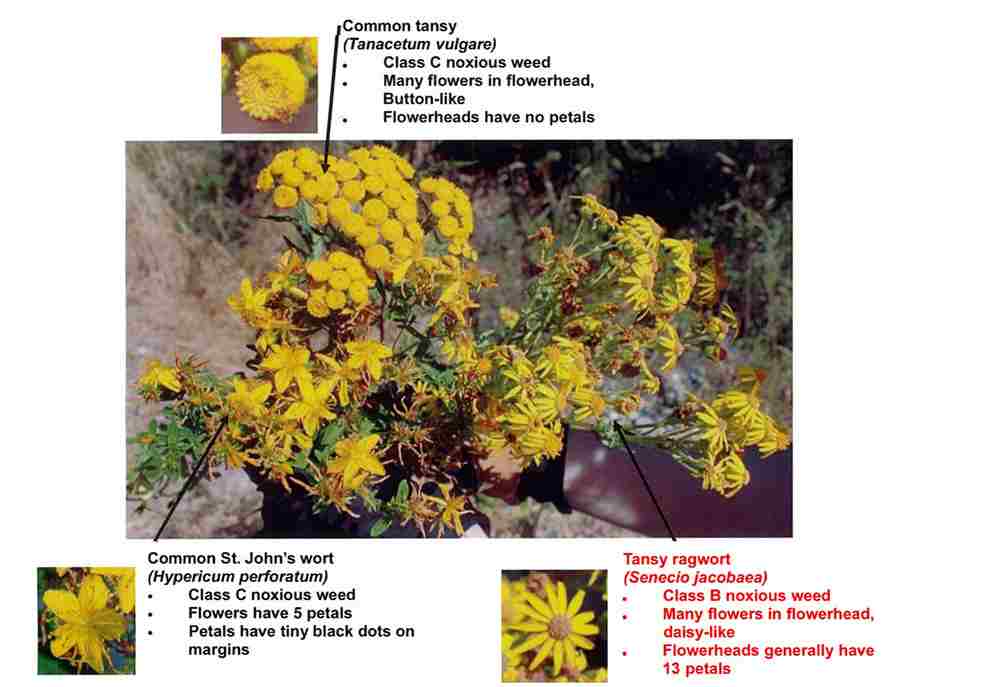
With the details and photographs in this article, you should not find it difficult to find this variety. If you want to purchase the plant, this plant is also known as Common St John’s Wort, Devil Chaser, St. Columba’s Flower, Goat Weed, and Herb John.
Frequently Asked Questions About St. John’s Wort
Q: How long does it take for St. John’s Wort to work for depression?
A: St. John’s Wort typically shows effects within 4-6 weeks of consistent daily use. Some people notice subtle improvements around week 2-3, but full therapeutic effects generally appear by week 6.
Don’t expect immediate results. This is not a “take as needed” herb—it requires daily, consistent use to build up in your system and create lasting changes in brain chemistry. If you’ve seen no improvement after 8 weeks of proper dosing, St. John’s Wort may not be effective for you, or your depression may be more severe than this herb can address.
Q: Is St. John’s Wort as effective as prescription antidepressants?
A: For mild to moderate depression, yes—multiple studies show St. John’s Wort is comparable in effectiveness to prescription SSRIs.
A major Cochrane Review analyzed 29 studies with over 5,000 participants and found that St. John’s Wort was significantly more effective than placebo and as effective as standard antidepressants for mild to moderate depression, with fewer side effects. Response rates are 50-60%, similar to SSRIs.
Important: For severe depression or suicidal thoughts, St. John’s Wort is not appropriate. Prescription medications and professional care are necessary.
Q: What are the most common side effects?
A: St. John’s Wort is generally well-tolerated, but some people experience:
Common side effects (affecting 1-10% of users):
- Mild digestive upset, nausea
- Dry mouth
- Dizziness or mild headache
- Fatigue or restlessness
- Photosensitivity (sun sensitivity) – the most notable side effect
The photosensitivity means you can sunburn much more easily. Wear SPF 30-50 sunscreen daily, avoid tanning beds, and stay out of direct sun during peak hours (10am-4pm). Most side effects are mild and resolve within the first week or two of use.
Q: Can I take St. John’s Wort with my other medications?
A: This is critical: St. John’s Wort interacts with numerous medications and can make them less effective or cause dangerous complications.
Never take St. John’s Wort with:
- Birth control pills (can cause pregnancy)
- Antidepressants (risk of serotonin syndrome)
- Blood thinners (Warfarin)
- Heart medications
- HIV medications
- Immunosuppressants (organ transplant drugs)
- Chemotherapy drugs
St. John’s Wort activates liver enzymes that break down many drugs faster than normal, reducing their effectiveness. If you take ANY prescription medications, consult your doctor before using St. John’s Wort. This is not optional—the interactions can be life-threatening.
Q: Should I take capsules, tincture, or tea?
A: It depends on your goal:
For treating depression: Use standardized capsules (300mg with 0.3% hypericin, three times daily) or tincture. These provide consistent, therapeutic doses backed by research.
For general relaxation or mild mood support: Tea is fine, but it contains much lower and inconsistent amounts of active compounds—typically 50-100mg per cup versus the 900mg daily therapeutic dose.
Bottom line: If you’re treating clinical depression, choose standardized capsules or tincture. If you just enjoy the tea for relaxation, that’s perfectly fine, but don’t expect it to treat depression effectively.
Still have questions? Consult with a qualified herbalist or healthcare provider who can address your specific situation. Depression and mental health are too important to self-diagnose and treat without proper guidance.
Warning and Cautions
There are, as always, cautions that go with using any product, including natural, plant-based ones. St John’s Wort is no exception. There are indications that:
- Long-term use, when taken orally, may cause unpleasant side-effects
- Large doses may lead to serious skin reactions when exposed to the sun
- St John’s Wort interacts with numerous drugs including those for anxiety, depression, high blood pressure, birth control, and HIV / AIDS to name a few
- Pregnant and breastfeeding women should not use this plant
- Using this herb in the 3 weeks before surgery can lead to complications.
If you would like to use St John’s Wort it would be best to talk to your physician beforehand to make sure the plant is not interacting with your medication.
You may also like:

6 Simple Memory Techniques Anyone Should Try Today (Video)
How to Make a Chaparral Salve for Wounds And Skin Infections
Just like Xanax, the Anxiety Relieving Plant That Grows in Your Backyard
Very informative more people should go natural
Hi Gerald,
Thank you so much for your feedback.
We really appreciate it!
God bless!
Thank you so very much! Where can I purchase St. John’s wort ?
I love this herb. It is one of my favorites. The dried has no effect for me. I think all the medicine dries up. It is hard for me to forage for it and find it. I did not know that only one type was good for medicine. Good reminder that I am going to put in an order for some fresh when it comes in season.
Thank you for the comparison with ragwort. You answered several questions I had. Tansy and ragwort definitely cause contact dermatitis for me. :/ Thank goodness the arnica and dandelions don’t. 🙂