
Dogwood: The Forgotten Native Healer Growing in Your Backyard Forest
Walk through almost any eastern woodland in April and you will likely pass right beneath it. The flowering dogwood lifts its white blossoms like cupped hands before a single leaf unfurls, so showy it stops traffic on country roads and earns its place as a state tree in Virginia and Missouri. But most people admire it and walk on, never suspecting that this humble understory tree was once one of the most important medicinal plants in North America.
Native peoples relied on dogwood bark for fevers, pain, and wounds long before European colonists arrived. Continental Army soldiers used it when Peruvian bark was impossible to obtain. Civil War surgeons prescribed it when quinine ran out. It was the best North American substitute for quinine that herbalists knew for generations, and it has a chemistry to back that reputation up.
This guide covers everything you need to know about flowering dogwood: how to identify it with confidence, where it grows, what it contains, how traditional healers prepared and used it, what modern research says, how to harvest it responsibly, and what cautions apply. Whether you are a wildcrafter, a student of plant medicine, or simply someone who wants to understand the forest around them a little better, dogwood deserves your full attention.
Botanical Identity and Common Names
The tree we are discussing is Cornus florida L., the flowering dogwood, a member of the family Cornaceae. Its genus name comes from the Latin cornu, meaning horn, a reference to the exceptional hardness of the wood. The species name florida comes from the Latin word for flowering, celebrating the blossoms that made this tree famous.
Common names include flowering dogwood, white dogwood, pink dogwood (for color varieties), flowering cornel, white cornel, American dogwood, and boxwood. The name “dogwood” itself is curious. One credible explanation is that the slender, hard stems were once used to make skewers called “dags” or “dogs,” giving us dag-wood and eventually dogwood. Another folk etymology holds that a decoction of the bark was historically used to treat mange in dogs.
The genus Cornus contains roughly 40 species spread across temperate regions worldwide, and several hold medicinal significance. Cornus officinalis (the cornelian cherry or Asian dogwood) is an important herb in Traditional Chinese Medicine. Cornus sericea (red osier dogwood) was heavily used by Indigenous peoples of the Pacific Northwest and Great Plains. Piscidia piscipula (Jamaican dogwood) is a separate species with its own distinct therapeutic profile. This guide focuses on Cornus florida, the native species of eastern North America.
How to Identify Flowering Dogwood
Overall Appearance
Flowering dogwood is a small to medium deciduous tree, typically reaching 15 to 30 feet in height at maturity, though some individuals approach 40 feet. The branching is characteristically horizontal and layered, giving mature trees a flat-topped, broadly pyramidal silhouette that is unmistakable once you know to look for it. Growth is slow, averaging about one to two feet per year under ideal conditions.
The “Flowers” (Bracts)
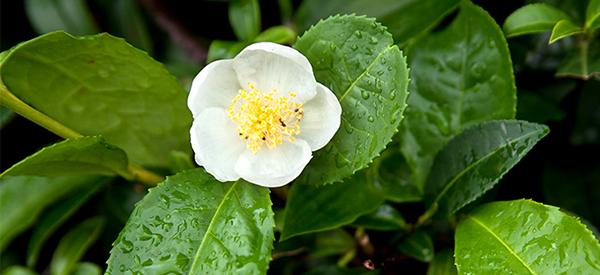
Here is the most important identification key: what people call the flowers of dogwood are not actually petals. The true flowers are tiny, yellowish-green, and grouped in tight button-like clusters at the center of what appears to be a single large bloom. The showy white (or pink) parts surrounding them are bracts, modified leaves that serve as attractors for pollinators. Each cluster is surrounded by four bracts that open flat, creating the illusion of a 3- to 4-inch white flower with notched tips. This notch at the tip of each bract is a reliable identification feature. Flowering dogwood blooms in early spring, typically late March through May depending on latitude, usually before or just as the leaves begin to emerge.
Leaves
The leaves are opposite on the stem, meaning two leaves emerge at each node directly across from each other. They are oval to ovate, 3 to 6 inches long, with smooth or very slightly wavy margins and a pointed tip. The veins are a definitive identification feature: they curve upward and arch toward the leaf tip in a pattern botanists call arcuate venation. If you gently pull a dogwood leaf apart, you will see fine latex threads connecting the two halves along the vein lines. This thread test is one of the most reliable field checks for the Cornus genus. Leaves turn brilliant scarlet to burgundy-red in autumn.
Bark
The bark of a mature dogwood is one of its most distinctive features. It breaks into small, squarish blocks separated by shallow furrows, producing a texture that closely resembles the skin of an alligator or a roughly cobbled surface. The color is gray-brown to reddish-brown. This blocky bark pattern develops as the tree ages and is a useful identification feature in winter when no leaves or flowers are present.
Fruit
The fruits are oval to oblong, glossy red drupes, about a half inch long, borne in clusters of two to ten. They ripen in late summer and early fall, and their bright red color against the scarlet autumn foliage creates one of the most striking displays in the eastern forest. The fruits are bitter and largely inedible to humans, and some sources consider them mildly toxic in quantity. They are, however, a critical food source for over 30 species of birds, including robins, bluebirds, cedar waxwings, and cardinals, as well as small mammals from chipmunks to black bears.
Distinguishing Dogwood from Lookalikes
The most common point of confusion is with Cornus kousa (kousa dogwood), a closely related Asian species widely planted in gardens and landscapes. The differences are worth knowing. Kousa dogwood flowers approximately one month later than the native species and blooms after its leaves have fully emerged, while flowering dogwood blooms before or simultaneously with leaf emergence. Kousa dogwood fruits are large, orange-red, bumpy, and spherical, hanging on long stalks, quite unlike the smooth small red clusters of Cornus florida. Kousa dogwood also has pointed bracts rather than the notched bracts of the native species.
The pagoda dogwood (Cornus alternifolia) is another eastern native that can be confused with Cornus florida when not in flower. The key difference is in leaf arrangement: Cornus alternifolia has alternate leaves, while all other dogwoods in this group have opposite leaves. Check this before harvesting any part for medicinal use.
Where Flowering Dogwood Grows
Flowering dogwood is native to a broad swath of eastern North America, ranging from southwestern Maine south through the Atlantic Coast states to northern Florida, west through southern Ontario, Michigan, Illinois, Missouri, and Kansas, and south to eastern Texas and Mexico. It is absent from the upper Midwest and all of the western states.
Within its range, dogwood is a classic understory tree. It grows in the shade of larger oaks, maples, tulip poplars, beeches, and pines, occupying the layer of the forest between the shrub level and the main canopy. It is frequently found along woodland edges, roadsides, and stream banks, where partial light reaches it. It also establishes itself in old fields, thickets, and along fence rows.
The tree thrives in USDA Hardiness Zones 5 through 9. It prefers rich, moist, slightly acidic to neutral, well-drained soils with high organic matter content, though it tolerates a range of soil types from sandy to clay. It does not perform well on dry ridges, in prolonged drought, or in standing water. In warmer climates, it benefits from afternoon shade. In cooler areas, it can tolerate full sun if soil moisture is adequate. According to the USDA Forest Service, flowering dogwood is an understory associate in dozens of distinct forest communities across eastern North America.
A Deep History of Medicinal Use
Indigenous Traditions
The medicinal use of flowering dogwood by Indigenous peoples of eastern North America is extensive and well-documented. According to the USDA PLANTS database, the root bark was used as a fever reducer, skin astringent, antidiarrheal agent, and pain reliever for headaches, sores, and muscle inflammation. It was used to counteract the effects of poisons and as a general tonic for unspecified ailments.
The Houma people of Louisiana and Mississippi used bark scrapings in remedies for malaria, a use that has since been partially supported by laboratory research on the bark compounds. The Cherokee used it for headache and backache relief, as a throat aid for hoarseness, and as an infusion for childhood diseases including worms and measles. The flowers were infused to reduce fever and relieve colic. Compound infusions of several plant parts served as blood purifiers. Various tribal traditions also employed dogwood bark preparations in the form of baths, poultices on wounds and ulcers, and compound formulas combined with other plants.
The twigs were used as chewing sticks for oral hygiene, a practice noted by early colonists who observed their whitening and gum-strengthening effect. This is one of the longest-documented uses of the plant and is consistent with the astringent tannin chemistry in the bark.
Colonial and Revolutionary Era
European settlers quickly adopted dogwood bark medicine from Indigenous peoples. During the American Revolution, when imports of Peruvian bark (the original source of quinine from Cinchona trees) were disrupted by war and trade blockades, dogwood bark became a critical domestic substitute. According to the classic eclectic herbal record at Henriette’s Herbal, dogwood bark was used considerably during the American Revolution as a substitute for Peruvian bark, and the naturalist Constantine Rafinesque wrote in 1828 that it was the best North American substitute for quinine.
The chemical connection is real: both quinine from Cinchona bark and the compounds in dogwood bark share bitter, antiperiodic properties, meaning they interrupt the cyclical fevers characteristic of malaria. They are not identical in chemistry or potency, but the traditional comparison has a rational basis.
Civil War Medicine
The Civil War created a severe shortage of quinine in the Confederate states, where Union naval blockades cut off access to imported medicinals. Confederate surgeons turned to dogwood bark as a quinine substitute to manage malaria, which was a major killer in military camps throughout the war. The bark was also used for its tonic and astringent properties in treating diarrhea, a disease that claimed more lives in the conflict than battlefield wounds. This period represents perhaps the most intensive documented use of dogwood as a clinical botanical medicine in American history.
Eclectic and Physiomedicalist Traditions
Nineteenth-century American Eclectic physicians, who favored native plant medicines over imported European drugs, used dogwood bark extensively. It appeared in formularies for intermittent (malarial) fevers, dyspepsia, diarrhea, chronic fatigue, and as a general tonic and appetizer. The root bark was preferred over the stem bark for its greater concentration of active compounds. Eclectic texts noted that fresh bark caused gastrointestinal upset and that bark should always be dried thoroughly before use, sometimes for several months, to reduce irritating compounds and improve efficacy.
Chemical Profile and Active Compounds
The chemistry of Cornus florida bark centers on several classes of compounds that explain its historical therapeutic applications.
Cornin (also known as verbenalin) is the most historically significant compound. It is an iridoid glycoside, a class of bitter monoterpenoids, and was first isolated from Cornus florida bark in 1835, making it one of the earliest identified compounds of the entire iridoid class. As reviewed in the peer-reviewed journal Food Reviews International, cornin and related iridoids have been studied for a spectrum of biological activities. Cornin also occurs in verbena and in related Cornus species.
Tannins, particularly hydrolyzable tannins, contribute the pronounced astringency of dogwood bark. Tannins cause tissues to contract and reduce fluid loss, which is the mechanism behind the bark’s traditional use for diarrhea, wound healing, and as an astringent gargle for sore throats. The glycoside cornin in the bark has long been described as possessing notable astringent properties.
The bark also contains bitter alkaloids and glycosides that contribute to its antiperiodic and tonic effects, as well as ursolic acid, a pentacyclic triterpenoid with known anti-inflammatory properties that appears across multiple Cornus species. Research published in PubMed on the related Cornus kousa found that cornin and other compounds isolated from the fruits inhibited COX-1 and COX-2 enzymes, which are the targets of common anti-inflammatory drugs, and also inhibited lipid peroxidation.
A comprehensive review on the related species Cornus officinalis, published in Frontiers in Nutrition, identified a diverse range of cyclic enol ether terpene glycosides in the genus, including loganin, morroniside, sweroside, and cornin itself. While this research is primarily on the Asian Cornus species, it provides important context for understanding the chemistry across the genus and suggests that many of the same bioactive compound classes are present throughout Cornus species.
As noted in the Wikipedia entry for Cornus florida, laboratory experiments have found compounds isolated from the bark to show moderate antiplasmodial and antileishmanial activity, partially supporting the traditional use of the bark as a quinine substitute in malaria treatment.
Traditional and Herbal Medicinal Uses
Fevers and Malaria
Reducing fever is the oldest and most consistently documented use of flowering dogwood bark. The bitter antiperiodic compounds interrupt the cyclical pattern of malarial fevers, and the bark was used both as a decoction and a tincture for this purpose. Inner bark boiled in water and consumed as a tea was a standard preparation across many traditions. While malaria has largely been eliminated from the continental United States, the antipyretic tradition extends to other types of fever as well, and the bark was used for pneumonia, influenza, and general febrile illness throughout the 19th century.
Digestive Complaints
The astringent properties of dogwood bark make it a reliable traditional remedy for diarrhea. The tannins bind to the intestinal mucosa, reduce inflammation, and check excess fluid loss. The bark was also used as a digestive bitter and tonic, stimulating appetite and supporting overall digestive function. A tincture of the bitter red fruits was historically used to restore tone to the stomach, including in cases of alcoholism. The astringent bark tea also served as a remedy for dysentery.
Related: DIY Indigestion Tonic
Pain Relief
Headache, backache, muscle pain, and neuralgia were among the conditions treated with dogwood bark preparations. The compound was used both internally as a decoction or tincture and externally as a wash or poultice applied directly to painful areas. The anti-inflammatory and astringent properties of the bark would have contributed to this effect.
Related: 10 Natural Painkillers Hiding in Plain Sight
Oral Health
Chewing fresh dogwood twigs as a natural toothbrush is one of the most durable folk uses of this plant. The fibrous twig end frays with chewing into a soft brush, while the astringent compounds in the wood clean the teeth and tone the gums. Many Native American traditions specifically valued this practice for its teeth-whitening and gum-strengthening effects. This use is widely documented in ethnobotanical records and historical accounts.
Related: Home Remedies to Whiten Your Teeth Naturally
Wounds and Skin
A poultice of the bark was applied to external ulcers, wounds, and skin sores. The tannins in the bark create an astringent environment that promotes tissue contraction and may help prevent infection in open wounds. Bark decoctions were also used as washes for inflamed or irritated skin.
Related: Forgotten Herbal Remedies for Infections and Wounds
Throat and Voice
Dogwood bark decoctions were used as a gargle and throat remedy for hoarseness, sore throat, and loss of voice. Boiling the inner bark and drinking the tea to restore a lost voice appears across multiple historical sources. The astringent and mild anti-inflammatory properties would soothe inflamed mucous membranes.
Related: The Best Herbal Drink for Sore Throat – Time-Tested Remedies That Actually Work
Children’s Illnesses
A compound infusion of dogwood bark and root was used in treating childhood diseases including measles and intestinal worms. It was often administered as a bath rather than an internal preparation for younger children. The antiparasitic and fever-reducing properties both contributed to this use.
Related: Parasites 101: Signs, Dangers & Natural Remedies That Actually Work
How to Prepare Dogwood Bark Medicine
Which Part to Use
The most medicinally potent part of the tree is the root bark. Eclectic sources consistently preferred the root bark over the stem bark, noting higher concentrations of the bitter and astringent active compounds. The bark of the trunk and branches also contains the active compounds, though generally in lower concentrations. The flowers have been used in some traditions for fever, but the bark is the primary medicinal material.
Critical Safety Note on Fresh vs. Dried Bark
Always use dried bark, never fresh. This is one of the most important rules from the traditional herbal record and echoes across every source consulted. Fresh dogwood bark causes significant gastrointestinal distress, including cramping, nausea, and bowel upset. The bark must be dried for a period of months before use, which allows certain irritating compounds to break down or dissipate while concentrating the therapeutic ones. Traditional sources recommended drying for up to a year for the most effective and least irritating medicine. Store dried bark in an airtight container away from moisture and direct light.
Bark Tea (Decoction)
A decoction, not a simple infusion, is the correct preparation for bark medicine. Bark is too dense for compounds to release in merely steeped hot water. The standard traditional preparation is to simmer one tablespoon of dried, coarsely powdered or broken root bark in one pint of water for 30 minutes, then strain. Take half a cup every two to three hours for acute conditions, or a mouthful three times a day as a tonic. Use ceramic or glass vessels rather than metal when possible.
Tincture
A tincture can be made by steeping dried bark in 40 to 60 percent ethanol (such as vodka or food-grade ethyl alcohol) at a ratio of 1 part bark to 5 parts liquid, by weight to volume. Allow to macerate in a sealed glass jar for four to six weeks, shaking daily, then strain and press the marc. Traditional dosage from the historical eclectic record is 20 to 40 drops in water, as needed.
External Poultice
A strong decoction of the bark can be used as a wash for wounds, skin sores, and inflamed tissue. For a poultice, the spent bark material from a decoction can be wrapped in clean cloth and applied directly to the affected area while still warm.
Chewing Stick
For oral hygiene, select a young, slender twig about the diameter of a pencil. Chew the cut end to fray the fibers, then use the resulting brush to clean teeth and massage gums. This is an excellent low-tech use of the tree that requires no preparation at all.
Responsible Harvesting and Conservation
Flowering dogwood is facing serious conservation pressure in parts of its range. Dogwood anthracnose, a fungal disease caused by Discula destructiva, has caused widespread mortality across the northeastern and central Appalachian portions of the species’ range. The NC State Extension notes that trees in some areas, particularly at higher elevations, have suffered significant losses from this pathogen. The disease is less prevalent at lower elevations and in drier regions.
Given this context, ethical harvesting of dogwood requires restraint and care. Some guidelines for responsible practice follow.
- Never harvest bark from the trunk of a living tree in a way that girdles (removes bark in a ring around) the trunk. Girdling kills the tree. If taking stem bark, take small sections from one or two branches, no more than 20 percent of the available bark on any individual tree.
- Root bark harvest inevitably damages the root system. Only harvest root bark from trees that must be removed anyway, such as those already dead from anthracnose, being cleared for development, or fallen.
- Do not harvest from trees that appear stressed, diseased, or in decline, as these trees are not good medicinal material and removing bark further compromises them.
- Consider the local population density. In areas where dogwood anthracnose has reduced populations significantly, avoid harvest altogether and source bark from cultivated trees or reputable ethical suppliers.
- Late autumn and winter, after leaves have dropped, is a traditional and practical time for bark harvest. The tree is dormant and the bark is easier to remove cleanly.
- Dry harvested bark in thin layers in a warm, well-ventilated area away from direct light. Ensure it is thoroughly dry before storing.
Cultivating your own dogwood is one of the most responsible approaches if you want a sustainable medicinal supply. Dogwood grows well in most gardens within its hardiness range (Zones 5 to 9) given dappled shade, moist well-drained slightly acidic soil, and mulched roots. Planting it also supports dozens of bird species and specialized native bee populations that depend on it.
Safety, Precautions, and Contraindications
Consult a qualified healthcare provider before using dogwood bark medicinally, particularly if you are pregnant, nursing, taking medications, or managing a chronic health condition.
The fruits of flowering dogwood are considered toxic to humans and should not be consumed. Multiple sources, including the Florida Native Plant Society, list the red berries as poisonous to humans. They are safe food for birds but not for people.
Fresh bark causes gastrointestinal irritation. This point cannot be overstated. Only properly dried bark, prepared as described above, should be used medicinally.
Dogwood bark has not been the subject of clinical trials in humans. All traditional uses are based on historical and ethnobotanical records. The evidence base for medicinal use remains traditional rather than evidence-based by modern clinical standards.
Interactions with pharmaceutical medications, particularly quinine derivatives or drugs that affect fever, are theoretically possible given the antiperiodic chemistry of the bark. Avoid combining dogwood bark preparations with quinine-based medications.
As with all bitter tonics, prolonged or excessive use can cause gastrointestinal irritation even with dried bark. Use therapeutic doses as outlined, and take breaks rather than using continuously.
Ecological Value and Wildlife Connections
Beyond its medicinal significance, flowering dogwood is a keystone species in the eastern forest ecosystem. The Missouri Botanical Garden describes it as arguably the most beautiful of the native American flowering trees, but its ecological importance runs far deeper than aesthetics.
The early spring bloom of dogwood provides pollen and nectar to long-tongued bees, short-tongued bees, wasps, flies, and butterflies at a time when few other trees are flowering. It is a host plant for the spring azure butterfly (Celastrina ladon), the cecropia silk moth, the io moth, and the dogwood thyatirid moth, among others. The fruits, which ripen in late summer and early fall, are a critical high-fat food source for migrating birds preparing for long journeys south. Over 30 bird species consume the fruits, including robins, bluebirds, cedar waxwings, cardinals, grouse, quail, and wild turkeys. Mammals from chipmunks and squirrels to foxes, black bears, white-tailed deer, and skunks also eat the fruit.
In short, planting a flowering dogwood in your yard or forest does not just give you a beautiful tree and a medicinal resource. It feeds the migration, shelters songbirds, and supports the specialized native bee populations that your garden depends on.
Growing Your Own Dogwood
Flowering dogwood is not as difficult to establish as its reputation suggests, provided you understand its natural preferences. It is an understory tree, so it evolved under conditions of filtered light, cool root zones, and rich organic soil. Try to replicate these conditions and you will be rewarded.
- Light: Full sun to partial shade. In zones 7 to 9, afternoon shade is important to prevent leaf scorch and heat stress. Morning sun with afternoon shade is ideal in warmer climates.
- Soil: Moist, well-drained, slightly acidic (pH 5.5 to 6.5), high in organic matter. Add compost at planting. Avoid compacted, waterlogged, or highly alkaline soils.
- Mulch: Apply a 2- to 4-inch layer of organic mulch over the root zone, keeping it several inches back from the trunk. This keeps roots cool, retains moisture, and mimics the leaf litter layer of the forest floor.
- Water: Regular watering during the first two to three years while the tree establishes. Once mature, it tolerates periodic dry spells but not prolonged drought.
- Disease resistance: When selecting trees at a nursery, look for named anthracnose-resistant cultivars such as Cherokee Brave, Appalachian Spring, or Appalachian Blush if you are in an area where dogwood anthracnose is a concern.
- Propagation: Dogwood can be grown from seed collected in fall, stratified cold for 90 to 120 days, and sown in spring. Softwood cuttings taken in late spring can also be rooted with the use of rooting hormone.
A Brief Note on Related Species
Red osier dogwood (Cornus sericea, also called red-twig dogwood) is a widespread shrubby species used medicinally by many Indigenous peoples of the Pacific Northwest, Great Plains, and boreal regions. Traditional uses include treatment of upper respiratory infections, use as a postpartum healing herb in sitz baths, and topical application for pain relief. It is visually distinctive for its bright red stems in winter.
Cornelian cherry (Cornus mas) is a European and Asian species with tart red fruits that have been used in jam and traditional medicine for centuries. It is not native to North America but is sometimes planted as an ornamental.
Asian dogwood (Cornus officinalis) is a foundational ingredient in Traditional Chinese Medicine, where the dried fruit is used to tonify the liver and kidneys, support adrenal function, and address patterns of deficiency. It is the most extensively researched species in the Cornus genus, with a published body of literature documenting anti-inflammatory, antidiabetic, neuroprotective, and cardiovascular protective effects. Much of this research is directly relevant to understanding the broader chemistry of the genus.
Build a Real Home Apothecary Before You Need One
Most people walk past powerful medicine every day without recognizing it. Flowering dogwood is a perfect example. What looks like nothing more than a beautiful spring tree was once trusted for fevers, wounds, pain, digestive trouble, and oral care by Native healers, early American herbalists, and even wartime physicians when standard medicines ran out.
That is exactly why resources like The Forgotten Home Apothecary matter so much right now. This is not just about memorizing a few herbs. It is about rebuilding the kind of practical household knowledge families once depended on when there was no pharmacy around the corner and no guarantee that supplies would always be available. When you understand how to identify plants, how to prepare them properly, and how to use them safely, your home becomes more resilient overnight.
The Forgotten Home Apothecary is a step-by-step guide to creating remedies at home using time-tested plant knowledge. It shows you how to turn herbs and wild plants into tinctures, salves, teas, syrups, infusions, decoctions, and other preparations that support everyday health and self-reliance. More importantly, it helps you organize that knowledge into a practical system you can actually use, instead of leaving it scattered across random notes and bookmarked articles.
If this article opened your eyes to how much medicinal value can be hiding in a single tree, imagine what happens when you start learning dozens more. Dogwood is only one piece of a much larger forgotten tradition.
Explore The Forgotten Home Apothecary here!
The more plants you learn, the less dependent you become on fragile systems, empty shelves, and forgotten knowledge. A real home apothecary is not just a collection of remedies. It is a layer of independence.
Final Thoughts
Flowering dogwood is one of those plants that reveals a great deal about the gap between what we see and what we know. Millions of people drive past it every spring, captivated by the blossoms, and never stop to consider that this is also a tree with a pharmacopoeia. Indigenous peoples knew it. Revolutionary War doctors knew it. Civil War surgeons knew it. Eclectic herbalists built compound formulas around it.
Today, dogwood bark is not commonly found in mainstream herbal commerce, and that scarcity is part of what makes responsible cultivation and foraging so valuable. If you have access to this tree in your woodland, on your property, or in a forest where it can be ethically wildcrafted, you have access to a piece of American botanical medicine that runs deeper than most.
Learn to identify it across all four seasons: by the notched white bracts in spring, the arcuate-veined leaves in summer, the scarlet fruit and foliage in fall, and the blocky alligator bark in winter. Then decide thoughtfully whether and how to use it. The tree has given enough to this land. Approach it with the respect that history demands.
Note: This article is for educational purposes only. Nothing here constitutes medical advice. Always consult a qualified healthcare practitioner before using any plant medicine, especially for serious or chronic health conditions.
You may also like:

The Best Natural Painkiller That Grows in Your Own Backyard (Video)
Natural Home Wound Care: Do’s & Don’ts
The Complete Guide to Herbs for Pain & Inflammation
The Complete Guide to Herbs for Digestion & Gut Health