
Addicted To Nasal Spray? Try This.
What if the nasal spray you use to breathe better is actually the reason you can’t breathe without it anymore?
They’re making you buy something to “fix” an issue, only to create another issue that keeps you hooked, constantly pouring your hard-earned money into their pockets.
Let me explain what I mean.
Some nasal sprays can actually make your congestion WORSE when you use them for too long.
Doctors even have a name for it: rebound congestion.
Sprays with oxymetazoline open your nose fast. But use them for more than three days, and you could end up even more stuffed up than before.
And suddenly, you’re caught in a frustrating cycle.
The good news? Our ancestors used herbs for generations to help clear their airways and breathe easier. And unlike certain medicated nasal sprays, these herbs don’t come with a warning about rebound congestion.
Why Your Nose Gets So Stuffy in Winter
When a cold virus enters your body, your immune system gets to work.
Your nasal passages swell, mucus builds up, and suddenly breathing through your nose feels like an impossible task.
And during the colder months, when respiratory viruses spread more easily, that stuffy nose can become an all-too-familiar problem.
But before we talk about what can actually help you breathe more comfortably, let’s talk about your immune system.
Because when cold season hits, you want your immune system ready to fight back, not struggling to keep up.
And for that, I’m just going to mention elderberry.
For generations, families prepared elderberry syrups and teas when winter colds came knocking.
Elderberry contains natural plant compounds, including anthocyanins, and has a long history of use during cold and flu season.
Want to try an old immune-support recipe built around elderberry?
This one was pulled from historical records by historian Claude Davis and brings back the kind of winter preparation families used long before store shelves were packed with cold remedies. Click here to check it out.
When winter comes, I personally do something very simple.
For a week or two, I add 20–30 drops of this elderberry tincture to my tea every day so I can get the plant compounds elderberry is praised for without making syrup from scratch. I’d recommend you do the same.
Now, let’s get to those respiratory herbs.
Mullein: The Forgotten Respiratory Herb
If you’ve ever seen mullein growing along a country road, you probably remember its tall stalk and soft, fuzzy leaves.
But this plant has a long history of helping people through coughs and colds.

For generations, people have turned to mullein to naturally ease dry coughs, scratchy throats, and respiratory irritation.
Its flowers contain mucilage, which coats and calms irritated throat tissues, making mullein tea an old-fashioned favorite when winter colds leave you coughing.
And here’s another fascinating plant worth knowing.
Lungwort Lichen: Nature’s Strange Lung-Shaped Remedy
Have you ever heard of a plant named after the organ it was traditionally used for?
Meet lungwort lichen (Lobaria pulmonaria).
For centuries, people who relied on nature’s remedies used lungwort lichen to treat coughs, breathing difficulties, and other respiratory complaints.
Its wrinkled, branching surface even resembles human lung tissue! Our ancestors traditionally prepared it in teas and decoctions when respiratory troubles struck.
If you still don’t have The Forgotten Home Apothecary, you’re missing one of the easiest ways to keep this kind of plant knowledge in one place.
It’s the kind of book you keep for yourself and gift to someone you care about, because this knowledge is far more useful before you need it.
If you haven’t got your copy yet, with 78% off right now, this is the moment I’d fix that.
Make This Simple Mullein Respiratory Tea
Here’s something you can actually prepare tonight.
You’ll need:
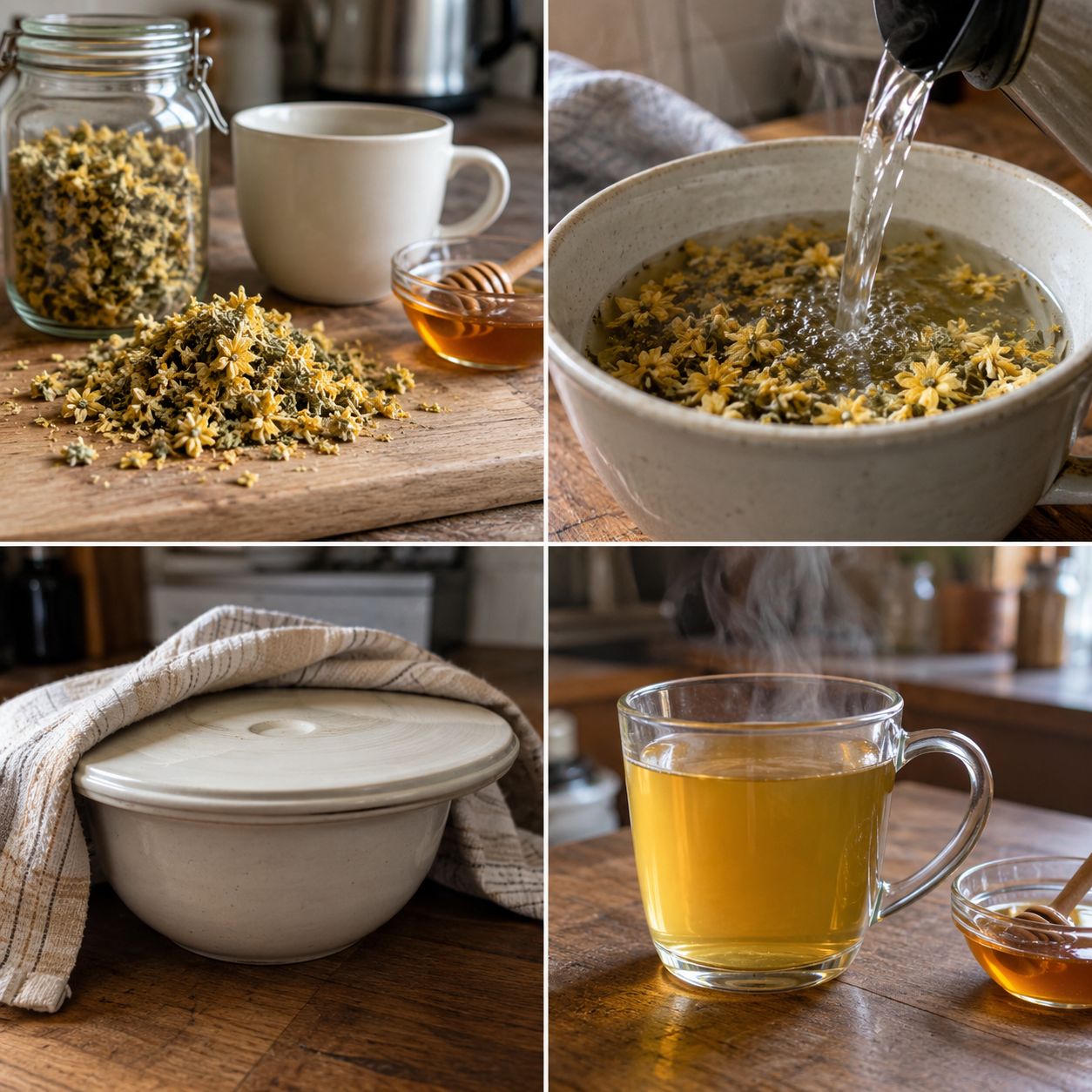
- 1½–2 grams dried mullein flowers
- 1 cup hot water
- A little honey (optional)
Here’s how to make it:
- Pour hot water over your mullein flowers.
- Cover and steep for about 10 minutes.
- Strain thoroughly through a coffee filter to remove the irritating tiny hairs.
- Add honey and sip while warm.
The Old-Fashioned Peppermint Steam Trick
Now that we’ve covered a remedy for the inside, let’s try something for the outside, too!
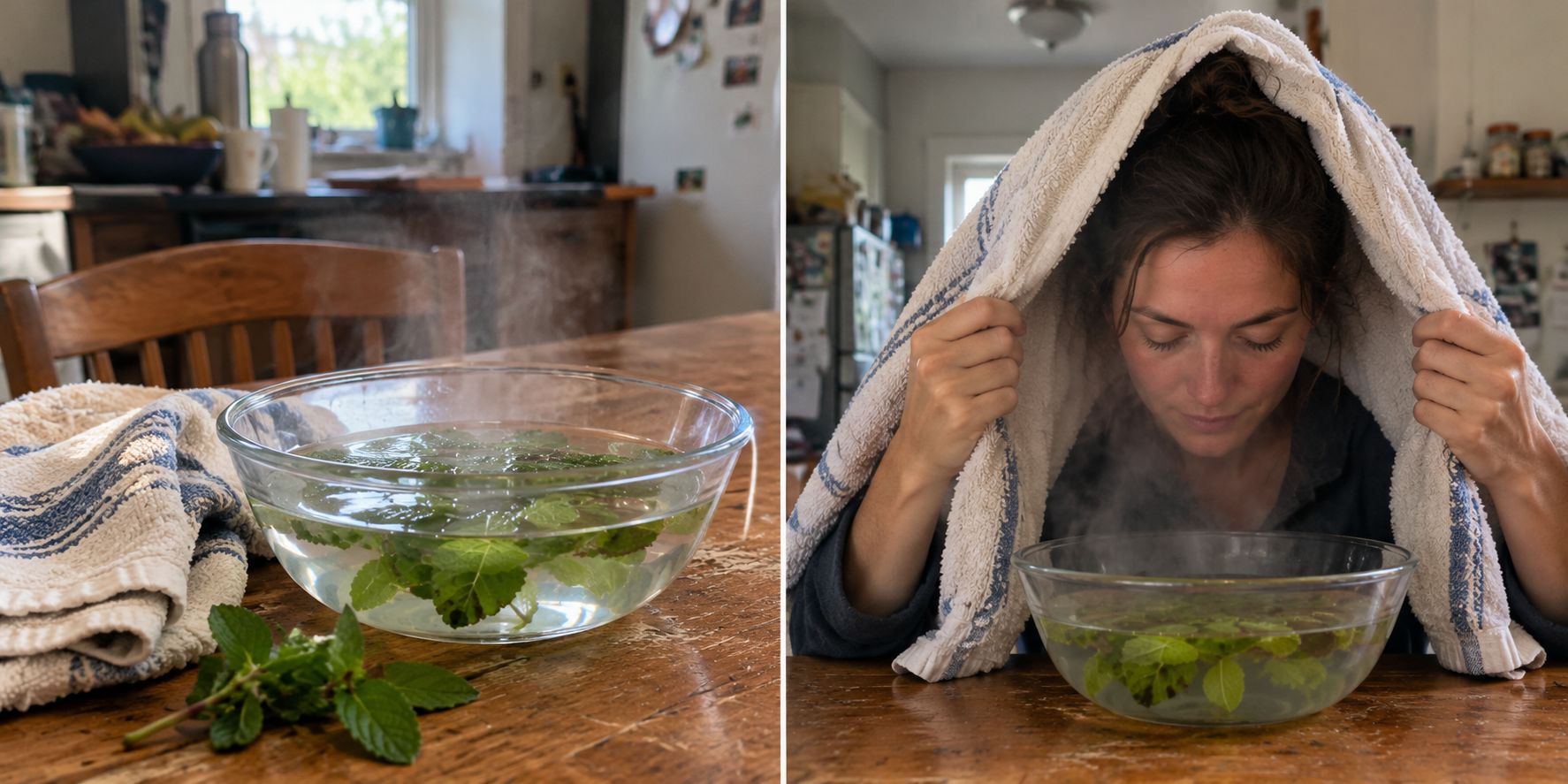
Remember when your grandparents used a bowl of hot water and a handful of herbs whenever someone caught a cold?
Peppermint was one of those traditional favorites.
Its menthol creates that familiar cooling sensation that can make your nose feel clearer and breathing more comfortable.
And there’s a simple way to bring this old-fashioned remedy back into your home.
You’ll need:
- 1 peppermint tea bag or 1 teaspoon dried peppermint leaves
- 2 cups hot water
- A wide, heatproof bowl
- A towel
Here’s how to do it:
- Place the peppermint leaves or tea bag in your bowl.
- Pour hot water over them and let them steep for 5–10 minutes.
- Place the bowl on a stable surface and allow the water to cool until comfortably warm.
- Traditionally, people would lean over the bowl and cover their heads with a towel to trap the peppermint-scented steam, breathing it in for several minutes.
- For a safer version, enjoy the peppermint aroma without covering your head or leaning directly over the water.
⚠️ Caution: Never use boiling water or place your face close to hot water. Even water that has cooled slightly can cause burns, especially if spilled. A towel can also trap unexpectedly hot steam, so checking the temperature alone doesn’t eliminate the risk.
Want more moisture? Take a comfortably warm shower and breathe normally in the humid bathroom for a few minutes.
One Last Thing Before You Reach for That Spray
Life’s too short to spend your days struggling to breathe, stuck indoors, and missing out on the things you love when you could be outside enjoying life and taking better care of your health.
And don’t get me wrong. I’m not saying you should throw away every nasal spray in your medicine cabinet.
I’m just reminding you that nature has its own alternatives.
Plants our ancestors relied on for generations, many of which might be growing right in your backyard or neighborhood.
And if you’d rather explore those old-fashioned remedies than constantly reach for another bottle, why not give traditional plant knowledge a place in your home?
Your lungs don’t just help you breathe.
They help deliver the oxygen your entire body — including your brain — depends on every second of the day.
That’s why I wouldn’t wait until breathing feels difficult before supporting them.
Nicole’s Lung Support Bundle combines Lungwort Lichen, Mullein, Yerba Santa, Nettle, Reishi, Cordyceps, and her Bronchial Blend to support clearer airways, mucus balance, comfortable breathing, and the respiratory system as a whole. 
You may also like:
Dandelion Lemonade for Gallbladder Health