

Herbal Brain Map: 9 Most Powerful Herbs for Brain Health and Mental Sharpness
Ever walk into a room and forget why you’re there? Losing track of conversations mid-sentence? Lying awake at night worrying about things you can’t control? Walking into the kitchen and standing there, wondering what you came for?
You’re not broken. Your brain is just hungry for the right kind of support, and nature has given us plenty of interesting places to look.
While pharmaceutical companies continue developing the next memory pill or anxiety medication, you also have access to herbs that have been part of traditional brain-support routines for thousands of years.
And here’s the exciting part: modern science is finally catching up, exploring how these plant allies may influence pathways connected to memory, stress, focus, and other parts of brain function.
Let me show you your brain’s herbal support system and how you can tap into it starting today.
The Hippocampus

Deep in your brain’s temporal lobe sits your hippocampus—your memory command center. This is where your brain converts those fleeting moments into lasting memories. It’s why you remember your first kiss, your grandmother’s recipes, and the route to your favorite hiking spot. When your hippocampus thrives, you learn faster, recall names effortlessly, and even grow new brain cells.
Related: How To Make Your Own Mind Matrix Formula At Home
But here’s the problem: stress, aging, and inflammation can affect this vital region. The good news? Certain herbs are being studied for how they may support memory, resilience, and healthy brain function as you age.
Bacopa (Brahmi) is one of the best-known herbs in the traditional memory-support world. Ayurvedic healers used it for centuries, and modern researchers are now studying why.
Bacopa has been studied for effects on pathways involving brain-derived neurotrophic factor (BDNF)—think of it as one of the signals involved in how brain cells adapt and communicate.
Studies show Bacopa extracts have produced interesting effects on memory and neuron-related pathways in preclinical research, while human trials have also explored memory and cognitive performance.
If you’re studying, learning a language, or tired of searching for your keys every morning, Bacopa is one of those gentle, traditional options researchers keep coming back to.
Lion’s Mane Mushroom is one of the most fascinating mushrooms in brain-health research. This shaggy white fungus is being studied for memory support and for compounds connected to nerve-growth pathways.
Studies show that compounds from lion’s mane dramatically increased the length and branching of hippocampal neurons. Mice given lion’s mane showed significantly improved recognition memory in maze tests, and lab cultures revealed these mushroom molecules can double neuron growth.
Imagine recalling names more easily at social gatherings, learning that new skill you’ve been putting off, or simply feeling more confident about supporting your brain as you age. That is exactly why lion’s mane has attracted so much attention.
I started using lion’s mane a few months ago because I wanted to see how it fit into my own routine.
What I liked most was that it didn’t feel like the kind of stimulant-heavy brain supplement that leaves you wired.
For me, it became more about consistency and supporting focus than chasing an instant effect.
That is also what makes lion’s mane so interesting to researchers: rather than acting like a quick stimulant, its compounds are being studied for how they interact with nerve-growth and brain-health pathways.
Get your lion’s mane tincture here — it’s affordable, potent, and actually worth the investment. That’s the kind of support your brain deserves.
Ginkgo Biloba, one of Earth’s oldest tree species, has long been studied for circulation and neuron-supporting effects. Clinical studies have also explored standardized ginkgo preparations in people with cognitive impairment, with mixed but interesting results.
In Alzheimer’s models, it protected hippocampal cells from oxidative stress, helping preserve learning and memory. When you’re feeling foggy or forgetful, ginkgo could be the circulatory boost that brings mental clarity back.
Other powerful allies include sage for cognitive support, and turmeric (curcumin), which has produced interesting effects on beta-amyloid and neurogenesis-related pathways in animal research. Those findings are still very different from proving the same effect in people.
The Amygdala

Your amygdala, two almond-shaped clusters deep in your limbic system, is your brain’s emotional sentinel. It processes every worry, fear, and anxious thought you experience.
When it’s overactive, you feel on edge, overwhelmed, unable to sleep. When it’s balanced, you feel calm, centered, and emotionally resilient.
Think about how anxiety steals your joy. The constant worry, the racing thoughts at 3 AM, the dread before social events. Your amygdala is working overtime, and it desperately needs support.
Lemon Balm has been soothing anxious minds since the Middle Ages, and science now confirms why it works. Studies show lemon balm extract reduces anxiety while improving mood and cognition.
Participants taking lemon balm reported feeling calmer and performed better on memory tests. The herb boosts GABA—the neurotransmitter that quiets brain activity—and may even raise serotonin, your happiness chemical.
Before that stressful meeting, difficult conversation, or when your mind won’t stop racing at night, lemon balm tea or tincture can be a gentle ritual worth reaching for.
Lemon balm is one of those herbs that truly deserves a permanent spot in your wellness routine. If you have access to forage it yourself or know a reliable source, that’s ideal.
But if you’re looking for a ready-made lemon balm tincture from a source I trust, you can find one here.
Chamomile isn’t just a bedtime ritual. In controlled trials, specific chamomile extracts have shown promising effects on anxiety symptoms compared with placebo, although the evidence is not the same as proving chamomile treats an anxiety disorder.
Some chamomile compounds interact with pathways involved in relaxation, which may help explain why the herb has such a long-standing reputation as a calming tea.
I grow my own chamomile right on my kitchen window, and it’s one of the best decisions I’ve made for my health. The peace of mind knowing exactly what you’re consuming: no pesticides, no additives… is priceless.
If you want to do the same, these are quality chamomile seeds that I trust. Once you have them growing, you’ll have fresh chamomile whenever anxiety or poor sleep strikes. It’s that simple.
Ashwagandha is stress’s natural adversary. This Ayurvedic adaptogen doesn’t mask stress, it helps your body resist it. Multiple studies show ashwagandha significantly reduces stress and cortisol levels.
In an 8-week trial, people taking ashwagandha experienced greater reductions in anxiety and morning cortisol than those on placebo. A 90-day study also reported improvements in some memory and focus measures—an interesting reminder that stress and cognition can be closely connected.
Imagine waking up without that pit of dread in your stomach, handling challenges without emotional overwhelm, and thinking clearly under pressure. That is the kind of stress support that has made ashwagandha so interesting to researchers.
Here’s something most people don’t realize: ashwagandha and lemon balm approach stress support from different angles, which makes them an interesting pair in a calming routine.
If racing thoughts, constant worry, or that familiar knot of tension shows up in your day, this is the kind of combination many herbalists keep close.
See this ashwagandha and lemon balm blend here, it’s specifically formulated with the exact plants we just discussed.
Don’t forget lavender for calming rituals, passionflower for traditional relaxation support, and holy basil (Tulsi) for stress resilience and mood support. These are all herbs worth knowing when you’re building a gentler stress-support routine.
The Prefrontal Cortex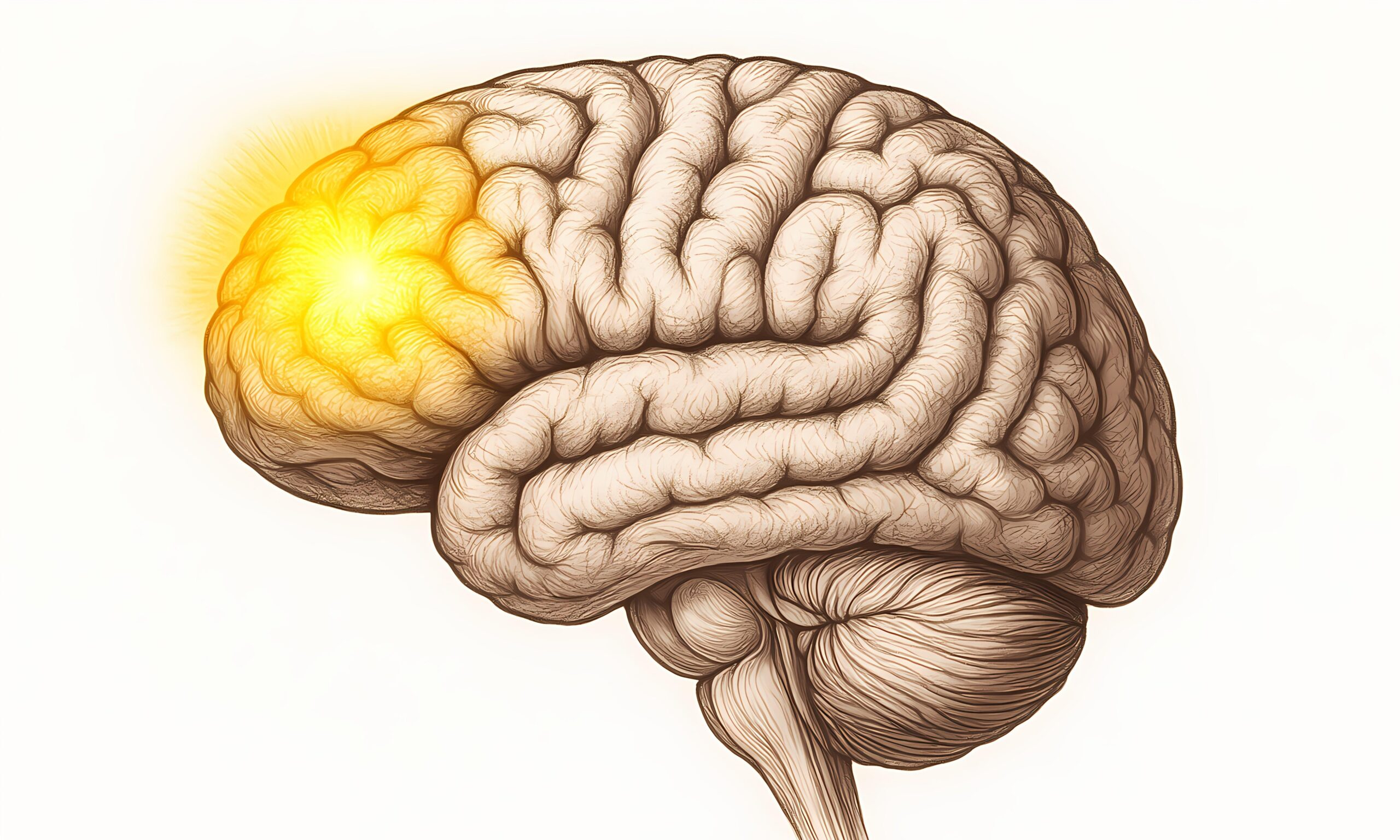

Right behind your forehead sits your prefrontal cortex, your brain’s CEO. This is your focus center, your decision-maker, your planner. It’s what helps you concentrate on work, ignore distractions, and make sound judgments.
When it’s functioning well, you power through tasks effortlessly. When it’s not, everything feels impossible and your mind scatters in ten directions.
Modern life assaults your prefrontal cortex daily, constant notifications, multitasking demands, information overload. You need support to keep this control tower operating at peak performance.
Rosemary is your prefrontal cortex’s wake-up call. “Rosemary for remembrance” isn’t just poetic, it’s scientifically accurate. A 2023 study found that adults who drank a rosemary-infused beverage showed improved sustained attention on EEG brain scans.
The herb boosted both speed and accuracy of information processing by increasing cerebral blood flow and modulating neurotransmitters.
Next time you’re facing a deadline or need laser focus, brew rosemary tea or diffuse rosemary oil near your workspace. You’re giving your prefrontal cortex the fuel it needs to perform.
Ginseng offers mental energy without the crash. When brain fog rolls in or fatigue makes thinking feel like wading through mud, ginseng provides invigoration without jitters.
Clinical studies show ginseng’s active compounds (ginsenosides) improve working memory, mental arithmetic, and reaction time—especially during fatigue or stress. It reduces brain inflammation and oxidative stress, keeping neurons healthy.
Preclinical research has also explored ginseng compounds in pathways involving beta-amyloid and age-related brain changes. That research is intriguing, but it should not be read as proof that ginseng prevents cognitive decline or Alzheimer’s disease.
Gotu Kola brings calm focus without stimulation. This Ayurvedic and Traditional Chinese Medicine staple improves learning and memory by fighting oxidative stress and improving brain circulation.
A 2021 review discussed gotu kola in relation to oxidative stress and cognitive health. It remains an interesting traditional option for people looking for calm focus without heavy stimulation.
Other focus-enhancing allies include peppermint (even the aroma increases alertness and blood flow to frontal brain areas), Rhodiola rosea for reducing mental fatigue and improving attention under stress, and green tea, whose blend of caffeine and L-theanine improves focus and calm simultaneously.
Think about it: all these plants we’ve talked about are extensively studied, and our ancestors used them for centuries. But consider how many other plants out there have powerful medicinal properties that we’ve simply forgotten about.
Why do some plants receive decades of research while others barely get a serious look? Funding, commercial interest, tradition, and what can realistically become a standardized product may all play a part. It does make you wonder how many useful plants are still sitting outside the spotlight.
Once you understand plant medicine, you also gain more options for everyday wellness. That doesn’t make prescriptions obsolete—but it does mean the medicine cabinet isn’t the only place worth looking for support.
That’s exactly why I got The Forgotten Home Apothecary. It’s a collection of about 300 forgotten natural remedies organized by ailment, with step-by-step instructions, dosages, and color pictures.
It’s ancestral knowledge made practical, all in one place. At the price point it’s at, it’s honestly one of the most useful herbal resources I’ve found. Check it out here.
Your Brain Deserves Better
You wouldn’t feed your body junk food every day and expect it to thrive. Why do the same to your brain?
These herbs aren’t random internet trends—they’re plants with long traditional histories, and many are now being studied through a modern scientific lens.
Lion’s mane is being investigated for nerve-growth pathways. Lemon balm is studied for stress and mood. Rosemary has research around attention and cognition. Different plants, different questions, different pieces of the brain-health puzzle.
Pharmaceuticals have an important place, especially when a condition needs diagnosis or treatment. But they aren’t the only tools people are curious about when it comes to everyday brain support.
Herbs offer a different kind of approach: one rooted in traditional use, daily routines, and compounds researchers are still working to understand.
Maybe the most interesting question isn’t herbs or modern medicine. Maybe it’s what we can learn when we stop assuming those two worlds have nothing to say to each other.
If you’re worried about making remedies correctly, or if you’re uncertain about quantities, worried about poisonous lookalikes, or just not sure where to start, Nicole Apelian’s walkthrough videos are exactly what you need.
She teaches you everything: how to identify plants, proper measurements, remedy-making techniques, and how to avoid the dangerous mistakes that could happen if you’re guessing.
Her course is high-quality, practical, and thorough. When I first watched her free introductory video, I didn’t hesitate, I finished the full course and got my herbalist diploma within days.
If you want to feel confident making your own remedies from day one, this is the resource that makes it actually happen.
Your brain remains remarkably adaptable throughout life. These herbs can be part of the wider conversation around supporting it.
Source quality herbs, start with one that fits the area you’re most interested in supporting—memory, stress, or focus—and pay attention to how it fits into your routine.
Because wanting a sharp memory, a calm mind, and clearer focus is reason enough to learn what the plant world has to offer.
Always consult with a healthcare professional when adding new herbs to your routine, especially if you’re on medications or have existing health conditions.
If you’d like to know about other parts of your brain and what herbs and remedies are being studied in relation to them, let me know in the comments and I’ll make a part 2 of this article!
Please continue with the brain map !
Yes, please continue
Yes I would like more about brain
Please continue! Maybe also mentioning if an herb would be beneficial for kids. Daughter had a brain scan because we noticed issues such a memory, speech, and severe anxiety. They diagnosed her with add and dyslexia and wanted to put her on antisezuire medication as it’s been known to help with brain healing and not just seizures. I am trying to research herbs for her to boost brain healing but it’s been exhausting.
Yes! please continue with the Brain Map ! I would love more information on how to keep the brain healthy and maybe slow down or prevent Alzheimer’s disease and other forms of Dementia. I currently use (daily) your tinctures – Lions’s Mane, Reshi, Turkey Tail and Cordyceps. As well as Lemon Balm and Stinging Nettle. I Love them !
yessss, please
Yes, please continue with the brain map. Alzheimer’s runs in the family & it’s very scary. Thank you.
Yes, please continue with the brain map!
Yes please continue
I already rcv ur emails but would like Part2 of this article. Thank u
Hey Doc, when you get around to the second part of this article of Brain Health, you might want to consider other parts of the Brain also… You might also want to include certain vegetables, as well. Adding herbs to specific foods, like cauliflower, which can also help the brain… Or stop using Floride, in toothpaste and water, since Floride causes calcium to build up and around the Pineal Gland.
The revolution of life does not focus in only one area of overall health. Adding the right Herbs and foods together works better, with better and notable results. Just saying.
Yes Nicole, please provide this additional information about the brain ad beneficial herbs. Appreciate all you do!
Yes, please do. I wish I could afford the book they want band.
Do you have any information on phenolalanine? I took it for a couple years back in the 90s and found it to be good for the mind/brain. Would you recommend it or something else?
This is amazing knowledge, thank you for sharing. I’m curious what would support the memory retrieval process if you have any supportive herbs suggestions.