What if one of the most interesting lessons about aging didn’t come from a laboratory, but from a cup of tea, a handful of berries, or a strange-looking mushroom that has been used for generations?
Across China, herbal traditions have long treated aging differently than we often do today.
Instead of waiting until the body feels completely worn down, traditional practices have often focused on something much simpler: supporting strength, resilience, digestion, movement, and mental clarity before they begin slipping away.
That doesn’t mean there’s a magical Chinese herb that guarantees you’ll live to 100. There isn’t.
But when researchers look at some of China’s oldest adults, an interesting pattern appears. Plant-rich diets, tea drinking, regular movement, and other everyday habits repeatedly show up alongside healthier aging and lower mortality.
And woven through that culture are herbs and mushrooms that have been treasured for centuries.
Some were brewed when energy felt low. Others were eaten to nourish the eyes, digestion, or mind.
Today, modern research is beginning to look more closely at many of them.
Here are some of the most fascinating.
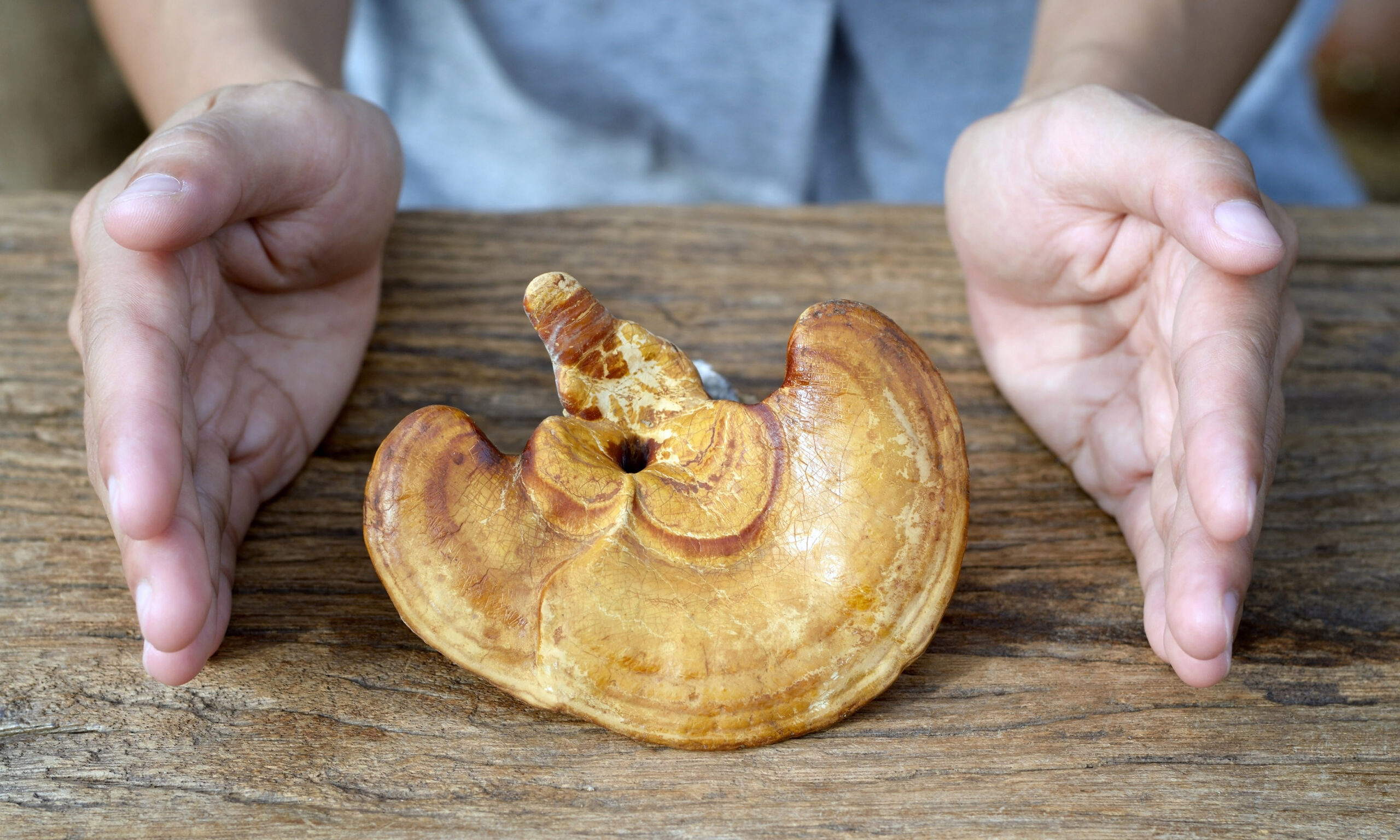
1. Lingzhi
If you could travel back hundreds of years and ask a Chinese herbalist which mushroom represented longevity, there’s a good chance you would hear one name:
Lingzhi. Or, you probably know it as Reishi.
Its reputation became so closely tied to vitality and long life that it eventually earned the nickname “the mushroom of immortality.”
Of course, Reishi cannot make you immortal. What makes it interesting is why people valued it so highly.
Traditionally, Reishi was considered a restorative mushroom, something you reached for when the body needed support rather than stimulation. And as you age, it probably becomes more relevant for you too.
When you were younger, a poor night’s sleep or a stressful week might barely have slowed you down. As the years pass, recovery sometimes takes a little longer.
That’s one reason researchers have become interested in Reishi’s polysaccharides and other compounds, particularly for their potential effects on immune activity, oxidative stress, fatigue, and overall well-being.
How people use it today
Reishi is commonly prepared as a tincture, tea, decoction, or even powdered mushroom extract.
Its flavor is quite bitter, which is one reason many people prefer a tincture or concentrated preparation rather than drinking large mugs of Reishi tea.
Powdered Reishi has its place.
But let’s be honest… not everyone wants to simmer bitter mushroom tea or drink cup after cup just to make it part of their routine.
That’s why I prefer the liquid form.b
A good Reishi tincture is easy to take, easy to absorb, and easy to stay consistent with. Just a few drops in water, tea, or straight under the tongue, and you’ve added one of the most respected longevity mushrooms to your day.
No bitter brew. No powder clumps. No complicated routine.
Think of it less as an instant energy boost and more as the type of herb traditionally used when you want to support your body’s resilience over time.
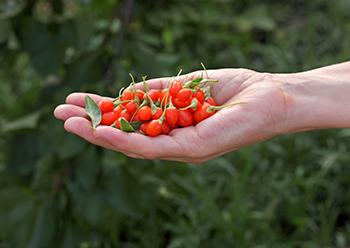
2. Goji Berries: A Small Fruit With a Very Long Reputation
You’ve probably seen Goji berries sprinkled over smoothie bowls.
In China, however, they are much more than a modern superfood trend.
Goji berries (Lycium barbarum) have been used as both food and traditional medicine for centuries.
And perhaps one of their most interesting traditional associations involves something many of us become increasingly protective of with age: our eyes.
Goji berries naturally contain zeaxanthin, a carotenoid that becomes concentrated in the retina.
That doesn’t mean a handful of berries will restore failing eyesight.
But it does make this humble little fruit far more interesting than its appearance suggests.
An easy way to use them
You don’t need an elaborate formula. Try adding a small handful of dried Goji berries to: herbal tea, oatmeal, soups, rice dishes, and trail mixes. You can even drop them straight into hot water.
They soften as they steep and give the water a gently sweet taste.
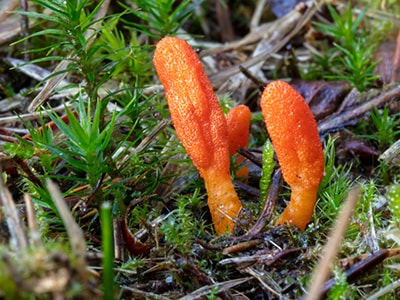
3. Cordyceps: When Your Energy Doesn’t Feel Like It Used To
One of the frustrating parts of aging isn’t necessarily looking older. It’s noticing that your body doesn’t always have the same reserve.
The walk feels longer. The stairs suddenly seem steeper. A busy day takes a little more out of you than it once did.
This is exactly why Cordyceps has such an interesting history.
Cordyceps has traditionally been associated with stamina, vitality, and physical resilience.
And unlike many herbs that rely almost entirely on traditional reputation, Cordyceps has also been studied specifically in older adults.
In one randomized, double-blind trial, healthy adults between the ages of 50 and 75 took a Cordyceps preparation for 12 weeks.
Researchers found improvements in certain exercise-performance thresholds, including metabolic and ventilatory measures.
VO₂ max itself did not significantly improve, so Cordyceps certainly isn’t a magic endurance drug.
But the results suggest something more subtle, and perhaps more useful:
It may help support physical capacity as you age.
Why does physical capacity matter so much as you age? Because when your energy drops, your whole life can quietly shrink.
You walk less. You move less. You avoid the stairs. You skip the garden. You say “not today” more often than you realize.
And over time, less movement can affect your weight, joints, muscles, heart, mood, and independence.
That’s why Cordyceps is so interesting. It’s not about feeling artificially “buzzed.” It’s about supporting the kind of stamina that helps you keep doing the things that make life feel like life.
A walk. A hike. A day in the garden. Playing with grandkids. Getting through errands without feeling drained.
And the habit is simple.
A few drops in your favorite drink earlier in the day, and you’re done.
Many people choose to take it earlier in the day because of its traditional association with energy and stamina.
If your goal is to keep walking, gardening, hiking, or simply moving comfortably as the years pass, this is one traditional mushroom worth knowing about.
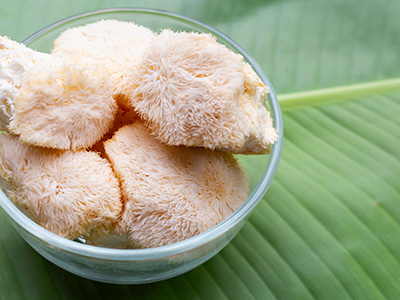
4. Lion’s Mane: For the Part of Aging People Rarely Talk About
You walk into a room. Then stop. Why did I come in here again?
You lose a word halfway through a sentence. You put your glasses somewhere “safe” and spend 20 minutes looking for them.
Occasional forgetfulness happens to almost everyone.
But memory is also one of the things people quietly worry about most as they get older.
That makes Lion’s Mane particularly fascinating.
This unusual white mushroom looks almost like a small waterfall of shaggy fibers.
It has a long history of use in East Asia and has become especially popular today because of research involving the nervous system and cognition.
In one double-blind placebo-controlled trial, adults between 50 and 80 years old with mild cognitive impairment received Lion’s Mane for 16 weeks.
Their cognitive scores improved compared with the placebo group during supplementation.
Interestingly, some of those improvements diminished after supplementation stopped.
It’s true that big pharmaceutical companies don’t portray as a treatment for dementia or serious neurological disease.
But these studies give us a good reason to take this strange mushroom seriously.
I actually take Lion’s Mane daily.
Not because I expect a miracle overnight, but because my work demands a sharp mind. I spend hours reading research, checking sources, comparing details, and making sure the information I share with you is actually worth your time.
For that kind of deep focus, I like having Lion’s Mane in my routine.
What makes it so interesting is that it’s not a stimulant that just pushes you for a few hours. It’s a mushroom being studied for memory, cognition, and nerve-growth pathways, especially in older adults.
So if you’ve been walking into rooms and forgetting why, losing words mid-sentence, or simply wanting to support your brain as you age, this is one mushroom I’d seriously look at.
If healthy aging means anything, keeping your mind engaged and supported deserves just as much attention as caring for your joints or muscles.
5. Three Old Tonics for Resilience
Not every longevity herb was used because someone felt “sick.”
Some were used because the body felt drained, slower, or less able to adapt.
Schisandra was known as the “five-flavor fruit” because it carries sweet, sour, salty, bitter, and pungent notes all at once. In traditional Chinese herbalism, it was valued as a resilience tonic during times of stress, depletion, and change.
Asian Ginseng became famous for vitality. It was the root people reached for when they didn’t feel as strong, sharp, or energetic as they used to. Not a magic switch back to youth, but one of the most respected traditional herbs for deep tiredness and depletion.
Jiaogulan, often called “Southern Ginseng,” was traditionally consumed as tea in parts of southern China. It later became interesting because of its connection to metabolic health — the way your body handles blood sugar, energy, weight, and insulin as you age.
Different plants. Different traditions.
But the same old idea:
Aging well is not just about living longer. It’s about helping your body stay steady through change.
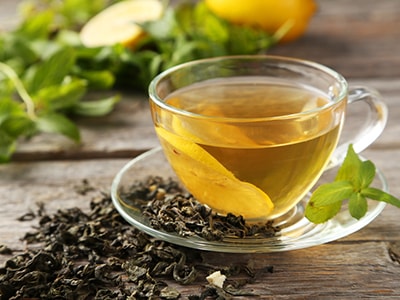
7. Green Tea: The Longevity Herb Hiding in Plain Sight
Not every herbal secret needs to come from a rare root growing on a remote mountain.
Sometimes it’s sitting inside your kitchen cabinet. Tea drinking is deeply woven into Chinese culture.
And when researchers followed thousands of very old Chinese adults, tea drinking produced some interesting results.
One study involving more than 9,000 adults aged 80 and older found that daily tea consumption was associated with roughly a 10% lower risk of mortality compared with not drinking tea.
Another major study involving Chinese adults found an association between green tea consumption and lower cardiovascular mortality, particularly among nonsmokers.
This does not mean green tea guarantees a longer life. People who drink tea may also have other habits that contribute to their health.
But there’s something worth noticing here. The habit is incredibly simple.
Heat water. Steep leaves. Drink. Repeat for decades.
That may be one of the biggest lessons hidden inside traditional herbal cultures.
They didn’t always rely on dramatic interventions.
They built plants into everyday life.
Green tea is a beautiful daily habit.
But it doesn’t have to be the only herb in your cup.
Once you start thinking the old way, tea becomes more than something warm to sip. It becomes a simple daily ritual for digestion, energy, calm, resilience, and seasonal support.
And that’s where herbal tea recipes make life easier.
Instead of wondering what to combine, how long to steep it, or which herbs make sense together, you can follow ready-made recipes that show you exactly what to use and why.
Drinking green tea and taking a highly concentrated green tea extract are not the same thing.
Green tea as a beverage is generally considered safe for most adults.
Concentrated extracts can behave differently in the body and may carry additional risks.
Sometimes the gentlest preparation really is enough.
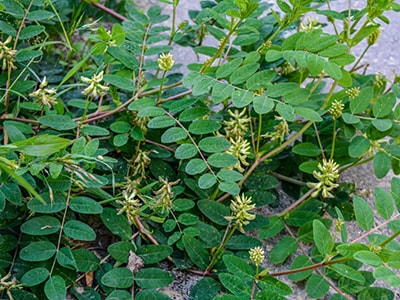
9. Astragalus: The Root Scientists Keep Coming Back To
Some herbs have a mountain of human clinical research behind them.
Astragalus isn’t quite there yet when it comes specifically to longevity.
But researchers remain fascinated by it.
Astragalus membranaceus has a long history in traditional Chinese herbal medicine and was traditionally used as a strengthening and defensive tonic.
Scientists have studied compounds in Astragalus for their possible relationships with:
oxidative stress
inflammatory signaling
immune activity
cellular aging processes
Much of the anti-aging evidence so far comes from laboratory and animal studies rather than large human longevity trials.
And that distinction matters.
Still, sometimes early research becomes interesting precisely because it begins to explain why a plant was valued long before anyone had a microscope.
Astragalus may be one of those herbs.
Traditional preparation
The dried root is often simmered slowly rather than simply steeped like ordinary tea.
Some herbalists even add slices of Astragalus root to broth or soup and remove them before serving.
That’s a beautiful example of something modern wellness culture sometimes forgets:
herbal medicine doesn’t always have to come in a capsule.
10. Ginger: The Remedy You Probably Already Have
Not every traditional plant needs an exotic name.
Ginger has traveled so widely through kitchens and herbal traditions that many of us forget just how medicinal its history is.
For centuries, Asian herbal systems have used ginger particularly around digestion, nausea, circulation, and warming the body.
Modern human research has found evidence supporting ginger for certain forms of nausea, while preliminary evidence also suggests potential benefits involving menstrual discomfort and osteoarthritis symptoms.
For everyday life, however, its biggest advantage might simply be accessibility.
You can find fresh ginger almost anywhere.
Ginger tea is one of the simplest remedies you can make.
But it also points to something much bigger.
Our grandparents didn’t need a complicated app or a cabinet full of modern products to handle everyday problems. They knew how to use what they had — roots, herbs, food, water, fire, jars, cloth, and common sense.
That kind of practical independence is exactly what this old-skills guide brings back.
Inside, you’ll find 200 illustrated skills with step-by-step instructions, including old food, remedy, storage, water, and self-reliance methods that most people were never taught. It even includes a traditional honey-and-garlic recipe, the kind of simple kitchen preparation people used long before pharmacies became the first place everyone looked.
If ginger tea made you think, “I wish I knew more simple things like this,” you’ll want to see what else is inside.
After reading about Reishi, Cordyceps, Goji, Ginseng, and all these fascinating plants, it would be easy to search for the one herb responsible for longevity.
But that may be the wrong lesson.
The largest studies of China’s oldest adults don’t point toward one magic mushroom or berry.
They point toward something broader:
plant-rich foods, vegetables, fruit, tea, movement, and habits repeated over many years.
Perhaps that’s why traditional herbalism feels so different from the modern urge to find one powerful thing that fixes everything overnight.
Maybe longevity was never hidden in one miraculous herb.
Maybe the real secret was knowing how to keep plants in your life for 70, 80, or even 90 years.
It’s about the routine.
What you eat in the morning. How you move. How you sleep. How you calm stress. What herbs you use. What habits you repeat when nobody is watching.
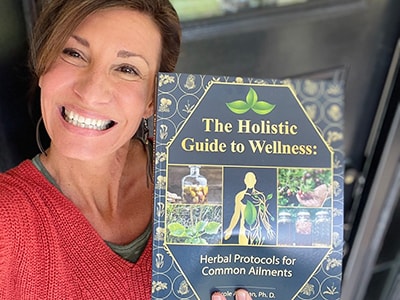
That’s exactly why Nicole’s holistic protocol book fits so well here.
Instead of giving you random tips, it lays out complete natural protocols you can follow morning, afternoon, and evening: with foods, herbs, vitamins, minerals, stretches, stress-relief techniques, exercises, detoxes, and simple remedies organized into a clear plan.
It includes 45 protocols, plus free bonuses on anti-inflammatory meals and building an herbal apothecary at home.
Because the older you get, the less you can afford to guess.
Herbs can be powerful, which is exactly why they deserve respect.
If you take prescription medications, have a chronic condition, are preparing for surgery, or are pregnant or breastfeeding, check with a qualified healthcare professional before using concentrated herbal extracts or supplements.
Traditional remedies can be valuable tools for supporting everyday wellness, but they aren’t substitutes for necessary medical care.
We use cookies to ensure that we give you the best experience on our website. If you continue to use this site, we will assume that you are happy with it.
Functional Always active
The technical storage or access is strictly necessary for the legitimate purpose of enabling the use of a specific service explicitly requested by the subscriber or user, or for the sole purpose of carrying out the transmission of a communication over an electronic communications network.
Preferences
The technical storage or access is necessary for the legitimate purpose of storing preferences that are not requested by the subscriber or user.
Statistics
The technical storage or access that is used exclusively for statistical purposes.The technical storage or access that is used exclusively for anonymous statistical purposes. Without a subpoena, voluntary compliance on the part of your Internet Service Provider, or additional records from a third party, information stored or retrieved for this purpose alone cannot usually be used to identify you.
Marketing
The technical storage or access is required to create user profiles to send advertising, or to track the user on a website or across several websites for similar marketing purposes.