Oral thrush is a fungal infection of the mouth caused by an overgrowth of Candida albicans, a yeast that naturally lives in small amounts in the mouth, gut, and on the skin. Under normal conditions it is kept in check by the immune system and by competing populations of beneficial bacteria. When that balance tips, whether through antibiotic use, immune suppression, high sugar intake, dry mouth, or certain medical conditions, Candida can multiply and form the characteristic white patches that mark oral thrush.
Conventional treatment relies primarily on prescription antifungal medications: nystatin rinse, fluconazole tablets, or clotrimazole lozenges. These are effective and often necessary, particularly in people who are immunocompromised or in cases that are persistent or severe. But a growing body of research has also examined the antifungal properties of plant-based compounds, and for many people with mild or recurrent cases, herbal approaches are of genuine interest as a complement to conventional care.
This article covers the herbal antifungals with the strongest research backing for activity against Candida, explains how each one works, provides practical guidance on how to use them, and is clear about when a doctor visit is the right move rather than a home remedy.
Understanding Oral Thrush: Who Gets It and Why
Oral thrush is not a condition that appears out of nowhere in otherwise healthy adults. When it does, it is worth asking why. Several well-understood triggers tip the balance toward Candida overgrowth, and addressing those underlying factors is as important as any topical treatment, herbal or pharmaceutical.
The most common triggers include:
Antibiotic use: Broad-spectrum antibiotics kill the beneficial bacteria that ordinarily compete with and suppress Candida. This is probably the single most common reason otherwise healthy people develop thrush.
Corticosteroid inhalers: People using inhaled steroids for asthma or COPD frequently develop oral thrush as a side effect, because residual steroid deposits in the mouth suppress local immune defenses. Rinsing the mouth thoroughly after each use substantially reduces risk.
Dentures: Ill-fitting dentures trap moisture and create an environment where Candida can colonize the tissue underneath. Denture hygiene and proper fit are key factors.
Dry mouth: Saliva contains antimicrobial proteins that help regulate the oral microbiome. Reduced saliva flow, whether from medication side effects, mouth breathing, or conditions like Sjogren’s syndrome, removes a key natural defense.
Immune suppression: HIV/AIDS, cancer treatment, organ transplant immunosuppression, diabetes, and prolonged high-dose corticosteroid use all significantly increase susceptibility. Oral thrush in the absence of other obvious triggers can occasionally be an early sign of undiagnosed immune dysfunction.
Infants: Newborns and infants commonly develop oral thrush because their immune systems are still maturing. It can also transfer between a nursing mother and baby through the nipple-mouth cycle.
The Centers for Disease Control and Prevention provides detailed clinical background on candidiasis, including oral thrush, its risk factors, and when medical evaluation is warranted. Their guidance is a useful baseline for understanding who is most at risk and why.
Plant-derived antifungal compounds work through several different mechanisms, which is part of what makes them scientifically interesting. Unlike a single pharmaceutical molecule acting on one target, the active compounds in medicinal plants often affect Candida through multiple simultaneous pathways.
The primary mechanisms documented in the research literature include:
Cell membrane disruption: Many plant compounds, including the terpenoids in oregano oil and the medium-chain fatty acids in coconut oil, damage or destabilize the Candida cell membrane, causing leakage of cellular contents and cell death.
Inhibition of biofilm formation: Candida forms biofilms, dense communities of cells attached to surfaces and encased in a protective matrix. Biofilms are significantly more resistant to antifungal drugs than free-floating cells. Several herbal compounds, including allicin from garlic and eugenol from clove, have demonstrated activity against Candida biofilms in laboratory studies.
Interference with ergosterol synthesis: Ergosterol is the fungal equivalent of cholesterol, a critical component of the Candida cell membrane. Conventional antifungal drugs like fluconazole work primarily by blocking ergosterol synthesis. Some plant compounds appear to act on similar pathways.
Disruption of hyphal transition: Candida can switch between a yeast form and a more invasive hyphal (filamentous) form. The hyphal form is more pathogenic and better able to penetrate tissue. Some herbal compounds have been shown to suppress this transition in laboratory settings.
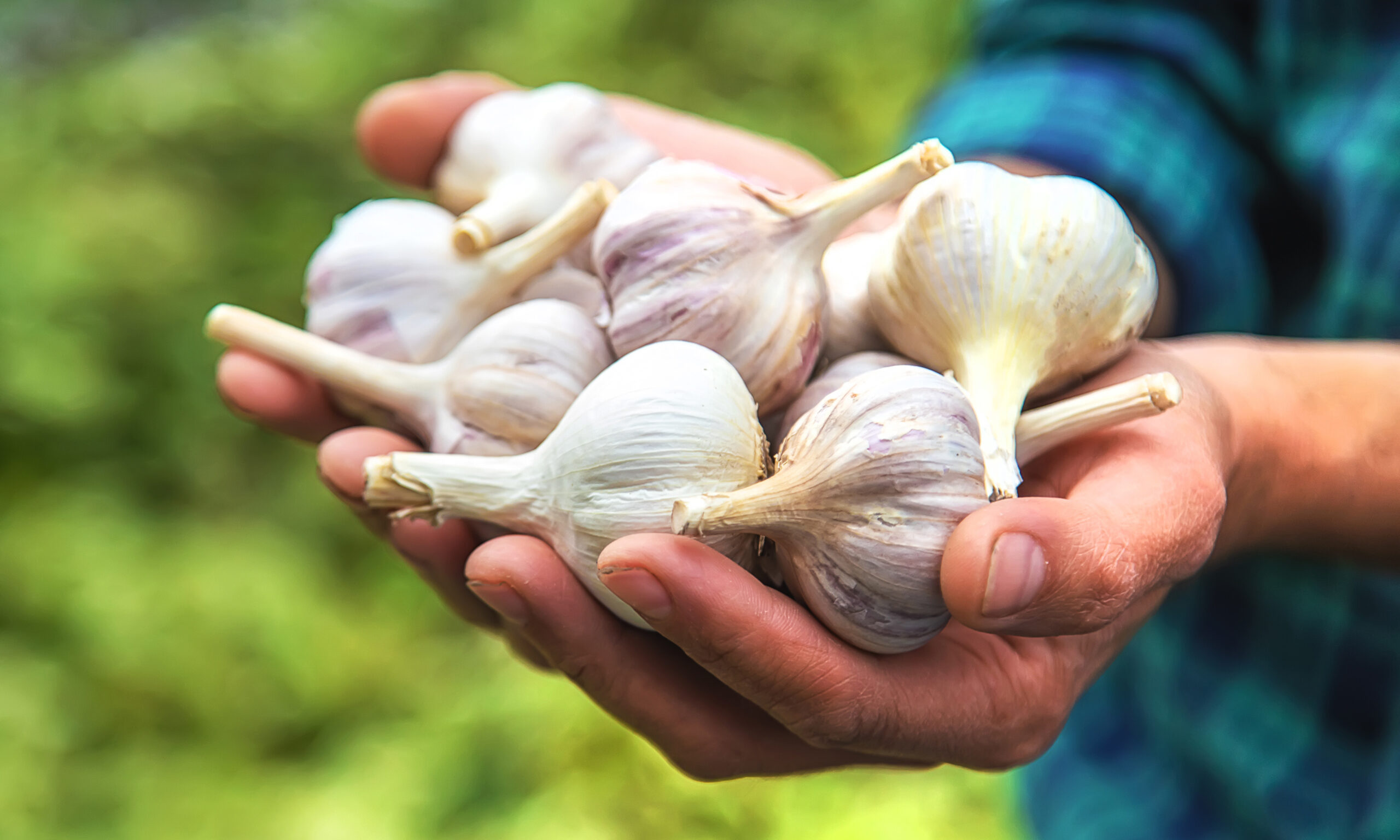
Garlic (Allium sativum) has one of the deepest research records of any plant against Candida. The primary active compound, allicin, is formed when raw garlic is crushed or chewed, triggering an enzymatic reaction between the amino acid alliin and the enzyme alliinase. Allicin is highly unstable and degrades quickly, which is one reason that raw garlic has different properties than aged or cooked garlic.
Multiple laboratory studies have confirmed allicin’s antifungal activity against Candida albicans, including against drug-resistant strains and against Candida biofilms. A study published in the journal Antimicrobial Agents and Chemotherapy demonstrated that allicin was effective against fluconazole-resistant Candida strains in laboratory conditions, which has drawn significant research interest given the growing problem of antifungal drug resistance.
Research indexed through the National Library of Medicine shows a consistent body of in vitro evidence for garlic’s activity against Candida species. It is worth noting that most of this research is laboratory-based; well-controlled clinical trials in humans are more limited.
Disclaimer: Raw garlic is potent and can cause irritation to sensitive oral tissue. Do not hold raw garlic directly on inflamed or broken tissue for extended periods. People with bleeding disorders or who take blood-thinning medications should consult a healthcare provider before using garlic therapeutically.
The most practical approaches for oral use include:
Eating raw crushed garlic: Crush one or two cloves and allow them to sit for 10 to 15 minutes before eating. This resting period allows alliinase to fully convert alliin to allicin. Eat the crushed garlic as part of a meal. Daily consumption is the approach most aligned with the traditional use of garlic as a systemic antimicrobial.
Garlic rinse: Crush two cloves into a cup of warm (not boiling) water, allow to steep for 10 minutes, strain, and use as a mouth rinse for 30 to 60 seconds. Boiling water degrades allicin, so keep the water at a warm rather than scalding temperature.
Garlic oil: Commercially prepared garlic oil can be applied gently to affected areas with a clean cotton swab. Check the ingredient list to confirm it is actual garlic extract and not simply garlic-flavored oil.
Oil of Oregano: Carvacrol and Thymol Against Candida
Oil of oregano (derived from Origanum vulgare or Origanum compactum, not culinary oregano) is one of the most concentrated plant-derived antifungals available. Its primary active constituents are carvacrol and thymol, both of which are phenolic monoterpenoids with well-documented antimicrobial properties.
Laboratory research has demonstrated that carvacrol and thymol disrupt Candida cell membranes, inhibit biofilm formation, and interfere with the yeast-to-hyphae transition that makes Candida more virulent. A 2011 study published in the Brazilian Journal of Microbiology found that oregano essential oil showed significant antifungal activity against multiple Candida species. More recent research has continued to build the in vitro evidence base.
A review of the pharmacological properties of carvacrol published through the National Center for Biotechnology Information outlines the mechanisms by which this compound disrupts microbial membranes, including fungal ones, and discusses its potential as an antimicrobial agent. The same review notes that while the in vitro evidence is strong, human clinical data remain limited.
Disclaimer: Oregano essential oil is extremely concentrated and must never be used undiluted in the mouth. It can cause chemical burns to mucous membranes if applied full strength. Always dilute in a carrier oil before any oral use. Avoid use during pregnancy. Do not use oregano essential oil with blood-thinning medications without medical supervision.
Diluted oil pull: Add 1 to 2 drops of high-quality oregano essential oil (look for products standardized to at least 70% carvacrol) to one tablespoon of coconut or olive oil. Swish gently in the mouth for 5 to 10 minutes, then spit. Do not swallow. Rinse afterward with clean water.
Capsule form: Enteric-coated oregano oil capsules are available as a supplement for internal use. These bypass the mouth and are more suitable for systemic support than for direct topical treatment of oral tissue.
Frequency: Once daily for adult use. If irritation occurs, discontinue and consult a healthcare provider.
Coconut Oil: Caprylic Acid and Oil Pulling
Coconut oil’s antifungal properties come primarily from its medium-chain fatty acid content, particularly caprylic acid (C8), capric acid (C10), and lauric acid (C12). These fatty acids are incorporated into and disrupt Candida cell membranes. Caprylic acid in particular has been studied specifically as an antifungal agent and is sold in capsule form as a supplement for Candida-related concerns.
Oil pulling, the practice of swishing oil in the mouth for an extended period before spitting, has a traditional history in Ayurvedic medicine and has attracted modest but genuine research interest in the context of oral health. A clinical study published in the Journal of Traditional and Complementary Medicine compared coconut oil pulling to chlorhexidine mouthwash in people with Streptococcus mutans counts in the mouth and found comparable reductions. While that study addressed bacteria rather than Candida specifically, the methodology is relevant to how oil pulling might work against oral fungal populations.
Research on caprylic acid as an antifungal agent, including its mechanism of action against Candida species, is summarized in peer-reviewed literature accessible through the PubMed database. The evidence base is largely laboratory-based, with some animal studies supporting the in vitro findings.
How to Use Coconut Oil for Oral Thrush
Oil pulling: Use one tablespoon of cold-pressed, virgin coconut oil. Swish gently around the mouth for 10 to 20 minutes, making sure to pull the oil through and around all tooth surfaces. Spit into a trash can (not the sink, as solidified oil can clog pipes). Rinse with warm water and brush teeth as usual. Best done first thing in the morning before eating or drinking.
Topical application: Coconut oil can be applied directly to white patches with a clean cotton swab or clean finger. It is gentle enough to use on infant oral tissue when recommended by a pediatrician for infant thrush.
Dietary use: Adding coconut oil to the diet, in cooking or blended into warm drinks, provides systemic caprylic acid. This is a low-risk, low-effort addition that many people find practical alongside topical treatment.
Clove: Eugenol as an Antifungal Agent
Clove (Syzygium aromaticum) has a long history in traditional dental and oral medicine, and the active compound responsible for much of its pharmacological activity is eugenol, a phenylpropanoid with well-documented antimicrobial and antifungal properties. Eugenol is the compound that gives clove oil its distinctive warming numbing sensation, and it has been used in dentistry as an analgesic and antimicrobial agent for over a century.
Research has demonstrated that eugenol inhibits Candida albicans growth, disrupts cell membrane integrity, and suppresses biofilm formation. A study published in the Journal of Medical Microbiology found that clove essential oil exhibited antifungal activity against Candida strains comparable to or exceeding that of the antifungal drug fluconazole in laboratory conditions. Importantly, several studies have found activity against fluconazole-resistant Candida strains, which is of particular interest given the challenge of drug-resistant oral thrush.
A comprehensive review of eugenol’s biological activities, including its antifungal mechanisms, is available through PMC at the National Library of Medicine. The review covers laboratory findings and contextualizes them within the broader antimicrobial pharmacology of clove-derived compounds.
How to Use Clove for Oral Thrush
Disclaimer: Clove essential oil is highly concentrated and can cause irritation or chemical burns if applied undiluted. Always dilute in a carrier oil before oral use. Eugenol can interact with blood-thinning medications. Do not use clove oil on infants without pediatric guidance.
Clove tea rinse: Simmer 4 to 5 whole cloves in 2 cups of water for 10 to 15 minutes. Allow to cool to a comfortable warm temperature, strain, and use as a mouth rinse for 30 to 60 seconds, two to three times daily.
Diluted clove oil: Add 1 drop of food-grade clove essential oil to one tablespoon of coconut or olive oil and use as a gentle swish. Do not apply undiluted clove oil directly to oral tissue.
Whole cloves: Chewing a whole clove releases eugenol slowly and with lower concentration than the essential oil. This is a gentler option and has traditional use as an oral antiseptic. Chew slowly and gently rather than biting down hard.
Thyme: Thymol and Its Antifungal Properties
Thyme (Thymus vulgaris) contains thymol as its primary phenolic constituent, the same compound found alongside carvacrol in oregano oil. Thymol has been extensively studied for antimicrobial activity and is an active ingredient in several commercial mouthwashes, including Listerine. Its antifungal activity against Candida species is supported by a solid body of laboratory evidence.
Thyme essential oil and aqueous thyme extracts have both shown activity against Candida albicans in laboratory studies. The mechanism overlaps with other phenolic antifungals: disruption of cell membrane integrity, interference with ergosterol synthesis, and inhibition of biofilm formation. Thyme is also relatively gentle compared to clove or oregano oils, which makes it a reasonable starting option for people who are sensitive to stronger herbal preparations.
How to Use Thyme for Oral Thrush
Thyme tea rinse: Steep 1 to 2 teaspoons of dried thyme (or a small handful of fresh leaves) in 1 cup of just-boiled water for 10 to 15 minutes. Strain well, allow to cool to a comfortable temperature, and use as a mouth rinse. The rinse can be held in the mouth and swished gently for 30 to 60 seconds before spitting.
Frequency: Two to three times daily is a practical starting point. Thyme tea is mild enough that this frequency is generally well tolerated.
A research review on the antimicrobial properties of thyme and thymol, including evidence relevant to Candida, is available through PubMed Central. The review covers both essential oil and aqueous extract activity, which is relevant for understanding why a simple thyme tea rinse has genuine pharmacological rationale behind it.
Aloe Vera: Soothing and Antifungal
Aloe vera gel contains a range of active constituents including anthraquinones, polysaccharides, and plant sterols, several of which have demonstrated antifungal activity in laboratory studies. Aloe is also well established as a soothing agent for inflamed and irritated mucous membranes, which makes it a practical choice for oral thrush where the tissue may be sore or raw.
A clinical trial published in the Australian Dental Journal compared aloe vera gel to clotrimazole (a standard antifungal medication) in patients with denture stomatitis, a common form of oral candidiasis. The trial found aloe vera gel to be as effective as clotrimazole in reducing Candida counts and clinical symptoms over a four-week period, which is a notable result for a plant-based intervention in a human clinical setting.
How to Use Aloe Vera for Oral Thrush
Disclaimer: Use only food-grade or cosmetic-grade pure aloe vera gel for oral use, or fresh gel from a home-grown plant. Avoid products containing alcohol, artificial colors, or preservatives for internal or oral application. Some people experience sensitivity to aloe; discontinue if irritation increases.
Direct application: Apply a small amount of pure aloe vera gel directly to affected areas using a clean cotton swab or clean fingertip. Hold gently in place for a minute or two before rinsing. Repeat two to three times daily.
Aloe rinse: Dilute two tablespoons of pure aloe vera juice (not gel concentrate) in half a cup of water and use as a mouth rinse. Swish gently for 30 to 60 seconds and spit.
The Australian Dental Journal clinical trial comparing aloe vera to clotrimazole in denture stomatitis is cited and summarized in reviews available through the National Library of Medicine’s PubMed database. It remains one of the stronger pieces of human clinical evidence for a plant-based antifungal intervention in an oral Candida context.
Dietary Adjustments That Support Antifungal Treatment
Topical herbal treatment works best when combined with dietary changes that reduce the conditions favoring Candida overgrowth. Candida thrives on simple sugars and refined carbohydrates, which provide a rapid fuel source for yeast proliferation. Reducing these foods during an active case of oral thrush is a practical and well-supported adjunct to any antifungal treatment.
The dietary approach most commonly recommended for Candida management includes:
Reducing sugar and refined carbohydrates: This includes table sugar, sweetened drinks, white bread, white rice, pastries, and sweetened dairy. These foods elevate oral and systemic glucose, which promotes Candida growth.
Limiting alcohol: Alcohol is both a sugar source and an immune suppressant at higher quantities. It also disrupts the gut microbiome, which can influence systemic Candida burden.
Increasing probiotic foods: Lacto-fermented foods such as plain yogurt with live cultures, kefir, sauerkraut, kimchi, and miso introduce beneficial bacteria that compete with Candida in the gut. Some research suggests that Lactobacillus species reduce oral Candida counts when consumed regularly.
Eating garlic, thyme, and coconut oil regularly: Incorporating these foods into daily cooking means you are getting a consistent low-level antifungal effect alongside the benefit of dietary diversity.
Staying well hydrated: Adequate hydration supports saliva production, and saliva is one of the body’s natural defenses against oral Candida. Dry mouth, even mild chronic dryness, can be a contributing factor.
Probiotics and the Oral Microbiome
The relationship between the oral microbiome and Candida overgrowth is an active area of research. Candida is kept in check in part by a healthy and diverse community of oral bacteria, and disruption of that community, most commonly by antibiotics, creates the opening for Candida to overgrow. Restoring and supporting the oral microbiome is therefore a logical part of managing recurrent thrush.
Several clinical trials have examined the use of Lactobacillus-based probiotics for oral Candida management. A randomized controlled trial published in the journal Clinical Oral Investigations found that daily consumption of probiotic Lactobacillus rhamnosus GG significantly reduced salivary Candida counts in elderly care home residents, a population at elevated risk for oral thrush. Another study in the Journal of Oral Science found that Lactobacillus acidophilus consumption reduced Candida colonization in denture wearers.
Research on Lactobacillus species and oral Candida counts is indexed and searchable through PubMed at the National Library of Medicine. The body of evidence is growing and generally positive, though researchers note that optimal strains, dosages, and treatment durations are still being worked out.
Practical ways to support the oral microbiome alongside antifungal treatment:
Eat plain unsweetened yogurt with live active cultures daily. Look for products listing specific strains on the label.
Consider a quality probiotic supplement containing Lactobacillus strains, particularly if you are completing or have recently completed a course of antibiotics.
Avoid mouthwashes containing alcohol, which disrupts the oral microbiome along with any harmful bacteria. If antifungal mouthwash is medically indicated, use it as directed and discuss with your provider how to support the microbiome afterward.
Rinse the mouth with clean water after using corticosteroid inhalers, as this removes residual steroid deposits that suppress local immunity and favor Candida.
Hygiene Practices That Reduce Oral Thrush Risk
Several simple hygiene practices meaningfully reduce the risk of oral thrush developing or recurring. These are often overlooked but are genuinely effective when maintained consistently.
Replace your toothbrush: Once thrush has resolved, replace your toothbrush to avoid reintroducing Candida. Toothbrushes can harbor fungal spores and contribute to reinfection.
Clean dentures thoroughly every night: Remove dentures before sleeping and soak them in a denture cleanser solution. Brush them with a soft brush. Do not sleep in dentures, as continuous wear creates an ideal warm, moist environment for Candida under the plate.
Stay on top of inhaler technique: If you use a corticosteroid inhaler, rinse your mouth with water and gargle after every single use. Using a spacer device also reduces oropharyngeal deposition of the steroid.
Manage blood sugar: Elevated blood glucose, whether from diabetes or from a high-sugar diet, creates an oral environment that favors Candida. This is a modifiable factor worth taking seriously if oral thrush is recurrent.
Stay hydrated: Dry mouth is a consistent risk factor. If chronic dry mouth is a problem, speak with your dentist or physician about causes and solutions, including saliva substitutes if appropriate.
When Herbal Remedies Are Not Enough: Knowing When to See a Doctor
Herbal antifungal approaches work best as a complement to good overall health and hygiene, and as a supportive measure for mild, uncomplicated cases of oral thrush in otherwise healthy adults. They are not appropriate as a standalone treatment in several important situations.
You should see a healthcare provider promptly if:
Oral thrush appears in the absence of a clear trigger such as recent antibiotic use. Unexplained oral thrush in adults, particularly men, warrants evaluation for underlying immune dysfunction.
The infection is spreading or worsening despite home treatment after 7 to 10 days.
You are experiencing difficulty swallowing, which may indicate that the infection has spread to the esophagus (esophageal candidiasis). Esophageal involvement requires prescription treatment.
You are pregnant. Oral thrush during pregnancy should be evaluated and treated under medical guidance.
The affected person is an infant. While infant thrush is common, it should be confirmed by a pediatrician, and treatment should be coordinated to prevent the mother-baby reinfection cycle if nursing.
You are immunocompromised for any reason, including HIV/AIDS, cancer treatment, organ transplant, or long-term corticosteroid use. Oral thrush in these populations can be significantly more serious and requires medical management.
You have diabetes, particularly if blood sugar is not well controlled.
The American Academy of Oral Medicine provides clinical information on oral candidiasis including diagnostic criteria, treatment options, and guidance for when specialist evaluation is warranted. Their resources reflect current evidence-based clinical practice.
Herb-Drug Interactions to Be Aware Of
Several of the herbal antifungals discussed in this article have documented or potential interactions with prescription medications. This is not a reason to avoid them categorically, but it is a reason to disclose any herbal use to your healthcare provider, particularly if you are taking:
Blood-thinning medications (warfarin, aspirin, clopidogrel): Garlic, clove, and oregano all have some blood-thinning activity. Combined with anticoagulant medications, this could increase bleeding risk.
Immunosuppressant medications: People taking immunosuppressants for organ transplant or autoimmune conditions should discuss any herbal supplement use with their transplant team or rheumatologist before proceeding.
Diabetes medications: Garlic in therapeutic doses can lower blood sugar. People on insulin or oral hypoglycemic medications should monitor closely if using garlic therapeutically and inform their physician.
Antifungal drugs: If you are already taking prescription antifungal medication, discuss adding herbal antifungals with your provider. The combination may be appropriate in some cases and inadvisable in others.
Disclaimer: This list is not exhaustive. Always disclose all herbal, supplement, and over-the-counter product use to your healthcare provider and pharmacist, who can evaluate interactions specific to your medication regimen.
The Herbal Knowledge Most Families Have Forgotten
Garlic, thyme, clove, oregano, aloe vera, lemon balm—our ancestors didn’t just grow these plants, they knew exactly how to use them. If you’re fascinated by the traditional herbal remedies discussed in this article, Forgotten Home Apothecary is a resource you’ll want on your shelf.
Inside, you’ll discover step-by-step instructions for identifying, harvesting, preserving, and preparing dozens of medicinal plants into teas, tinctures, salves, syrups, poultices, and other time-tested remedies. It’s the kind of practical herbal knowledge that helped generations care for their families long before modern pharmacies existed.
Putting It Together: A Practical Herbal Approach to Oral Thrush
For a mild case of oral thrush in an otherwise healthy adult with a clear trigger such as a recent course of antibiotics, a reasonable herbal-focused approach might look like this: begin oil pulling with coconut oil each morning, use a thyme or clove tea rinse two to three times daily, incorporate raw garlic into meals each day, eat plain probiotic yogurt daily, and reduce sugar and refined carbohydrates for the duration of the treatment period. Replace your toothbrush once the infection has cleared.
Most mild cases in healthy adults will begin to show improvement within a week. If you are not seeing progress by day 10, or if symptoms are worsening at any point, that is a clear signal to seek medical evaluation. A prescription antifungal is not a failure of a natural approach. It is the appropriate tool for cases that need it, and the herbal approaches described here can often continue alongside prescription treatment to support the process.
The herbs covered in this article, garlic, oregano, coconut oil, clove, thyme, and aloe vera, each have genuine laboratory evidence supporting their antifungal activity. What the research record does not yet have is large-scale, well-controlled human clinical trials comparing herbal interventions head-to-head with pharmaceutical antifungals across diverse populations. That gap matters. It means these approaches are promising and worth understanding, not that they are proven substitutes for medical care when medical care is what the situation calls for.
Important: This article is for educational purposes only. It does not constitute medical advice. Oral thrush can indicate underlying health conditions that require professional evaluation. Always consult a qualified healthcare provider before beginning any herbal treatment, especially if you are pregnant, nursing, immunocompromised, or taking prescription medications.
We use cookies to ensure that we give you the best experience on our website. If you continue to use this site, we will assume that you are happy with it.
Functional Always active
The technical storage or access is strictly necessary for the legitimate purpose of enabling the use of a specific service explicitly requested by the subscriber or user, or for the sole purpose of carrying out the transmission of a communication over an electronic communications network.
Preferences
The technical storage or access is necessary for the legitimate purpose of storing preferences that are not requested by the subscriber or user.
Statistics
The technical storage or access that is used exclusively for statistical purposes.The technical storage or access that is used exclusively for anonymous statistical purposes. Without a subpoena, voluntary compliance on the part of your Internet Service Provider, or additional records from a third party, information stored or retrieved for this purpose alone cannot usually be used to identify you.
Marketing
The technical storage or access is required to create user profiles to send advertising, or to track the user on a website or across several websites for similar marketing purposes.