

#1 Fruit Not To Eat After 39
Let’s get this out of the way first: fruit doesn’t suddenly become poison when you turn 40. Your body doesn’t wake up on your birthday and decide it can’t handle apples anymore.
But there is one fruit that deserves caution in midlife. Not because it’s unhealthy, but because it can quietly interfere with medications many people start taking in their 40s and beyond.
And the reason matters more than you might think.
Why This Matters Now
Nearly 7 out of 10 adults aged 40-79 take at least one prescription medication. One in five takes five or more. Cholesterol meds, blood pressure pills, diabetes drugs, antidepressants… these become common as we age.
Here’s the thing about this fruit: it’s not a bad fruit. It’s actually really good for you. Bright, refreshing, packed with vitamin C. The kind of thing that looks like it belongs in a healthy breakfast.
But if you’re taking certain medications, it can mess with how they work. Not because the fruit itself is unhealthy, but because compounds in it change how your body absorbs those drugs.
Sometimes, too much medication gets into your bloodstream, which raises your risk of side effects. Other times, not enough gets through, and the medicine doesn’t work as well as it should.
That fruit you’re reading about is grapefruit.
The FDA has warnings about this. Grapefruit can interact with some cholesterol statins, blood pressure medicines, anti-anxiety medications, and certain corticosteroids. So it’s not about the fruit being bad, it’s about the circumstances. If you’re on these meds, grapefruit becomes something you need to be careful with.
Related: Fruit Juice vs. Whole Fruit. Which One is Better?
This is just one example. You have no idea how dozens of other common kitchen ingredients actually interact with your ailments or the medications you take.
Grapefruit isn’t the only thing that changes how drugs work in your body. Garlic can thin your blood. Turmeric can interfere with blood thinners. Even black pepper affects how certain medications are absorbed.
Most people have no idea what interacts with Type 2 diabetes, high blood pressure, high cholesterol, or the medications they’re taking for these conditions. Your pharmacist doesn’t have time to explain everything. Your doctor might not even know all the interactions.
If you want to find out for yourself or a loved one, click here to see the complete natural protocols. 
How Much Grapefruit Causes Problems
Here’s what makes grapefruit especially tricky: it doesn’t take much.
One whole grapefruit or about a cup of juice can be enough to create a meaningful interaction for certain medications.
Even more frustrating: you can’t outsmart it by timing. Having grapefruit hours away from your pill doesn’t necessarily solve the problem. The interaction can last across your entire dosing window.
Research shows that over 85 medications are known or predicted to interact with grapefruit. And the effects don’t wear off quickly like you’d hope.
Also Read: What Raisins Actually Do To Your Body
What to Do If You Take Medication
If grapefruit is part of your routine and you take any medication regularly, here’s what to do:
Check the leaflet that came with your medication. Look for grapefruit warnings.
Ask your pharmacist directly. They have access to interaction databases and can tell you within seconds if your specific medication is affected.
Talk to your doctor if you want to keep eating grapefruit. Sometimes they can switch you to a different medication that doesn’t interact.
Don’t just guess and hope for the best. Grapefruit interactions are real enough that the FDA took the time to warn people.
Pharmacists will never tell you if grapefruit interacts with herbal remedies. To know that, you’d have to ask a real herbalist.
You might want to learn about Nature’s Candy: Jujube
But it’s impossible for one of the most well-known and trusted herbalists in the US to directly visit or call hundreds of thousands of interested people who want to know which plants they should avoid combining.
That’s why Dr. Nicole Apelian dedicated an entire section in her bestselling book, The Forgotten Home Apothecary, to plant interactions and synergies.
Inside, you’ll find which plants you should NEVER combine, and 250 recipes with plant combinations that work safely together to boost the effect of each remedy.
It’s 30 years of plant knowledge from someone who’s made thousands of remedies and knows what works.
Click here to get The Forgotten Home Apothecary.
How You Eat Fruit Matters
But here’s what makes this article actually useful instead of just scary: grapefruit isn’t the only fruit issue after 39.
For most people, the bigger everyday problem is the form fruit takes.
Whole fruit still deserves its healthy reputation. An apple, a bowl of berries, a pear—these are still excellent choices for almost everyone.
But once fruit becomes juice, or a giant smoothie, or handfuls of dried fruit, it becomes much easier to consume more sugar and calories than you realize.
The Hidden Concentrated Sugar
Dried fruit isn’t forbidden. But it is concentrated.
Half a cup of dried fruit counts as a full cup of fresh fruit. The sugar is the same, but the volume is much smaller. It’s incredibly easy to eat too much.
A handful of raisins while watching TV can turn into several handfuls. Suddenly you’ve consumed the sugar equivalent of several cups of grapes without noticing.
Fruit Juice: The Hidden Problem
Whole fruit and fruit juice don’t work the same way in your body.
Research consistently shows that whole fruit is linked with better long-term health outcomes. Fruit juice? Not so much. It doesn’t show the same protective patterns, and it makes excess calorie intake much easier.
Liquids don’t satisfy the appetite the way solid food does. A bowl of berries makes you chew, slow down, and notice when you’re full. A glass of juice slides past those natural brakes without resistance.
That “healthy” glass of orange juice at breakfast? It might contain the sugar from 3-4 oranges without any of the fiber that would normally slow absorption and help you feel satisfied.
To get a single glass of fresh orange juice, you need to squeeze 3 to 4 oranges. Think about that. You wouldn’t sit down and eat 3 whole oranges in five minutes. Your body wouldn’t let you.
But when it’s juice? You drink it without thinking. All that concentrated sugar hits your bloodstream at once, with none of the fiber to slow it down. Your blood sugar spikes. Your pancreas scrambles to catch up.
Do this every morning for years, and you’re setting yourself up for something worse than a sugar crash.
Dr. Nicole Apelian teaches you how to make a Medicinal Juice for Blood Pressure using plants that may help regulate both blood sugar and cardiovascular function.

Known as “The Silent Killer,” high blood pressure shows no symptoms while putting you at increased risk for heart disease and stroke. A stroke can leave you paralyzed for life.
Nicole shows you on video, step by step, which plants to use, how to prepare them, and why they work together synergistically.
Smoothies: Portion Creep in a Glass
The blender itself isn’t the villain. A smoothie made from whole fruit isn’t the same as clear juice.
The problem is portion creep.
A smoothie can hide several servings of fruit, especially if you use juice as the base, add dried fruit for sweetness, or just make the glass enormous.
What looks like one serving becomes three or four servings without you realizing it.
Why Age Changes the Math
As you get older, you generally need fewer calories even though you still need plenty of nutrients.
In your 20s, you might have burned through extra sugar without thinking about it. In your 40s, 50s, and beyond, your body handles it differently.
Type 2 diabetes most often develops in people 45 and older. Blood sugar issues that never bothered you before start showing up. The metabolism that forgave everything in your youth doesn’t forgive as much anymore.
So the question isn’t “Is fruit healthy?” The question is “How does fruit behave in the body I actually have now?”
Type 2 diabetes most often develops in people 45 and older. Blood sugar issues that never bothered you before suddenly show up. Your metabolism changed. The body that forgave everything in your 20s doesn’t forgive anymore.
If you want to be extra careful with this, I recommend four powerful herbs specifically chosen for cardiovascular and metabolic health: Hawthorn, Tulsi (Holy Basil), Fenugreek, and Bilberry. These herbs have been traditionally used to help regulate blood glucose, lower LDL cholesterol, reduce inflammation, and maintain healthy blood pressure levels.
You can make a tincture out of them all combined, or if you want to skip all the work, you can get the ready-made heart tincture here. It’s a convenient way to support your heart and metabolism with just a few drops in water, morning and evening.
But if you know you need more comprehensive blood sugar support, you should give your body more complex remedies like Cordyceps, Reishi, Turkey Tail, and Lemon Balm. Those mushrooms and calming herbs work together to help your body manage blood sugar with its own power.
It’s so powerful that these are Nicole Apelian’s own formulas. She uses them after she studied them for over 30 years. She even created a bundle that targets heart, blood pressure & blood sugar, containing the plants I mentioned above for a lower price than standalone tinctures. Click here to check it out!
The Simple Rule That Works
Here’s the honest, practical answer:
Eat fruit in ways that still look like fruit.
The closer it stays to its original form, the more likely it is to help instead of complicate.
Berries, apples, pears, oranges (not grapefruit if you’re on meds), peaches, plums—these are still excellent choices.
Keep juice modest. If you drink it, treat it like a treat, not like water.
Build smoothies with restraint. Use whole fruit, add greens or protein, keep the portion reasonable. Don’t use juice as the base and then add dried fruit and honey on top.
Treat dried fruit with respect. A small amount is fine. Multiple handfuls while you’re distracted is asking for trouble.
What Fruits Can ACTUALLY Do
Fruits aren’t bad. Neither are their seeds. Take papaya, for example. Most people throw the seeds away without realizing what they’re tossing out.
Did you know that papaya seeds actually help flush intestinal parasites? And if you think you don’t have parasites, don’t be so sure.
If you’ve ever touched a doorknob in a public place, played in dirt as a kid, drank tap water, eaten at a restaurant, or owned a pet, there’s a chance you’ve been exposed. The CDC estimates that millions of Americans have intestinal parasites right now and don’t even know it.
Even if you’re not sure you have parasites, doing a cleanse won’t hurt you. But if you do have them, getting rid of them changes everything: better digestion, more energy, clearer skin, less bloating.
Click here to get the Papaya Parasite Flush recipe. 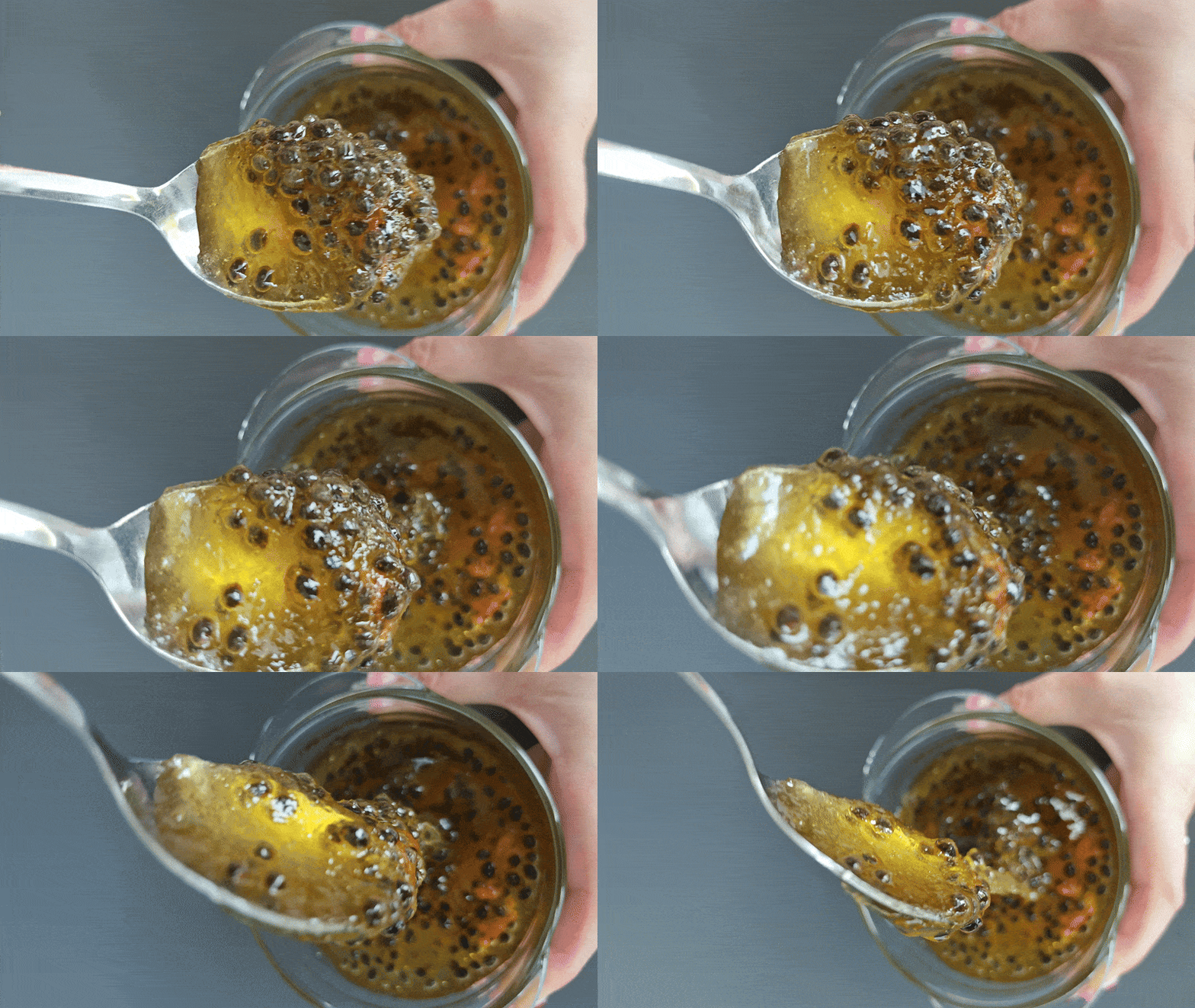
What You SHOULD Eat After 39!
If you actually want to know what you should eat to restore the strength lost by your body after 39, the answer isn’t just “less fruit juice.”
Your metabolism slowed down. Your body needs different support now. Imagine you had to eat 48 mushrooms and plants daily. It sounds insane. Well, you can!
I tried this herbal blend that contains superfoods like spirulina, Alfalfa, Acacia Gum, Cinnamon Bark, Ginseng, Ginger Root, Green Tea Leaf, medicinal mushrooms, and Turmeric Root, herbs known for their thermogenic effects, blood sugar support, and ability to help your body manage stress (which directly affects metabolism).
Also Read: Blue Milk
Sure, it’s marketed for weight loss. But that’s just the effect of a better metabolism, one that’s boosted by these synergistic and very helpful plants. The “side effect” is that you’re going to feel energized, better, maybe even younger.
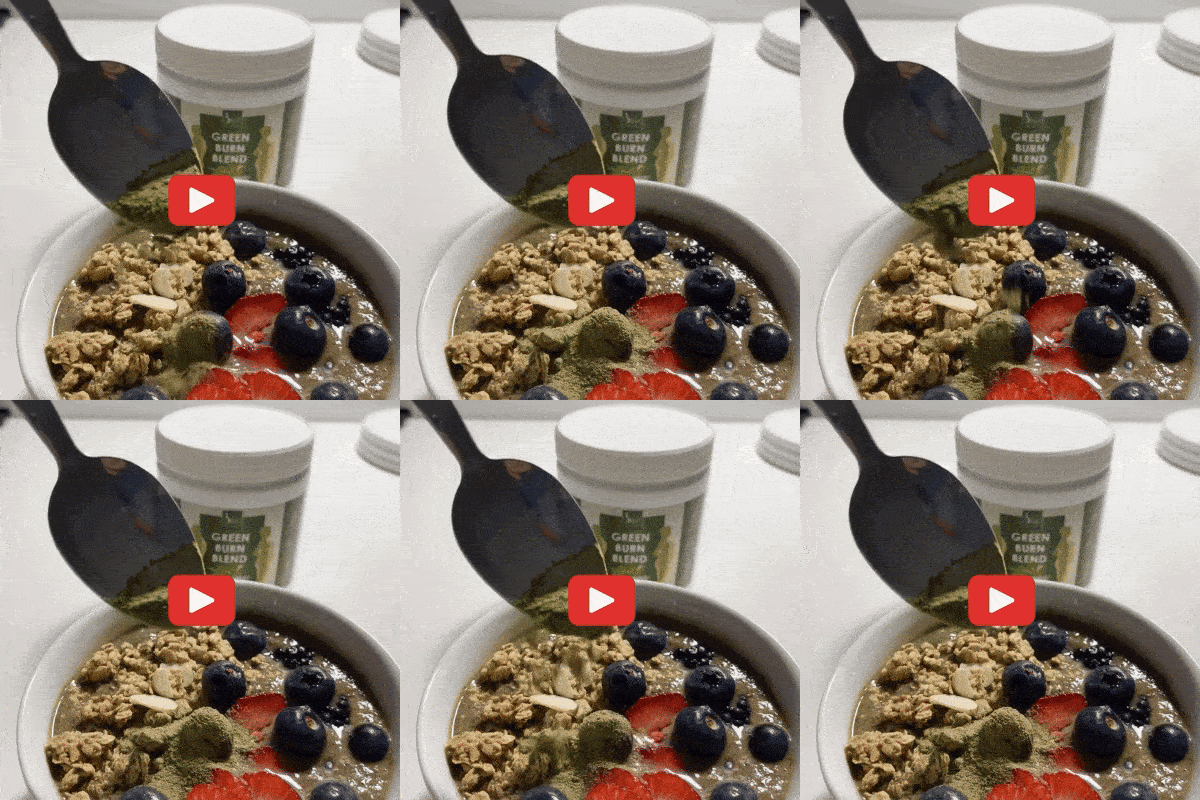 It’s a great addition that gives you the power of 48 herbs in one scoop. When you read the ingredients and see only natural stuff, you know it’s just going to help. And with 48 plants, there are tons of minerals and vitamins your body will absorb.
One scoop in water or your morning coffee. That’s it. It can’t get easier than this!
Click here to get the Green Burn Blend.
The Bottom Line
The number one fruit to be careful with after 39 is grapefruit, especially if you take medication regularly. After that, the real guideline is about form: whole fruit is almost always better than juice, smoothies, or dried fruit.
Your body is different now than it was at 25. The metabolism that forgave everything doesn’t forgive as much.
Check your medications for grapefruit warnings. Choose whole fruit over juice most of the time. Keep smoothies reasonable. Treat dried fruit like the concentrated form it actually is.
That’s the whole strategy. Not dramatic. Not complicated. Just paying attention to what actually matters now
You may also like: 
The ‘Nerve Oil’ You Should Use For Shaky Hands
Never Do This Before Going To Sleep (Video)


Simple solution here Folks, Stop Taking The Deadly Poison big pharma cartel drugs!
Exactly what I was getting ready to say!
Yup, I was going to say the same thing. Don’t demonize the fruit that God gave us for our health. Last I checked, the grapefruit doesn’t grow with a 14 page warning list of dangerous side effects.
Hi Marco, we agree with you that grapefruit is a gift from nature. We’re definitely not demonizing it. 😊
The article actually says grapefruit is not a “bad fruit” and that it can be bright, refreshing, and packed with vitamin C. The caution is only for people taking certain medications, because grapefruit can affect how some of them are absorbed.
So this isn’t about choosing drugs over fruit. It’s about helping people avoid a bad combination when both are already in their life.
Preach, Tal 😄 Nothing beats helping your body naturally when you can.
It’s well known that grapefruit has negative interactions with SOME medications. Especially things like blood thinners. It’s a fact of life that some people have no choice but to need their medications and they DO have to be careful as to what they eat. And I agree with some of the other comments don’t demonize the food that God has made available for its children on this amazing planet of ours. And it IS an easy fix. And if your doctor has prescribed some medication for you they should also be able to tell you at the same time if those meds have any interactions with other drugs, food or alcohol. If your meds do, just cut those things out of your life. Eazy. Peazy. 😉
Armin, beautifully said, that’s exactly the balanced view we were hoping people would take from the article. Grapefruit isn’t the enemy. It’s a powerful food, and powerful things deserve respect. 🌿
You’re right that the issue is with SOME medications, not everyone and not every situation. And yes, people should ask their doctor or pharmacist directly if their medication interacts with grapefruit.
Our goal was never to scare people away from God-given foods. It was to remind readers that natural foods, herbs, and medications can overlap in real ways, and being informed is always better than guessing.
And an extra thank you for being a long-term The Lost Herbs reader. I appreciate you!
Thanks, Arthur. Great article. I know not everyone is aware of the interactions that grapefruit has with SOME medications. I was also unaware until I had to take blood thinners after open heart surgery. Yes. I am an old codger. LOL! Otherwise grapefruit is an amazing fruit and if I had my way would eat it every day to help melt some of the extra fat off of me. But fruit and veg have become almost prohibitively expensive. So glad that Nicole is able to have wonderful guest lecturers such as yourself. Absolutely adore Nicole and have the utmost respect for her. She’s an amazing person. Thank you for your kind reply. 😉