
15 Plants You Can Grow in Water Bottles
Stop throwing away your empty bottles!
With a few holes, a handful of soil and the right seeds, that bottle can become your free medicinal garden.
It could hold chamomile flowers you harvest for your evening tea. Lemon balm you reach for after one of those days. Calendula you grow for traditional skin preparations. Fresh parsley and rosemary for your meals. Or the beginnings of nettle, yarrow, echinacea and other herbs people used long before modern pharmacies.
And you don’t need a big backyard to do it.
You don’t need raised beds. You don’t need fancy gardening equipment. You don’t even need much experience.
You can start taking your health into your own hands with little more than a street-seed and a bottle you were about to throw away.
Now is the time to bring back these medicinal traditions, even if your only gardening space is a sunny windowsill.
Think of it as your tiny living herb cupboard.
Or, as I like to think of it, a little green home apothecary.
Your Water Bottle Is Already Halfway to Becoming a Planter
For most medicinal herbs, we’re not aiming for hydroponics. There’s an easier approach: turn the bottle into a miniature plant pot and fill it with proper potting mix.
Just make sure it has drainage holes. Roots need air as well as water. Use potting mix instead of dense garden soil, and choose a bottle that gives your plant enough room to grow.
A small bottle is perfect for starting seeds, but bigger plants will eventually need a bigger home.
Here’s a practical guide:
| Reused water container | What to grow in it |
| 500–750 mL / 17–25 oz bottle | Seedlings, cuttings and very young plants |
| 1.5–2 L bottle / 51–68 oz bottle | Compact herbs such as chamomile, parsley and calendula; young lemon balm or feverfew |
| 1 gallon / 3.8 L water jug | Perennial herbs and larger flowering plants |
| 2.5–5 gallon / 9.5–19 L water jug | Peppers, vigorous herbs and plants needing larger root systems |
The bigger the plant you want above the soil, the more room you should usually give it beneath the soil.
Growing your own plants is one way to get them.
But what if some of the most useful ones are already growing around you for free?
The real challenge is knowing what you’re looking at — especially when edible or medicinal plants can have dangerous lookalikes.
There’s one guide I’d consider almost essential if you enjoy foraging. It covers 400+ wild plants, with large color photos, defining features, poisonous lookalikes, distribution maps, when to harvest them, and how to actually use what you find.
How to Turn an Empty Bottle Into a Herb Planter

What Are You Going to Grow?
Chamomile: Your Evening Cup, Growing on the Windowsill
Chamomile is a perfect first bottle herb. Give it a 1.5–2 L (51–68 oz) bottle, good drainage and plenty of light. Harvest and dry the little flowers for tea traditionally enjoyed for relaxation, digestive comfort and winding down before sleep. If you’re sensitive to ragweed or related plants, however, chamomile may cause an allergic reaction and can interact with some medications.
Calendula: The Golden Flower Worth Keeping Close
Give calendula a 2 L (68 oz) bottle or gallon jug and you’ll get more than beautiful golden flowers. Calendula has traditionally been used for minor skin inflammation, sunburn and minor wounds—making it a useful plant to keep close. Avoid it if you’re allergic to Asteraceae plants, and remember that serious wounds need proper medical care.
Feverfew: The Headache Herb
Feverfew’s pretty daisy-like flowers hide a long herbal history, particularly its traditional association with recurrent headaches and migraines. Start it in a 2 L (68 oz) bottle, although a gallon container is better long-term. Feverfew can interact with medicines, affect blood clotting and shouldn’t be taken during pregnancy.
Lemon Balm: Grow This One for Those Days
When your mind won’t switch off, you’ll appreciate having lemon balm nearby. Give it a 2 L (68 oz) bottle or gallon jug, then harvest its wonderfully lemon-scented leaves. 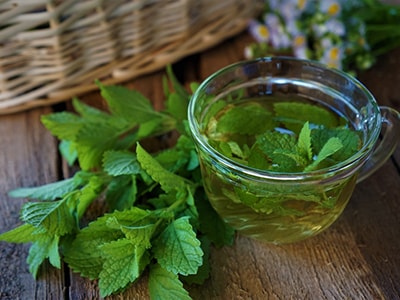 Traditionally, lemon balm has been used for mild stress, sleep support and digestive complaints such as bloating—a lovely herb for those restless evenings.
Lemon balm is wonderful to grow, but if you don’t want to wait for the plant, harvest it, and prepare it every time, there’s an easier option.
Nicole Apelian makes a wild-harvested, 100% organic Lemon Balm Tincture that’s already prepared and ready when you need it.
If you want the easy version, this is the one I’d keep in the herbal cabinet.
Parsley: Don’t Underestimate What You Already Know
A 1.5–2 L (51–68 oz) bottle can keep fresh parsley right beside your kitchen. Its leaves provide nutrients including vitamins A and C and iron, and unlike some herbs you’ll grow “just in case,” you’ll probably use parsley constantly. Snip it fresh into soups, eggs, potatoes, sauces and salads.
Lavender: Sometimes the Aroma Is Enough
Start young lavender in a 2 L (68 oz) bottle, then move it to a gallon container as it grows. Give it plenty of drainage and avoid keeping the roots constantly wet. Lavender has a long history in aromatic preparations and remains closely associated with calm and relaxation. Concentrated preparations and essential oils require more caution than ordinary culinary use.
When a Little Bottle Just Isn’t Enough
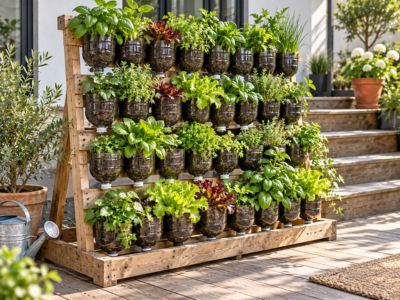 Some medicinal plants can start in a bottle but need more room as they mature. For the herbs below, save your larger 1–5 gallon water jugs. Moving a plant into a bigger container isn’t failure—the little bottle simply did its job.
Chicory: An Old-Fashioned Bitter Herb
Because its root is traditionally valued, give chicory a deep gallon jug. Chicory root has long been used as a coffee substitute and traditionally for digestive complaints such as fullness, flatulence and slow digestion. It’s a wonderful example of how food and herbal tradition often overlap.
Yarrow: An Herb With a Long Memory
Start yarrow in a smaller bottle, then move it into a gallon jug as it grows. For generations, yarrow preparations have traditionally been used for minor menstrual cramps and small superficial wounds. Significant wounds or uncontrolled bleeding, of course, require proper medical care.
I used to pick yarrow with my mom when I was little.
Back then, I hated it.
Now I’d do almost anything to turn back time and make one of those old remedies with her again.
I can’t do that anymore, so keeping Nicole’s Yarrow Tincture in my cabinet brings back a little of that feeling for me.
This is one of those traditional herbs I really think is worth keeping close.
California Poppy: A Different Kind of Poppy
Give California poppy a deep, well-drained jug and enjoy those unmistakable orange flowers. Traditionally, the herb has been used for mild stress, restlessness and nervousness, and to support sleep during stressful periods—making it an interesting companion to chamomile, lavender and lemon balm.
Marshmallow: Yes, There Really Is a Plant
The original marshmallow is Althaea officinalis, and because its root is traditionally valued, it needs a deep water jug rather than a small bottle. Its soothing, mucilaginous root has traditionally been used for dry throat irritation and mild gastrointestinal discomfort.
Marshmallow is a great plant to grow, but getting from plant to tincture takes a little more work.
You need enough room for the root to develop, then you have to harvest it, clean it, prepare it properly, and wait for the extraction.
And if you want to combine it with other gut-soothing plants, there’s another problem: slippery elm comes from a tree, so that’s not exactly something you’re growing in a bottle on your windowsill.
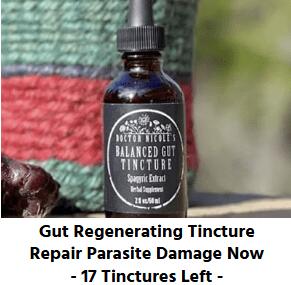 That’s why I like the easier version.
Nicole’s gut-health tincture combines the traditional plants above, so you get several classic gut-supporting plants in one ready-made tincture.
If growing and preparing all of that yourself sounds like too much trouble, I’ve got you — this is the one I’d use.
Evening Primrose: More Than a Pretty Flower
Give evening primrose at least a gallon jug. Native American communities traditionally used parts of the plant for skin concerns, minor wounds, gastrointestinal complaints and sore throats. Modern evening primrose oil comes from its seeds, so think of your bottle garden as a way to grow and appreciate the living herb—not as a home oil factory.
Echinacea: North American Herbal History
Start echinacea in a bottle, but eventually give this perennial a gallon-plus container or garden space. Native American traditions included its use for respiratory complaints and tooth pain, and today it’s strongly associated with cold-season herbal preparations. Allergic reactions and medication interactions are possible.
Stinging Nettle: The Plant You Were Told Not to Touch
Give nettle a gallon container and keep it somewhere bare arms won’t accidentally brush against it! Nettle has traditionally been used for minor joint pain and urinary complaints, and has also appeared in soups, teas and spring greens for generations. Its urinary use isn’t appropriate for people medically advised to restrict fluids.
Our ancestors even practiced urtication — deliberately brushing or striking painful areas with fresh stinging nettle.
Interesting tradition.
But there’s no way I’m covering myself in nettle stings just to use the plant.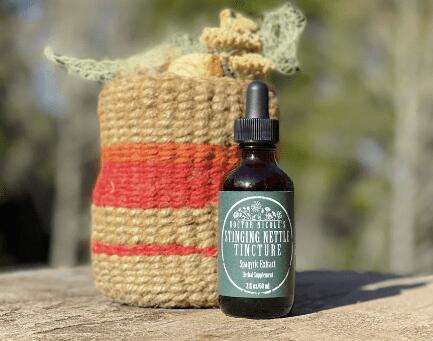
I’d rather keep a ready-made Nettle Tincture and skip the burning, itching, gloves, and harvesting altogether. Same plant. Much easier.
Yerba Santa: A Western Herb With Deep Roots
Yerba santa can start in a bottle, but this woody Western North American plant will eventually need considerably more space. Indigenous Californian peoples traditionally used it in several preparations, including documented use for colds. Growing it offers a living connection to the herbal traditions of the American West.
If I had to pick one tincture to have ready at this time of year, this one right here, the Yerba Santa Tincture, would be very high on my list.
Winter is coming, and this is exactly when people start stocking up on the herbs they trust for cold season.
Nicole’s prices are already very reasonable, and her seasonal remedies tend to get a lot more attention once everyone suddenly realizes they need them.
That’s why I wouldn’t wait until winter is already here.
Yerba Santa is also included in her Winter Defense Bundle, together with other cold-season herbs — including yarrow.
Cayenne Pepper: From Bottle to Spice Cupboard
Start cayenne in a 2 L (68 oz) bottle, then move it into a larger water jug if you want plenty of peppers. Its heat comes from capsaicin, a compound also used in topical preparations for certain kinds of pain. At home, simply dry your peppers, grind them and enjoy your harvest in the kitchen.
You can absolutely make your own cayenne salve.
First, you need to infuse the cayenne into oil, strain it properly, melt in the wax, get the consistency right, pour it before it sets, and somehow avoid touching your eyes with cayenne-covered fingers in the process.
So yes, it can be done.
You can also buy one of those synthetic spicy creams at the store, but personally, I’d rather use something built around actual plants.
Nicole came up with a 100% plant-based Joint & Movement Salve with cayenne and several other traditional herbs for joints and movement.
No infusing. No straining. No kitchen mess.
And what I really like is that she’s kept it accessible instead of turning it into some overpriced “premium” herbal product.
If you want the cayenne effect without making the whole salve yourself, this is the one I’d keep around.
Keep Your Bottle Apothecary Alive
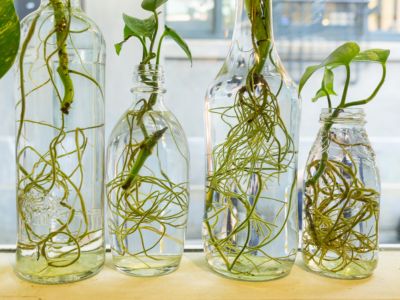 Small bottles heat up and dry out quickly, so check the soil rather than watering on a rigid schedule. Make sure excess water can drain, feed plants when appropriate and move them into larger containers when they become cramped. Your bottle doesn’t need to be the plant’s forever home—sometimes its job is simply to turn a tiny seed into a healthy young herb.
Grow What You’ll Actually Use
You don’t need dozens of medicinal plants. Grow the ones that fit your life. Choose chamomile, lemon balm or lavender for quiet evenings; parsley and cayenne for the kitchen; calendula for traditional skin preparations; or nettle, yarrow, echinacea and yerba santa to reconnect with old herbal traditions. A few plants you truly know and use are worth far more than a garden full of herbs you barely recognize.
So Where Do You Get the Seeds?
You can collect them outside when you know exactly what you’re looking for.
Or you can skip the scavenger hunt and start with them already sorted for you.
Nicole’s Medicinal Garden Kit contains 4,818 non-GMO seeds for 10 medicinal plants, including many we’ve just talked about: yarrow, marshmallow, chamomile, evening primrose, lavender, echinacea, calendula, feverfew, and chicory.
And when you break the price down across all those seeds, it works out to roughly $0.01 per seed.
That’s basically next to nothing compared with what you can spend buying finished herbal products again and again.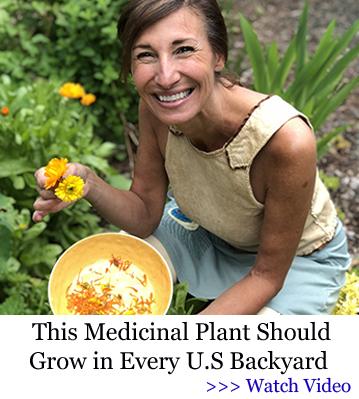
You also get a guide showing you how to plant, grow, harvest, and turn them into tinctures, salves, poultices, decoctions, infusions, and more.
And many of these plants either come back every year or reseed themselves.
Click here to see the Medicinal Garden Kit and start your own little bottle pharmacy.
One Last Thing Before You Start Your Home Apothecary
Growing these plants is one thing.
Knowing when to harvest them, what part to use, how to prepare them, and what to actually do with them afterward is another.
And this is where I really appreciate Nicole.
She has decades of experience with medicinal plants, and instead of just giving you another written recipe, she actually sits down on video and shows you the plant, explains what you need to know about it, and then teaches you how to use it.
So with something like lemon balm, you don’t just read that it’s useful.
You can actually watch Nicole talk you through the plant and then show you how to prepare it yourself. 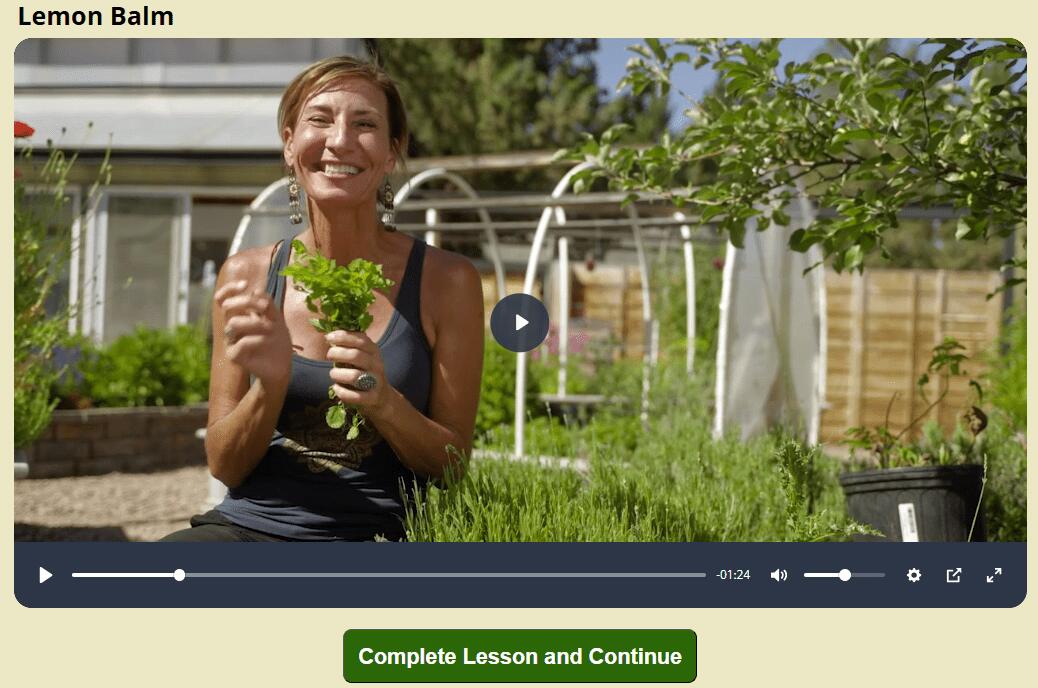
That’s the kind of knowledge I wish more of us had been taught growing up.
Click here to watch Nicole teach you how to use the medicinal plants you’re growing.
Our ancestors simply kept useful plants close to home.
Now you can too—even if all you have is one sunny windowsill.
You may also like:
The ‘Nerve Oil’ You Should Use For Shaky Hands
Never Do This Before Going To Sleep (Video)