They’d do anything to take your hard-earned money out of your pockets.
And most of the time, it happens through the little things you buy almost as a reflex.
Most people wouldn’t think twice about buying a new toothpaste, mouthwash, whitening strip, or electric toothbrush head.
I’m not saying you shouldn’t take care of your teeth.
Of course you should.
But hand someone a small stick and tell them people have used it to clean their teeth for centuries?
That usually gets a different reaction.
And yet, miswak may be one of the most interesting oral-care tools our ancestors ever kept alive.
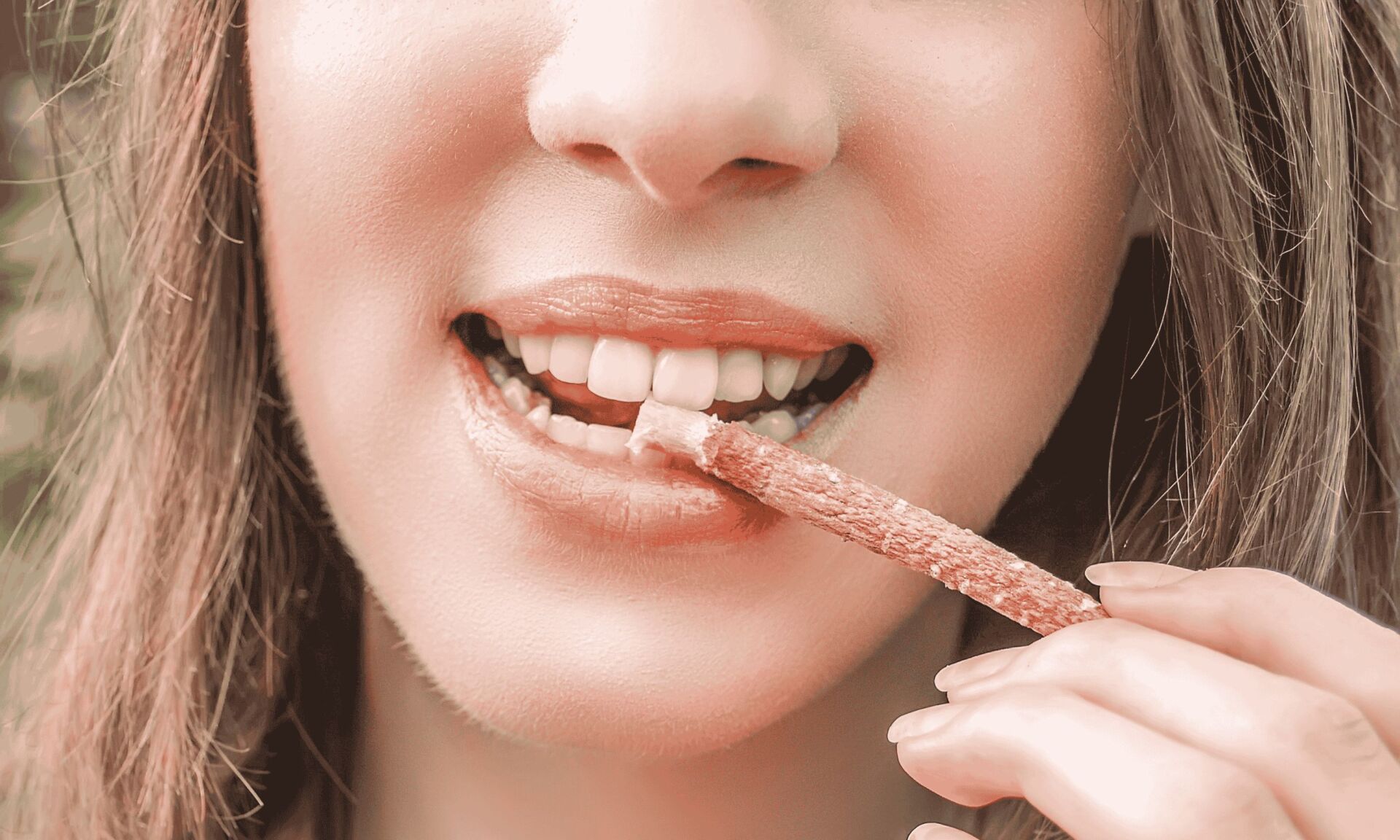
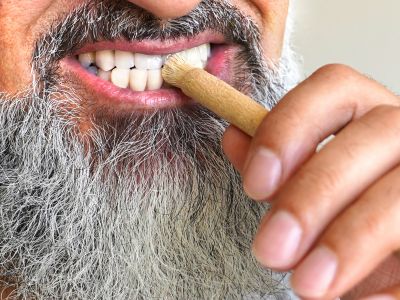
Made from the Salvadora persica tree, miswak has been used across parts of Africa, the Middle East, and Asia for generations.
Why?
Because when used correctly, it can help against plaque and support gum health — the exact things you need to take care of if you want to avoid tooth decay, gum problems, or eventually losing your teeth altogether.
And tooth health matters more socially ýou may realize.
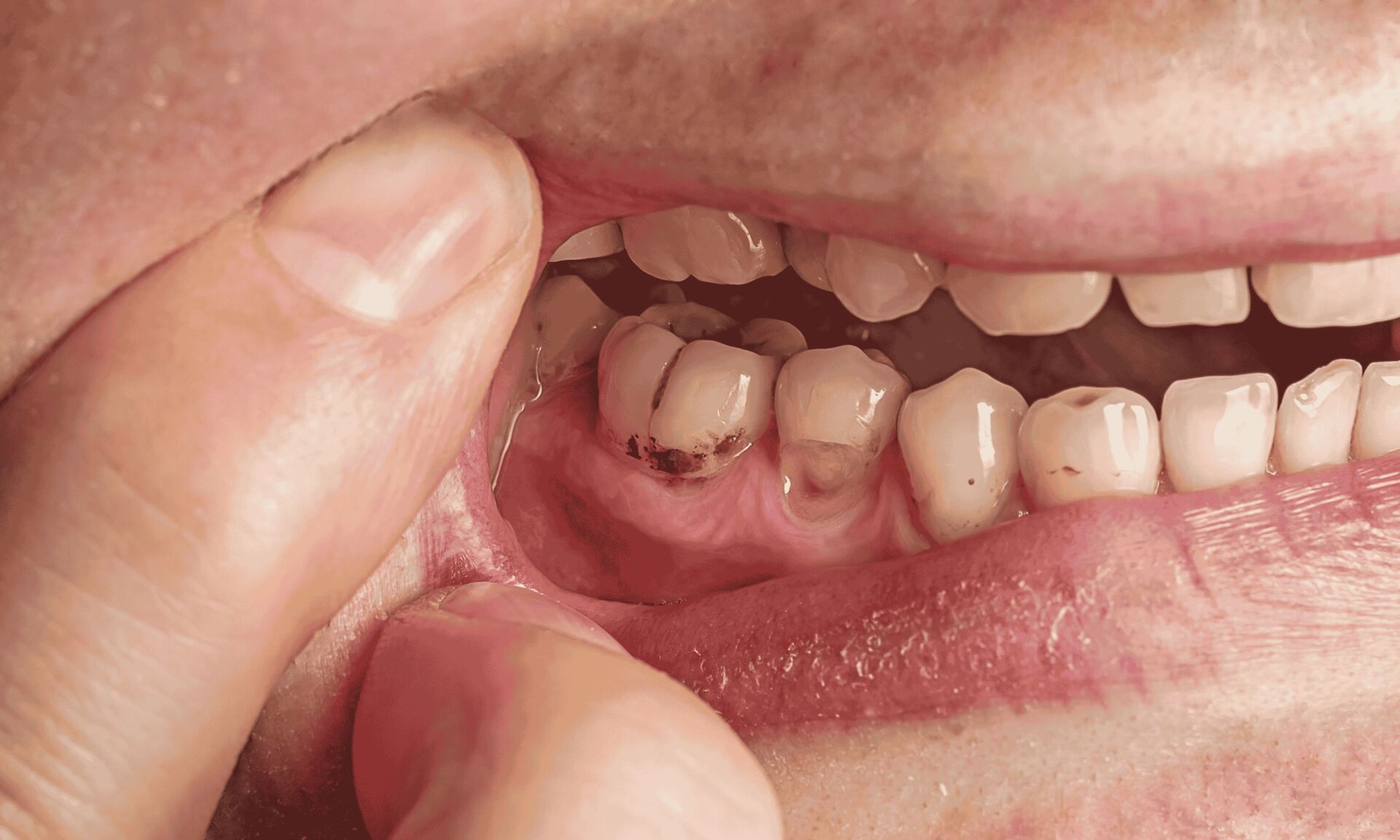
You don’t want bad teeth that contribute to bad breath.
You don’t want to lose a tooth and suddenly feel embarrassed every time you smile.
You don’t want to become the person who covers their mouth when they laugh because they’re worried about what other people notice.
Teeth are one of those things you tend to overlook when everything is fine.
But they can completely change the way you feel about yourself, and even the way others see you, once something goes wrong.
And usually, you only realize how important they were when it’s already too late.
How to Prevent Tooth Pain, Decay, and Tooth Loss
Plaque builds quietly.
You may not notice it at first, but that sticky film settles around the gumline, between teeth, and in all the places you tend to miss when you brush too quickly.
Certain bacteria inside that plaque feed on sugars and fermentable carbohydrates.
As they do, they produce acids that can gradually weaken enamel.
That’s one of the basic pathways that can lead to tooth decay.
Miswak helps for a very practical reason: it physically disrupts that buildup.
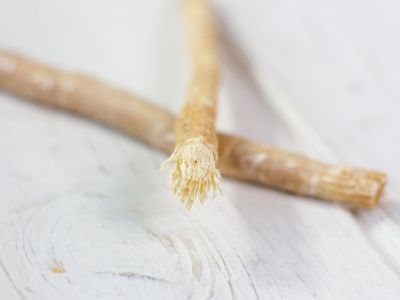
Once the end of the stick softens into fine fibers, you can work those fibers over the tooth surface and along the gumline.
And this kind of natural brushing doesn’t involve a factory-made plastic toothbrush that can shed microplastics.
And when it comes to plaque and gingivitis control, properly used miswak can do a very similar job to a regular toothbrush — without the same concern around microplastic exposure.
But there is another layer to it.
There are foods that contribute to plaque, feed the bacteria behind tooth decay, and may slowly shorten the life of your teeth.
But there are also foods that can do the opposite and support your teeth for longer.
Salvadora persica is not just useful because it frays into bristles.
It also contains naturally occurring compounds that have antimicrobial and oral-care properties.
That means miswak gives you two forms of support at the same time:
the mechanical cleaning of the fibers and the plant chemistry naturally present in the stick.
They obviously didn’t talk about biofilms, phytochemicals, or bacterial strains.
They learned through observation how remedies helped them manage:
A certain stick cleaned well.
Another plant freshened the mouth.
A particular flower eased tooth pain.
A resin helped irritated tissue.
And I’ll tell you about all of them.
That knowledge stayed useful because people kept using what worked.
And when you start looking through traditional oral remedies, you find far more than miswak. Let me tell you more about it.
This is exactly why I think knowing your plants matters.
There are medicinal plants growing in backyards, along roadsides, and under your feet that you may walk past — or literally step on — without realizing what they can do.
And this kind of knowledge becomes even more valuable when pharmacy prices keep climbing, or when getting what you normally rely on simply isn’t an option.
Nicole Apelian teaches you what these plants are, how to identify them, what properties they have, and how to turn them into remedies yourself.
But it doesn’t do much for you if you can’t get it where you actually need it.
Ever since I used usnea for toenail fungus, I’ve kept Nicole’s ready-made Usnea Spray around.
And because I still use it, I also like how easy the spray makes it to reach between teeth, around the gumline, and into those tiny spaces that are awkward to get to otherwise.
That little bit of pressure from the spray makes a difference in where you can apply it.
Take a fresh miswak stick and remove roughly half an inch of bark from one end.
Chew that exposed section gently until the fibers separate and soften.
Once it begins to resemble a tiny brush, use light movements to clean the tooth surfaces and gumline.
Work around the mouth carefully, especially around the back teeth and along the gumline where plaque tends to accumulate.
When the fibers become worn, trim them away and expose a fresh section.
Then start again.
Maybe Our Ancestors Weren’t Missing as Much as We Think
Modern dentistry can do things traditional remedies never could — repair damaged teeth, treat serious infections, fill cavities, and catch problems you can’t see.
But that doesn’t mean everything that came before it was useless.
Miswak, clove, salt water, propolis, and plants like usnea survived because people kept finding a reason to use them.
That’s the part I find interesting: some useful knowledge didn’t disappear because it stopped working. It disappeared because newer products replaced the habit of making things yourself.
And that brings me to toothpaste.
If miswak is basically Nature’s toothbrush, then it only makes sense to pair it with a toothpaste that follows the same idea.
I personally don’t want a natural toothbrush and then cover it in a paste full of artificial colors, mystery ingredients, and more of certain additives than I really want in my mouth every day.
You can make it yourself with simple ingredients you probably already have at home, and the recipe comes from a natural-health recipe book designed to help you make more of these everyday products yourself instead of constantly buying them.
Do enough of that, and the savings can add up surprisingly fast.
We use cookies to ensure that we give you the best experience on our website. If you continue to use this site, we will assume that you are happy with it.
Functional Always active
The technical storage or access is strictly necessary for the legitimate purpose of enabling the use of a specific service explicitly requested by the subscriber or user, or for the sole purpose of carrying out the transmission of a communication over an electronic communications network.
Preferences
The technical storage or access is necessary for the legitimate purpose of storing preferences that are not requested by the subscriber or user.
Statistics
The technical storage or access that is used exclusively for statistical purposes.The technical storage or access that is used exclusively for anonymous statistical purposes. Without a subpoena, voluntary compliance on the part of your Internet Service Provider, or additional records from a third party, information stored or retrieved for this purpose alone cannot usually be used to identify you.
Marketing
The technical storage or access is required to create user profiles to send advertising, or to track the user on a website or across several websites for similar marketing purposes.