

Hawthorn: The Heart-Healing Herb That Also Fights Anxiety, Aids Digestion, and Stores for Years
Hawthorn (Crataegus), is also known as quickthorn, thornapple, May-tree, or hawberry. The Crataegus genus holds several hundred species of small trees or shrubs that are native throughout temperate regions of Europe, Asia, North Africa, and North America. Crataegus belong to the rose or Rosaceae family of plants. In fact, the berries or small fruits resemble rosehips more than other berries or tree fruits.
The small fruits are packed with nutrients and the fruit, leaves, and flowers have famously been used in herbal remedies and in Traditional Chinese Medicine for centuries. Most notably, hawthorn has been used in teas and tinctures to aid digestive issues, heart problems, and high blood pressure.
The wood of hawthorn is incredibly strong and has been used to make tools and tool handles. The sharp thorns were used as fishhooks and as medical tools for piercing boils. Due to the hardwood and sharp thorns, hawthorn shrubs are often used as living protective fencing when grown in hedges.
High in pectin, hawthorn fruit is a useful addition when making jams and jellies. Many cultures use hawthorn in snack foods and as ingredients in liqueurs, beverages, wine making, and candy. Even the leaves are edible and can be picked in spring when they are still young and tender to use in salads.
You Might Also Want To Learn About: Betony
An important wildlife food as well, Hawthorns are used as food and shelter by many birds and mammals. The flower’s nectar feeds many insects including moths and butterflies. In the winter, many birds eat the remaining haws which help to disperse the seeds.
The History of Hawthorn
The richness in historical lore of Crataegus species is incredibly robust. This may be due to the fact that these small trees and shrubs grow throughout the temperate regions of the world since ancient times. Not only that but the plant, its flowers, fruit, and leaves are each incredibly useful.

In North America, fruits were used as food and medicine since time immemorial by many indigenous peoples. In addition to eating the fruit fresh, the pulp of the fruits was mashed and dried in cakes or used as an ingredient of pemican.
As a fruit that persists on the branches into the winter season, hawthorns have probably been a survival food throughout human history. In fact, during the days of the pioneers, settlers noted this was the only remaining food supply in some areas.
Perhaps, for this reason, there is much evidence in folklore that hawthorns in bloom were celebrated, and destruction of hawthorn bushes or trees was dreaded as signs of bad luck. There is a strong association of hawthorn plants with fairies in several medieval cultures. In the Victorian language of flowers, hawthorn blossoms represent hope. Currently, hawthorn is the state flower of Missouri.
Also Read: What Raisins Actually Do To Your Body
Since the fruit persists into the winter months, many winter celebration foods worldwide have hawthorn as an ingredient. There are many traditions of healing ceremonies using this interesting plant as well.
Where the Plant is Found
Hawthorns are often found growing in hedgerows or around old garden spaces. In the wild, they grow in mixed forests. They prefer moist, deep soils which are usually fine-textured and rich in organic matter.
Supplements, extracts, and dried plant parts may be available through herbal supplies, online stores, or health food stores.
Related: The Complete Map of Edible Plants: Find Out What You Have in Your Area! (Video)
How to Identify Crataegus
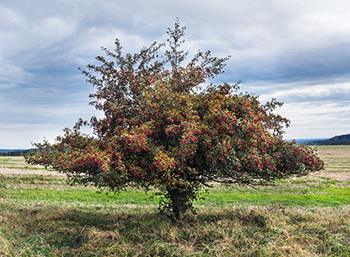
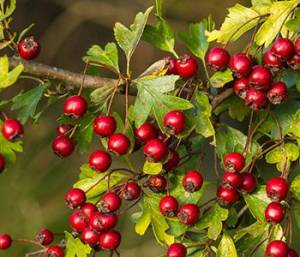
 Shape: Many Crataegus species are small trees or shrubs growing 15 to 50 feet tall.
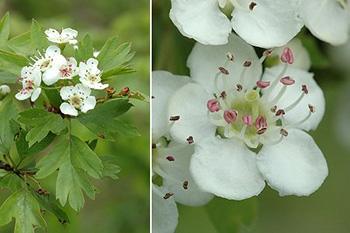
- Leaves: Leaves are arranged spirally along shoots and in small clusters on spurs of branches. Oval with scalloped margins, leaves are shiny green on the upper surface and pale green underneath with distinct veins.
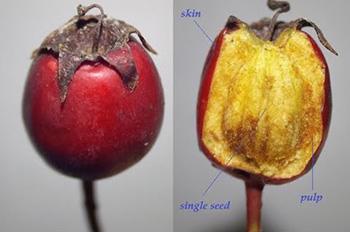

- Flower: A symbol of hope, five-petaled flowers bloom in clusters in white, pink, or red in early spring.
- Stem: The bark is grey and smooth with longitudinal ridges in mature specimens. Sharp thorns arise on stems and branches and are often ½ to 1 inch long.
- Fruit & Seeds: The fruit or haw of hawthorns are similar to rose hips with thick skin, mushy pulp, and large stone-like seeds.
Related: Plant Identification Guide – 400 Wild Plants That You Can Forage For (Video)
How to Grow
 Hawthorns prefer rich soil which holds moisture that is high in organic matter but still drains well. They grow well in full sun and tolerate part shade in most soil types with a variety of pH levels. They have some disease susceptibility to apple scabs, and fire blight as well as some leaf issues and types of rust. There are disease-resistant varieties. Keeping your hawthorn healthy with plenty of organic matter and minimizing stress from competition, drought, or environmental damage may help your hawthorn weather these cyclic plant diseases.
Hawthorn trees and shrubs don’t need a lot of pruning but removing suckers to keep trees neat and tidy may be beneficial. Remove thorn-covered branches from areas visited by people as the thorns can be sharp and painful.
Related: The 10 Medicinal Seeds You Should Plant for a Complete Backyard Pharmacy (Video)
How to Harvest This Plant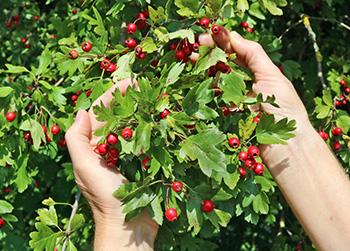

- Harvesting hawthorn flowers can be done in early spring. Of course, flowers become the haws so harvest sparingly.
- The leaves, as mentioned above, are edible and tender when young. They can be harvested with the flowers for an interesting addition to salads.
- The haws are ripe when dark in color, often in the last weeks of summer and early fall. Again, harvest only a small amount from anyone tree, especially if shrubs and trees are scarce. Leaves for tea can be harvested at any time. Inspect them for any damage, spots, or rust as this will change the beneficial characteristics of the leaves.
What Hawthorn Is Good For and The Natural Remedies Made From It
- Hawthorn has a bounty of benefits, famously aiding cardiovascular and digestive issues for centuries. They can be eaten raw. Some say the haws have a tart to sweet taste while others report them being sour to bland. This variation could depend on harvest time, species of hawthorn, and growing conditions.
- Tea made with hawthorn has been reported to have many healthful benefits. Commercial hawthorn teas often combine dried haws, flowers, and leaves. It is certainly possible to make your own hawthorn tea or add hawthorn to your favorite homemade herbal tea combinations.
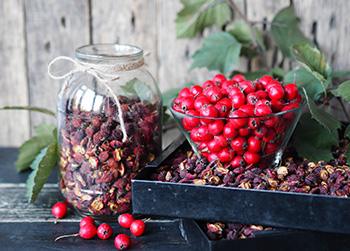
- Highly nutritious, including hawthorn in the diet is one way to use this nutritious food which contains many phytochemicals including tannins, phenolic acids, proanthocyanidins, and flavonoids. Hawthorn is often an ingredient in jam, jelly, pie filling, and syrup. They can also be made into fermented tasty beverages such as wine or vinegar to be used in salad dressing.
- Supplements containing hawthorn may be an easy and convenient way to increase hawthorn in your diet by using powder, pill, or liquid forms. These may be available through a pharmacy or health food supplier.
Related: “Nature’s Prozac” Or The Instant Anxiety Relief Plant That Could Be Growing Near Your House (Video)
What Parts of Hawthorn Are Used In Remedies?
Extracts made from the berries or haws of hawthorn have shown incredible symptom benefits for treating chronic heart failure and cardiovascular disease. The extracts made, not only from berries but also using leaves and flowers show excellent potential in providing antioxidant, anti-inflammatory, gastroprotective, and antimicrobial activity.
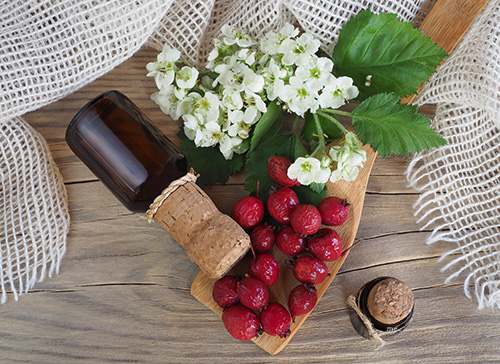
Perhaps due to the high quantities of beneficial phytochemicals, leaves, flowers, and berries are still used in many traditional medicines to help treat high blood pressure, arrhythmia, a variety of digestive issues as well as arteriosclerosis and heart conditions. There is further evidence that these extracts contribute to lowered cholesterol levels as well.
Studies also show the natural polyphenolic compounds found in hawthorn berries, particularly the fruit’s skin, have chemoprotective potential.
The Science Behind Hawthorn’s Benefits
The medicinal activity of hawthorn is primarily attributed to its dense concentration of polyphenolic compounds, particularly oligomeric proanthocyanidins (OPCs), flavonoids including vitexin and hyperoside, and chlorogenic acids. Understanding what these compounds actually do helps explain why hawthorn has been trusted in traditional medicine across so many cultures for so long.
Oligomeric proanthocyanidins are potent antioxidants that protect blood vessel walls from oxidative damage, improve the elasticity of arterial tissue, and reduce inflammation in the cardiovascular system. They are found in grape seed extract as well, but hawthorn’s OPC profile is distinct and has been the subject of considerable clinical research.
Flavonoids, particularly the vitexin compounds found in hawthorn leaves and flowers, appear to dilate coronary blood vessels, improving blood flow to the heart muscle directly. This mechanism is one reason hawthorn has shown benefit in clinical trials for angina and reduced exercise tolerance in early-stage heart failure patients.
A landmark clinical trial known as the SPICE trial, details of which are available through the National Library of Medicine, followed 2,681 patients with heart failure over 24 months. While the primary endpoint was not met in the full population, a subgroup analysis showed significant benefit in patients with a higher ejection fraction, reinforcing hawthorn’s value as a complementary cardiovascular support.
Regarding the chemoprotective properties mentioned earlier: research indicates that hawthorn’s polyphenolic compounds, particularly those concentrated in the berry skin, demonstrate the ability to inhibit certain cancer cell lines in laboratory studies and to support the body’s natural antioxidant defenses. As the Memorial Sloan Kettering Cancer Center’s integrative medicine database notes, this research is preliminary and hawthorn should not be considered a cancer treatment, but the cellular protective mechanisms are genuinely present and scientifically documented.
Hawthorn for Anxiety, Stress, and Sleep
While hawthorn is most widely recognized for its cardiovascular benefits, its traditional use as a mild calming herb is well documented and increasingly supported by research. The same flavonoids and proanthocyanidins that support heart function also appear to exert a gentle sedative effect on the central nervous system, making hawthorn useful for stress-related symptoms, mild anxiety, and restless sleep.
This makes particular sense from a physiological standpoint. Anxiety and chronic stress place significant strain on the cardiovascular system, elevating heart rate and blood pressure over time. Hawthorn’s dual action, supporting both heart function and nervous system calm, means it addresses these two connected systems simultaneously.
Research published in the Journal of Human Psychopharmacology found that hawthorn extract (combined with magnesium) produced a significant reduction in anxiety symptoms compared to placebo in a group of mildly anxious adults, with no adverse side effects reported.
Traditional herbalists frequently combine hawthorn with lemon balm for nervous heart conditions, meaning the kind of heart palpitations or elevated heart rate that accompanies stress and anxiety rather than structural cardiac disease. This combination is gentle, widely available, and well-tolerated by most adults.
For sleep support specifically, hawthorn berry tea taken 30 to 60 minutes before bed is a traditional remedy for restlessness and difficulty falling asleep. It is not a sedative in the pharmaceutical sense but rather a gentle nervine that helps reduce the physical tension that keeps many people awake.
A DIY Hawthorn Tincture Recipe
We are making a simple herbal extraction in alcohol. We are using high-quality alcohol as our extractor. Alcohol has an incredible solvent ability to extract the beneficial components from plants at room temperature over a reasonably short period of time, making them shelf-stable. Other ingredients can work as extractors, even water such as when we make tea. Vegetable-based glycerin is also a popular option.
We will be using the simple or folk method. This is relatively easy and requires only basic equipment. Essentially, we put our plant material in a glass container, cover it with alcohol, and allow it to steep for several weeks.
Method
Step 1: Identify your hawthorn trees and shrubs for your future harvest area. Note the scalloped leaves and long, sharp thorns. This picture was taken earlier in the season while the haws were just developing.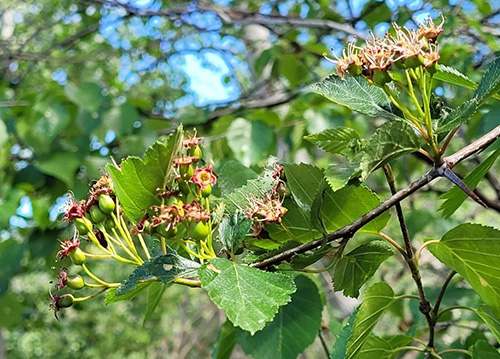
Step 2: Once the fruit or haws are dark in color, collect some with the nice thick leaves.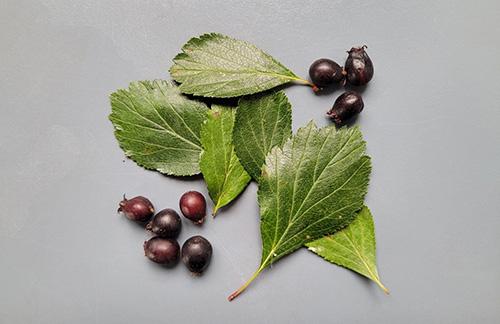
Step 3: Gather the haws and leaves. Note, some of the haws are a little worse for wear after our long drought and heatwave. For this purpose, haw raisins are still excellent. Also, for those exceptional people who harvested some flowers and young leaves in the spring and dried them, here is a perfect time to bring them out and add them to our extraction tincture.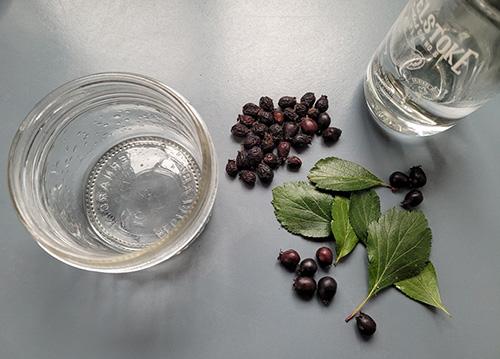
Step 4: You might choose to rip some of the leaves to expose more surface area. Similarly, cutting into some of the haws to expose their soft pulpy insides is great to extract even more of their powerful benefits.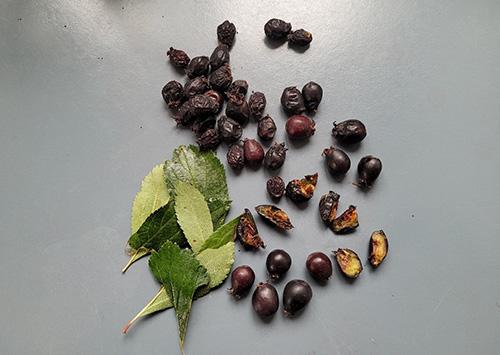
Step 5: Place the plant material into a clean, sterilized glass container. Cover with your desired choice of alcohol and stir the mixture slightly before sealing the contents.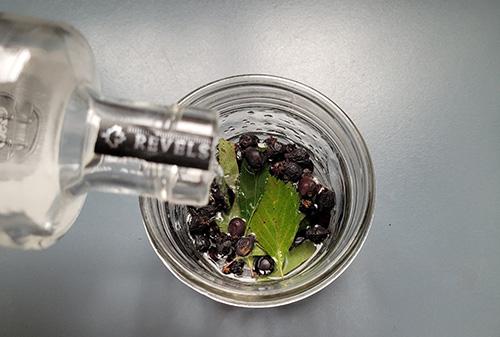
Step 6: Keep the tincture in a cool dark place for 2 to 6 weeks. Check on it periodically to give it a little agitation and stir. Strain the mixture and keep it in a container that is easy to store and easy to use such as a brown dropper bottle.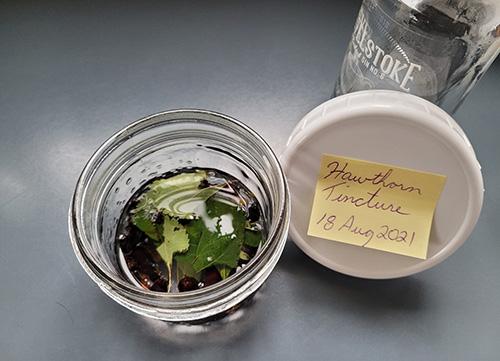
Potential Uses
Use hawthorn tincture daily to potentially aid digestion and help lower blood pressure, reduce cholesterol, and strengthen the cardiovascular system.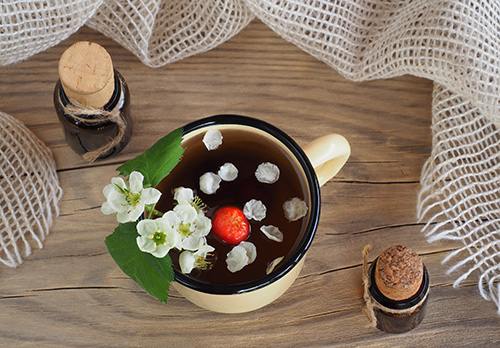
Add a couple of drops of this tincture to 1 cup of water or juice a couple of times a day. Monitor the effects. If any unwanted side effects occur, discontinue use. See warnings and cautions and take care to manage prescription medications appropriately.
A note on alcohol choice: For a medicinal tincture, alcohol percentage matters. The minimum recommended is 80-proof vodka (40% alcohol by volume), which is sufficient to extract water-soluble compounds including most of hawthorn’s flavonoids. For a more complete extraction that also captures resinous and fat-soluble compounds, 100-proof vodka or food-grade grain alcohol diluted to 50 to 60% is preferable. Avoid rubbing alcohol (isopropyl alcohol) entirely, which is toxic and not suitable for any internal preparation. Brandy at 80 proof is a traditional and flavorful alternative if you prefer a softer base.
Related: How to Recognize a Heart Attack and What to Do Next (Video)
Hawthorn Berry Syrup Recipe
For those who prefer to avoid alcohol, or who want a preparation suitable for children, hawthorn berry syrup is an excellent alternative to the tincture. It is easy to make, shelf-stable when stored correctly, and can be used as a daily supplement, added to food, or stirred into warm water as a simple tonic drink.
You will need:
- 2 cups of fresh or dried hawthorn berries (haws). If using dried berries, reduce to 1 cup as they are more concentrated.
- 3 cups of water.
- 1 cup of raw honey (added after cooking, never boiled, to preserve its own beneficial compounds).
Optional: a small cinnamon stick, a few cloves, or a strip of fresh ginger added during simmering for flavor and additional anti-inflammatory benefit.
Method:
Combine hawthorn berries and water in a saucepan. Bring to a boil, then reduce to a gentle simmer. Allow the mixture to simmer uncovered for 30 to 40 minutes until the liquid has reduced by approximately half. Mash the softened berries during cooking to release as much of the pulp and its beneficial compounds as possible.
Remove from heat and allow to cool to below 40 degrees Celsius (104 degrees Fahrenheit) before adding honey. Straining is important: hawthorn seeds are large and hard and should not be consumed. Use a fine mesh strainer or cheesecloth, pressing the pulp firmly to extract all liquid.
Stir honey thoroughly into the strained liquid. Transfer to a clean glass jar or bottle.
Stored in the refrigerator, hawthorn berry syrup will keep for 2 to 3 months. For longer storage, add 1/4 cup of brandy or vodka to the finished syrup, which extends shelf life to approximately 6 months refrigerated.
Dosage: 1 tablespoon for adults, 1 teaspoon for children over 12 months, once or twice daily. Do not give honey-containing preparations to infants under 12 months.
Hawthorn Dosage
Doses of hawthorn vary depending on the form used and the condition being supported. The following are general guidelines based on commonly cited clinical ranges. Always start at the lower end of any dosage range and monitor your response before increasing.
For standardized extract (the form used in most clinical studies): 160 to 900 mg daily, divided into two or three doses. Research published through the National Library of Medicine suggests a minimum effective dose of 300 mg daily for heart failure support, with most studies using 600 to 900 mg for measurable cardiovascular benefit.
For hawthorn tea using dried berries, leaves, and flowers: 1 to 2 teaspoons of dried material per cup of boiling water, steeped for 10 to 15 minutes. One to three cups daily is the standard traditional dose.
For a DIY tincture made using the folk method described in this article: begin with 20 to 30 drops (approximately 1 to 1.5 ml) in water or juice, two to three times daily. This is a starting point. Tincture potency varies depending on the plant material used, the alcohol percentage, and steeping time, so adjust based on your response.
For hawthorn powder (dried and ground berries): 500 mg to 1 gram, once or twice daily, mixed into food, water, or smoothies.
Results with any form of hawthorn are gradual. Allow a minimum of 4 to 6 weeks of consistent use before evaluating whether the remedy is producing the effects you are looking for.
How To Preserve This Plant
- Flowers and early spring leaves are best dried to use in the fall with the fall harvested leaves and fruit.
- Leaves and fruit harvested in the fall can be preserved in several ways. Drying is often the most convenient. This makes the plant parts available for future use as food, tea, or to use in tinctures or other forms of extracts.
- The fruit can be used fresh to make preserves such as jams, jellies, and pie filling. They can also be preserved in wine or vinegar making.
- Fresh fruit and leaves can be made into an alcohol extraction or tincture for medicinal use. In abundance, they can be used for making a flavorful liqueur.
All the Ways to Use Hawthorn
For readers asking how to use hawthorn berries and other parts of the plant practically, here is a complete reference in one place:
- Raw: Ripe haws can be eaten fresh off the tree. The flavor ranges from mildly tart and apple-like to bland depending on species, growing conditions, and harvest timing. Remove the seeds before eating in quantity as they contain compounds similar to those in apple seeds that are best avoided in large amounts.
- Tea: Dried berries, leaves, and flowers steeped in boiling water for 10 to 15 minutes. One to three cups daily for general wellness support.
- Tincture: Alcohol extraction of berries and leaves as described in the recipe above. Useful for longer shelf life and convenience of dosing.
- Syrup: Water and honey-based preparation as described in the recipe above. Ideal for alcohol-free use and for children over 12 months.
- Jam and jelly: The high pectin content of haws makes them excellent for preserves. Often combined with apples or other low-pectin fruits to balance flavor.
- Powder: Dried berries ground into powder can be added to smoothies, oatmeal, or encapsulated for supplement use. Commercial hawthorn powder is also widely available.
- Wine and fermented vinegar: Traditional preparations that make use of a large harvest. Hawthorn wine has a long European heritage and hawthorn berry vinegar can be used as a daily tonic diluted in water, or as a salad dressing base.
- Liqueur: A slower infusion of haws in spirits with added sugar, similar in principle to sloe gin. Best made with autumn-harvested berries at peak ripeness.
- Thorn ash or topical use: Less commonly, hawthorn preparations have been used topically in traditional medicine for minor skin conditions. This use is less well-studied and is not covered in detail here.
What Plants Resemble Hawthorn?
Hawthorn
| Feature | Hawthorn, Crataegus | Blackcurrant, Ribes nigrum | Blackthorn, Prunus spinosa |
 |  |  | |
| Size | 15 to 50 feet tall | 5- by 5-foot shrub | 16 feet tall |
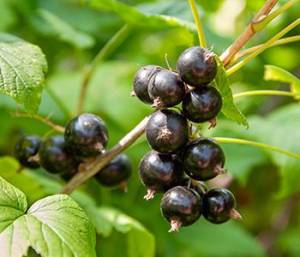
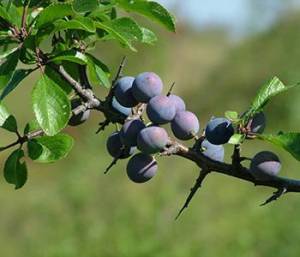
| Leaves and Stems | Stems have long thorns with leaves single or in clusters that are oval with scalloped margins. | Lobed palmate leaves with serrated margins on spiny stems. | Black bard with stiff spined branches with oval leaves with serrated margins. |
| Fruit and Seeds | Haws have thick skins, mushy pulp, and large, stone-like seeds | Dark purple to black glossy berries containing many seeds. | Thin fleshed drupes are black and ½ inch in size. |
| Flowers | Clusters of white, pink, or red, small five-petaled flowers in spring. | 3-inch-long clusters or strigs of white flowers in spring. | Clusters of white, small five-petaled flowers in early spring |
Warnings and Cautions
Hawthorn is generally well-tolerated but there are several specific interactions and considerations that anyone using it medicinally should know before starting.
Hawthorn has documented interactions with prescription heart medications. If you are taking digoxin, beta-blockers, or nitrates, do not use hawthorn supplements or concentrated extracts without consulting your doctor first. Hawthorn can amplify the effects of these medications, potentially causing blood pressure to drop too low or intensifying the action of cardiac drugs in ways that require medical supervision. According to the National Center for Complementary and Integrative Health (NCCIH), hawthorn may also interact with the erectile dysfunction drug sildenafil (Viagra), as both can lower blood pressure.
One important expectation to set: hawthorn is a slow-acting herb. Most clinical studies report that meaningful cardiovascular benefits require consistent use over 4 to 8 weeks before effects become noticeable. Do not discontinue use after a few days assuming it is not working. Conversely, do not increase your dose in an attempt to speed results.
Mild side effects reported in some users include nausea, dizziness, headache, and palpitations. These are typically dose-related and resolve when dosage is reduced. If side effects persist, discontinue use and consult a healthcare provider.
Hawthorn is not recommended as a replacement for prescribed cardiac medication. It is best viewed as a complementary support, used alongside, not instead of, medical treatment for diagnosed heart conditions.
Choose reputable sources when purchasing supplements containing hawthorn. As always, check with your healthcare provider before starting any new herbal remedy, particularly if you are managing a chronic condition or taking prescription medications.
You may also like:
 10 Natural Remedies You Can Only Make This Fall
An Ingenious Way to Stockpile Prescription Medicines, Including Insulin (Video)
9 Natural Remedies for High Cholesterol and Blood Pressure
The Backyard Plant that Keeps Your Heart Young
10 Berries You Should Look For In The Woods

what about low blood pressure? can i still use hawthorn as an adaptogen?
Omg this email is a book of great value – what effort! ❤️
i have two of her books and two from Claude Davis. it couldn’t get any better. all the info you could possibly need. i also bought a book called survival sanctuary by Lex Andrews and Mark Johnson it has a lot of really neat stuff in it for survival, including making your own garden out of wooden structures. there’s much more to that book
Yeah really! My bro’s got plenty of these trees but didn’t know about their healing properties… Gonna pic up yhe fruits next week and flowers in springtime.. 🙂
Can the haw be eaten raw? (See what I did there lol)
Traditionally the berry in Ireland off the Hawthorn was always boiled and put in a jar with sugar for a high source of vitamin C and as a cough syrup. I remember distinctly as a boy eating the leaves raw in the spring when we were hungry. I was always told not to eat the berries raw as they’d make you sick, The old people had some really weird traditions about the sacredness of the tree and a total fear of doing anything bad to it particularly in the month of May. Even today with modern farming techniques you’ll often see an ancient May bush smack dab in the middle of the field and everything ploughed around it. My mother still calls it the May bush. The only place I’ve ever seen one in America is at the Pony Express station in Gothenburg Nebraska, were I had my 4 year old eat some of the leaves with me. I wonder would it grow in Chicago if so I’d plant it for sure
Interesting story, too bad there’s not more where you live. We have them all over the PNW!
Yes
are there any wild plants for us when we get some age on us to help with erectile dysfunction
try beet root juice, also hawthorn as above as it increases the blood supply to vital areas.
thanks for the help
Check out Wim Hoff- cold treatments (shower, or cold swimming), increases testosterone and increases muscle, not to mention really boosting the immune system. It’s working for my man, it’s noticeable.
I never knew that the Hawthorn was so beneficial! They line our streets here in WA St!
I was told the seeds are toxic, dose anyone know if this is true? If so what’s the best way of separating the seed from pulp?
Following